







Question: Read the study case carefully. What are the main elements and concepts of the case study? Include and explain those that answer the question whether
Read the study case carefully.
- What are the main elements and concepts of the case study? Include and explain those that answer the question whether if Mahmood should invest in the vineyard or not. Be thorough with this answer. Give at least 7 reasons why he should or shouldn't invest.
- Provide 2 examples relating the study case with real life. Be specific and don't give short and bad examples. Preferably relating to the industry.
I'll upvote gladly :) if done so.
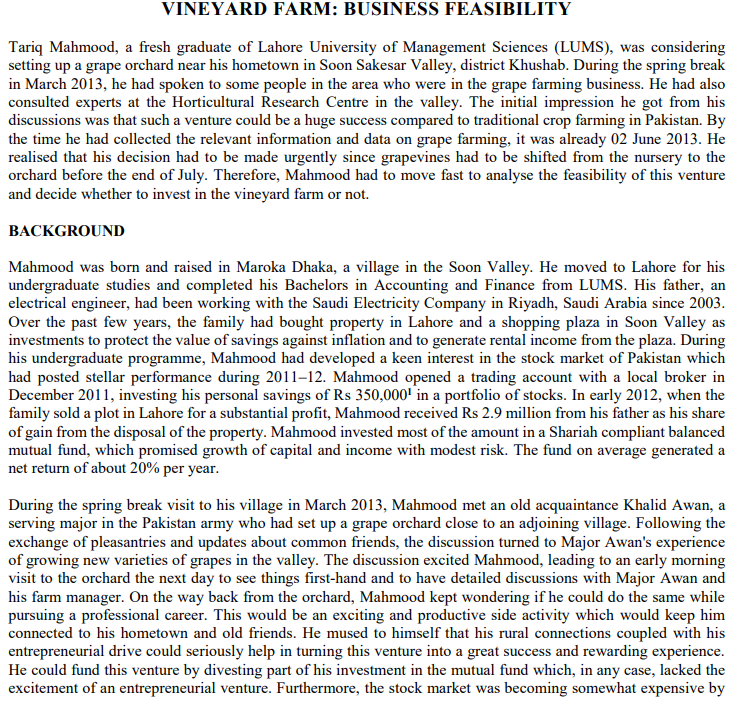
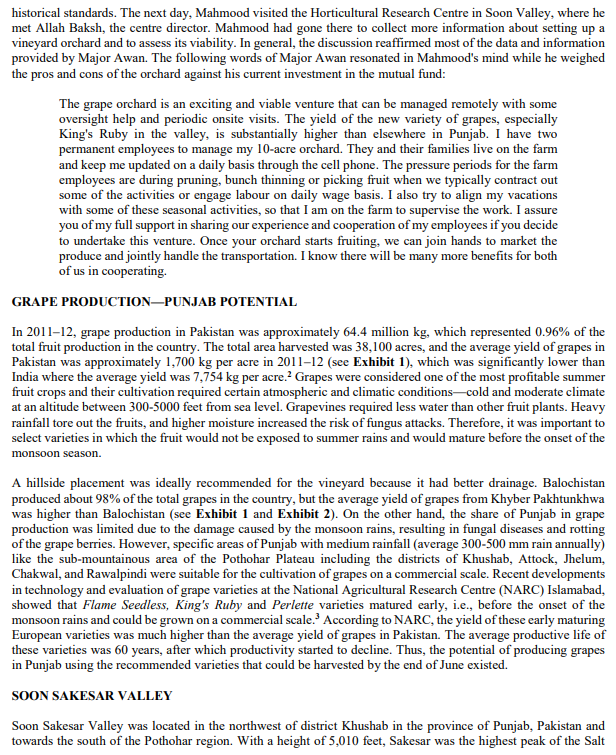
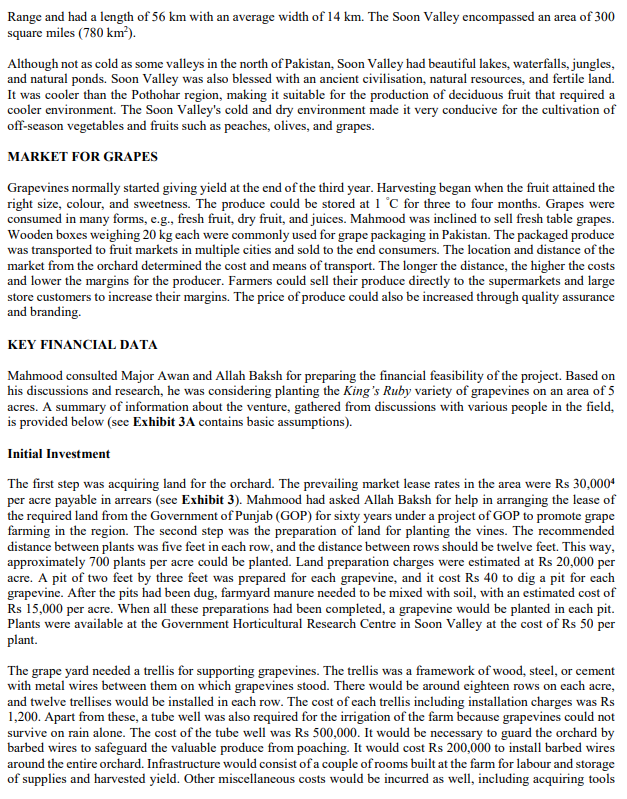
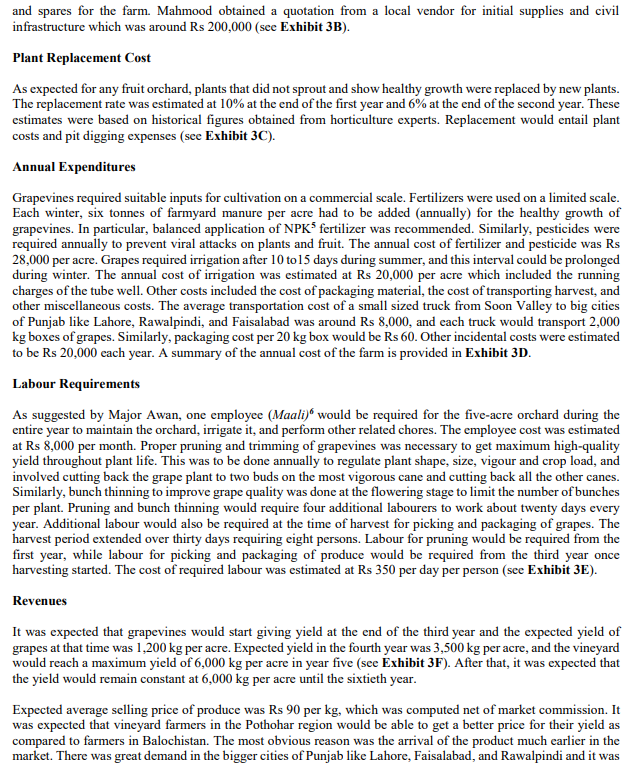
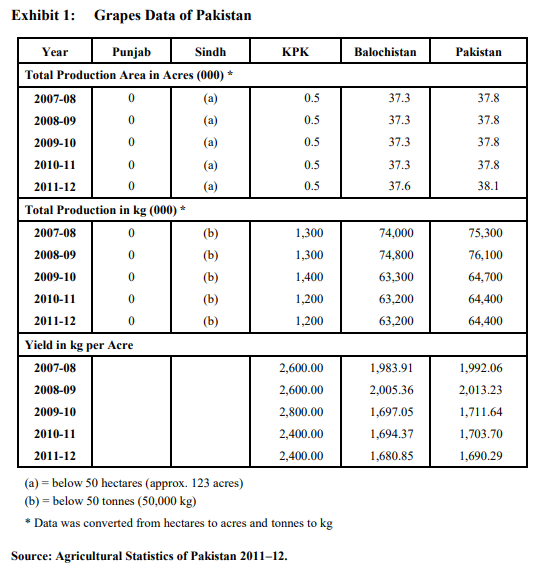
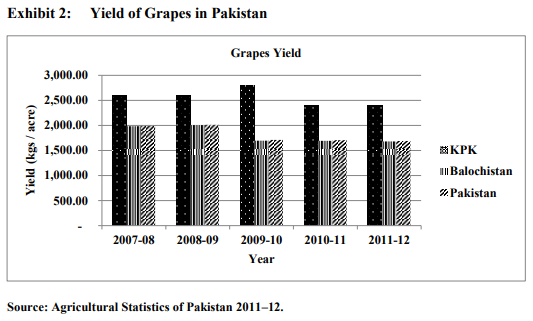
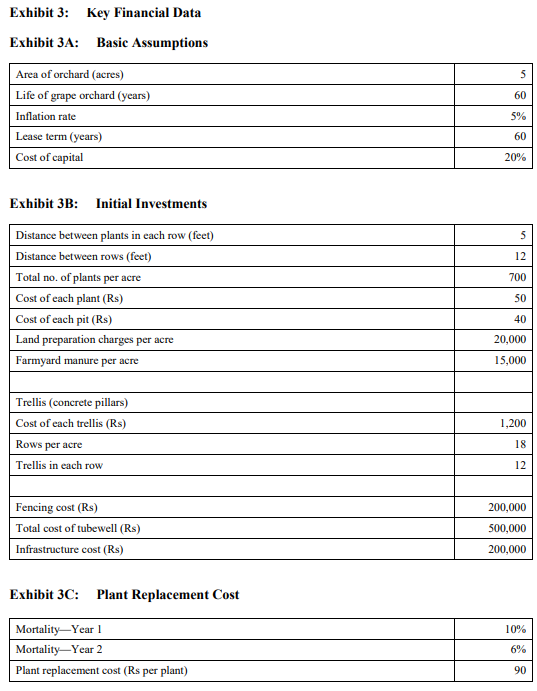
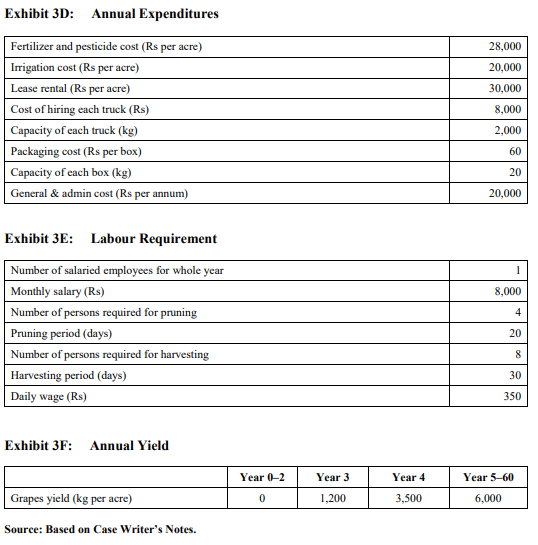
Tariq Mahmood, a fresh graduate of Lahore University of Management Sciences (LUMS), was considering setting up a grape orchard near his hometown in Soon Sakesar Valley, district Khushab. During the spring break in March 2013, he had spoken to some people in the area who were in the grape farming business. He had also consulted experts at the Horticultural Research Centre in the valley. The initial impression he got from his discussions was that such a venture could be a huge success compared to traditional crop farming in Pakistan. By the time he had collected the relevant information and data on grape farming, it was already 02 June 2013. He realised that his decision had to be made urgently since grapevines had to be shifted from the nursery to the orchard before the end of July. Therefore, Mahmood had to move fast to analyse the feasibility of this venture and decide whether to invest in the vineyard farm or not. BACKGROUND Mahmood was born and raised in Maroka Dhaka, a village in the Soon Valley. He moved to Lahore for his undergraduate studies and completed his Bachelors in Accounting and Finance from LUMS. His father, an electrical engineer, had been working with the Saudi Electricity Company in Riyadh, Saudi Arabia since 2003. Over the past few years, the family had bought property in Lahore and a shopping plaza in Soon Valley as investments to protect the value of savings against inflation and to generate rental income from the plaza. During his undergraduate programme, Mahmood had developed a keen interest in the stock market of Pakistan which had posted stellar performance during 2011-12. Mahmood opened a trading account with a local broker in December 2011, investing his personal savings of Rs 350,0001 in a portfolio of stocks. In early 2012 , when the family sold a plot in Lahore for a substantial profit, Mahmood received Rs 2.9 million from his father as his share of gain from the disposal of the property. Mahmood invested most of the amount in a Shariah compliant balanced mutual fund, which promised growth of capital and income with modest risk. The fund on average generated a net return of about 20% per year. During the spring break visit to his village in March 2013, Mahmood met an old acquaintance Khalid Awan, a serving major in the Pakistan army who had set up a grape orchard close to an adjoining village. Following the exchange of pleasantries and updates about common friends, the discussion turned to Major Awan's experience of growing new varieties of grapes in the valley. The discussion excited Mahmood, leading to an early morning visit to the orchard the next day to see things first-hand and to have detailed discussions with Major Awan and his farm manager. On the way back from the orchard, Mahmood kept wondering if he could do the same while pursuing a professional career. This would be an exciting and productive side activity which would keep him connected to his hometown and old friends. He mused to himself that his rural connections coupled with his entrepreneurial drive could seriously help in turning this venture into a great success and rewarding experience. He could fund this venture by divesting part of his investment in the mutual fund which, in any case, lacked the excitement of an entrepreneurial venture. Furthermore, the stock market was becoming somewhat expensive by historical standards. The next day, Mahmood visited the Horticultural Research Centre in Soon Valley, where he met Allah Baksh, the centre director. Mahmood had gone there to collect more information about setting up a vineyard orchard and to assess its viability. In general, the discussion reaffirmed most of the data and information provided by Major Awan. The following words of Major Awan resonated in Mahmood's mind while he weighed the pros and cons of the orchard against his current investment in the mutual fund: The grape orchard is an exciting and viable venture that can be managed remotely with some oversight help and periodic onsite visits. The yield of the new variety of grapes, especially King's Ruby in the valley, is substantially higher than elsewhere in Punjab. I have two permanent employees to manage my 10-acre orchard. They and their families live on the farm and keep me updated on a daily basis through the cell phone. The pressure periods for the farm employees are during pruning, bunch thinning or picking fruit when we typically contract out some of the activities or engage labour on daily wage basis. I also try to align my vacations with some of these seasonal activities, so that I am on the farm to supervise the work. I assure you of my full support in sharing our experience and cooperation of my employees if you decide to undertake this venture. Once your orchard starts fruiting, we can join hands to market the produce and jointly handle the transportation. I know there will be many more benefits for both of us in cooperating. GRAPE PRODUCTION-PUNJAB POTENTIAL In 2011-12, grape production in Pakistan was approximately 64.4 million kg, which represented 0.96% of the total fruit production in the country. The total area harvested was 38,100 acres, and the average yield of grapes in Pakistan was approximately 1,700 kg per acre in 2011-12 (see Exhibit 1), which was significantly lower than India where the average yield was 7,754kg per acre. 2 Grapes were considered one of the most profitable summer fruit crops and their cultivation required certain atmospheric and climatic conditions-cold and moderate climate at an altitude between 300-5000 feet from sea level. Grapevines required less water than other fruit plants. Heavy rainfall tore out the fruits, and higher moisture increased the risk of fungus attacks. Therefore, it was important to select varieties in which the fruit would not be exposed to summer rains and would mature before the onset of the monsoon season. A hillside placement was ideally recommended for the vineyard because it had better drainage. Balochistan produced about 98% of the total grapes in the country, but the average yield of grapes from Khyber Pakhtunkhwa was higher than Balochistan (see Exhibit 1 and Exhibit 2). On the other hand, the share of Punjab in grape production was limited due to the damage caused by the monsoon rains, resulting in fungal diseases and rotting of the grape berries. However, specific areas of Punjab with medium rainfall (average 300500mm rain annually) like the sub-mountainous area of the Pothohar Plateau including the districts of Khushab, Attock, Jhelum, Chakwal, and Rawalpindi were suitable for the cultivation of grapes on a commercial scale. Recent developments in technology and evaluation of grape varieties at the National Agricultural Research Centre (NARC) Islamabad, showed that Flame Seedless, King's Ruby and Perlette varieties matured early, i.e., before the onset of the monsoon rains and could be grown on a commercial scale. 3 According to NARC, the yield of these early maturing European varieties was much higher than the average yield of grapes in Pakistan. The average productive life of these varieties was 60 years, after which productivity started to decline. Thus, the potential of producing grapes in Punjab using the recommended varieties that could be harvested by the end of June existed. SOON SAKESAR VALLEY Soon Sakesar Valley was located in the northwest of district Khushab in the province of Punjab, Pakistan and towards the south of the Pothohar region. With a height of 5,010 feet, Sakesar was the highest peak of the Salt Range and had a length of 56km with an average width of 14km. The Soon Valley encompassed an area of 300 square miles (780km2). Although not as cold as some valleys in the north of Pakistan, Soon Valley had beautiful lakes, waterfalls, jungles, and natural ponds. Soon Valley was also blessed with an ancient civilisation, natural resources, and fertile land. It was cooler than the Pothohar region, making it suitable for the production of deciduous fruit that required a cooler environment. The Soon Valley's cold and dry environment made it very conducive for the cultivation of off-season vegetables and fruits such as peaches, olives, and grapes. MARKET FOR GRAPES Grapevines normally started giving yield at the end of the third year. Harvesting began when the fruit attained the right size, colour, and sweetness. The produce could be stored at 1C for three to four months. Grapes were consumed in many forms, e.g., fresh fruit, dry fruit, and juices. Mahmood was inclined to sell fresh table grapes. Wooden boxes weighing 20kg each were commonly used for grape packaging in Pakistan. The packaged produce was transported to fruit markets in multiple cities and sold to the end consumers. The location and distance of the market from the orchard determined the cost and means of transport. The longer the distance, the higher the costs and lower the margins for the producer. Farmers could sell their produce directly to the supermarkets and large store customers to increase their margins. The price of produce could also be increased through quality assurance and branding. KEY FINANCIAL DATA Mahmood consulted Major Awan and Allah Baksh for preparing the financial feasibility of the project. Based on his discussions and research, he was considering planting the King's Ruby variety of grapevines on an area of 5 acres. A summary of information about the venture, gathered from discussions with various people in the field, is provided below (see Exhibit 3A contains basic assumptions). Initial Investment The first step was acquiring land for the orchard. The prevailing market lease rates in the area were Rs 30,0004 per acre payable in arrears (see Exhibit 3). Mahmood had asked Allah Baksh for help in arranging the lease of the required land from the Government of Punjab (GOP) for sixty years under a project of GOP to promote grape farming in the region. The second step was the preparation of land for planting the vines. The recommended distance between plants was five feet in each row, and the distance between rows should be twelve feet. This way, approximately 700 plants per acre could be planted. Land preparation charges were estimated at Rs 20,000 per acre. A pit of two feet by three feet was prepared for each grapevine, and it cost Rs 40 to dig a pit for each grapevine. After the pits had been dug, farmyard manure needed to be mixed with soil, with an estimated cost of Rs 15,000 per acre. When all these preparations had been completed, a grapevine would be planted in each pit. Plants were available at the Government Horticultural Research Centre in Soon Valley at the cost of Rs 50 per plant. The grape yard needed a trellis for supporting grapevines. The trellis was a framework of wood, steel, or cement with metal wires between them on which grapevines stood. There would be around eighteen rows on each acre, and twelve trellises would be installed in each row. The cost of each trellis including installation charges was Rs 1,200. Apart from these, a tube well was also required for the irrigation of the farm because grapevines could not survive on rain alone. The cost of the tube well was Rs 500,000 . It would be necessary to guard the orchard by barbed wires to safeguard the valuable produce from poaching. It would cost Rs 200,000 to install barbed wires around the entire orchard. Infrastructure would consist of a couple of rooms built at the farm for labour and storage of supplies and harvested yield. Other miscellaneous costs would be incurred as well, including acquiring tools and spares for the farm. Mahmood obtained a quotation from a local vendor for initial supplies and civil infrastructure which was around Rs 200,000 (see Exhibit 3B). Plant Replacement Cost As expected for any fruit orchard, plants that did not sprout and show healthy growth were replaced by new plants. The replacement rate was estimated at 10% at the end of the first year and 6% at the end of the second year. These estimates were based on historical figures obtained from horticulture experts. Replacement would entail plant costs and pit digging expenses (see Exhibit 3C). Annual Expenditures Grapevines required suitable inputs for cultivation on a commercial scale. Fertilizers were used on a limited scale. Each winter, six tonnes of farmyard manure per acre had to be added (annually) for the healthy growth of grapevines. In particular, balanced application of NPK5 fertilizer was recommended. Similarly, pesticides were required annually to prevent viral attacks on plants and fruit. The annual cost of fertilizer and pesticide was Rs 28,000 per acre. Grapes required irrigation after 10 to 15 days during summer, and this interval could be prolonged during winter. The annual cost of irrigation was estimated at Rs 20,000 per acre which included the running charges of the tube well. Other costs included the cost of packaging material, the cost of transporting harvest, and other miscellaneous costs. The average transportation cost of a small sized truck from Soon Valley to big cities of Punjab like Lahore, Rawalpindi, and Faisalabad was around Rs 8,000, and each truck would transport 2,000 kg boxes of grapes. Similarly, packaging cost per 20kg box would be Rs 60 . Other incidental costs were estimated to be Rs 20,000 each year. A summary of the annual cost of the farm is provided in Exhibit 3D. Labour Requirements As suggested by Major Awan, one employee (Maali) 6 would be required for the five-acre orchard during the entire year to maintain the orchard, irrigate it, and perform other related chores. The employee cost was estimated at Rs 8,000 per month. Proper pruning and trimming of grapevines was necessary to get maximum high-quality yield throughout plant life. This was to be done annually to regulate plant shape, size, vigour and crop load, and involved cutting back the grape plant to two buds on the most vigorous cane and cutting back all the other canes. Similarly, bunch thinning to improve grape quality was done at the flowering stage to limit the number of bunches per plant. Pruning and bunch thinning would require four additional labourers to work about twenty days every year. Additional labour would also be required at the time of harvest for picking and packaging of grapes. The harvest period extended over thirty days requiring eight persons. Labour for pruning would be required from the first year, while labour for picking and packaging of produce would be required from the third year once harvesting started. The cost of required labour was estimated at Rs 350 per day per person (see Exhibit 3E). Revenues It was expected that grapevines would start giving yield at the end of the third year and the expected yield of grapes at that time was 1,200kg per acre. Expected yield in the fourth year was 3,500kg per acre, and the vineyard would reach a maximum yield of 6,000 kg per acre in year five (see Exhibit 3F). After that, it was expected that the yield would remain constant at 6,000kg per acre until the sixtieth year. Expected average selling price of produce was Rs 90 per kg, which was computed net of market commission. It was expected that vineyard farmers in the Pothohar region would be able to get a better price for their yield as compared to farmers in Balochistan. The most obvious reason was the arrival of the product much earlier in the market. There was great demand in the bigger cities of Punjab like Lahore, Faisalabad, and Rawalpindi and it was number of intermediaries and improve farmer margins. Soon Sakesar Valley grapes were ready for the market early (June/July) as compared to the produce from Balochistan, which became available from August to October. Mahmood was planning to sell the vineyard produce in the form of fresh table grapes to benefit from high prevailing prices in June/July. THE DECISION Mahmood was excited about the venture but had apprehensions regarding his ability to give enough time to the orchard, once his new job started in August. Although Major Awan and Allah Baksh had assured him of their full support, remote monitoring, especially during the development stage, would be challenging. However, the apparent benefits (mostly qualitative and emotional) were far too many to forego this opportunity without a thorough financial analysis. Mahmood began piecing together the financial data to forecast cash flows of the project. To simplify the analysis, Mahmood assumed that all recurring cash flows occurred at the end of each year. Based on financial data available, should Mahmood invest in the vineyard farm or not? Exhibit 1: Grapes Data of Pakistan (a) = below 50 hectares (approx. 123 acres) (b) = below 50 tonnes (50,000kg) * Data was converted from hectares to acres and tonnes to kg Source: Agricultural Statistics of Pakistan 2011-12. Exhibit 2: Yield of Grapes in Pakistan Source: Agricultural Statistics of Pakistan 2011-12. Exhibit 3: Key Financial Data Exhibit 3A: Basic Assumptions Exhibit 3B: Initial Investments Exhibit 3C: Plant Replacement Cost Exhibit 3D: Annual Expenditures Exhibit 3E: Labour Requirement Exhibit 3F: Annual Yield Source: Based on Case Writer's Notes
Step by Step Solution
There are 3 Steps involved in it

Get step-by-step solutions from verified subject matter experts
 Study Help