







Question: Read the text in photos and answer the following question As in most areas of life and work, advances in information technology have focused attention
Read the text in photos and answer the following question
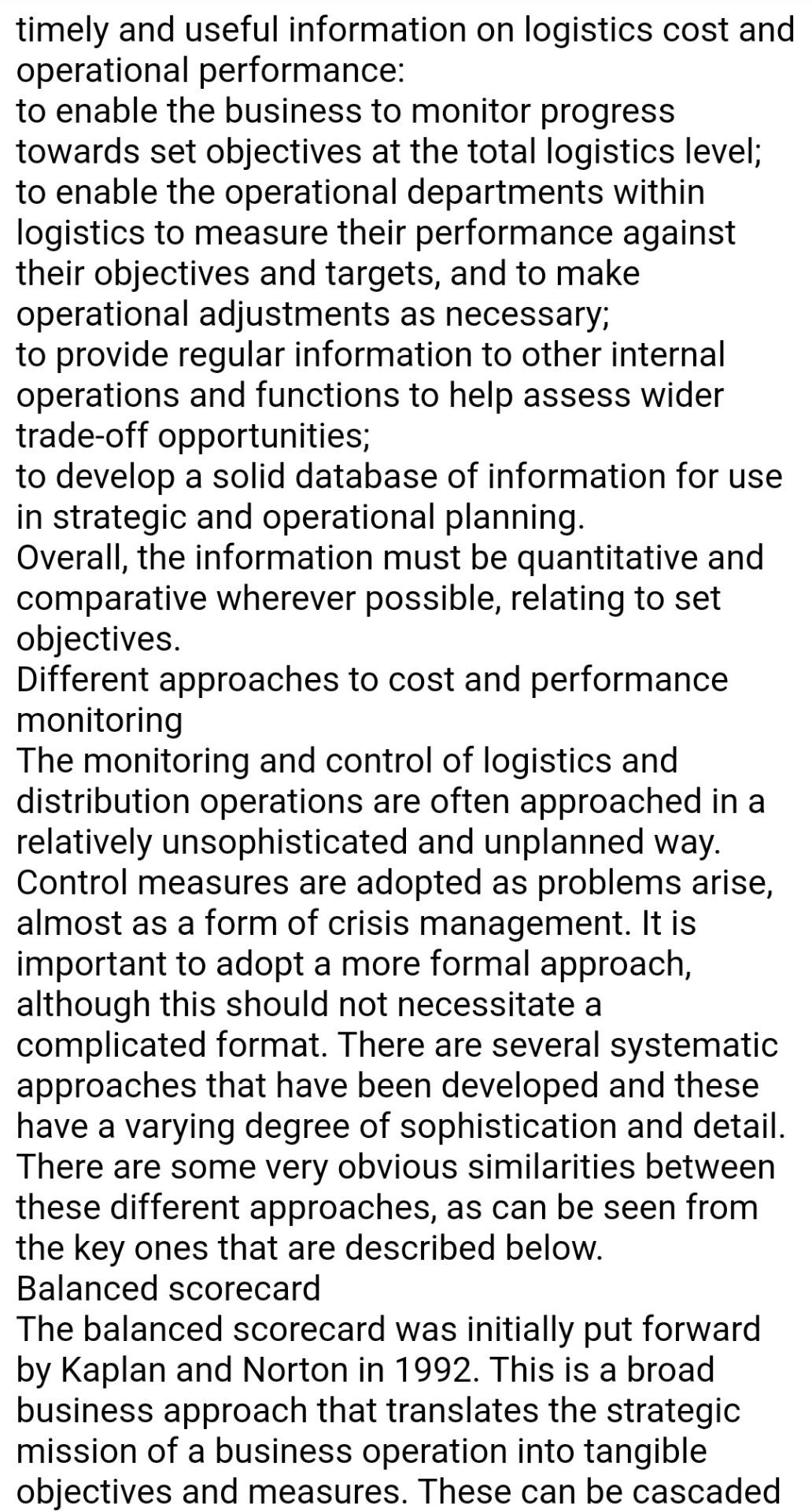
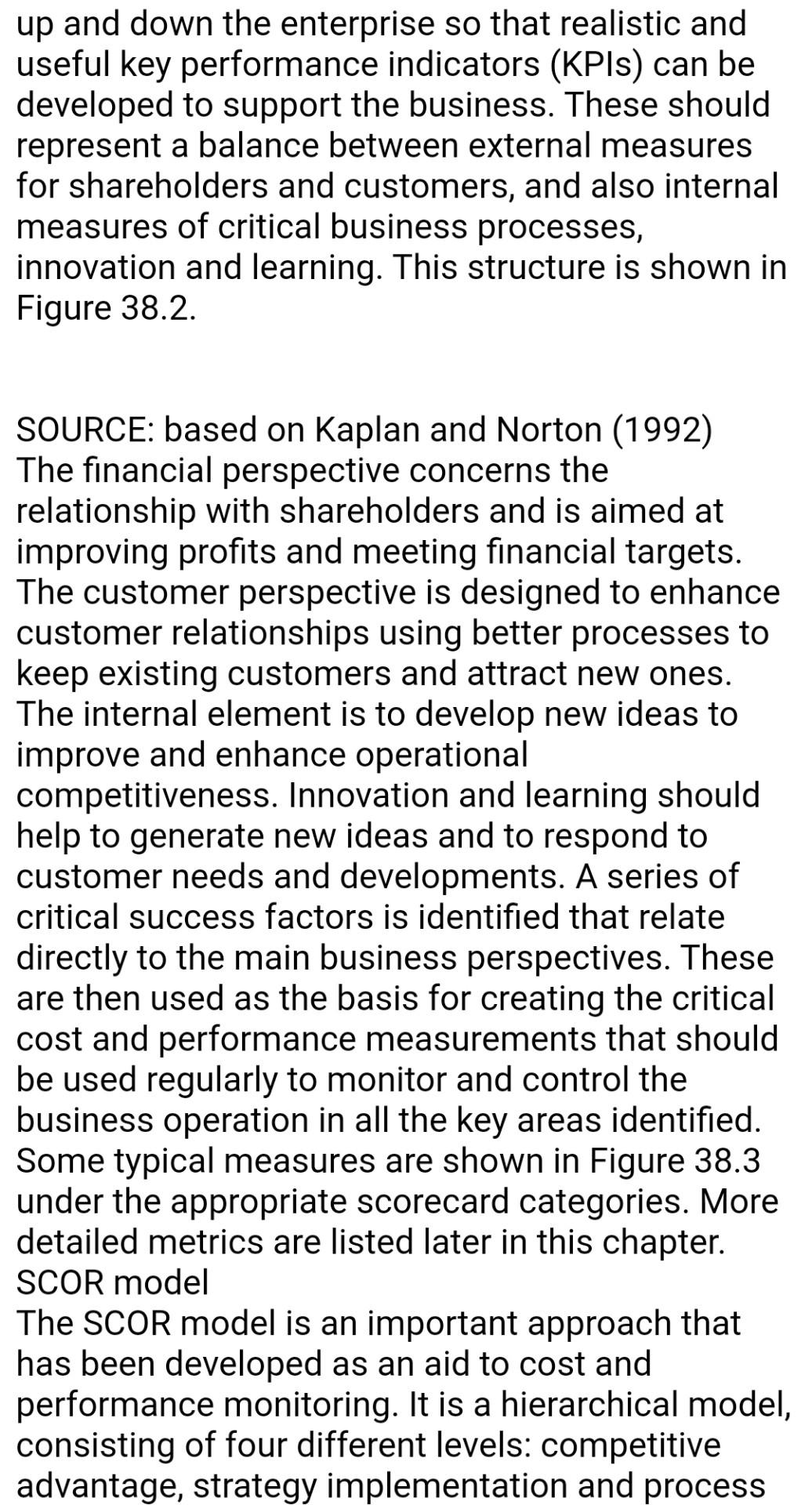
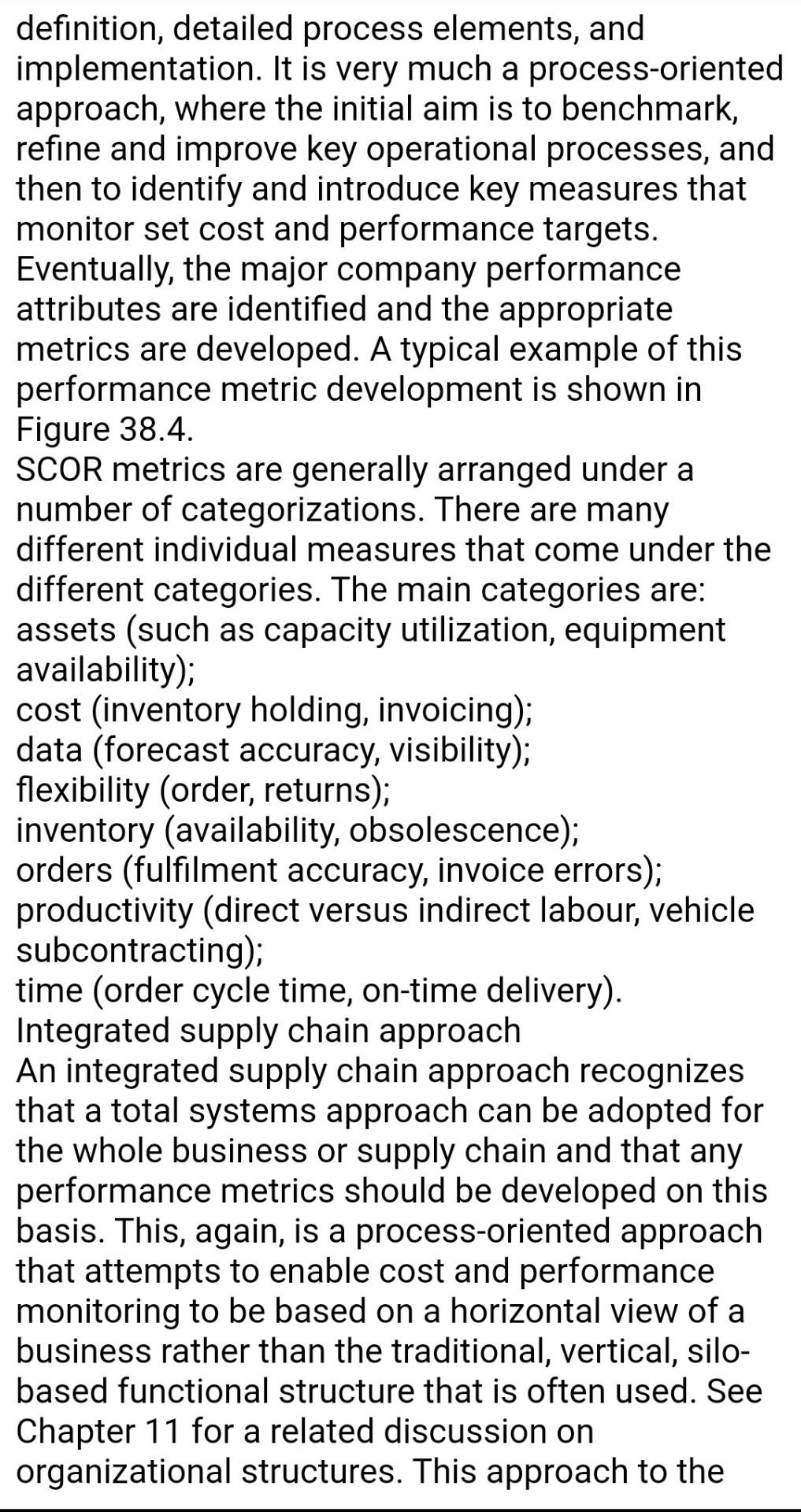
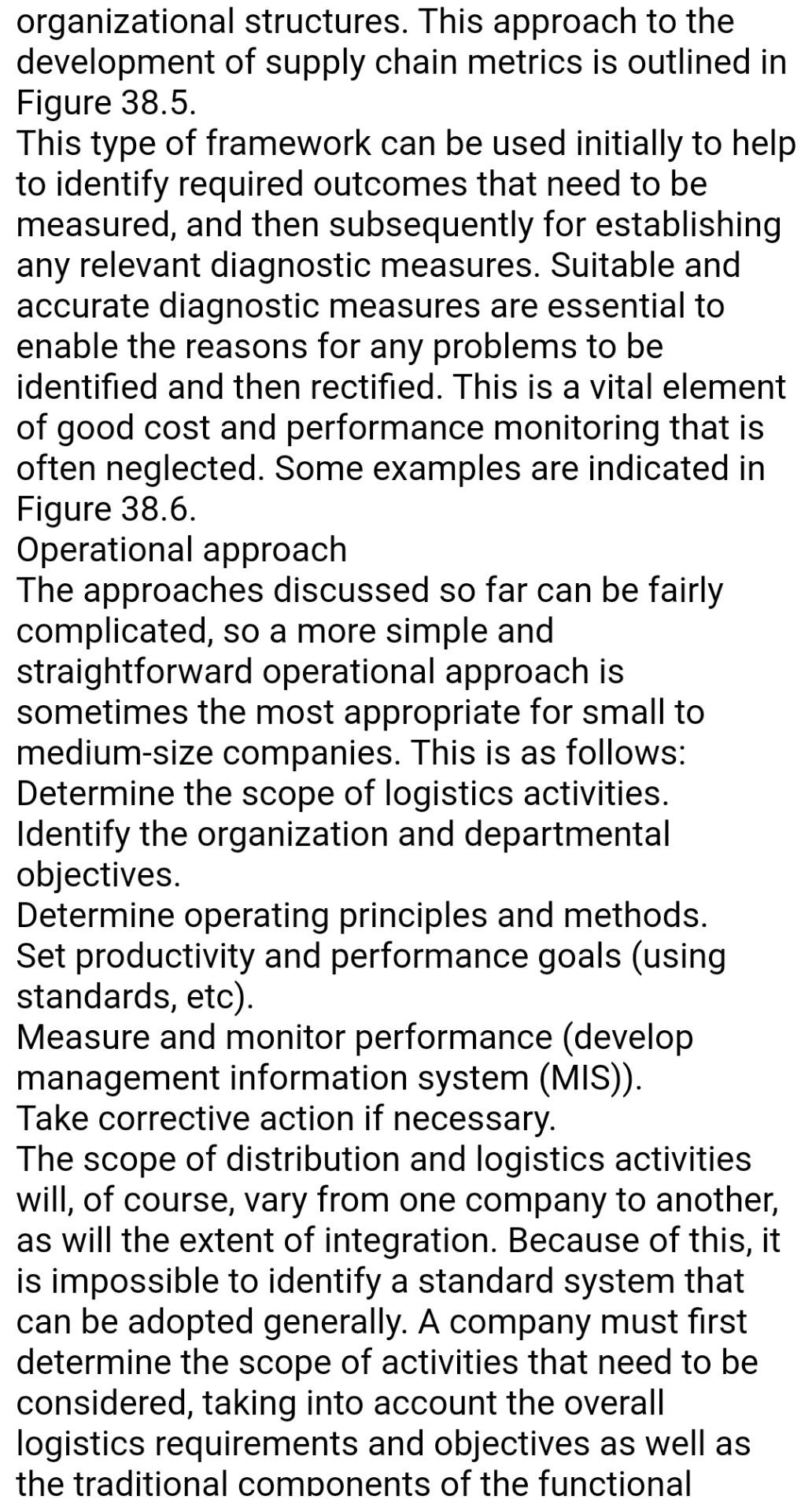
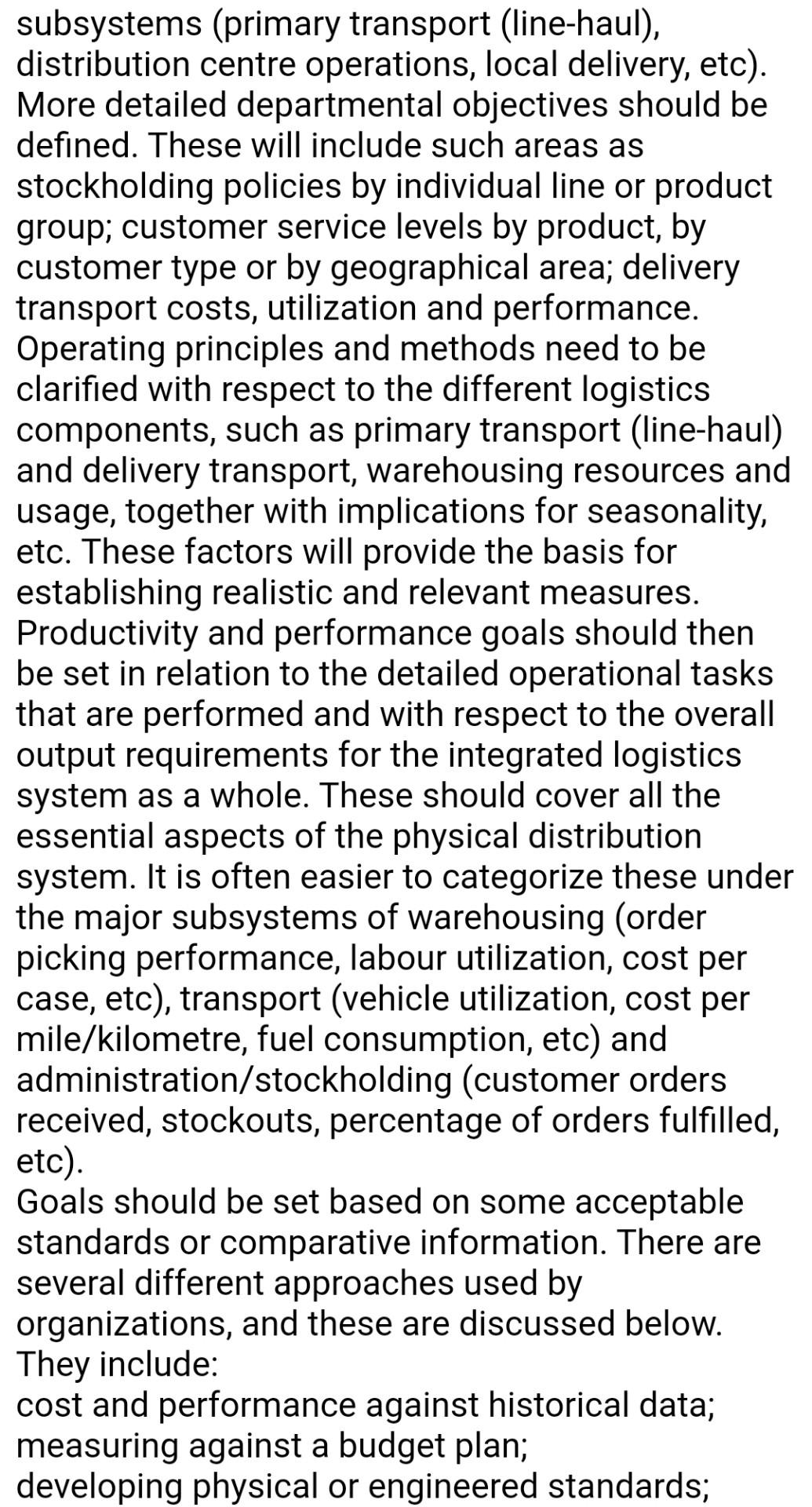
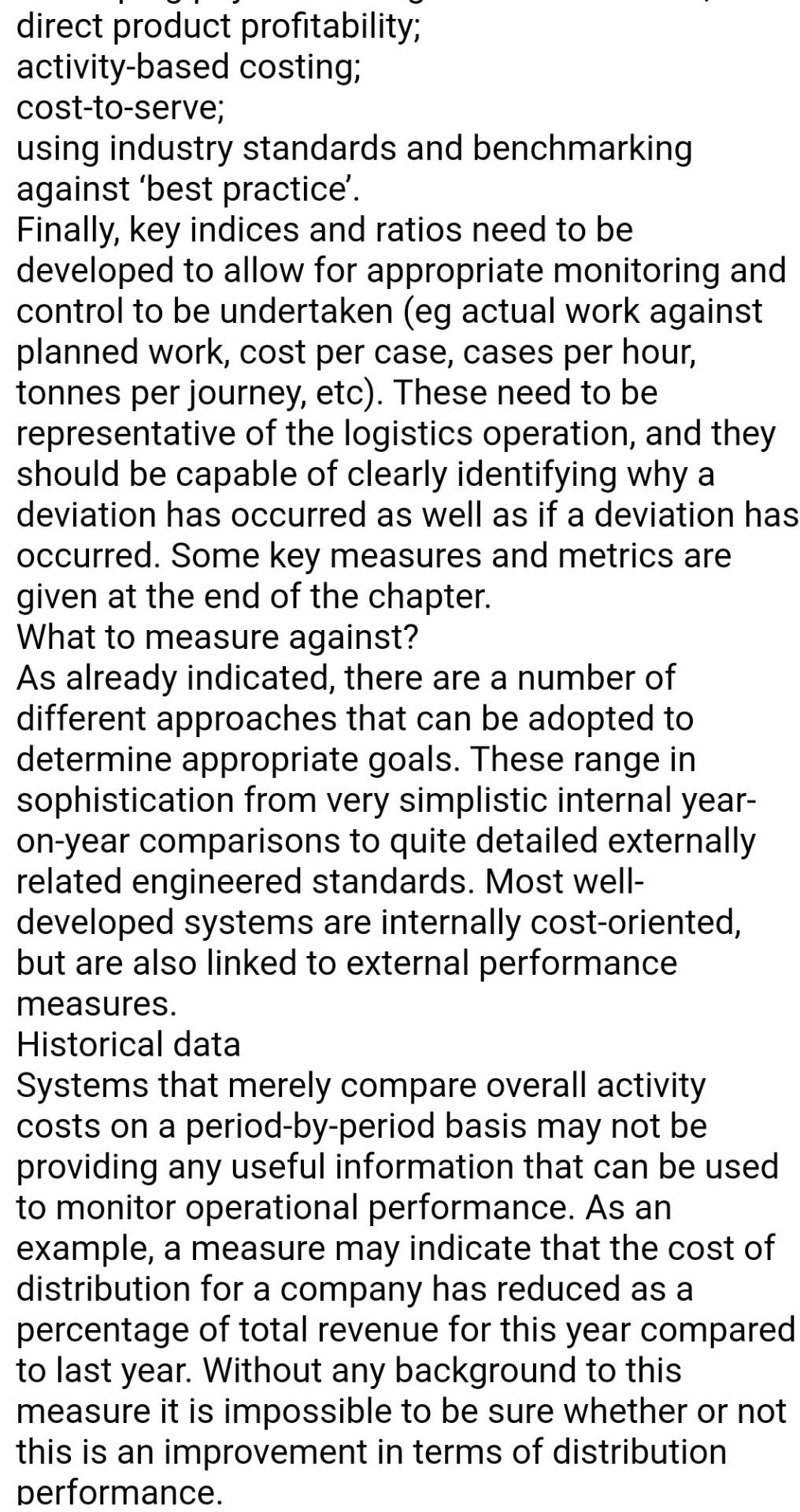
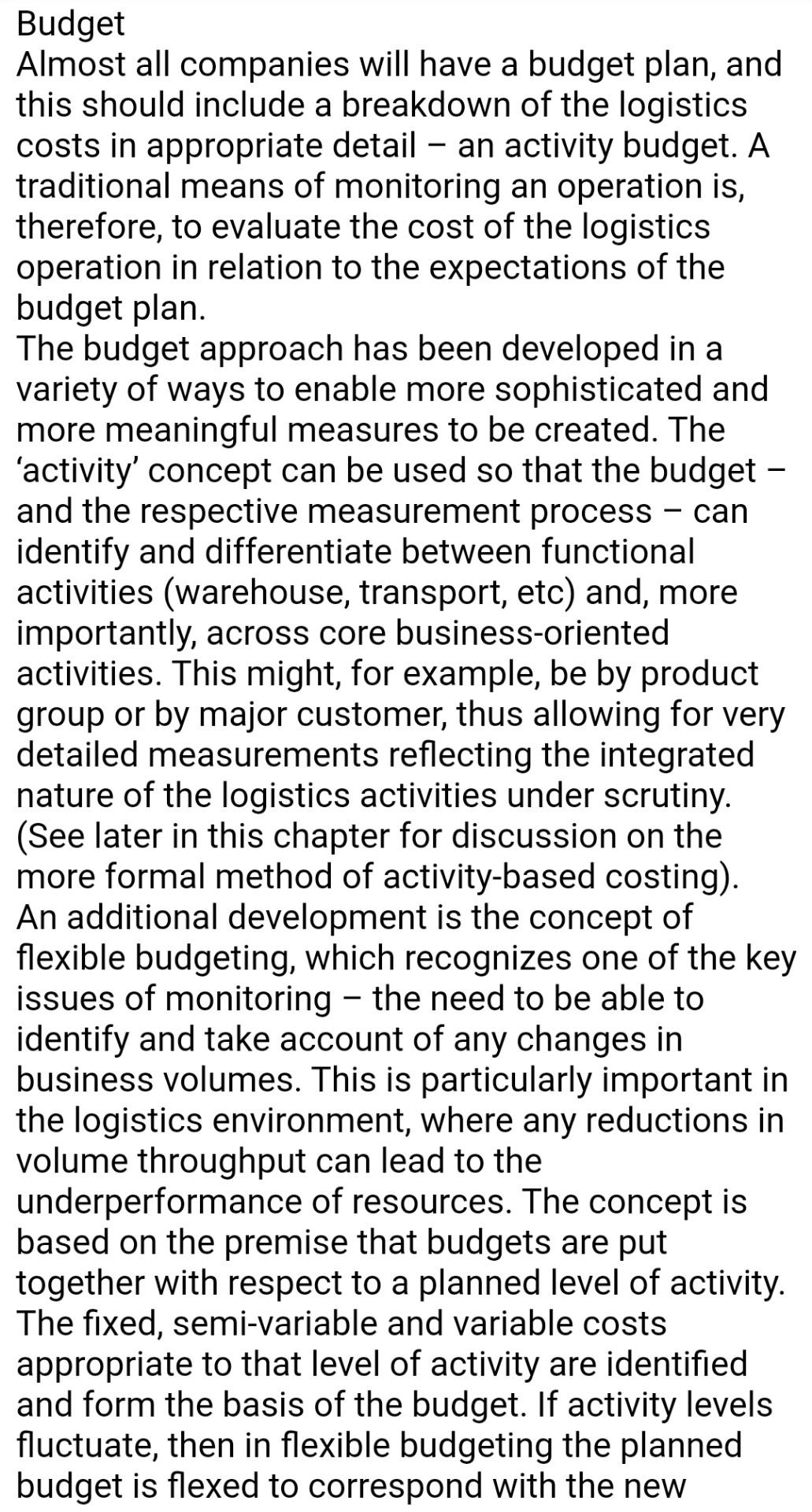
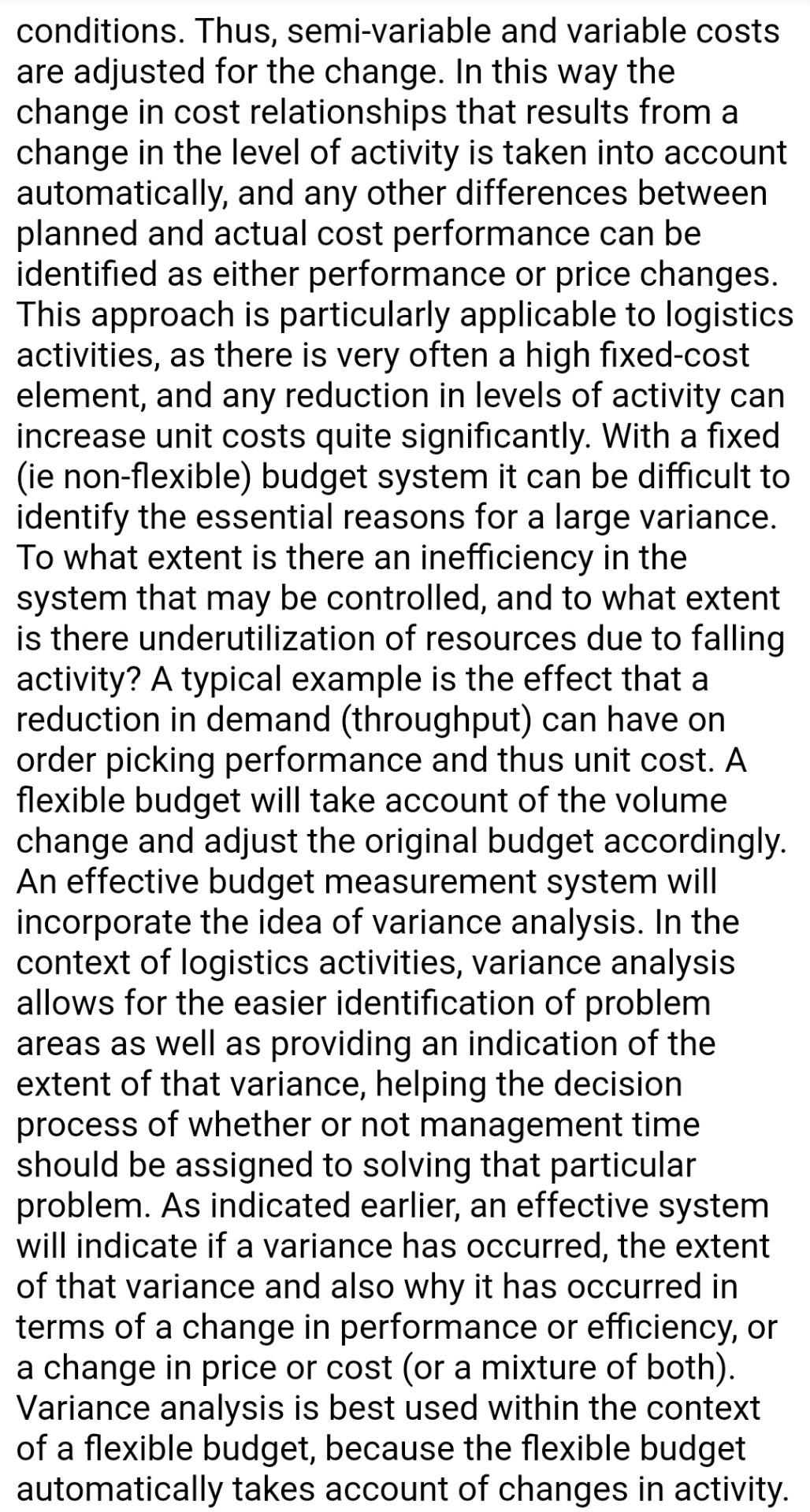
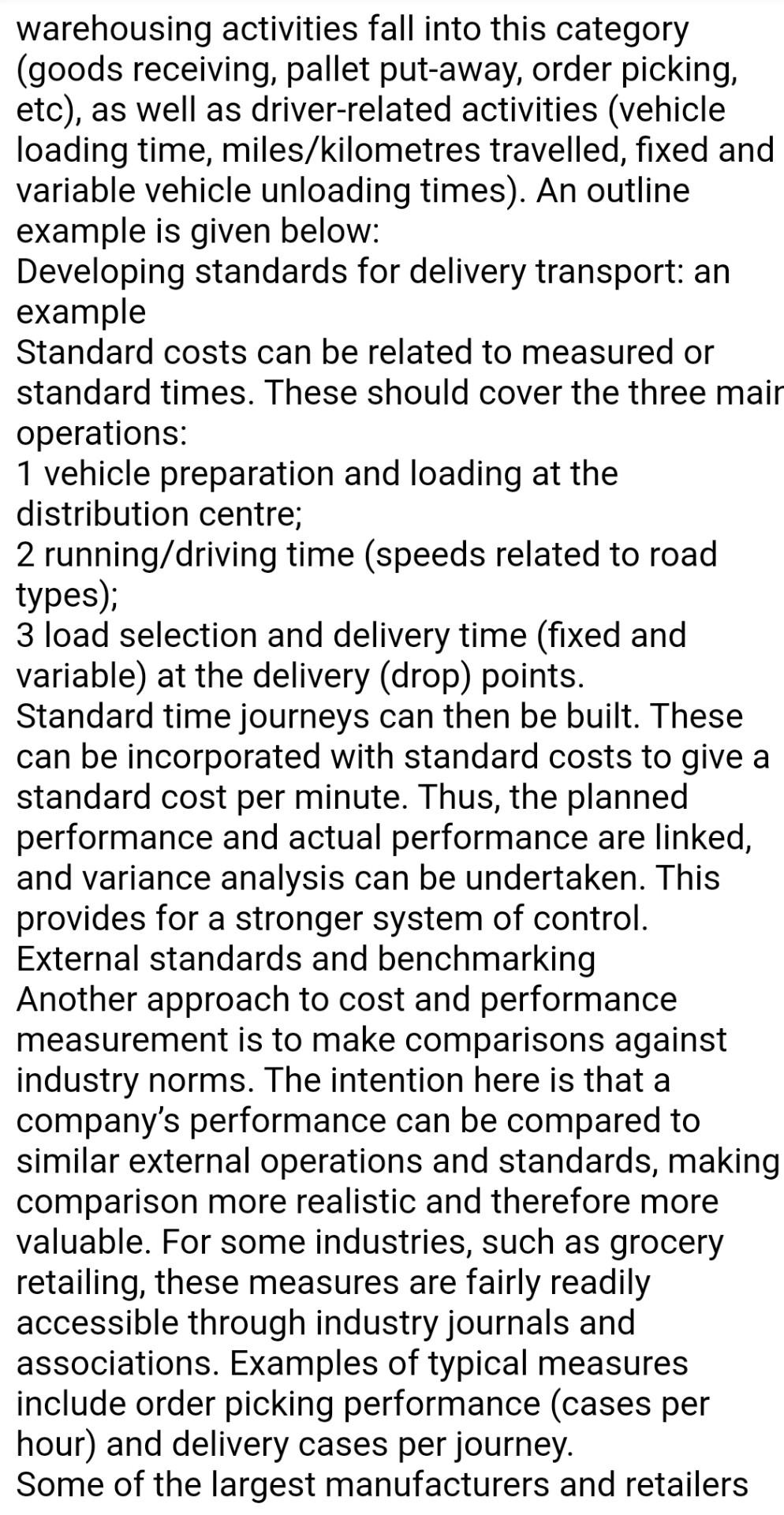
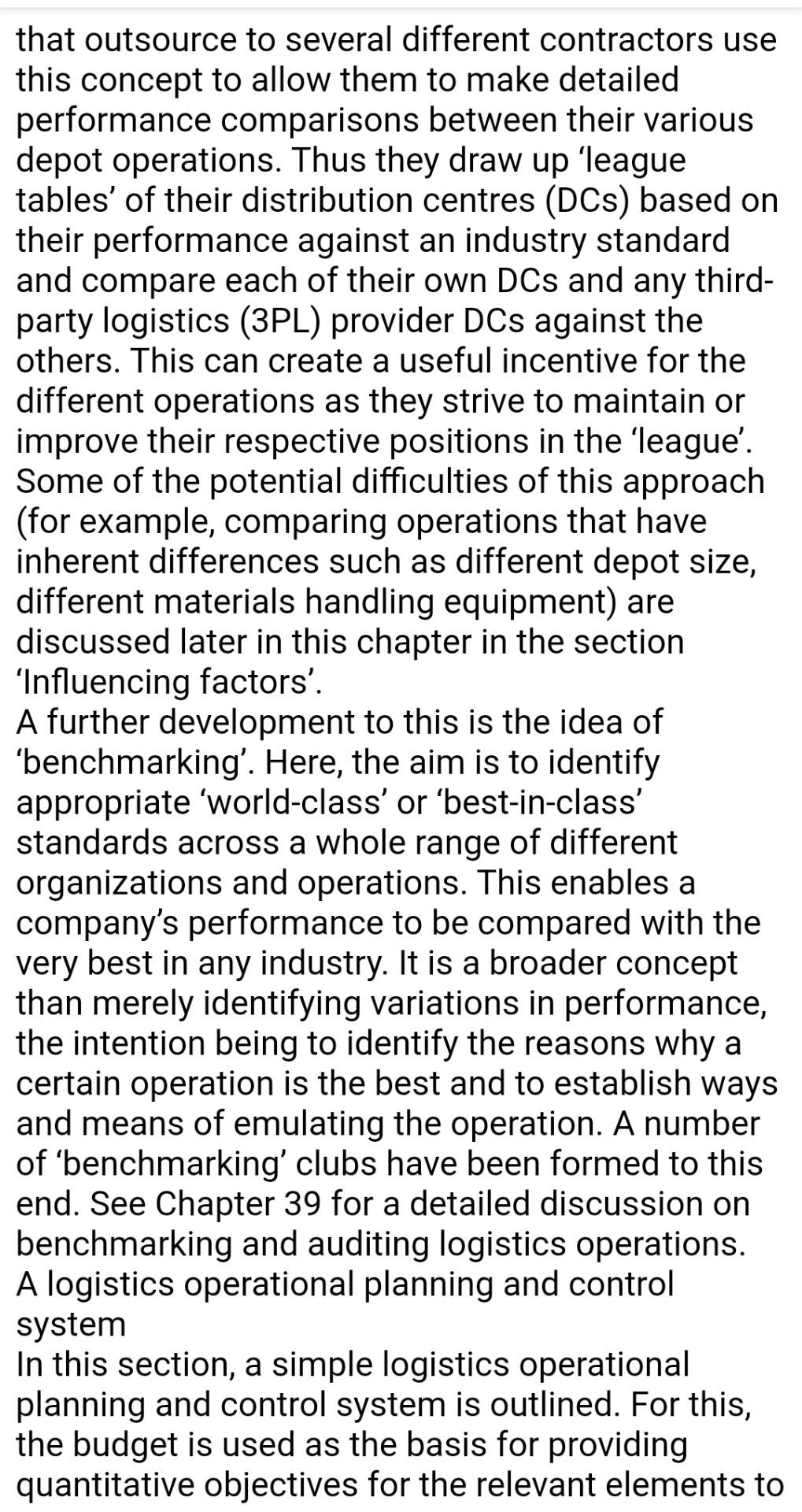
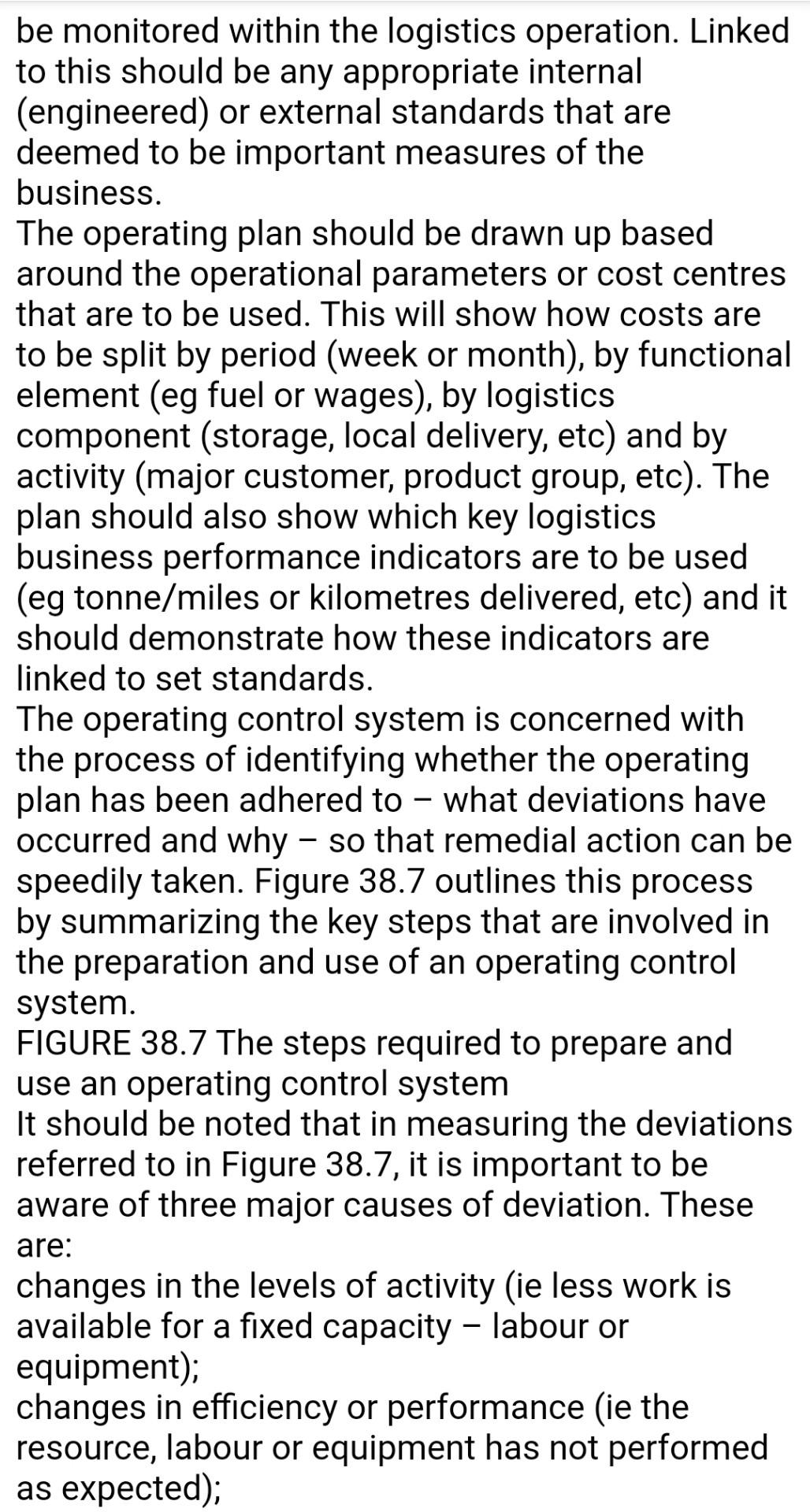
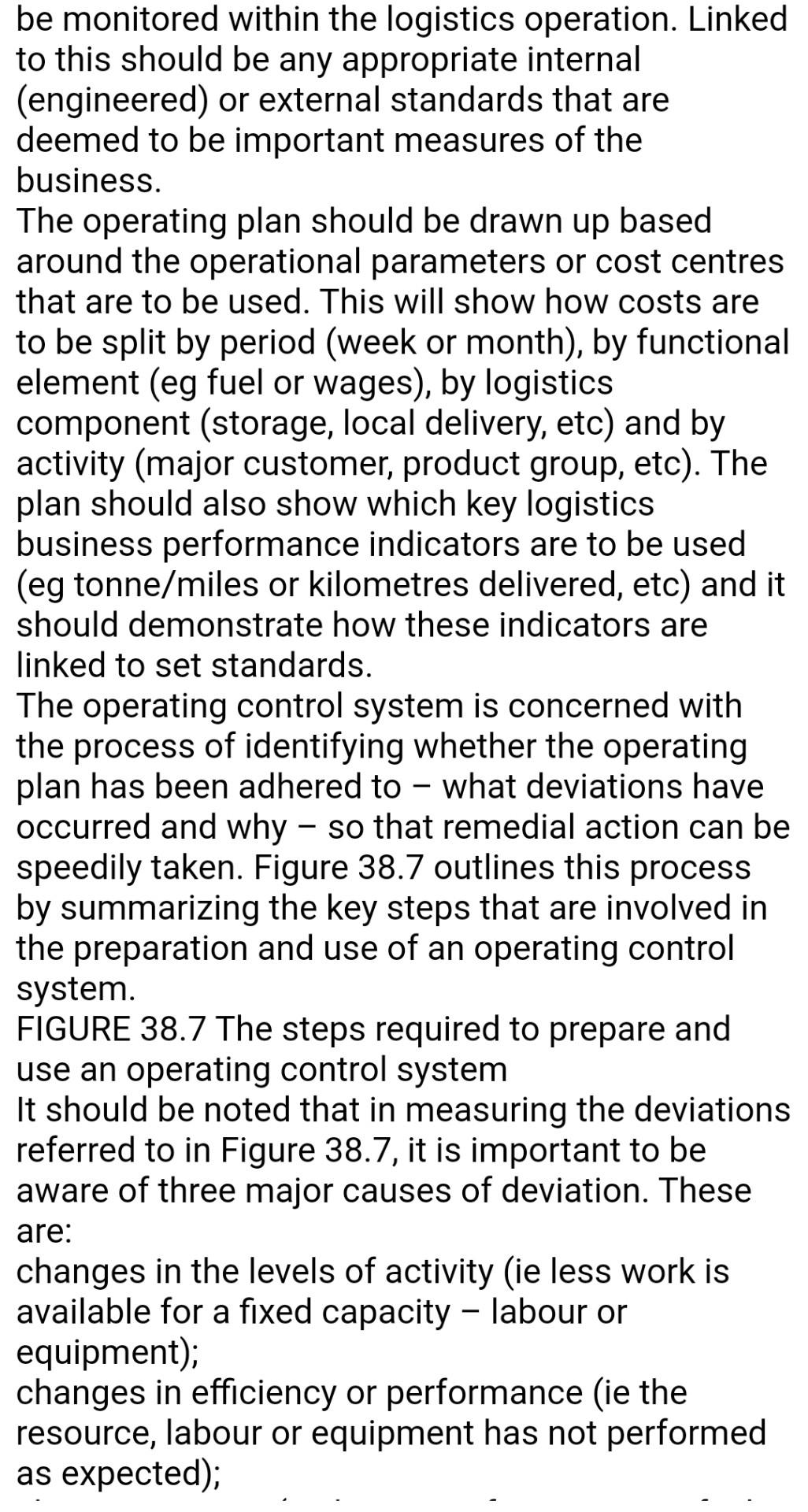
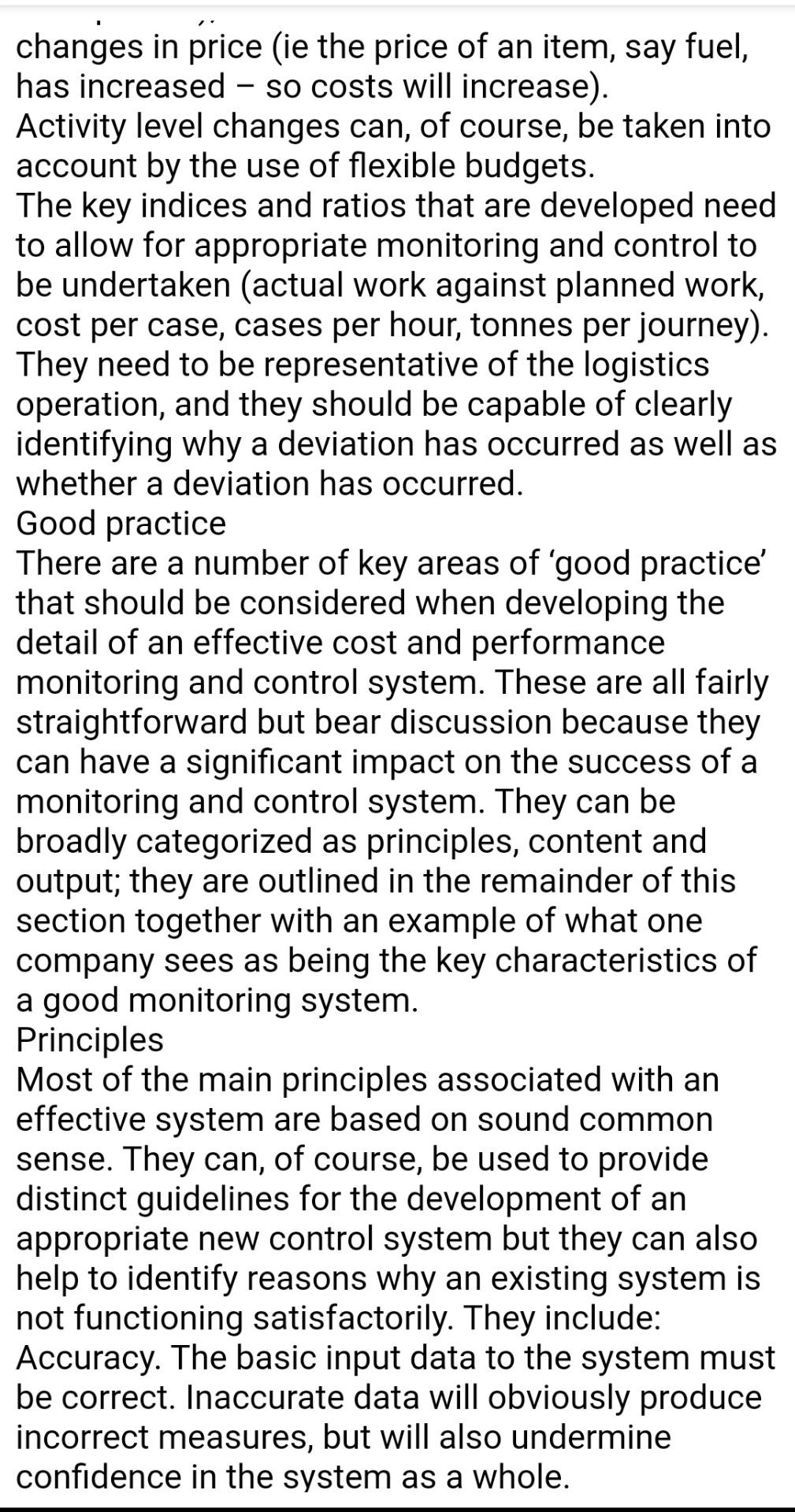
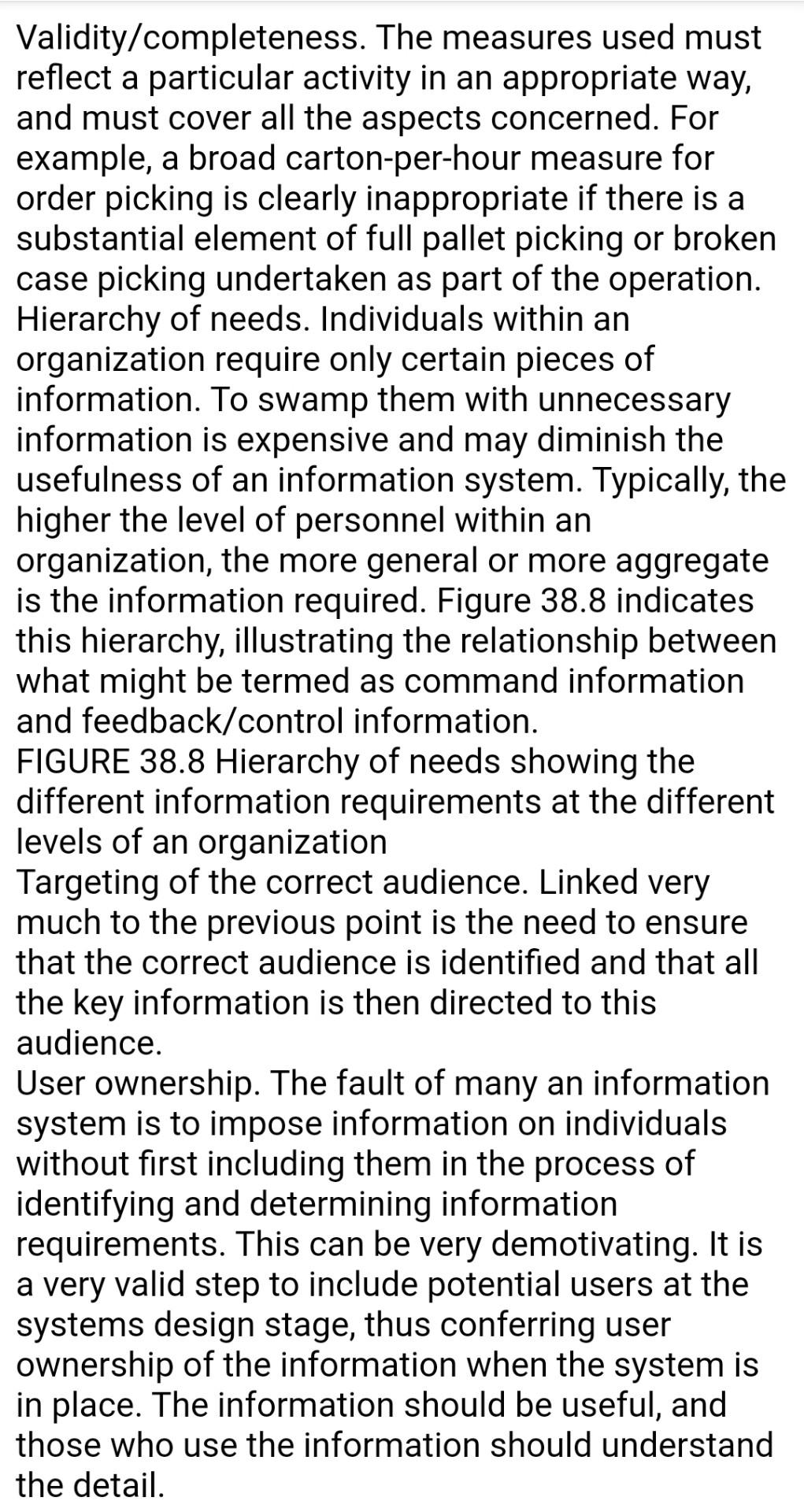
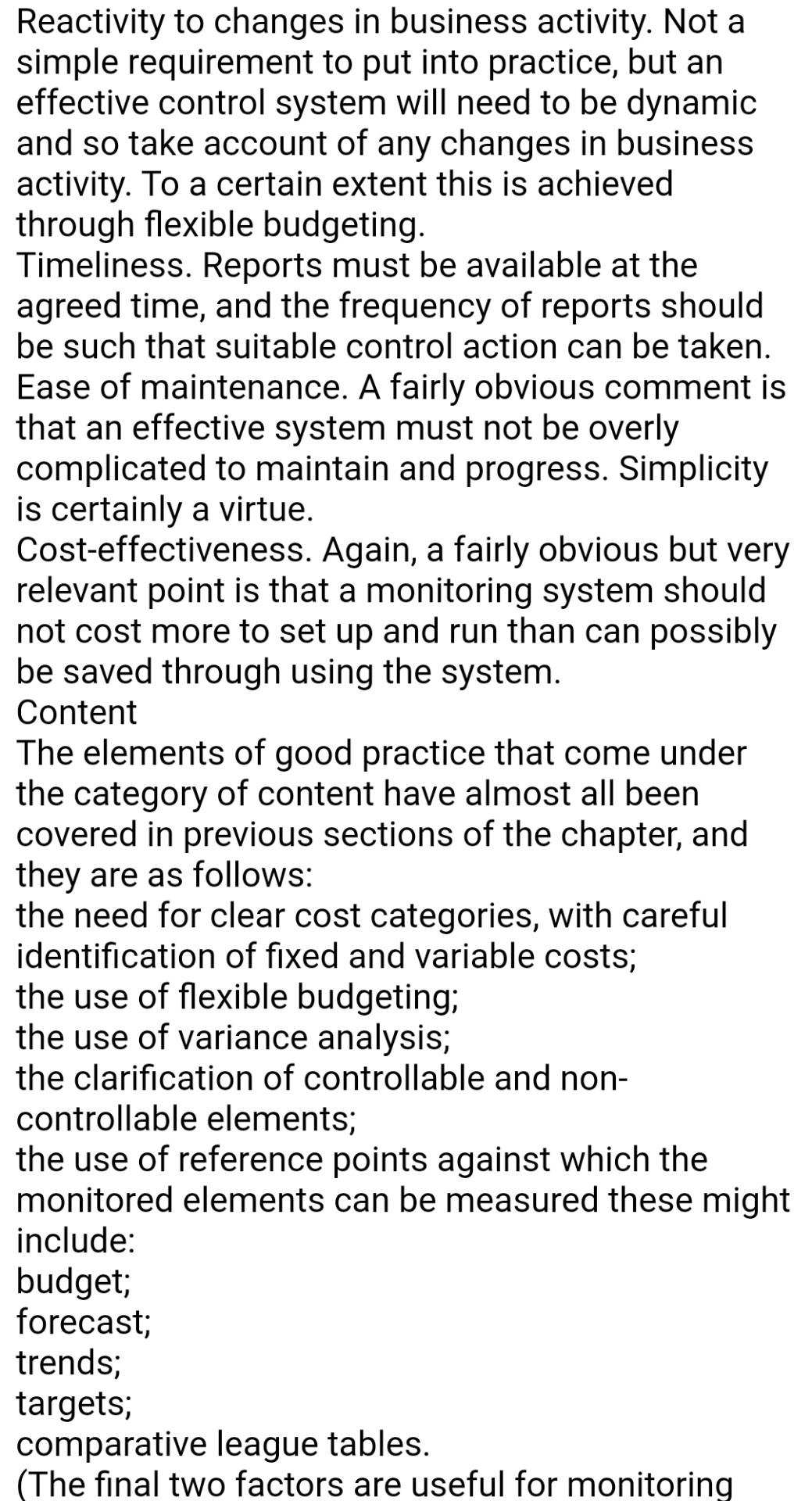
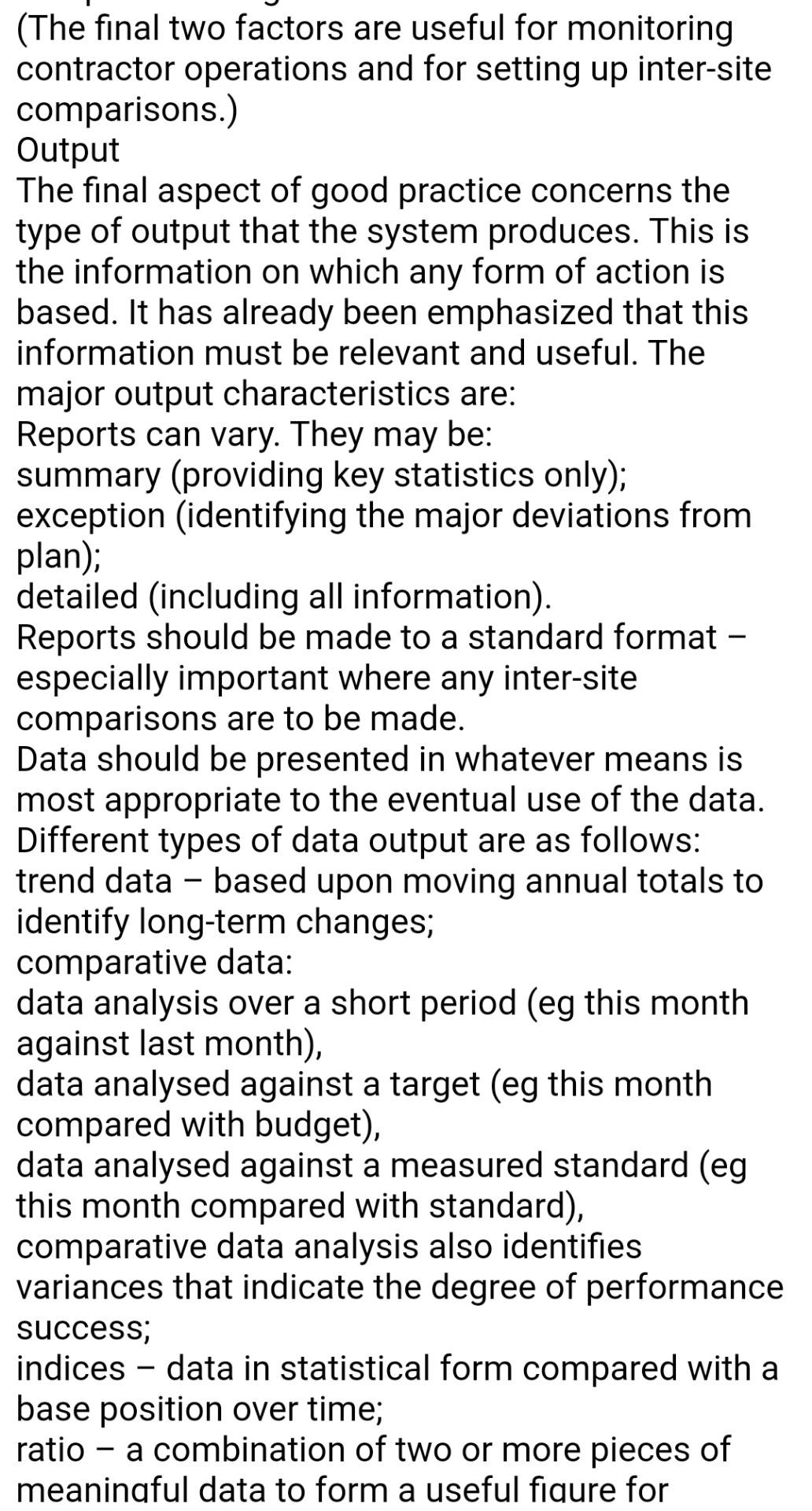
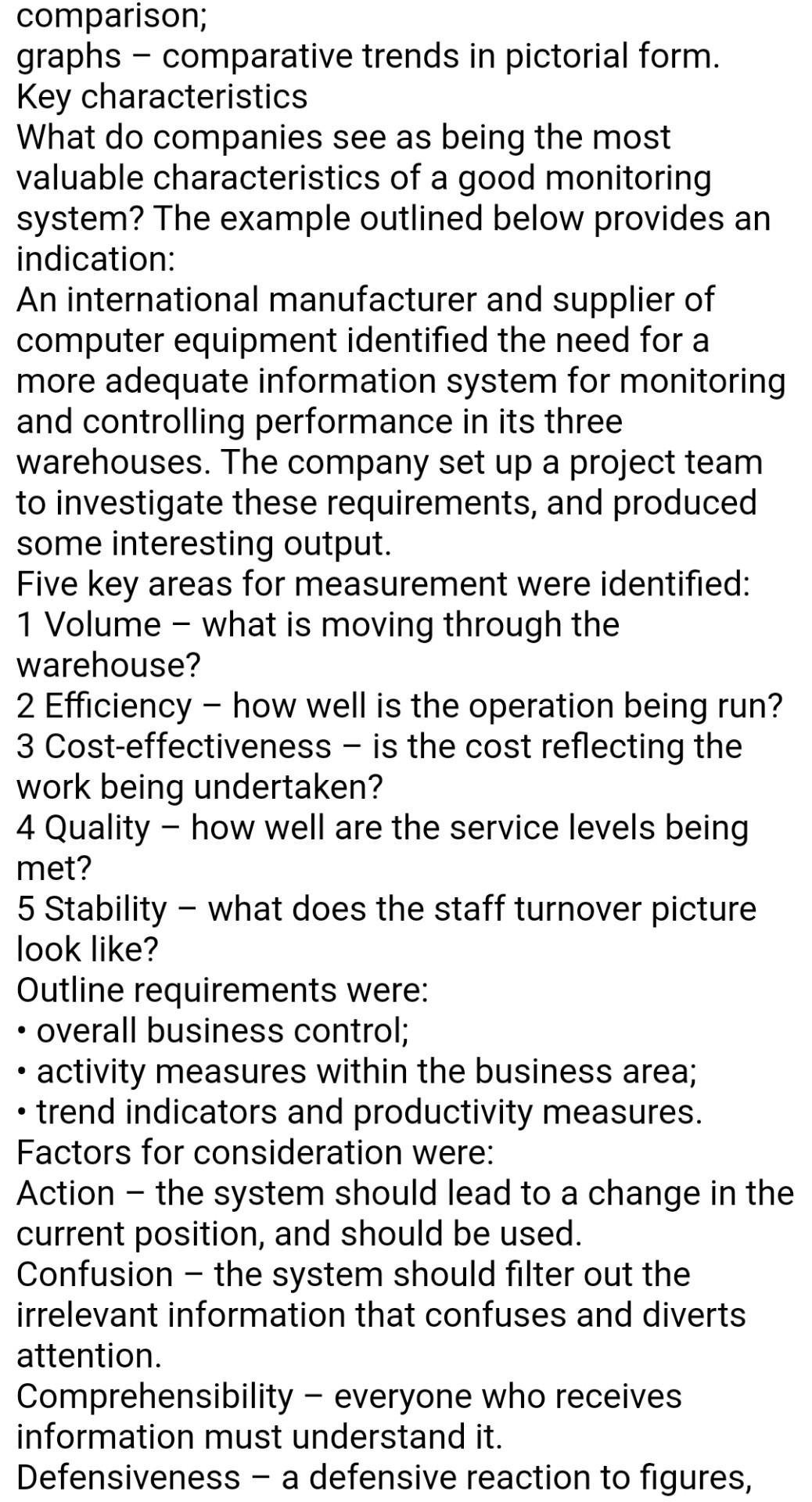
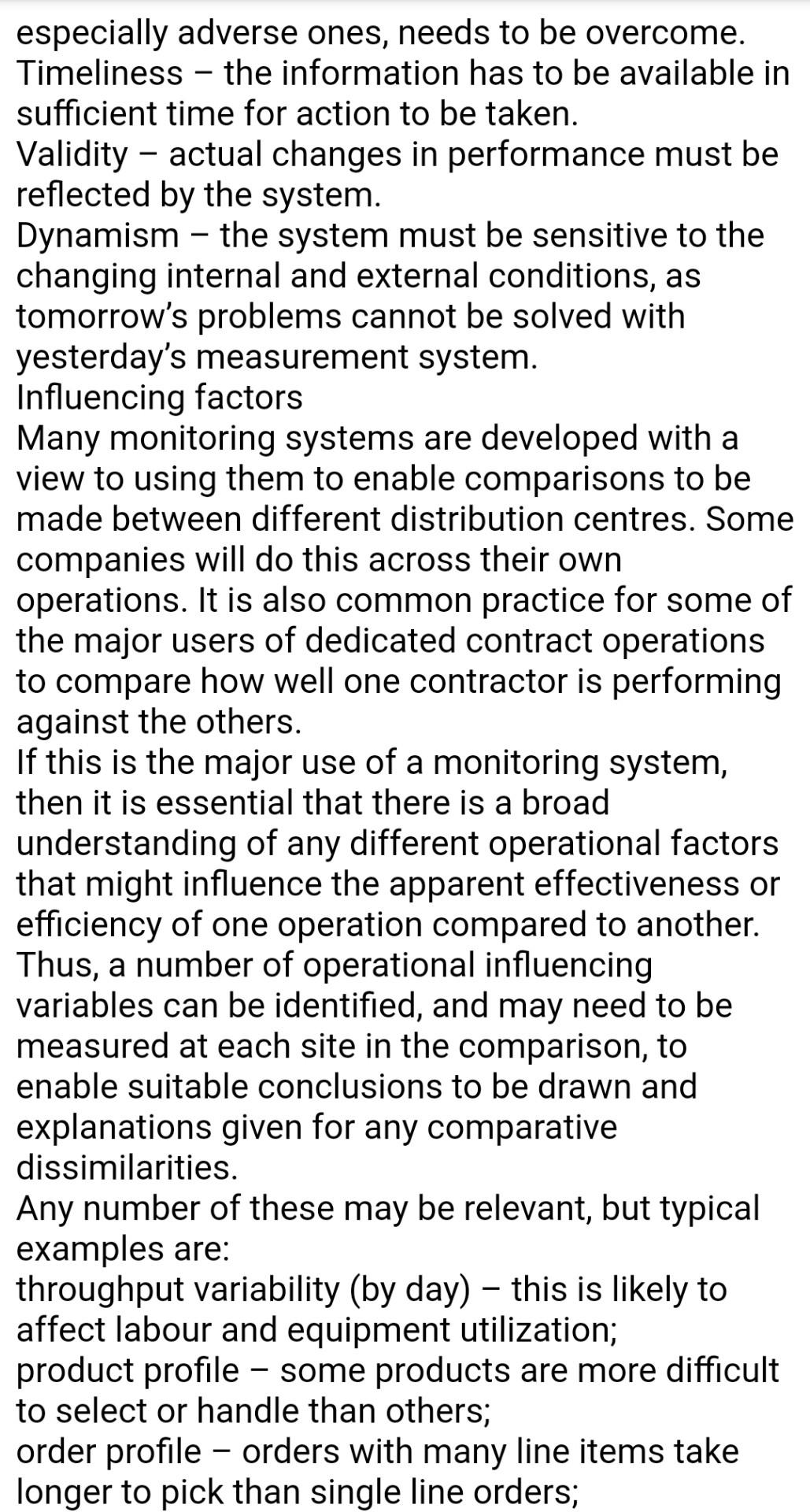
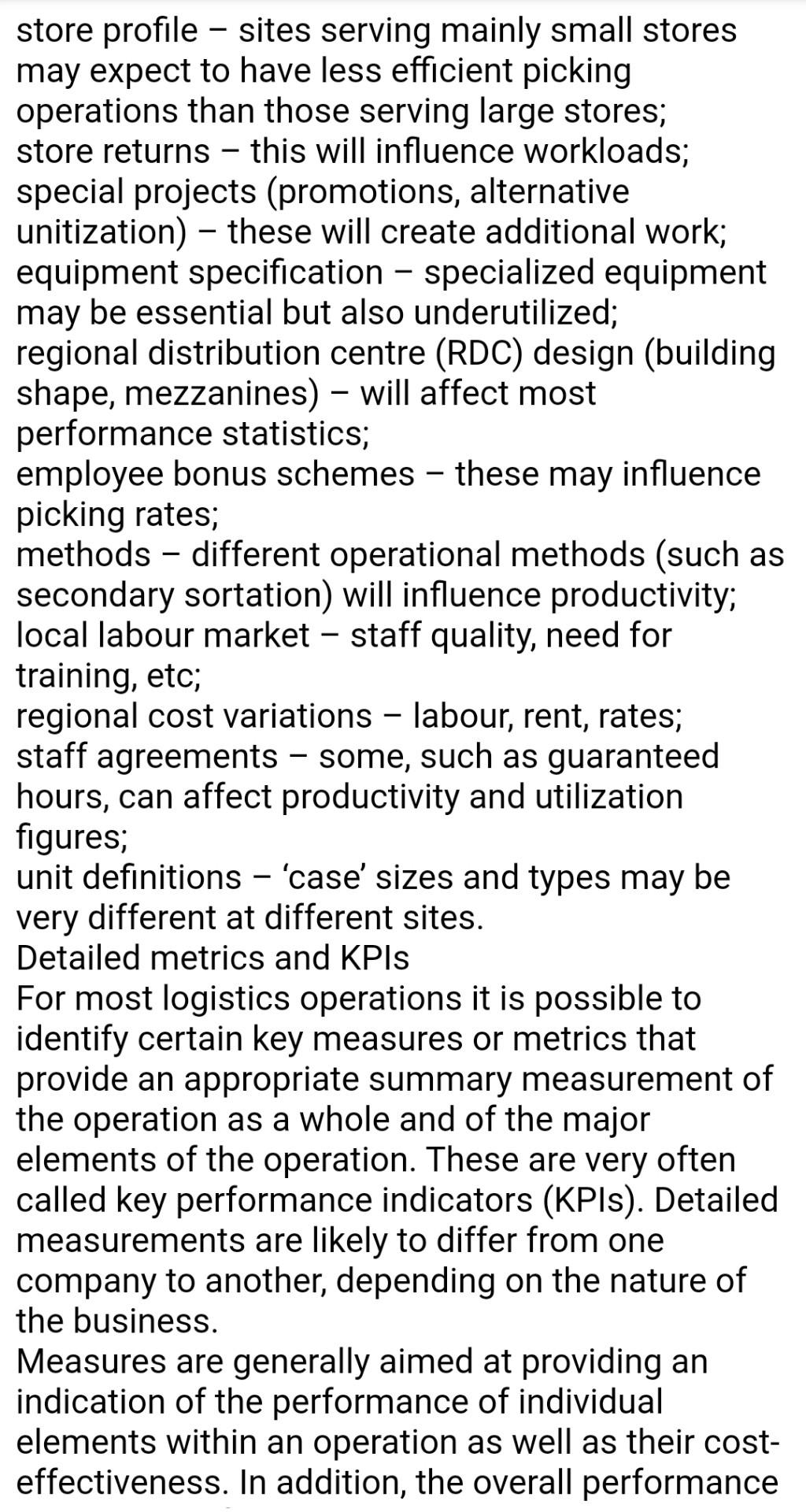
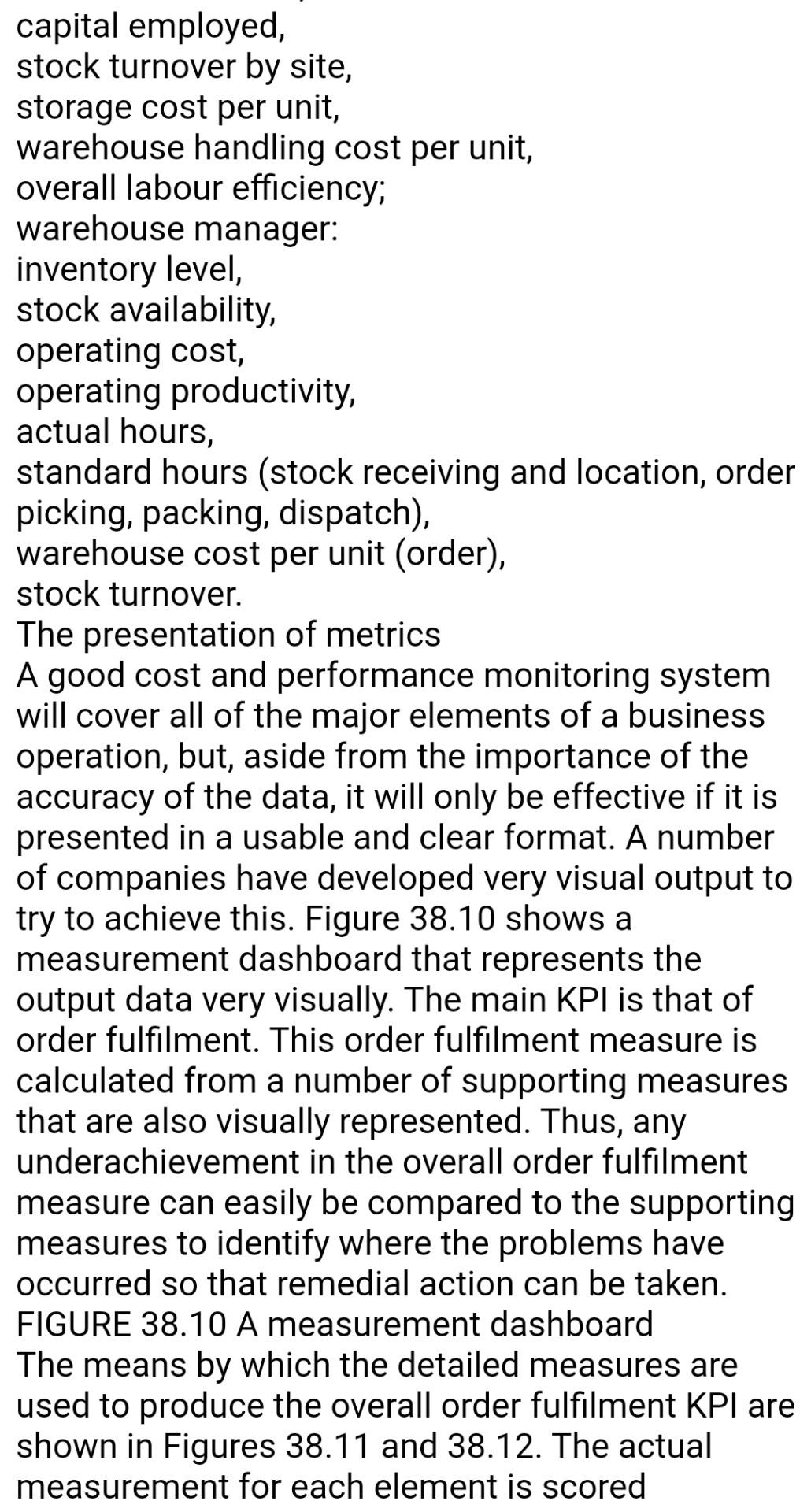
As in most areas of life and work, advances in information technology have focused attention on the importance of good information systems to support logistics and distribution activities. The requirement for relevant and accurate information has always been important, but the computer has enabled the development of more sophisticated means of data storage, processing and presentation. Information can be seen as the 'lifeblood' of a logistics and distribution system. Without the smooth flow and transfer of information, it is impossible for a logistics system to function adequately and effectively. To this end, it is important that an enterprise develops an appropriate approach for its information requirements in line with its logistics strategy and operations. This approach will need to take account of a number of different objectives, from strategic planning through to operational control. A typical framework illustrating the planning and control cycle is shown in Figure 38.1 (introduced in Chapter 2). This framework emphasizes the cyclical nature of the planning and control process, starting with the question 'Where are we now?', where the aim is to provide a picture of the current status of an operation. This might be through an information feedback procedure and/or through the use of a distribution audit. The second stage is to identify the objectives of the logistics or distribution process. These should be related to such elements as customer service requirements and marketing decisions. The third stage in the cycle is the process that includes the development of appropriate strategic and operational plans to achieve these objectives. Finally, there is a need for monitoring and control procedures to measure the effectiveness of the logistics operation compared to the plan. The cycle has then turned full circle and the process is ready to begin again. This emphasizes the dynamic nature of logistics, and the need for continual review and revision of plans, policies and their operations. This must be undertaken within a positive planning framework to ensure that continuity and progress are upheld. In this chapter, therefore, the key questions of why and how to monitor and control the costs and performance of logistics operations are addressed. The importance of identifying clear business objectives as the basis for setting up appropriate operational measures is emphasized. A formal approach for monitoring and control is recommended, and several different approaches are described. These include the balanced scorecard, the Supply Chain Operations Reference (SCOR) model, an integrated supply chain approach as well as a basic operational approach. One key aspect is to determine against what to measure or compare the operation. There are a number of alternatives, and these are described. They range from traditional cost and performance measurement against historical data and/or a budget plan, developing physical or engineered standards, methods such as direct product profitability, activity-based costing and cost-to- serve, to benchmarking against 'best practice'. A simple and straightforward logistics operational planning and control system is outlined, using the budget as the basis for providing quantitative objectives for the key elements to be monitored, but linking this directly to appropriate internal and external standards. Some key areas of good practice are considered. Some key areas of good practice are considered. Although based on sound common sense, these factors are essential to the development of an effective monitoring system. In addition, several influencing factors are highlighted. These are used to help explain the differences that occur when systems are monitored for comparative purposes. Finally, and most importantly, a number of detailed and key cost and performance monitoring metrics are described, together with an example of how these metrics can be presented. Why monitor? To establish an effective system for cost and performance monitoring and control it is crucial to identify the overall guidelines or aims that the system is designed to fulfil. These are likely to reflect major business objectives as well as more detailed operational requirements. Thus, it is important to be aware of the role of logistics and distribution within the context of the company's own corporate objectives. It is also essential that the control system reflects the integrated nature of logistics within an organization. Typical aims might be: To enable the achievement of current and future business objectives where these are directly linked to associated logistics and distribution objectives. To facilitate the effective provision of logistics services, thus enabling checks to be made that the distribution operation is appropriate for the overall objectives ('doing the right thing'). To enable the efficient operation of logistics resources, to ensure that the distribution operation is run as well as it can be ('doing the thing right'). To support the planning and control of an operation, so that any information can be fed back to the process of planning and management. To provide measures that focus on the real outputs of the business - this enables action to be taken when the operations are not performing satisfactorily or when potential improvement to the operation can be identified. This may be linked to some form of productivity improvement or better use of resources. In addition, some fairly specific objectives should be identified that relate to the logistics operation itself. A major feature is likely to be to measure actual progress against a plan. Typically this will be to monitor the budget in a way that identifies if some change from plan has taken place, but also to provide a usable indication of why actual performance or achievement does not reflect what was originally planned. Another feature may well be to highlight specific aspects or components of the system that need particular attention. Care needs to be taken in identifying these broader objectives. They need to be meaningful. Examples that fail the test include: 'The aim for distribution is to minimize costs.' Is this to be at the expense of customer service? There needs to be a clearly identified relationship between cost and service requirements. 'The level of service is as soon as possible. What does this really mean? Are all orders treated as urgent? 'Everything is to be delivered on our own vehicles. Does this mean resourcing the fleet to cover peak demand all year round? This is almost certainly not a cost-effective approach for determining transport requirements. An example of carefully prepared objectives comes from a manufacturer and distributor of soft drinks. The overall aim is to provide accurate, timely and useful information on logistics cost and operational performance: to enable the business to monitor progress towards set objectives at the total logistics level; to enable the operational departments within logistics to measure their performance against their objectives and targets, and to make operational adjustments as necessary; to provide regular information to other internal operations and functions to help assess wider trade-off opportunities; to develop a solid database of information for use in strategic and operational planning. Overall, the information must be quantitative and comparative wherever possible, relating to set objectives. Different approaches to cost and performance monitoring The monitoring and control of logistics and distribution operations are often approached in a relatively unsophisticated and unplanned way. Control measures are adopted as problems arise, almost as a form of crisis management. It is important to adopt a more formal approach, although this should not necessitate a complicated format. There are several systematic approaches that have been developed and these have a varying degree of sophistication and detail. There are some very obvious similarities between these different approaches, as can be seen from the key ones that are described below. Balanced Scorecard The balanced scorecard was initially put forward by Kaplan and Norton in 1992. This is a broad business approach that translates the strategic mission of a business operation into tangible objectives and measures. These can be cascaded up and down the enterprise so that realistic and useful key performance indicators (KPIs) can be developed to support the business. These should represent a balance between external measures for shareholders and customers, and also internal measures of critical business processes, innovation and learning. This structure is shown in Figure 38.2. SOURCE: based on Kaplan and Norton (1992) The financial perspective concerns the relationship with shareholders and is aimed at improving profits and meeting financial targets. The customer perspective is designed to enhance customer relationships using better processes to keep existing customers and attract new ones. The internal element is to develop new ideas to improve and enhance operational competitiveness. Innovation and learning should help to generate new ideas and to respond to customer needs and developments. A series critical success factors is identified that relate directly to the main business perspectives. These are then used as the basis for creating the critical cost and performance measurements that should be used regularly to monitor and control the business operation in all the key areas identified. Some typical measures are shown in Figure 38.3 under the appropriate scorecard categories. More detailed metrics are listed later in this chapter. SCOR model The SCOR model is an important approach that has been developed as an aid to cost and performance monitoring. It is a hierarchical model, consisting of four different levels: competitive advantage, strategy implementation and process definition, detailed process elements, and implementation. It is very much a process-oriented approach, where the initial aim is to benchmark, refine and improve key operational processes, and then to identify and introduce key measures that monitor set cost and performance targets. Eventually, the major company performance attributes are identified and the appropriate metrics are developed. A typical example of this performance metric development is shown in Figure 38.4. SCOR metrics are generally arranged under a number of categorizations. There are many different individual measures that come under the different categories. The main categories are: assets (such as capacity utilization, equipment availability); cost inventory holding, invoicing); data (forecast accuracy, visibility); flexibility (order, returns); inventory (availability, obsolescence); orders (fulfilment accuracy, invoice errors); productivity (direct versus indirect labour, vehicle subcontracting); time (order cycle time, on-time delivery). Integrated supply chain approach An integrated supply chain approach recognizes that a total systems approach can be adopted for the whole business or supply chain and that any performance metrics should be developed on this basis. This, again, is a process-oriented approach that attempts to enable cost and performance monitoring to be based on a horizontal view of a business rather than the traditional, vertical, silo- based functional structure that is often used. See Chapter 11 for a related discussion on organizational structures. This approach to the organizational structures. This approach to the development of supply chain metrics is outlined in Figure 38.5. This type of framework can be used initially to help to identify required outcomes that need to be measured, and then subsequently for establishing any relevant diagnostic measures. Suitable and accurate diagnostic measures are essential to enable the reasons for any problems to be identified and then rectified. This is a vital element of good cost and performance monitoring that is often neglected. Some examples are indicated in Figure 38.6. Operational approach The approaches discussed so far can be fairly complicated, so a more simple and straightforward operational approach is sometimes the most appropriate for small to medium-size companies. This is as follows: Determine the scope of logistics activities. Identify the organization and departmental objectives. Determine operating principles and methods. Set productivity and performance goals (using standards, etc). Measure and monitor performance (develop management information system (MIS)). Take corrective action if necessary. The scope of distribution and logistics activities will, of course, vary from one company to another, as will the extent of integration. Because of this, it is impossible to identify a standard system that can be adopted generally. A company must first determine the scope of activities that need to be considered, taking into account the overall logistics requirements and objectives as well as the traditional components of the functional subsystems (primary transport (line-haul), distribution centre operations, local delivery, etc). More detailed departmental objectives should be defined. These will include such areas as stockholding policies by individual line or product group; customer service levels by product, by customer type or by geographical area; delivery transport costs, utilization and performance. Operating principles and methods need to be clarified with respect to the different logistics components, such as primary transport (line-haul) and delivery transport, warehousing resources and usage, together with implications for seasonality, etc. These factors will provide the basis for establishing realistic and relevant measures. Productivity and performance goals should then be set in relation to the detailed operational tasks that are performed and with respect to the overall output requirements for the integrated logistics system as a whole. These should cover all the essential aspects of the physical distribution system. It is often easier to categorize these under the major subsystems of warehousing (order picking performance, labour utilization, cost per case, etc), transport (vehicle utilization, cost per mile/kilometre, fuel consumption, etc) and administration/stockholding (customer orders received, stockouts, percentage of orders fulfilled, etc). Goals should be set based on some acceptable standards or comparative information. There are several different approaches used by organizations, and these are discussed below. They include: cost and performance against historical data; measuring against a budget plan; developing physical or engineered standards; direct product profitability; activity-based costing; cost-to-serve; using industry standards and benchmarking against 'best practice'. Finally, key indices and ratios need to be developed to allow for appropriate monitoring and control to be undertaken (eg actual work against planned work, cost per case, cases per hour, tonnes per journey, etc). These need to be representative of the logistics operation, and they should be capable of clearly identifying why a deviation has occurred as well as if a deviation has occurred. Some key measures and metrics are given at the end of the chapter. What to measure against? As already indicated, there are a number of different approaches that can be adopted to determine appropriate goals. These range in sophistication from very simplistic internal year- on-year comparisons to quite detailed externally related engineered standards. Most well- developed systems are internally cost-oriented, but are also linked to external performance measures. Historical data Systems that merely compare overall activity costs on a period-by-period basis may not be providing any useful information that can be used to monitor operational performance. As an example, a measure may indicate that the cost of distribution for a company has reduced as a percentage of total revenue for this year compared to last year. Without any background to this measure it is impossible to be sure whether or not this is an improvement in terms of distribution performance. Budget Almost all companies will have a budget plan, and this should include a breakdown of the logistics costs in appropriate detail - an activity budget. A traditional means of monitoring an operation is, therefore, to evaluate the cost of the logistics operation in relation to the expectations of the budget plan The budget approach has been developed in a variety of ways to enable more sophisticated and more meaningful measures to be created. The 'activity' concept can be used so that the budget - and the respective measurement process - can identify and differentiate between functional activities (warehouse, transport, etc) and, more importantly, across core business-oriented activities. This might, for example, be by product group or by major customer, thus allowing for very detailed measurements reflecting the integrated nature of the logistics activities under scrutiny. (See later in this chapter for discussion on the more formal method of activity-based costing). An additional development is the concept of flexible budgeting, which recognizes one of the key issues of monitoring - the need to be able to identify and take account of any changes in business volumes. This is particularly important in the logistics environment, where any reductions in volume throughput can lead to the underperformance of resources. The concept is based on the premise that budgets are put together with respect to a planned level of activity. The fixed, semi-variable and variable costs appropriate to that level of activity are identified and form the basis of the budget. If activity levels fluctuate, then in flexible budgeting the planned budget is flexed to correspond with the new conditions. Thus, semi-variable and variable costs are adjusted for the change. In this way the change in cost relationships that results from a change in the level of activity is taken into account automatically, and any other differences between planned and actual cost performance can be identified as either performance or price changes. This approach is particularly applicable to logistics activities, as there is very often a high fixed-cost element, and any reduction in levels of activity can increase unit costs quite significantly. With a fixed (ie non-flexible) budget system it can be difficult to identify the essential reasons for a large variance. To what extent is there an inefficiency in the system that may be controlled, and to what extent is there underutilization of resources due to falling activity? A typical example is the effect that a reduction in demand (throughput) can have on order picking performance and thus unit cost. A flexible budget will take account of the volume change and adjust the original budget accordingly. An effective budget measurement system will incorporate the idea of variance analysis. In the context of logistics activities, variance analysis allows for the easier identification of problem areas as well as providing an indication of the extent of that variance, helping the decision process of whether or not management time should be assigned to solving that particular problem. As indicated earlier, an effective system will indicate if a variance has occurred, the extent of that variance and also why it has occurred in terms of a change in performance or efficiency, or a change in price or cost (or a mixture of both). Variance analysis is best used within the context of a flexible budget, because the flexible budget automatically takes account of changes in activity. It is worth noting that a good way to prepare for the monitoring of an agreed budget is to identify the largest cost areas and to concentrate on the regular review of these. Pareto analysis can be used as the basis for this, as described under the 'Tools and techniques' section in Chapter 7. Typically, in logistics, the largest cost element is labour, so this would be one key area to have effective measurement. Suitable logistics metrics are discussed later in this chapter. Direct product profitability An alternative approach to logistics cost analysis, direct product profitability (DPP) aims to identify all of the costs that are involved with an order or a product as it moves through its distribution channel. Very often the only easily identifiable cost of a product is the actual purchase price but there are also other costs incurred with respect to many distribution and logistics related elements such as ordering cost, storage costs, transport cost, etc. This real cost is often known as the total cost of ownership. These hidden costs can in many instances be quite substantial and might influence the product attractiveness if the retailer knows these true costs. Often, due to lack of information and due to reliance on classic accounting systems, these logistics costs are 'averaged inappropriately across a broad range of products, thus producing inaccurate 'real' costs of many individual products. Activity-based costing Concerns expressed over the unsuitability of conventional accounting systems for monitoring logistics operational costs has led to the development of more appropriate methods, the most common approach being that of activity- based costing (ABC). Key problems with traditional accounting systems include; Conventional accounting systems are not output oriented but are functionally based. Costs are collected at too general a level. Costs are collected as aggregates rather than directly related to specific activities. It is impossible to identify appropriate cost implications for different markets, product groups, channels or customers. Activity-based costing methods allow for greater visibility of the true costs that are involved in the overall logistics process by identifying cost implications at a much greater level of detail. This is made possible by the vastly improved and extended functionality of both IS hardware and software. The key to this approach is to allocate costs on the basis of the activities that are using the resources rather than on the traditional allocation based only on a broad unit product or the number of orders. To achieve this, the real cost drivers need to be identified and used. Thus, for order picking, for example, it is likely to be the number of lines on an order that should be used for the purposes of picking cost allocation rather than the traditional approach of an average cost per order made. Orders can differ quite dramatically in terms of the workload that is required to complete them. Thus, activity-based costing allows for the particular characteristics of a customer's ordering, storage and delivery requirements to be identified and accounted for. This is useful for the supplier as a means of identifying more accurate cost allocation and also for the customer to help them better understand the true costs of product supply. This approach to distribution and logistics cost analysis can provide much more reliable and more accurate information to enable a company to run a more effective operation and to understand the true costs of distributing a multitude of different products to a range of different customers. For a more detailed description of this type of approach, see the section on 'Benchmarking distribution operations' (in Chapter 39). An approach to a distribution cost audit is described where the individual elements of distribution are broken down to identify the key costs for each activity. Appropriate product categories or groups are used as the basis for data collection and analysis. The results of this can then be used as the foundation for developing an appropriate activity-based costing system. Cost-to-serve Cost-to-serve is a similar approach to activity- based costing. The major difference is that cost- to-serve is not as resource-intensive because it is based on aggregate analyses using a mixture of appropriate cost drivers. It is broadly a process- driven accountancy tool and it is used to calculate customer profitability using the actual business activities and overhead costs that are involved. For distribution and logistics it can be used to assess how costs are consumed throughout the supply chain. It takes into account that each product and each customer has a different cost profile and uses different activities. Pareto analysis can be used to show that certain products and certain customers (usually the top 20 per cent) are the most profitable for the company and that the others (usually the bottom 80 per cent) are the least profitable or indeed run at a loss. Unlike activity-based costing, cost-to- serve provides an integrated view of costs at each stage of the supply chain. It helps a company to identify opportunities for appropriate short-term improvements and also provides useful input into long-term decision making. Engineered standards A number of companies use internally derived measures for certain logistics activities through the development of engineered standards. This involves the identification of detailed measures for set tasks and operations and is particularly appropriate for many key warehousing tasks, especially picking operations. The means of determining these measures is a lengthy and often costly process involving the use of time and work study techniques but the accuracy of the measures provides the basis for a very powerful measurement tool. When suitable and acceptable standards have been agreed for specific tasks, then a performance monitoring system can be adjusted to allow for direct measurement of actual performance against expected or planned performance. The advantage of using engineered standards is that each task is measured against an acceptable base. A monitoring system that measures against past experience alone may be able to identify improved (or reduced) performance, but it is always possible that the initial measure was not a particularly efficient performance on which to base subsequent comparisons. Apart from cost, a potential drawback with engineered standards is that the initial time or work study data collection can be difficult to verify. There is no certainty that an operative who is under scrutiny will perform naturally or realistically (whether consciously or subconsciously). Many logistics tasks do lend themselves to the application of engineered standards. Most warehousing activities fall into this category (goods receiving, pallet put-away, order picking, etc), as well as driver-related activities (vehicle loading time, miles/kilometres travelled, fixed and variable vehicle unloading times). An outline example is given below: Developing standards for delivery transport: an example Standard costs can be related to measured or standard times. These should cover the three main operations: 1 vehicle preparation and loading at the distribution centre; 2 running/driving time (speeds related to road types); 3 load selection and delivery time (fixed and variable) at the delivery (drop) points. Standard time journeys can then be built. These can be incorporated with standard costs to give a standard cost per minute. Thus, the planned performance and actual performance are linked, and variance analysis can be undertaken. This provides for a stronger system of control. External standards and benchmarking Another approach to cost and performance measurement is to make comparisons against industry norms. The intention here is that a company's performance can be compared to similar external operations and standards, making comparison more realistic and therefore more valuable. For some industries, such as grocery retailing, these measures are fairly readily accessible through industry journals and associations. Examples of typical measures include order picking performance (cases per hour) and delivery cases per journey. Some of the largest manufacturers and retailers that outsource to several different contractors use this concept to allow them to make detailed performance comparisons between their various depot operations. Thus they draw up 'league tables' of their distribution centres (DCs) based on their performance against an industry standard and compare each of their own DCs and any third- party logistics (3PL) provider DCs against the others. This can create a useful incentive for the different operations as they strive to maintain or improve their respective positions in the league'. Some of the potential difficulties of this approach (for example, comparing operations that have inherent differences such as different depot size, different materials handling equipment) are discussed later in this chapter in the section 'Influencing factors'. A further development to this is the idea of 'benchmarking'. Here, the aim is to identify appropriate 'world-class' or 'best-in-class' standards across a whole range of different organizations and operations. This enables a company's performance to be compared with the very best in any industry. It is a broader concept than merely identifying variations in performance, the intention being to identify the reasons why a certain operation is the best and to establish ways and means of emulating the operation. A number of 'benchmarking' clubs have been formed to this end. See Chapter 39 for a detailed discussion on benchmarking and auditing logistics operations. A logistics operational planning and control system In this section, a simple logistics operational planning and control system is outlined. For this, the budget is used as the basis for providing quantitative objectives for the relevant elements to be monitored within the logistics operation. Linked to this should be any appropriate internal (engineered) or external standards that are deemed to be important measures of the business. The operating plan should be drawn up based around the operational parameters or cost centres that are to be used. This will show how costs are to be split by period (week or month), by functional element (eg fuel or wages), by logistics component (storage, local delivery, etc) and by activity (major customer, product group, etc). The plan should also show which key logistics business performance indicators are to be used (eg tonne/miles or kilometres delivered, etc) and it should demonstrate how these indicators are linked to set standards. The operating control system is concerned with the process of identifying whether the operating plan has been adhered to - what deviations have occurred and why - so that remedial action can be speedily taken. Figure 38.7 outlines this process by summarizing the key steps that are involved in the preparation and use of an operating control system. FIGURE 38.7 The steps required to prepare and use an operating control system It should be noted that in measuring the deviations referred to in Figure 38.7, it is important to be aware of three major causes of deviation. These are: changes in the levels of activity (ie less work is available for a fixed capacity labour or equipment); changes in efficiency or performance (ie the resource, labour or equipment has not performed as expected); be monitored within the logistics operation. Linked to this should be any appropriate internal (engineered) or external standards that are deemed to be important measures of the business. The operating plan should be drawn up based around the operational parameters or cost centres that are to be used. This will show how costs are to be split by period (week or month), by functional element (eg fuel or wages), by logistics component (storage, local delivery, etc) and by activity (major customer, product group, etc). The plan should also show which key logistics business performance indicators are to be used (eg tonne/miles or kilometres delivered, etc) and it should demonstrate how these indicators are linked to set standards. The operating control system is concerned with the process of identifying whether the operating plan has been adhered to - what deviations have occurred and why - so that remedial action can be speedily taken. Figure 38.7 outlines this process by summarizing the key steps that are involved in the preparation and use of an operating control system. FIGURE 38.7 The steps required to prepare and use an operating control system It should be noted that in measuring the deviations referred to in Figure 38.7, it is important to be aware of three major causes of deviation. These are: changes in the levels of activity (ie less work is available for a fixed capacity - labour or equipment); changes in efficiency or performance (ie the resource, labour or equipment has not performed as expected); changes in price (ie the price of an item, say fuel, has increased so costs will increase). Activity level changes can, of course, be taken into account by the use of flexible budgets. The key indices and ratios that are developed need to allow for appropriate monitoring and control to be undertaken (actual work against planned work, cost per case, cases per hour, tonnes per journey). They need to be representative of the logistics operation, and they should be capable of clearly identifying why a deviation has occurred as well as whether a deviation has occurred. Good practice There are a number of key areas of 'good practice that should be considered when developing the detail of an effective cost and performance monitoring and control system. These are all fairly straightforward but bear discussion because they can have a significant impact on the success of a monitoring and control system. They can be broadly categorized as principles, content and output; they are outlined in the remainder of this section together with an example of what one company sees as being the key characteristics of a good monitoring system. Principles Most of the main principles associated with an effective system are based on sound common sense. They can, of course, be used to provide distinct guidelines for the development of an appropriate new control system but they can also help to identify reasons why an existing system is not functioning satisfactorily. They include: Accuracy. The basic input data to the system must be correct. Inaccurate data will obviously produce incorrect measures, but will also undermine confidence in the system as a whole. Validity/completeness. The measures used must reflect a particular activity in an appropriate way, and must cover all the aspects concerned. For example, a broad carton-per-hour measure for order picking is clearly inappropriate if there is a substantial element of full pallet picking or broken case picking undertaken as part of the operation. Hierarchy of needs. Individuals within an organization require only certain pieces of information. To swamp them with unnecessary information is expensive and may diminish the usefulness of an information system. Typically, the higher the level of personnel within an organization, the more general or more aggregate is the information required. Figure 38.8 indicates this hierarchy, illustrating the relationship between what might be termed as command information and feedback/control information. FIGURE 38.8 Hierarchy of needs showing the different information requirements at the different levels of an organization Targeting of the correct audience. Linked very much to the previous point is the need to ensure that the correct audience is identified and that all the key information is then directed to this audience. User ownership. The fault of many an information system is to impose information on individuals without first including them in the process of identifying and determining information requirements. This can be very demotivating. It is a very valid step to include potential users at the systems design stage, thus conferring user ownership of the information when the system is in place. The information should be useful, and those who use the information should understand the detail. Reactivity to changes in business activity. Not a simple requirement to put into practice, but an effective control system will need to be dynamic and so take account of any changes in business activity. To a certain extent this is achieved through flexible budgeting. Timeliness. Reports must be available at the agreed time, and the frequency of reports should be such that suitable control action can be taken. Ease of maintenance. A fairly obvious comment is that an effective system must not be overly complicated to maintain and progress. Simplicity is certainly a virtue. Cost-effectiveness. Again, a fairly obvious but very relevant point is that a monitoring system should not cost more to set up and run than can possibly be saved through using the system. Content The elements of good practice that come under the category of content have almost all been covered in previous sections of the chapter, and they are as follows: the need for clear cost categories, with careful identification of fixed and variable costs; the use of flexible budgeting; the use of variance analysis; the clarification of controllable and non- controllable elements; the use of reference points against which the monitored elements can be measured these might include: budget; forecast; trends; targets; comparative league tables. (The final two factors are useful for monitoring (The final two factors are useful for monitoring contractor operations and for setting up inter-site comparisons.) Output The final aspect of good practice concerns the type of output that the system produces. This is the information on which any form of action is based. It has already been emphasized that this information must be relevant and useful. The major output characteristics are: Reports can vary. They may be: summary (providing key statistics only); exception (identifying the major deviations from plan); detailed (including all information). Reports should be made to a standard format - especially important where any inter-site comparisons are to be made. Data should be presented in whatever means is most appropriate to the eventual use of the data. Different types of data output are as follows: trend data based upon moving annual totals to identify long-term changes; comparative data: data analysis over a short period (eg this month against last month), data analysed against a target (eg this month compared with budget), data analysed against a measured standard (eg this month compared with standard), comparative data analysis also identifies variances that indicate the degree of performance success; indices - data in statistical form compared with a base position over time; ratio - a combination of two or more pieces of meaningful data to form a useful figure for comparison; graphs - comparative trends in pictorial form. Key characteristics What do companies see as being the most valuable characteristics of a good monitoring system? The example outlined below provides an indication: An international manufacturer and supplier of computer equipment identified the need for a more adequate information system for monitoring and controlling performance in its three warehouses. The company set up a project team to investigate these requirements, and produced some interesting output. Five key areas for measurement were identified: 1 Volume what is moving through the warehouse? 2 Efficiency how well is the operation being run? 3 Cost-effectiveness - is the cost reflecting the work being undertaken? 4 Quality - how well are the service levels being met? 5 Stability - what does the staff turnover picture look like? Outline requirements were: . overall business control; activity measures within the business area; trend indicators and productivity measures. Factors for consideration were: Action - the system should lead to a change in the current position, and should be used. Confusion - the system should filter out the irrelevant information that confuses and diverts attention. Comprehensibility - everyone who receives information must understand it. Defensiveness - a defensive reaction to figures, . especially adverse ones, needs to be overcome. Timeliness the information has to be available in sufficient time for action to be taken. Validity actual changes in performance must be reflected by the system. Dynamism - the system must be sensitive to the changing internal and external conditions, as tomorrow's problems cannot be solved with yesterday's measurement system. Influencing factors Many monitoring systems are developed with a view to using them to enable comparisons to be made between different distribution centres. Some companies will do this across their own operations. It is also common practice for some of the major users of dedicated contract operations to compare how well one contractor is performing against the others. If this is the major use of a monitoring system, then it is essential that there is a broad understanding of any different operational factors that might influence the apparent effectiveness or efficiency of one operation compared to another. Thus, a number of operational influencing variables can be identified, and may need to be measured at each site in the comparison, to enable suitable conclusions to be drawn and explanations given for any comparative dissimilarities. Any number of these may be relevant, but typical examples are: throughput variability (by day) - this is likely to affect labour and equipment utilization; product profile - some products are more difficult to select or handle than others; order profile - orders with many line items take longer to pick than single line orders; store profile - sites serving mainly small stores may expect to have less efficient picking operations than those serving large stores; store returns - this will influence workloads; special projects (promotions, alternative unitization) - these will create additional work; equipment specification - specialized equipment may be essential but also underutilized; regional distribution centre (RDC) design (building shape, mezzanines) - will affect most performance statistics; employee bonus schemes - these may influence picking rates; methods - different operational methods (such as secondary sortation) will influence productivity; local labour market - staff quality, need for training, etc; regional cost variations labour, rent, rates; staff agreements - some, such as guaranteed hours, can affect productivity and utilization figures; unit definitions - 'case' sizes and types may be very different at different sites. Detailed metrics and KPIs For most logistics operations it is possible to identify certain key measures or metrics that provide an appropriate summary measurement of the operation as a whole and of the major elements of the operation. These are very often called key performance indicators (KPIs). Detailed measurements are likely to differ from one company to another, depending on the nature of the business. Measures are generally aimed at providing an indication of the performance of individual elements within an operation as well as their cost- effectiveness. In addition, the overall performance capital employed, stock turnover by site, storage cost per unit, warehouse handling cost per unit, overall labour efficiency; warehouse manager: inventory level, stock availability, operating cost, operating productivity, actual hours, standard hours (stock receiving and location, order picking, packing, dispatch), warehouse cost per unit (order), stock turnover. The presentation of metrics A good cost and performance monitoring system will cover all of the major elements of a business operation, but, aside from the importance of the accuracy of the data, it will only be effective if it is presented in a usable and clear format. A number of companies have developed very visual output to try to achieve this. Figure 38.10 shows a measurement dashboard that represents the output data very visually. The main KPI is that of order fulfilment. This order fulfilment measure is calculated from a number of supporting measures that are also visually represented. Thus, any underachievement in the overall order fulfilment measure can easily be compared to the supporting measures to identify where the problems have occurred so that remedial action can be taken. FIGURE 38.10 A measurement dashboard The means by which the detailed measures are used to produce the overall order fulfilment KPI are shown in Figures 38.11 and 38.12. The actual measurement for each element is scored according to how successfully it achieved its goal for the given period. These scores are then aggregated to produce the overall KPI. FIGURE 38.11 Example of actual measurements for the dashboard FIGURE 38.12 Process calculations for the dashboard Summary Various approaches to cost and performance monitoring for logistics and distribution operations have been described in this chapter, linked wherever possible to actual company practice. The need for monitoring and control procedures to measure the effectiveness of actual distribution performance against a prescribed distribution plan has been identified within the context of the framework of a planning and control cycle. The need to establish clear, business-related objectives has been emphasized. A number of different approaches for developing a monitoring and control system were outlined. These included: the balanced scorecard; the SCOR model (Supply Chain Operations Reference model); an integrated supply chain model; an operational approach. Several different means of identifying suitable goals were introduced. These were: measuring cost and performance against historical data; measuring against a budget plan; developing physical or engineered standards; direct product profitability; activity-based costing; cost-to-serve; using industry standards and benchmarking against 'best practice'. The major factors related to these alternatives were discussed, together with the relative advantages and disadvantages of the different approaches. Finally, an operational planning and control system was described, with the emphasis on the need to identify and measure what deviations had occurred and why they had occurred. This should specifically consider changes in: levels of activity; efficiency or performance; price or cost. A number of key areas of good practice were considered. These were deemed essential in developing the detail of an effective monitoring and control system. These were considered under the heading of principles, content and output. The key characteristics of a good monitoring system were outlined. In addition, a number of influencing factors were highlighted as being important to help explain the differences that occur when systems are monitored for comparative purposes. Finally, a series of key and detailed cost and performance measures were considered, together with an example of how metrics can be presented. These were drawn from a number of specific case examples. Please read the text above and answer a detailed answer of almost 650 words: A) Discuss the value and importance of key performance indicators (KPIs) in general and more specifically for the supply chain management. Give some examples of KPIs in details (no more than 5 KPIs) and seek extra academic material
Step by Step Solution
There are 3 Steps involved in it
1 Expert Approved Answer
Step: 1 Unlock

Question Has Been Solved by an Expert!
Get step-by-step solutions from verified subject matter experts
Step: 2 Unlock
Step: 3 Unlock
 Study Help