



Question: Read this case study and answer the question following at the bottom It is July 2022. The Covid pandemic is over. The dust is settling
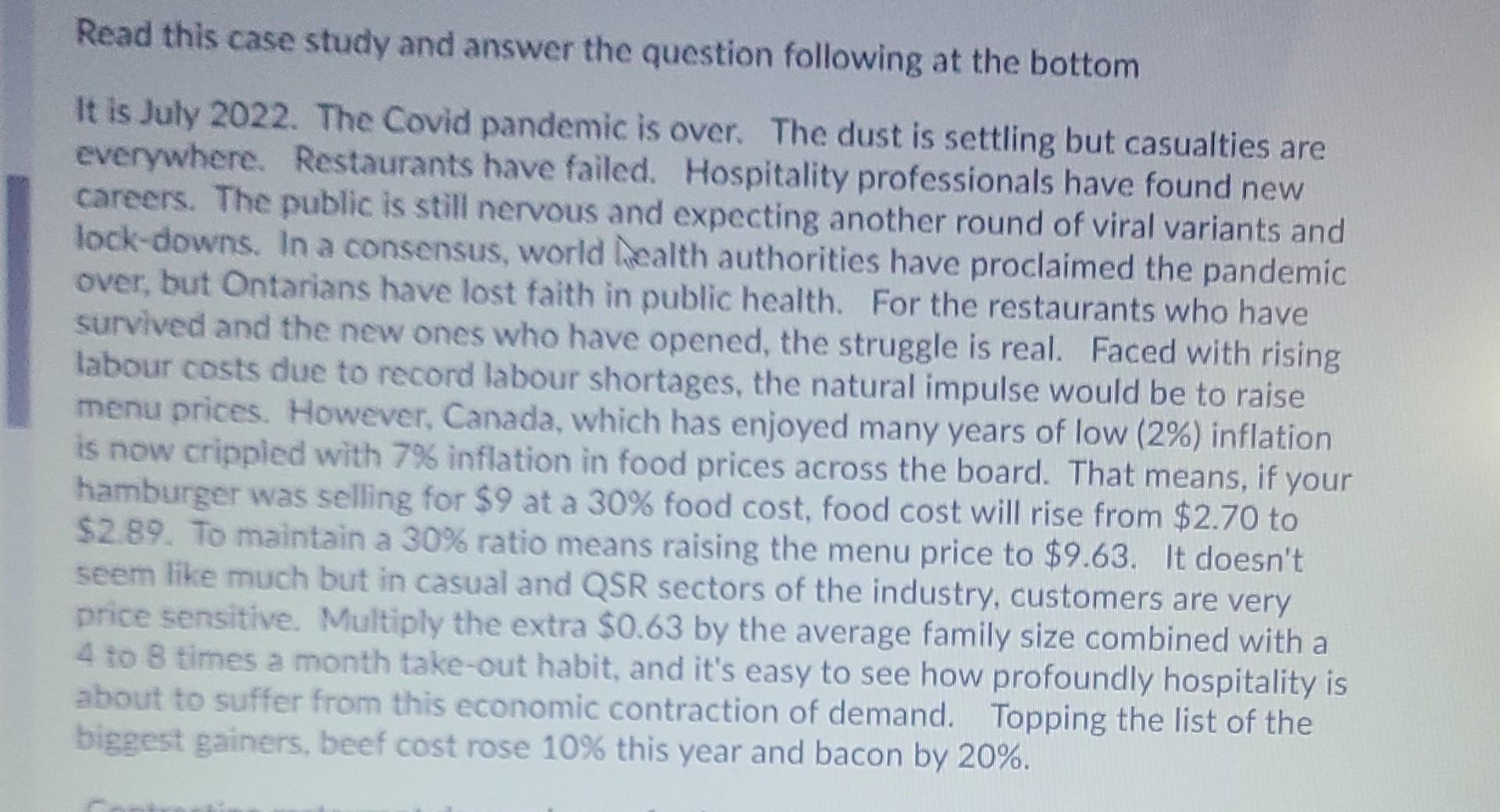
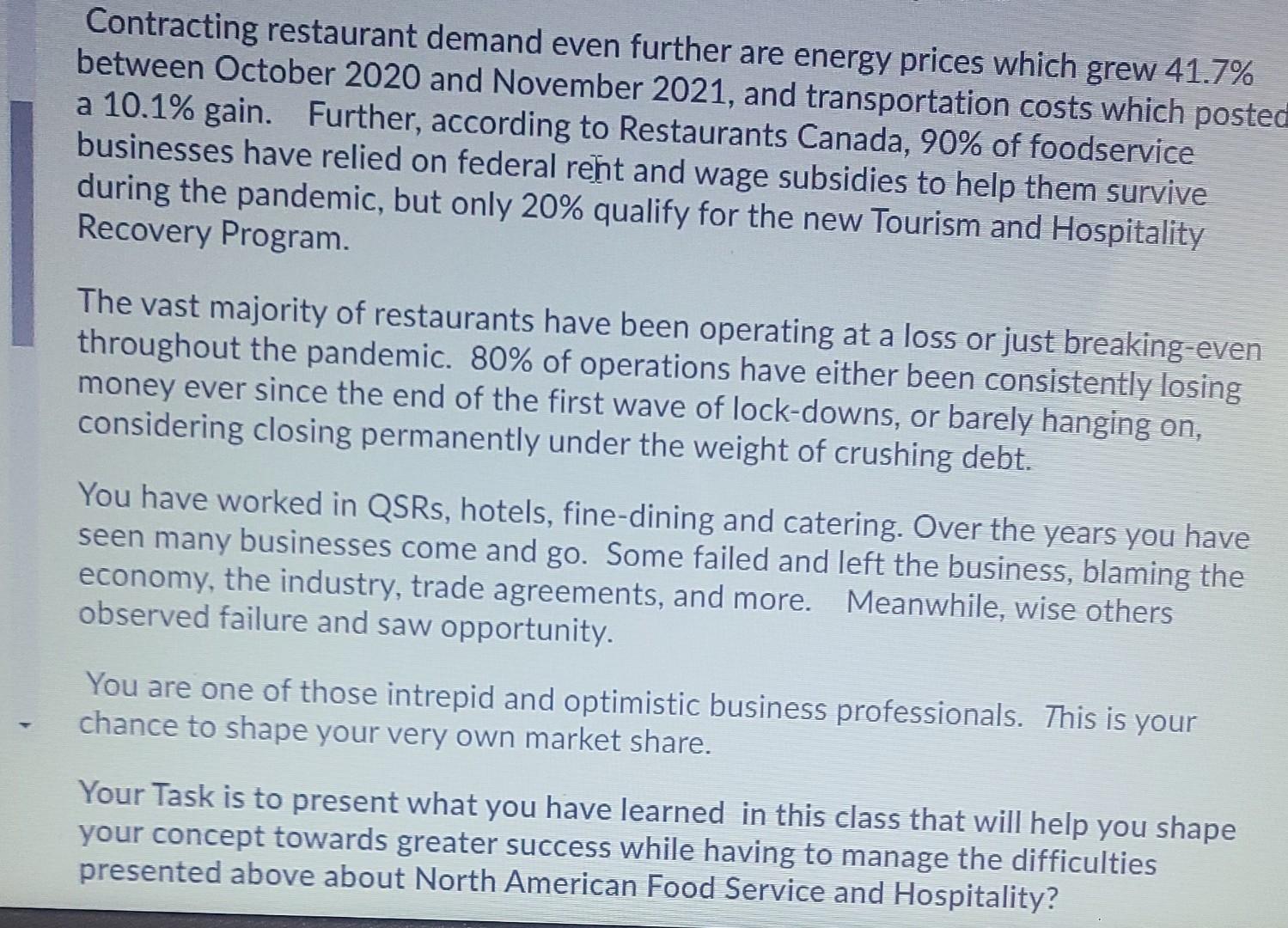
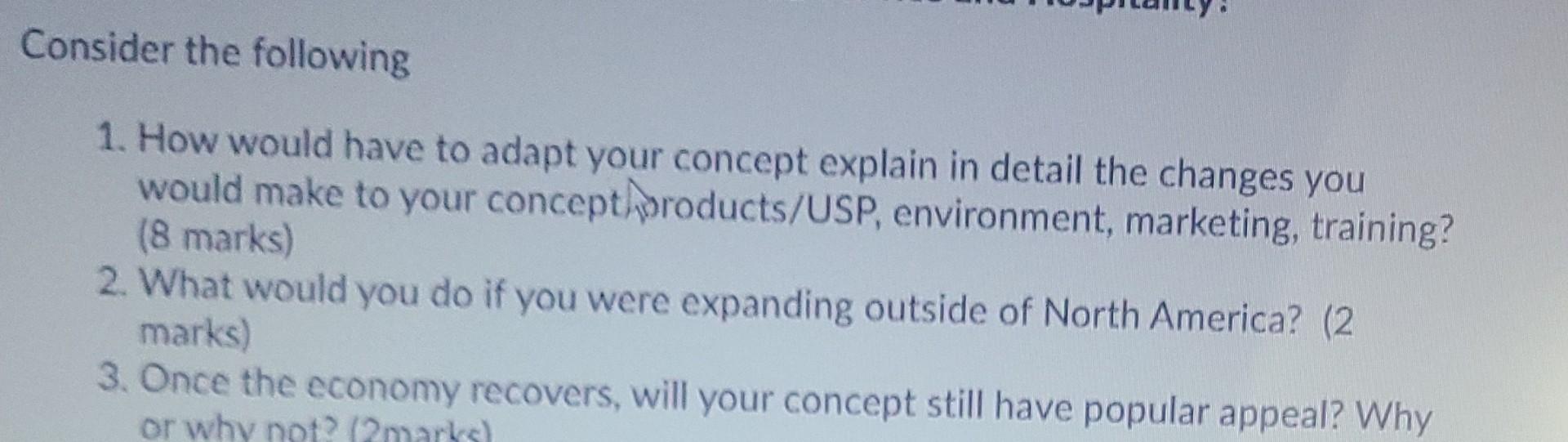
Read this case study and answer the question following at the bottom It is July 2022. The Covid pandemic is over. The dust is settling but casualties are everywhere. Restaurants have failed. Hospitality professionals have found new careers. The public is still nervous and expecting another round of viral variants and lock-downs. In a consensus, world lealth authorities have proclaimed the pandemic over, but Ontarians have lost faith in public health. For the restaurants who have survived and the new ones who have opened, the struggle is real. Faced with rising labour costs due to record labour shortages, the natural impulse would be to raise menu prices. However, Canada, which has enjoyed many years of low (2%) inflation is now crippled with 796 inflation in food prices across the board. That means, if your hamburger was selling for $9 at a 30% food cost, food cost will rise from $2.70 to $2.89. To maintain a 30% ratio means raising the menu price to $9.63. It doesn't seem like much but in casual and QSR sectors of the industry, customers are very price sensitive. Multiply the extra $0.63 by the average family size combined with a 4 to 8 times a month take-out habit, and it's easy to see how profoundly hospitality is about to suffer from this economic contraction of demand. Topping the list of the biggest gainers, beef cost rose 10% this year and bacon by 20%. Contracting restaurant demand even further are energy prices which grew 41.7% between October 2020 and November 2021, and transportation costs which posted a 10.1% gain. Further, according to Restaurants Canada, 90% of foodservice businesses have relied on federal rent and wage subsidies to help them survive during the pandemic, but only 20% qualify for the new Tourism and Hospitality Recovery Program. The vast majority of restaurants have been operating at a loss or just breaking-even throughout the pandemic. 80% of operations have either been consistently losing money ever since the end of the first wave of lock-downs, or barely hanging on, considering closing permanently under the weight of crushing debt. You have worked in QSRs, hotels, fine-dining and catering. Over the years you have seen many businesses come and go. Some failed and left the business, blaming the economy, the industry, trade agreements, and more. Meanwhile, wise others observed failure and saw opportunity. You are one of those intrepid and optimistic business professionals. This is your chance to shape your very own market share. Your Task is to present what you have learned in this class that will help you shape your concept towards greater success while having to manage the difficulties presented above about North American Food Service and Hospitality? Consider the following 1. How would have to adapt your concept explain in detail the changes you would make to your concept products/USP, environment, marketing, training? (8 marks) 2. What would you do if you were expanding outside of North America? (2 marks) 3. Once the economy recovers, will your concept still have popular appeal? Why or why not? (2marks
Step by Step Solution
There are 3 Steps involved in it
1 Expert Approved Answer
Step: 1 Unlock

Question Has Been Solved by an Expert!
Get step-by-step solutions from verified subject matter experts
Step: 2 Unlock
Step: 3 Unlock