







Question: Read this case study first = Abraham (40 year old male) wasreferred for treatment for Persistent Depressive Disorder by his GP. The referral letter noted
Read this case study first = Abraham (40 year old male) wasreferred for treatment for Persistent Depressive Disorder by his GP. The referral letter noted thatAbraham has been depressed without remission since his divorce to Gloria four years prior. Abraham's GP also noteda history of alcohol abuse during, but not after the divorce. Abrahamlives alone, andshares custody of his daughter, Christina who is 8 years old. At the intake session, Abrahamreported that he has been depressed most of his life. He recalled his first episode of depression at age 12, when his father left abruptly and severed all contact with the family. Abraham reported that he had believed that his parents were happily married and, at that time,blamed himself for his father's departure. Abraham stated that he feels inadequate. When asked to elaborate, he explained that other people experience stress, get divorced, and have crappy jobs, and they move on. Buthe doesn't move on. He got divorced four years ago and is still depressed. Abraham reported that he has hadperiods when he functions OK, but that he is never happy. He just stumbles through life and then a switch flips and he's in a dark place again. For the past four years, therehasn't been much that helps him to feel better. Even things that he thinks should help him feel better don't do much. He said heused to cookwonderful dinners with Gloria, but now feels like it is an effort to just order pizza.Everything feels like an effort, even at work in a job that isn't very challenging. He's an accountant and just does the bare minimum to get by. He's exercising less than he has in the past, but iswatching a lot more TV. He used to shut the TV off at 8pm and play a game or read a book to his daughter, butnow he watches TV until he falls asleep. He said thatTV helps keep his mind off Gloria and work, but not all that much. Hestill feels depressed. Abraham added thatsometimes he doesn't talk to another person or even get out of bed all weekend. He knows these things make his depression worse and that they aren't good for his daughter either, but does them anyway. He doesn't understand why. He said thesame thing used to happen with alcohol. Heknew it made things worse, but because it helped in the moment, he drank to distract himself. He doesn't drink anymore, but he's pulled back from other people, including his daughter. Abraham's social network revolved primarily around his former marriage. He haswithdrawn from that network since his divorceand hasn't found a new network. He reported that he hasalways had trouble fully engaging in relationships. He hides how he really feelsabout things,fails to express commitment to a relationship, and oftenruminates about mistakes he made in the past. When asked about why he engages in these behaviours, Abraham stated that he is trying to avoid re-experiencing the loss of his father. If he always keeps people at bay, it will hurt less when they go.He doesn't feel that he is good enough to sustain a relationship. He also mentioned that his family doesn't discuss their feelings. They don't discuss his father or his father's disappearance. Abraham did not evidence any psychotic behaviourduring the intake interview anddenied a history of mania.
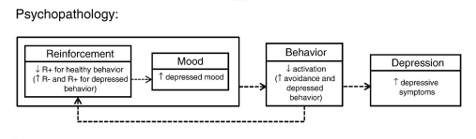
Psychopathology: Reinforcement Behavior Mood Depression I R+ for healthy behavior I activation IT A- and Ri+ for depressed T depressed mood If avoidance and f depressive behavior dapressed symptoms behavior'
Step by Step Solution
There are 3 Steps involved in it

Get step-by-step solutions from verified subject matter experts
 Study Help