







Question: Reconsider the Bad Debt problem from Homework 1, and its accompanying dataset.The second column in the dataset provides the variable Invoice amount.Suppose that the firm
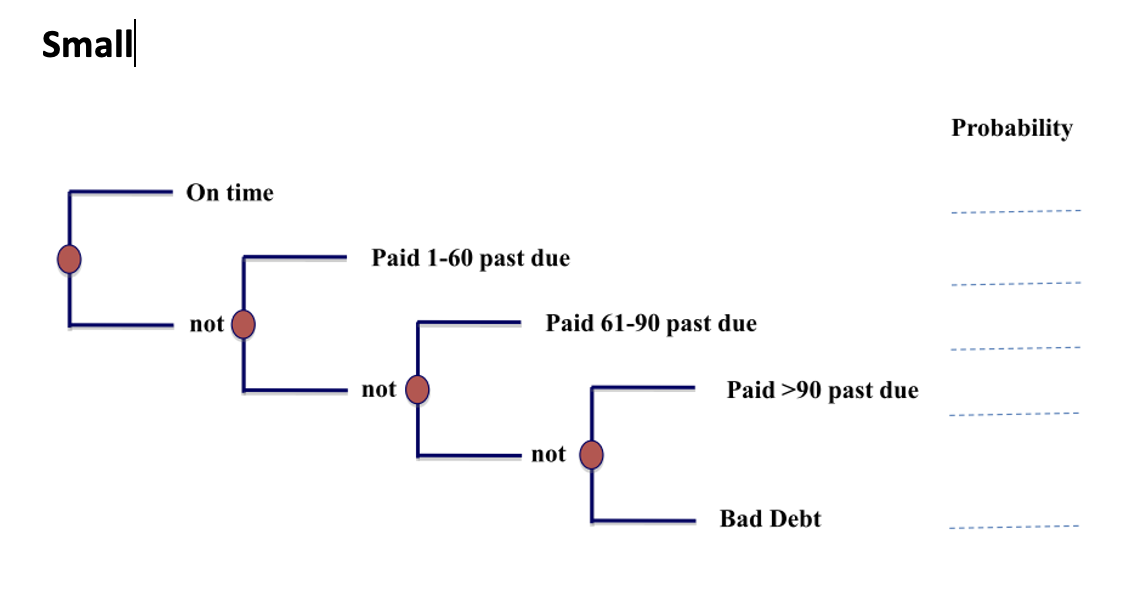
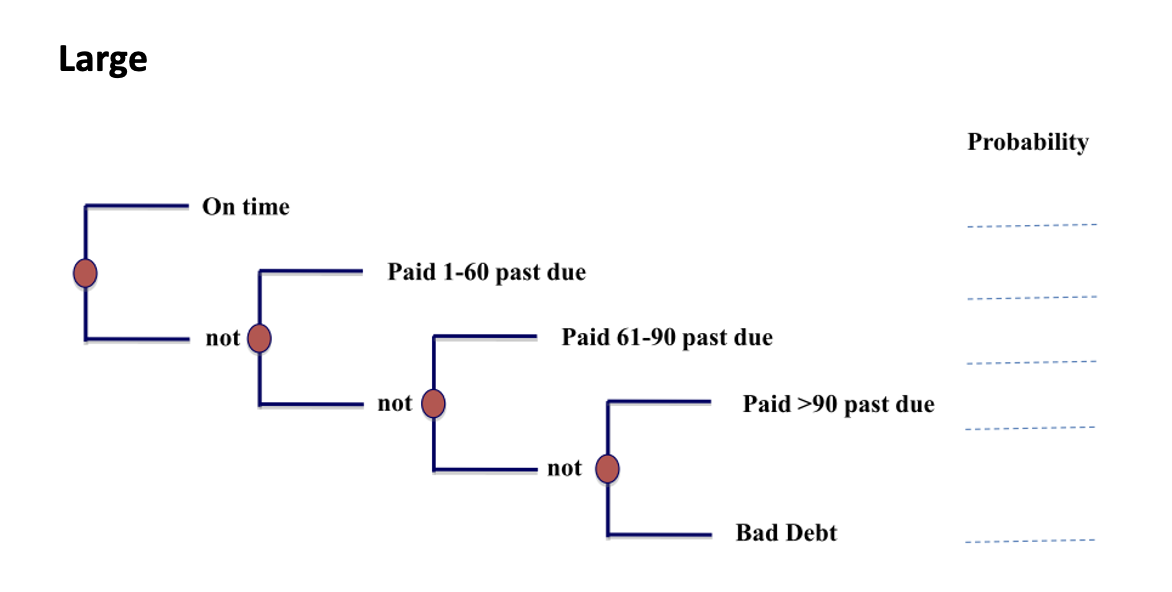
Reconsider the Bad Debt problem from Homework 1, and its accompanying dataset.The second column in the dataset provides the variable "Invoice amount".Suppose that the firm separates invoices into two categories: an invoice is "Small" if the invoice amount is less than $4,000, and it is "Large" if it is $4,000 or more.How would this firm estimate its bad debt?We answer this by performing the following steps.
(a)Create two copies of the probability tree structure (see below); label one tree as "Small" and one as "Large".Using the data from Homework 1 (BadDebt.xls), fill in probability information for the "Small" tree using data on small invoices.Do the same for the "Large" tree using data on large invoices.(Hint:you are merely dividing the data into two sets, and doing two new versions of the same exercise you did in Homework 1!)Your answer should be two complete trees.
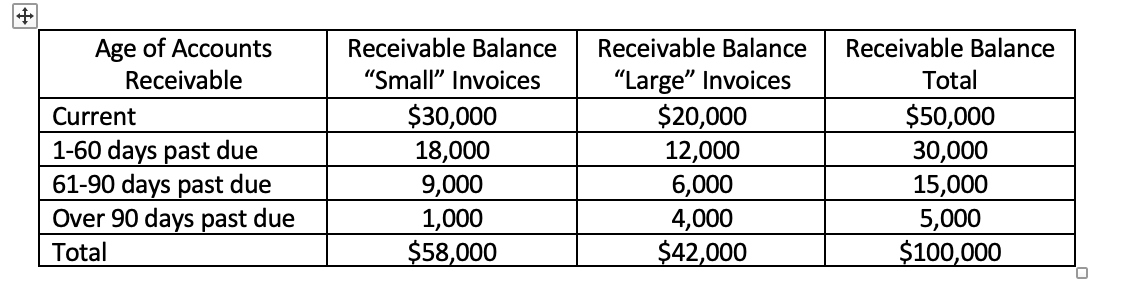
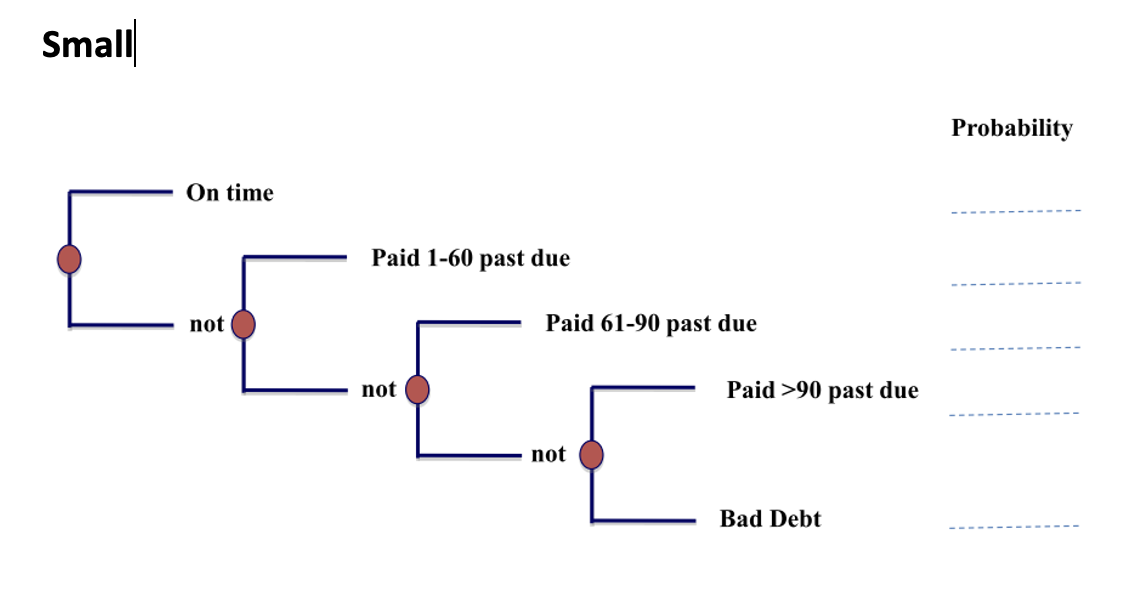
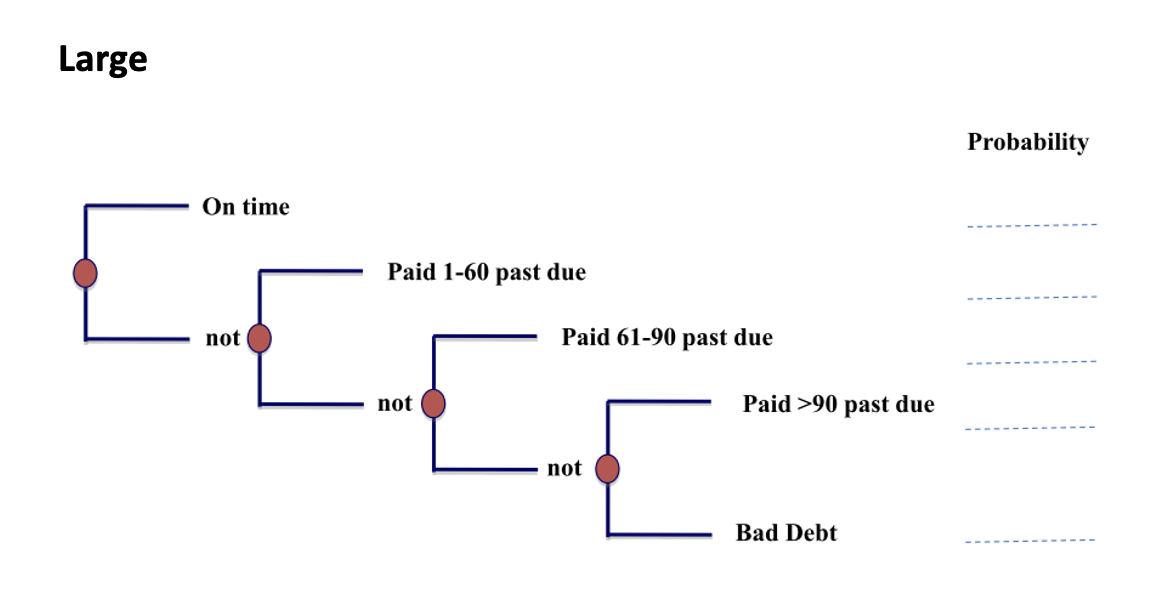
Age of Accounts Receivable Current 160 days past due 61-90 days past due Over 90 days past due Total Receivable Balance "Small\" Invoices $30,000 18,000 9,000 1,000 58 000 Receivable Balance "Large" Invoices $20,000 12,000 5,000 4,000 42 000 Receivable Balance Total $50,000 30,000 15,000 100 000 Small Probability On time Paid 1-60 past due not Paid 61-90 past due not Paid >90 past due not Bad DebtLarge Probability On time Paid 1-60 past due ______ not { Paid 61-90 past due _______ not { Paid >90 past due __________ not { Bad Debt
Step by Step Solution
There are 3 Steps involved in it

Get step-by-step solutions from verified subject matter experts
 Study Help