



Question: Reference: https://drive.google.com/folderview?id=1GYXYB-XKYhuZupLvZIRlHJ28gwfQ8lc7 GENERAL PHYSICS 2 Name of Learner: Date: Grade Level 8; Section: ACTIVITY: ELECTRIC CHARGE The term electricity came from the Greek work electron,
Reference:
https://drive.google.com/folderview?id=1GYXYB-XKYhuZupLvZIRlHJ28gwfQ8lc7
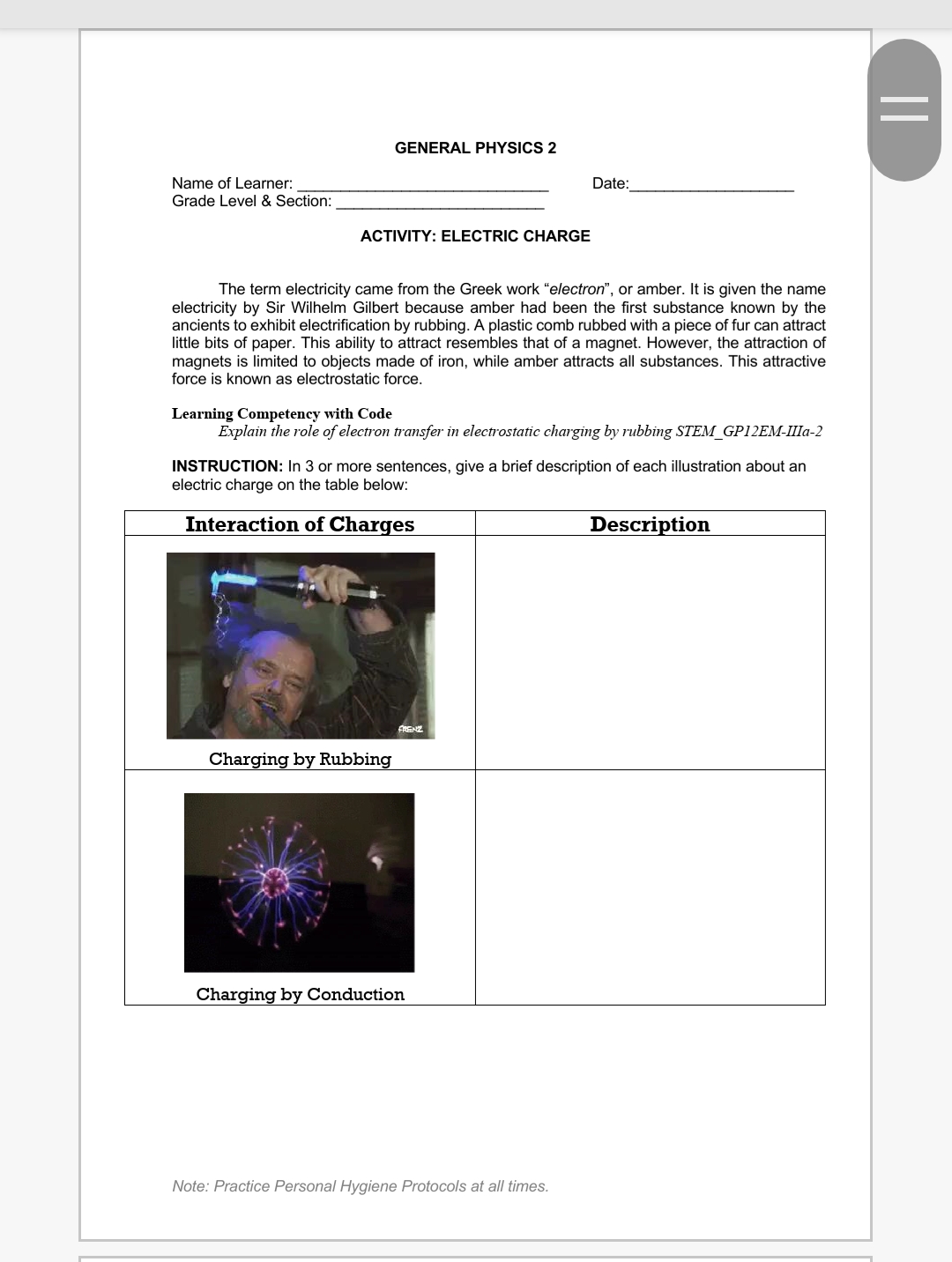
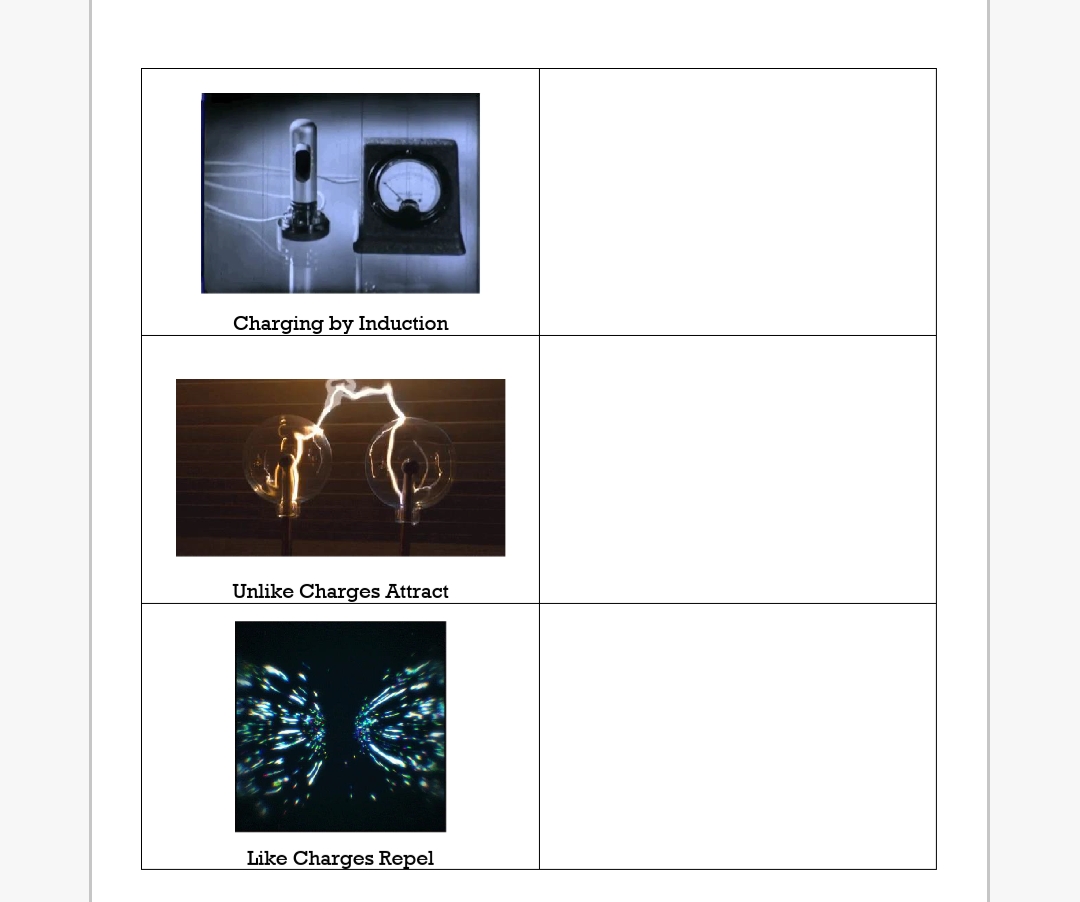
GENERAL PHYSICS 2 Name of Learner: Date: Grade Level 8; Section: ACTIVITY: ELECTRIC CHARGE The term electricity came from the Greek work \"electron", or amber. It is given the name electricity by Sir Wilhelm Gilbert because amber had been the rst substance known by the ancients to exhibit electrication by rubbing. A plastic comb rubbed with a piece of fur can attract little bits of paper. This ability to attract resembles that of a magnet. However, the attraction of magnets is limited to objects made of iron, while amber attracts all substances. This attractive force is known as electrostatic force. Learning Competency with Code Expr'ain the mic ofei'ectrort Hanger in efecrrosratic charging by rubbing STEJ_GPIZEMMa2 INSTRUCTION: In 3 or more sentences. give a brief description of each illustration about an electric charge on the table below: Interaction of Charges Description Charging by Rubbing Charging by Conduction Note: Practice Persona! Hygiene Protocols at all times. Charging by Induction Unlike Charges Attract Like Charges Repel
Step by Step Solution
There are 3 Steps involved in it

Get step-by-step solutions from verified subject matter experts