







Question: Reference: Management: A Practical Introduction, 10th Ed., Angelo Kinicki & Denise Breaux Soignet Book Based off Chapter 14 Review Chapter 14 on Leadership Then go
Reference: Management: A Practical Introduction, 10th Ed., Angelo Kinicki & Denise Breaux Soignet Book
Based off Chapter 14
Review Chapter 14 on Leadership
Then go to the following link discussing your personality trait:
Going to https://www.humanmetrics.com/personality/istj-type?EI=-72&SN=6&TF=6&JP=41
Then give a self-described Leadership Style in which you evaluate yourself against the five approaches to Leadership based on your personality trait (include the additional approaches) (table 14.2) and discuss what you believe your preferred style of Leadership is.
Give examples and website link references to support your statements.
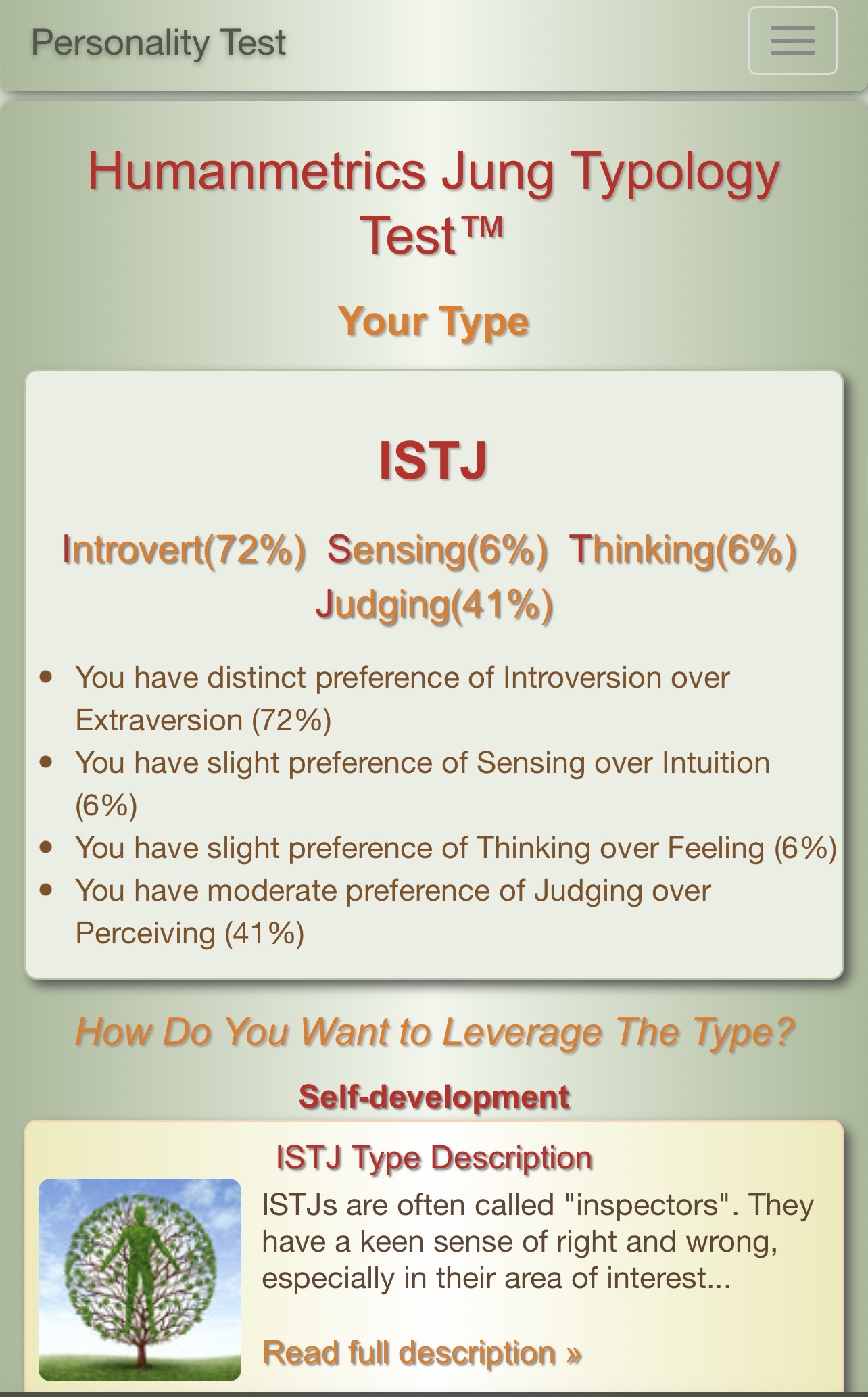
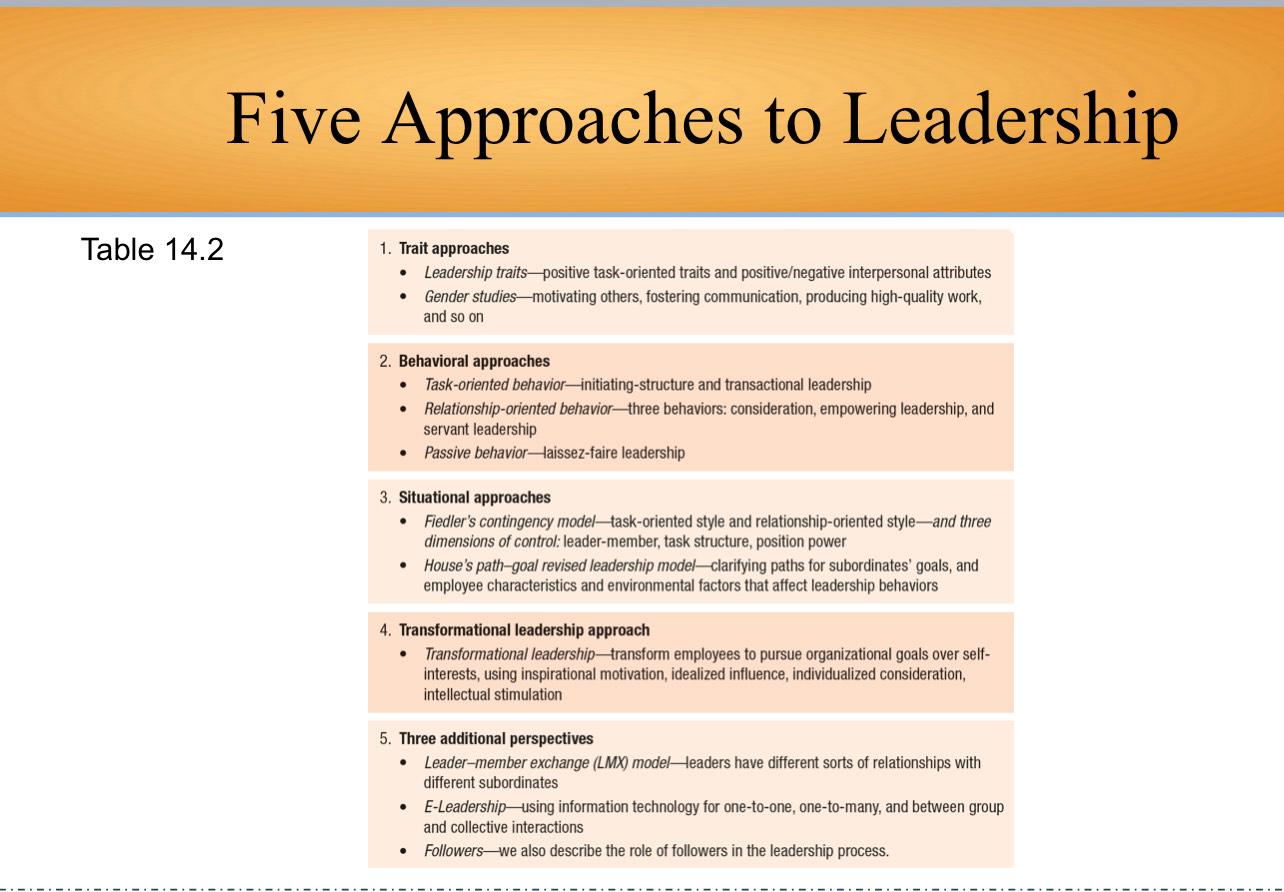
ISTJ Introvert(72%) Sensing(6%) Thinking(6%) Judging(41 %) You have distinct preference of lntroversion over Extraversion (72%) You have slight preference of Sensing over Intuition (6%) You have slight preference of Thinking over Feeling (6%) You have moderate preference of Judging over Perceiving (41%) Do You Want to Leverage The '2 Self-development ISTJ Type Description . . . lSTJs are often called \"inspectors". They , have a keen sense of right and wrong, especially in their area of interest... Read full description Five Approaches to Leadership Table 14.2 1. Trait approaches Leadership traits-positive task-oriented traits and positiveegative interpersonal attributes Gender studies-motivating others, fostering communication, producing high-quality work, and so on 2. Behavioral approaches Task-oriented behavior-initiating-structure and transactional leadership Relationship-oriented behavior-three behaviors: consideration, empowering leadership, and servant leadership Passive behavior-laissez-faire leadership 3. Situational approaches Fiedler's contingency model-task-oriented style and relationship-oriented style-and three dimensions of control: leader-member, task structure, position power House's path-goal revised leadership model-clarifying paths for subordinates' goals, and employee characteristics and environmental factors that affect leadership behaviors 4. Transformational leadership approach Transformational leadership-transform employees to pursue organizational goals over self- interests, using inspirational motivation, idealized influence, individualized consideration, intellectual stimulation 5. Three additional perspectives Leader-member exchange (LMX) model-leaders have different sorts of relationships with different subordinates E-Leadership-using information technology for one-to-one, one-to-many, and between group and collective interactions Followers-we also describe the role of followers in the leadership process
Step by Step Solution
There are 3 Steps involved in it

Get step-by-step solutions from verified subject matter experts
 Study Help