Question: Reflective Writing Guidelines Make sure the reflective entry addresses all four questions of the focused conversation model: 1. OBJECTIVE: Begin with data, facts, external reality.
Reflective Writing Guidelines Make sure the reflective entry addresses all four questions of the focused conversation model: 1. OBJECTIVE: Begin with data, facts, external reality. 2. REFLECTIVE: Evoke immediate personal reactions, internal responses, sometimes emotions or feelings, hidden images, and associations with the facts. 3. INTERPRETIVE: Draw out the meaning, values, significance, implications. 4. DECISIONAL: Bring the conversation to a close, eliciting resolution to make a decision about the future. The reflective writing must be in APA format, and make sure you include the cover page, running header, and table of contents. The minimum word requirement for the entry is 500 words. Each reflective writing is worth 5% of your overall grade.
Hi, Can you base on my rubric, guidelines, and writing sample. Can you help me my homework and find the source? Thank you
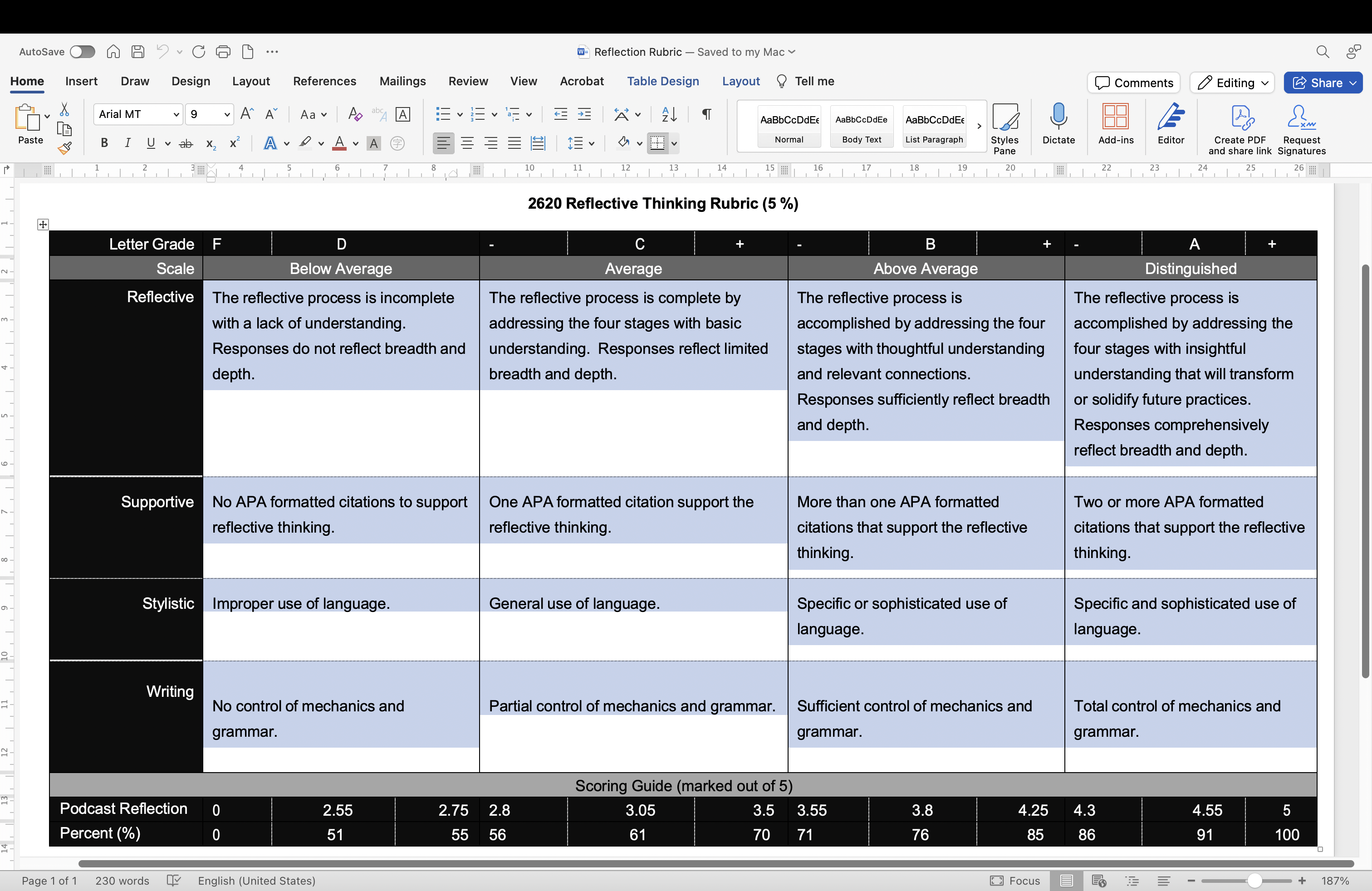
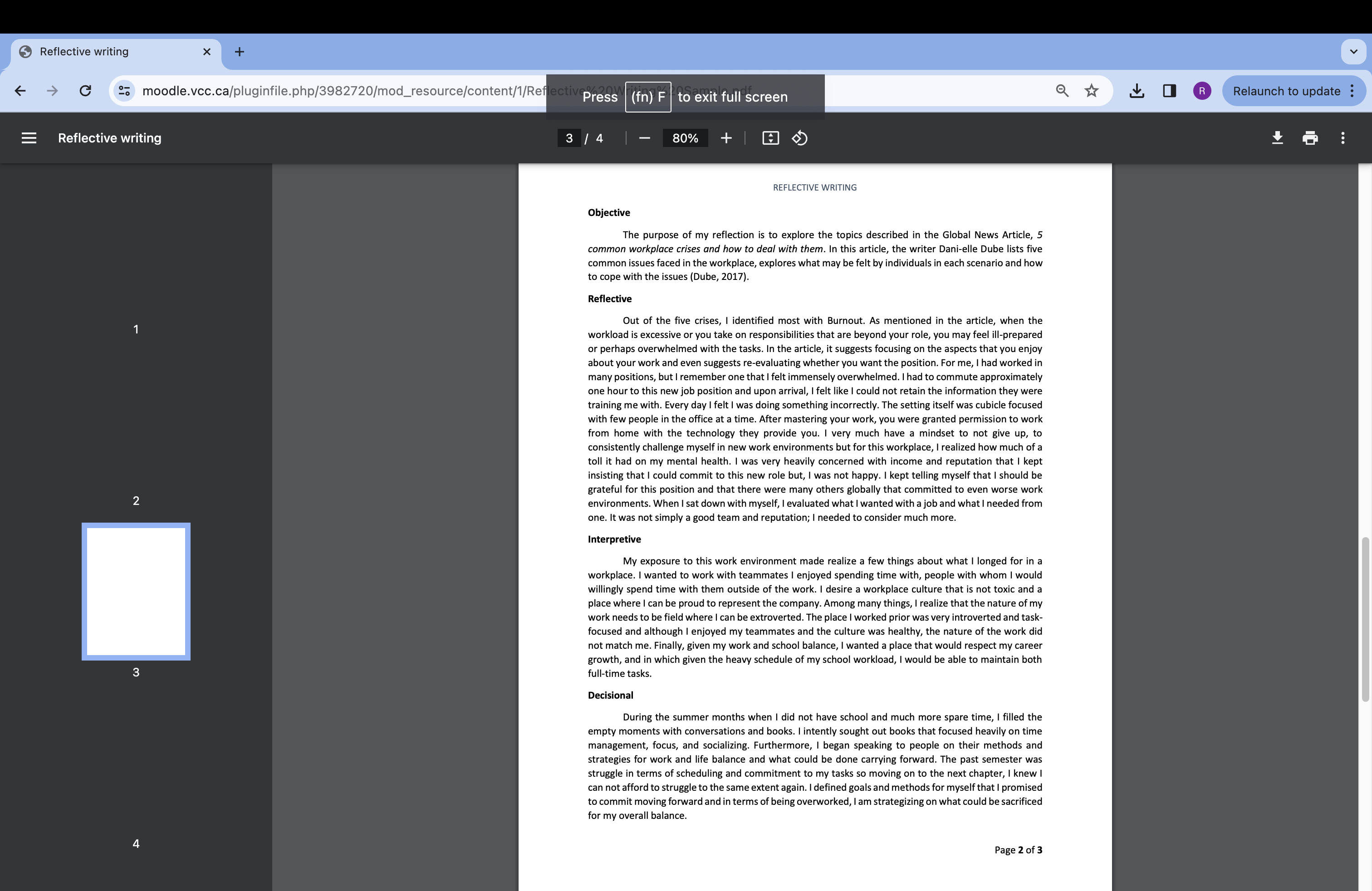
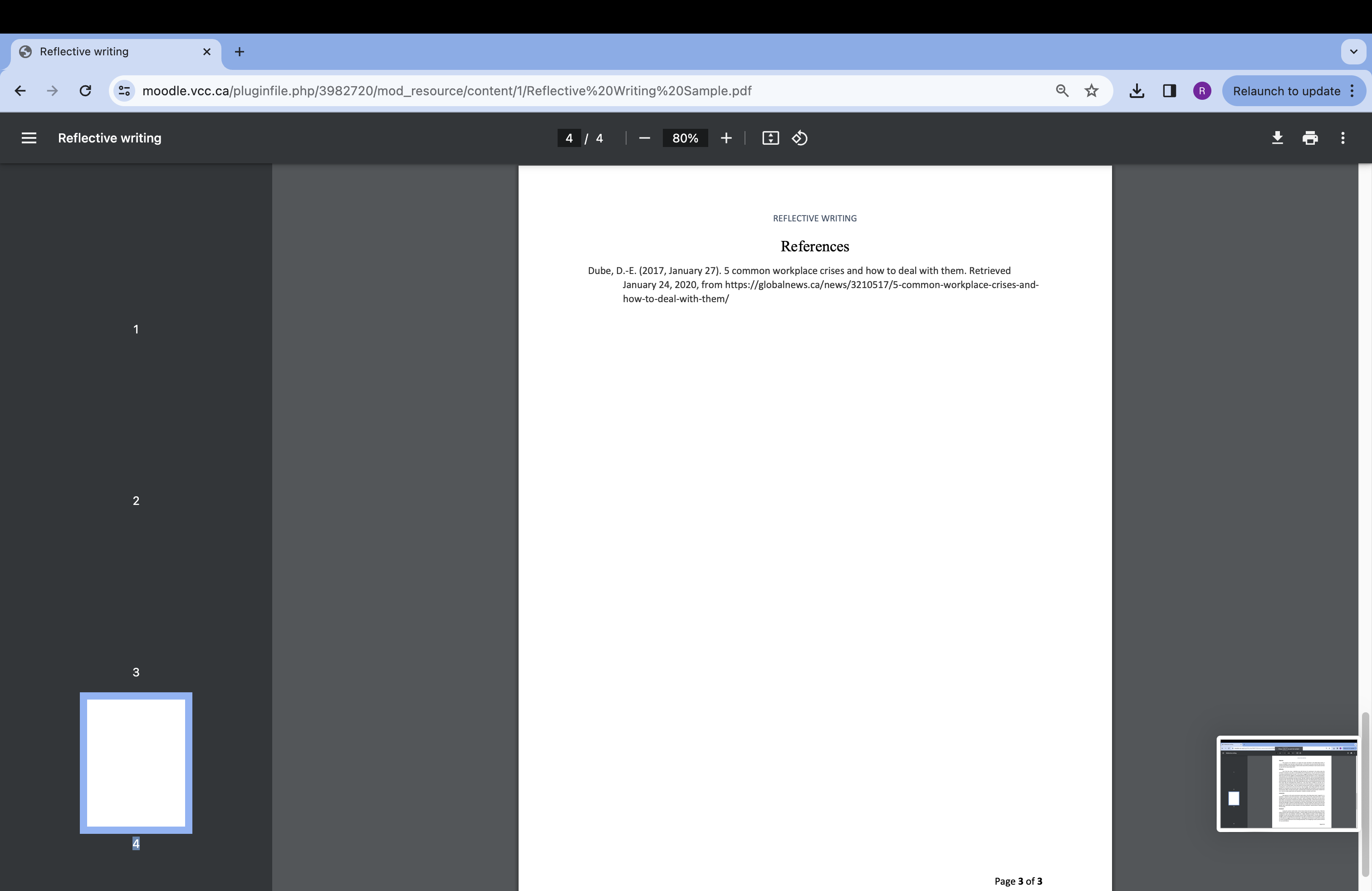
AutoSave On A . C G G ... w- Reflection Rubric - Saved to my Mac 2 Home Insert Draw Design Layout References Mailings Review View Acrobat Table Design Layout Tell me Comments Editing Share Arial MT v 9 V AA Aa Ap by A AaBbCcDdEE AaBbCcDdEe AaBbCcDdEE Paste BIUvab X X|A DAVA Normal Body Text List Paragraph Styles Dictate Add-ins Editor Create PDF Request Pane and share link Signatures 10 13 14 15 16 , 1 17 1 181 129 120 22 1 23 , 1 24 25 26 2620 Reflective Thinking Rubric (5 %) Letter Grade F D C B A Scale Below Average Average Above Average Distinguished Reflective The reflective process is incomplete The reflective process is complete by The reflective process is The reflective process is with a lack of understanding. addressing the four stages with basic accomplished by addressing the four accomplished by addressing the Responses do not reflect breadth and understanding. Responses reflect limited stages with thoughtful understanding four stages with insightful depth. breadth and depth. and relevant connections. understanding that will transform Responses sufficiently reflect breadth or solidify future practices. and depth. Responses comprehensively reflect breadth and depth. Supportive No APA formatted citations to support One APA formatted citation support the More than one APA formatted Two or more APA formatted reflective thinking. reflective thinking. citations that support the reflective citations that support the reflective thinking. thinking. Stylistic Improper use of language. General use of language. Specific or sophisticated use of Specific and sophisticated use of language. language. Writing No control of mechanics and Partial control of mechanics and grammar. Sufficient control of mechanics and Total control of mechanics and grammar. grammar. grammar. Scoring Guide (marked out of 5) Podcast Reflection 0 2.55 2.75 2.8 3.05 3.5 3.55 3.8 4.25 4.3 4.55 5 Percent (%) 0 51 55 56 61 70 71 76 85 86 91 100 Page 1 of 1 230 words English (United States) Focus 187%@ Reflective writing 5 + v > C 25 moodle.vcc.ca/pluginfile.php/3982720/mod_resource/content/1/Ref] O T | e e a o Relaunch to update REFLECTIVE WRITING Objective The purpose of my reflection is to explore the topics described in the Global News Article, 5 common workplace crises and how to deal with them. In this article, the writer Dani-elle Dube lists five common issues faced in the workplace, explores what may be felt by individuals in each scenario and how to cope with the issues (Dube, 2017). Reflective Out of the five crises, | identified most with Burnout. As mentioned in the article, when the workload is excessive or you take on responsibilities that are beyond your role, you may feel ill-prepared or perhaps overwhelmed with the tasks. In the article, it suggests focusing on the aspects that you enjoy about your work and even suggests re-evaluating whether you want the position. For me, | had worked in many positions, but | remember one that | felt immensely overwhelmed. | had to commute approximately one hour to this new job position and upon arrival, | felt like | could not retain the information they were training me with. Every day | felt | was doing something incorrectly. The setting itself was cubicle focused with few people in the office at a time. After mastering your work, you were granted permission to work from home with the technology they provide you. | very much have a mindset to not give up, to consistently challenge myself in new work environments but for this workplace, | realized how much of a toll it had on my mental health. | was very heavily concerned with income and reputation that | kept insisting that | could commit to this new role but, | was not happy. I kept telling myself that I should be grateful for this position and that there were many others globally that committed to even worse work environments. When | sat down with myself, | evaluated what | wanted with a job and what | needed from one. It was not simply a good team and reputation; | needed to consider much more. Interpretive My exposure to this work environment made realize a few things about what | longed for in a workplace. | wanted to work with teammates | enjoyed spending time with, people with whom | would willingly spend time with them outside of the work. | desire a workplace culture that is not toxic and a place where | can be proud to represent the company. Among many things, | realize that the nature of my work needs to be field where | can be extroverted. The place | worked prior was very introverted and task- focused and although | enjoyed my teammates and the culture was healthy, the nature of the work did not match me. Finally, given my work and school balance, | wanted a place that would respect my career growth, and in which given the heavy schedule of my school workload, | would be able to maintain both full-time tasks. Decisional During the summer months when I did not have school and much more spare time, | filled the empty moments with conversations and books. | intently sought out books that focused heavily on time management, focus, and socializing. Furthermore, | began speaking to people on their methods and strategies for work and life balance and what could be done carrying forward. The past semester was struggle in terms of scheduling and commitment to my tasks so moving on to the next chapter, | knew | can not afford to struggle to the same extent again. | defined goals and methods for myself that | promised to commit moving forward and in terms of being overworked, | am strategizing on what could be sacrificed for my overall balance. Page20f3 Reflective writing X + v 2 moodle.vcc.ca/pluginfile.php/3982720/mod_resource/content/1/Reflective%20Writing%20Sample.pdf Relaunch to update : E Reflective writing 4/4 - 80% + 1 REFLECTIVE WRITING References Dube, D.-E. (2017, January 27). 5 common workplace crises and how to deal with them. Retrieved January 24, 2020, from https://globalnews.caews/3210517/5-common-workplace-crises-and- how-to-deal-with-them/ 2 w Page 3 of 3
Step by Step Solution
There are 3 Steps involved in it
1 Expert Approved Answer
Step: 1 Unlock
Question Has Been Solved by an Expert!
Get step-by-step solutions from verified subject matter experts
Step: 2 Unlock
Step: 3 Unlock
Students Have Also Explored These Related Business Writing Questions!