



Question: Reformulate your query from Question 1 to use the other outer join type (for example, if you used a LEFT outer join in Exercise 10-1,
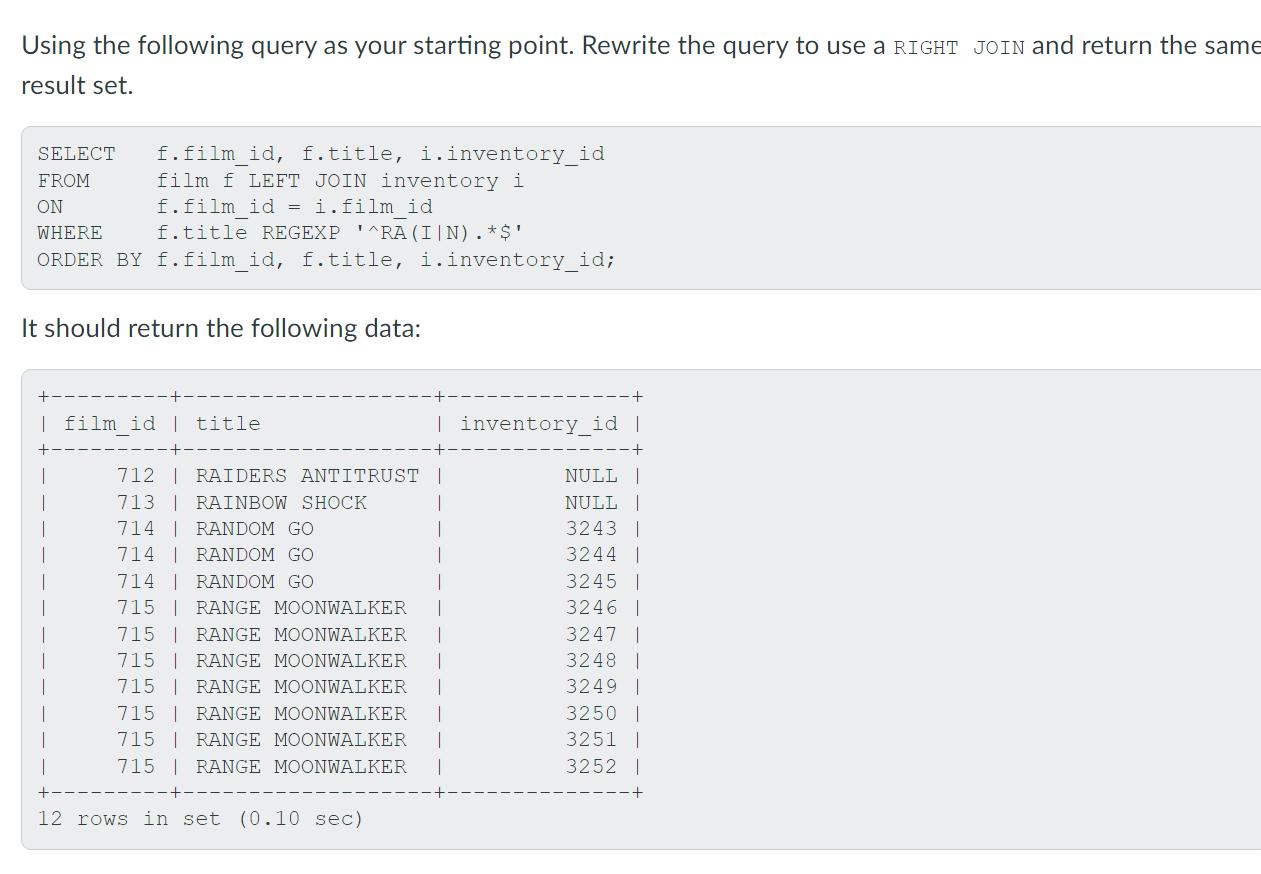
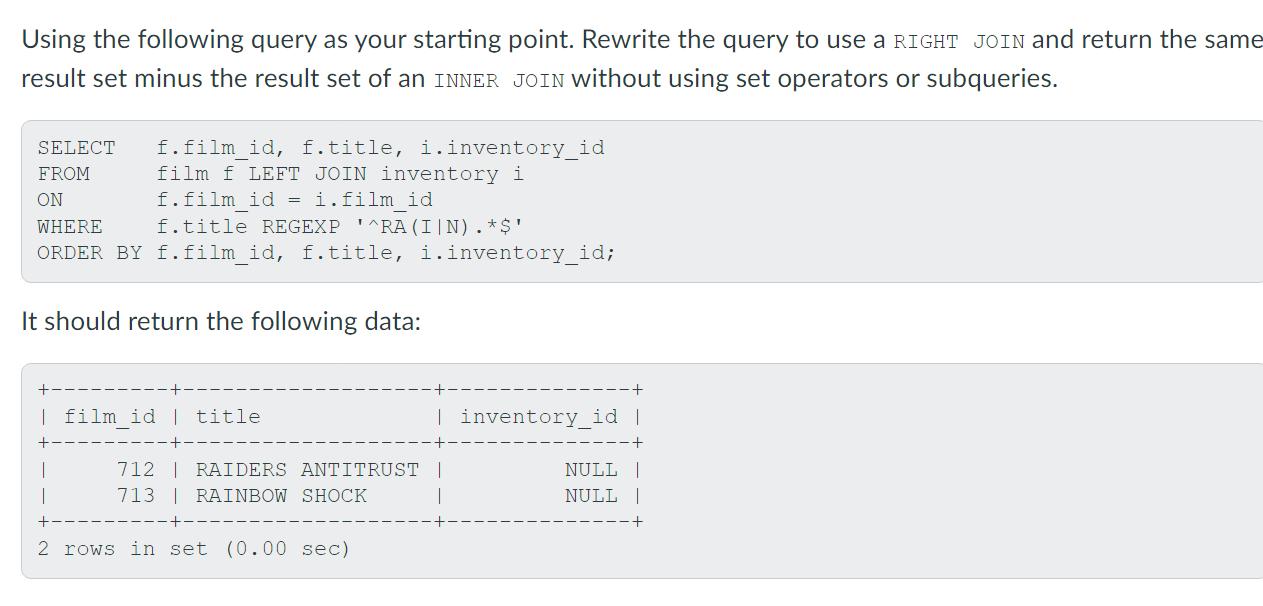
Reformulate your query from Question 1 to use the other outer join type (for example, if you used a LEFT outer join in Exercise 10-1, use a RIGHT outer join this time) such that the results are identical to Question 1.
QUESTION 3
Devise a query that will generate the set {1,2,3, ..., 99, 100}. (Hint: use a cross join with at least two FROM clause subqueries.)
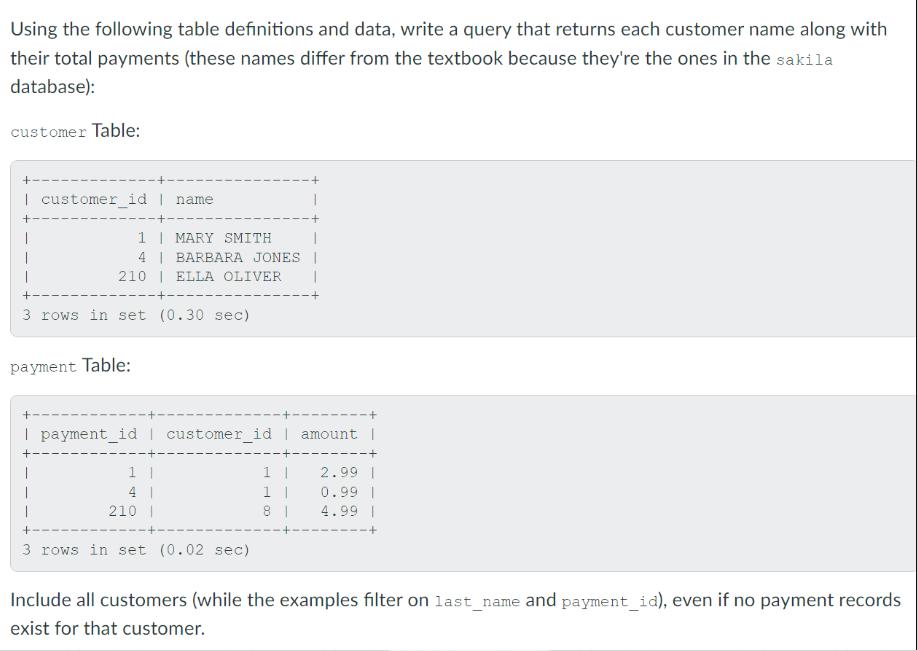
Using the following table definitions and data, write a query that returns each customer name along with their total payments (these names differ from the textbook because they're the ones in the sakila database): customer Table: | customer_id | name 1 MARY SMITH 4 BARBARA JONES | | ELLA OLIVER I 210 + +---- 3 rows in set (0.30 sec) payment Table: | payment_id | customer_id | amount | 1 1 2.99 1 0.99 | 11 81 4.99 I + 11 41 210 I 3 rows in set (0.02 sec) Include all customers (while the examples filter on last_name and payment_id), even if no payment records exist for that customer.
Step by Step Solution
3.50 Rating (157 Votes )
There are 3 Steps involved in it
For the first part of the question regarding the change to a RIGHT OUTER JOIN you can reformulate th... View full answer

Get step-by-step solutions from verified subject matter experts