







Question: REMEMBER: AS WE KNOW THEM TODAY Short Answer: Describe three inventions that were important to the development of movies as we know them today. Film
REMEMBER: AS WE KNOW THEM TODAY
Short Answer: Describe three inventions that were important to the development of movies as we know them today.
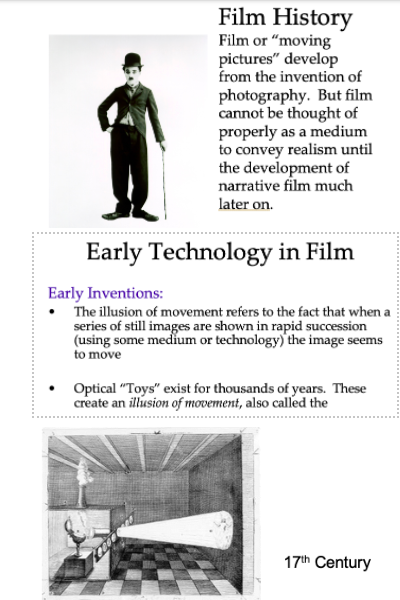
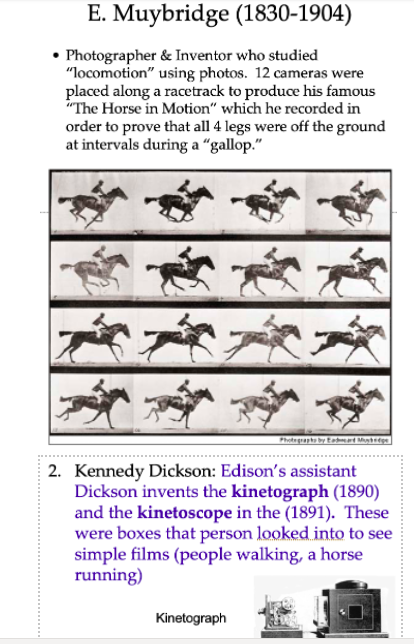
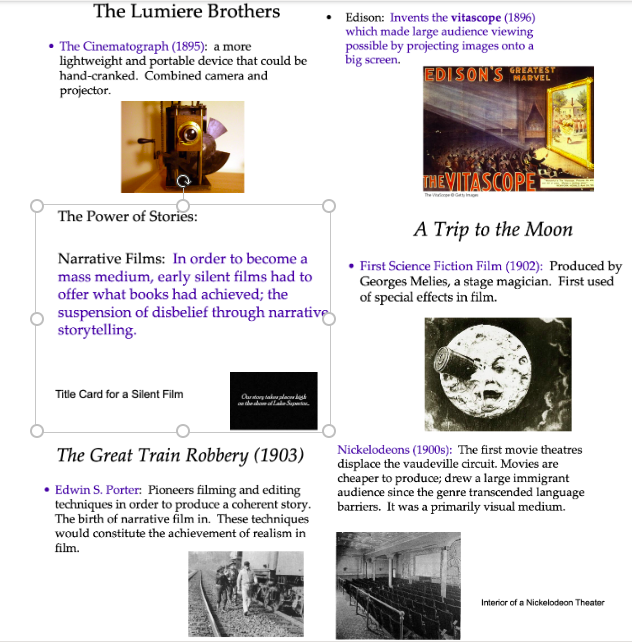
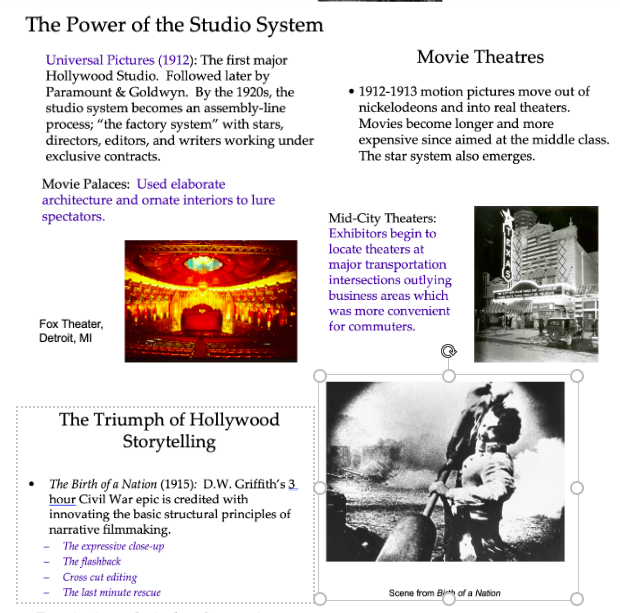
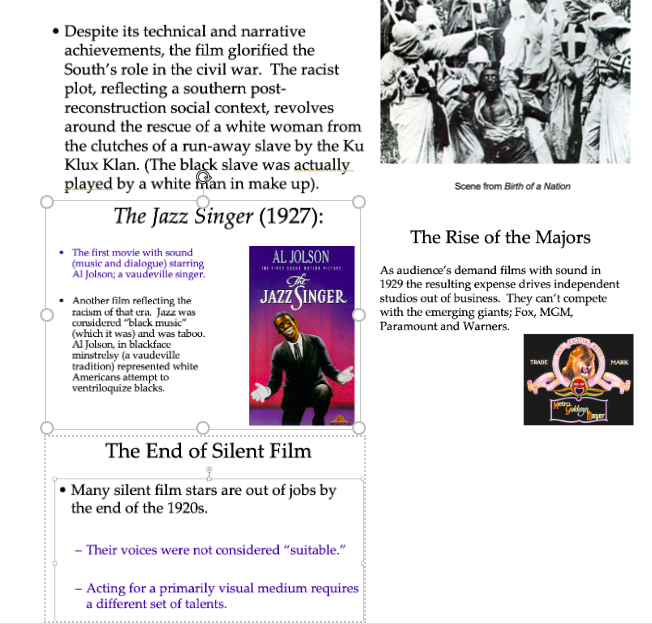
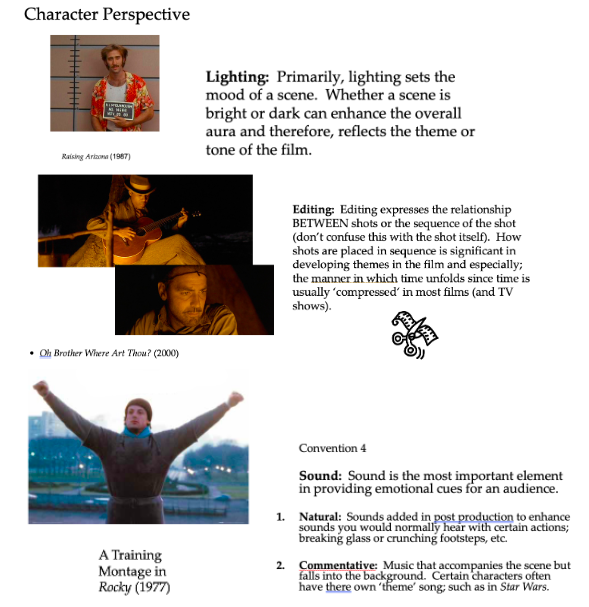
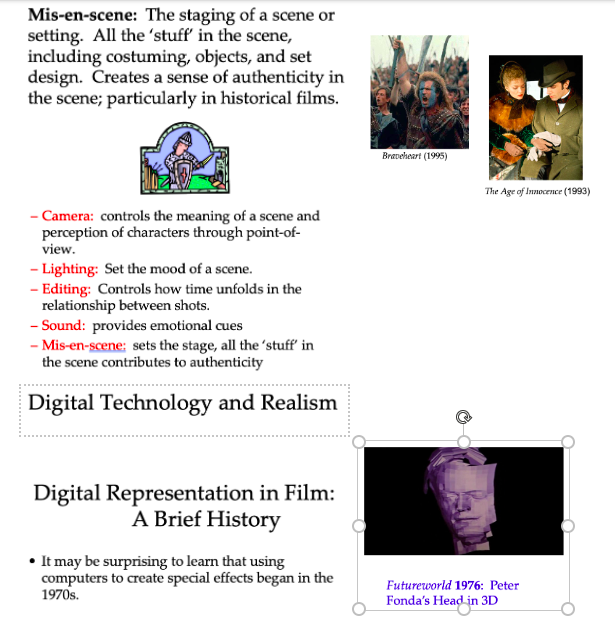
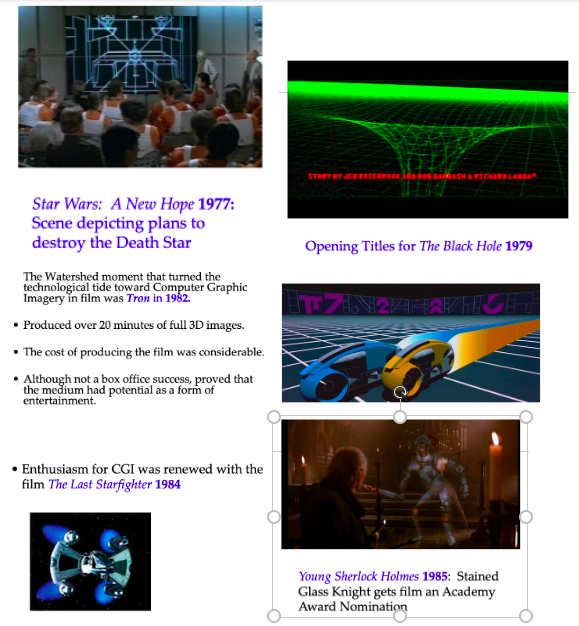
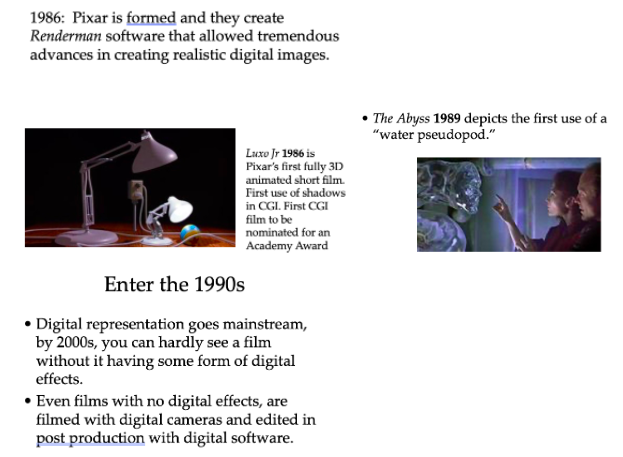
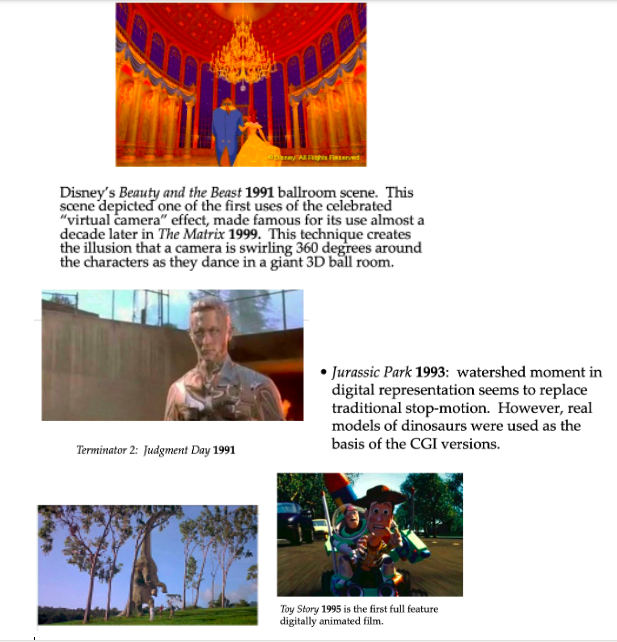
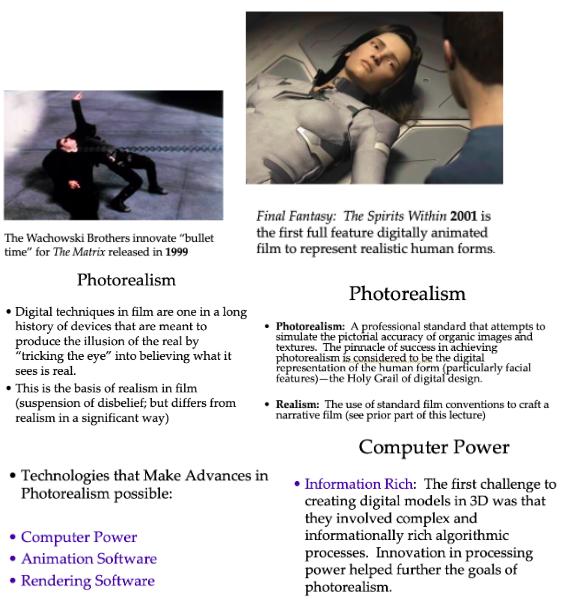
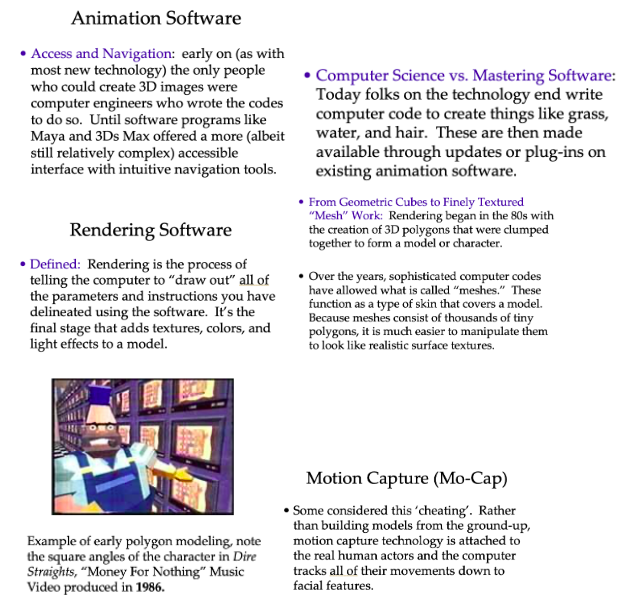
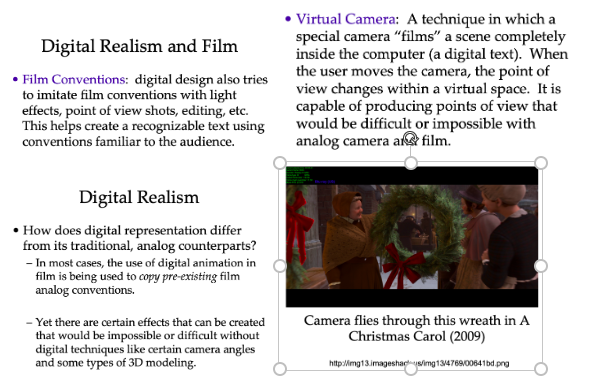
Film History Film or "moving pictures" develop from the invention of photography. But film cannot be thought of properly as a medium to convey realism until the development of narrative film much later on. Early Technology in Film Early Inventions: The illusion of movement refers to the fact that when a series of still images are shown in rapid succession (using some medium or technology) the image seems to move Optical "Toys" exist for thousands of years. These create an illusion of movement, also called the 17th Century E. Muybridge (1830-1904) Photographer & Inventor who studied "locomotion" using photos. 12 cameras were placed along a racetrack to produce his famous "The Horse in Motion" which he recorded in order to prove that all 4 legs were off the ground at intervals during a "gallop." Photographs by 2. Kennedy Dickson: Edison's assistant Dickson invents the kinetograph (1890) and the kinetoscope in the (1891). These were boxes that person looked into to see simple films (people walking, a horse running) Kinetograph The Lumiere Brothers The Cinematograph (1895): a more lightweight and portable device that could be hand-cranked. Combined camera and projector. Edison: Invents the vitascope (1896) which made large audience viewing possible by projecting images onto a big screen. EDISONS HAVE GREATEST THEVITASCOPE The Power of Stories: A Trip to the Moon Narrative Films: In order to become a mass medium, early silent films had to offer what books had achieved; the suspension of disbelief through narrativa storytelling First Science Fiction Film (1902): Produced by Georges Melies, a stage magician. First used of special effects in film. Title Card for a Silent Film Olarak wade The Great Train Robbery (1903) Edwin S. Porter: Pioneers filming and editing techniques in order to produce a coherent story. The birth of narrative film in. These techniques would constitute the achievement of realism in film. Nickelodeons (1900s): The first movie theatres displace the vaudeville circuit. Movies are cheaper to produce; drew a large immigrant audience since the genre transcended language barriers. It was a primarily visual medium. Interior of a Nickelodeon Theater The Power of the Studio System Universal Pictures (1912): The first major Movie Theatres Hollywood Studio. Followed later by Paramount & Goldwyn. By the 1920s, the 1912-1913 motion pictures move out of studio system becomes an assembly-line nickelodeons and into real theaters. process; "the factory system" with stars, Movies become longer and more directors, editors, and writers working under expensive since aimed at the middle class. exclusive contracts. The star system also emerges. Movie Palaces: Used elaborate architecture and ornate interiors to lure spectators. Mid-City Theaters: Exhibitors begin to locate theaters at major transportation intersections outlying business areas which was more convenient Fox Theater for commuters. Detroit, MI The Triumph of Hollywood Storytelling The Birth of a Nation (1915): D.W. Griffith's 3. hour Civil War epic is credited with innovating the basic structural principles of narrative filmmaking. The expressive close-up The flashback Cross cut editing The last minute rescue Scene from 8 of a Nation Despite its technical and narrative achievements, the film glorified the South's role in the civil war. The racist plot, reflecting a southern post- reconstruction social context, revolves around the rescue of a white woman from the clutches of a run-away slave by the Ku Klux Klan. (The black slave was actually played by a white man in make up). The Jazz Singer (1927): Scene from Birth of a Nation AL JOLSON The Rise of the Majors As audience's demand films with sound in 1929 the resulting expense drives independent studios out of business. They can't compete with the emerging giants; Fox, MGM, Paramount and Warners. The first movie with sound (music and dialogue) starring Al Jolson; a vaudeville singer. Another film reflecting the racisin of that era. Jazz was considered "black music" (which it was) and was taboo. Al Jolson, in blackface minstrelsy (a vaudeville tradition) represented white Americans attempt to ventriloquize blacks. JAZZSINGER TRADE MARK wetry The End of Silent Film Many silent film stars are out of jobs by the end of the 1920s. - Their voices were not considered "suitable." - Acting for a primarily visual medium requires a different set of talents. The Golden Age of Hollywood 1930s-1940s: This era is considered by film historians to be the apex of the industry before the breakup of the studio monopoly (the Paramount Decision) and declining attendance (competition from Television) emerges in the 1950s. Film Genres Genre Economics: By making films that fall into popular genres, the movie industry provides The most popular film genres are solidified by quickly produced (assembly line logic of the this familiar models that can be easily imitated and the 1930s into the following categories: era). - Gangster films 1. Product standardization: imitation makes - Westerns it easier to promote a film that already fits - Musicals into a pre-existing category. - Comedies 2. Product differentiation: usually occurs - Melodramas through technological inventions and - Horror films tweaking film form and film conventions. Famous Films of the Golden Age Dracula (1931) Frankenstein (1931) Silly Symphonies (Disney 1932) King Kong (1933) Modern Times (1936) Snow White & The Seven Dwarfs (1937) Gone With the Wind (1939) Stagecoach (1939) Fantasia (1940) Citizen Kane (1941) Casablanca (1941) Mr. Smith Goes to Washington (1942) The Postman Always Rings Twice (1943) Double Indemnity (1944) The Best Years of Our Lives (1946) Suburbs: After WWII people moved to the suburbs and spent more money on B. The Paramount Decision: By the mid- household products rather than movie tickets. 1940s, the Justice Department was demanding that the five major film companies end their monopoly. The Supreme Court divested the them of their theaters as a result. Home Video & Cable: Present a new Television: With TV dominating family challenge to Hollywood. People could audiences by the mid-1950s, Hollywood now watch films at home. Again, directors explored taboo sexual themes Hollywood adapts by enhancing that were formerly off limits as a exhibition technology such as marketing technique. Technicolor, Wide-Screen and later, digital special effects and surround sound. Rebel Without A Cause (1955) Jurassic Park Understanding How a Visual Media Text is Made - The Conventions of Realism in Film Film Language: We can talk about the mechanisms for creating a visual texts by treating them as a type of visual language. Film precedes Television historically. Film conventions are the basis of all visual texts. Other visual texts that use and can be critiqued with film conventions Television shows Advertisements Video games Reality-Based Programming News Documentaries We are familiar with these conventions and accept them as 'real' even though we seldom stop to consider how the 'work." Film conventions, like so many other types of communication conventions, have a tendency to become invisible. It is therefore, important to be able to identify them and understand how they influence the meaning of a visual text. The Conventions of Realism The Suspension of Disbelief: We know that films aren't "real" but we still enjoy them "as if they were real. We identify with characters, feel tension, and enjoy the resolution of problems at the end. Realism: In film refers to the illusion of resemblance to reality created through the manipulation of film language and conventions. Camera Lighting Mis-en-scene Editing Sound Realism is not Reality: Realism is a set of conventions; a highly fabricated text and not a window, onto reality of life as it is the news, documentaries, and reality based television are no exceptions). 1. Ease of Belief: We need to critique realism so that we don't just believe what we see. 2. Expectations: Audiences bring sets of expectations to the cinema based on cultural context and the familiarity of film conventions. Again, when our expectations about how films work are fulfilled, we rafely wonder how. 3. Erasure of Production: The effort to create a film is erased in the final product. The end product is 'seamless.' We don't see the stuff that ends up on the cutting room floor. This is true of many texts. The Five Film Conventions Camera: The camera imitates the movement of the eye. It plays an integral role in controlling the meaning and experience of a film. It often controls how we identify with characters. It creates a point-of-view. The Shot: An excerpl or part of the total film. We can examine shots individually, out it is important to understand them within the context of the film in its totality. Close Up Camera Shot" Techniques Close Up: Often used to register emotions on a characters face; lends a sense of drama and tragedy to the scene. Long Shot: Often convey a sense of 'vastness' such as with nature shots. Provides emotional distance for the audience. Elizabeth Taylor in Who's Afraid of Virginia Woolf? (1966) Long Shot Shot-Reverse-Shot: Used to represent a conversation between two people by showing the front of one character's face and then the other. Like most film language, this is an arbitrary convention since we don't experience conversations Battle Scene from The Return of the King (2003) like this in reality." Audience Perspective Camera & Point-of-View Defined by the position of the camera in relation to an object, scene or character. Audience Perspective: We are allowed a view of the scene that none of the characters have. Character Perspective: We are adopting the character's point of view (inhabiting their vision). This is extremely important for how we identify with a character - whether that is a positive or negative experience. An emotionally charged scene from Star Wars: The Empire Strikes Back (1980) Character Perspective SIE Lighting: Primarily, lighting sets the mood of a scene. Whether a scene is bright or dark can enhance the overall aura and therefore, reflects the theme or tone of the film. Raising Arizon (1987) Editing: Editing expresses the relationship BETWEEN shots or the sequence of the shot (don't confuse this with the shot itself). How shots are placed in sequence is significant in developing themes in the film and especially; the manner in which time unfolds since time is usually compressed' in most films and TV shows). Oh Brother Where Art Them? (2000) Convention 4 Sound: Sound is the most important element in providing emotional cues for an audience. 1. Natural: Sounds added in post production to enhance sounds you would normally hear with certain actions; breaking glass or crunching footsteps, etc. 2. Commentative: Music that accompanies the scene but falls into the background. Certain characters often have there own theme song, such as in Star Wars. A Training Montage in Rocky (1977) Mis-en-scene: The staging of a scene or setting. All the 'stuff in the scene, including costuming, objects, and set design. Creates a sense of authenticity in the scene; particularly in historical films. TI Braveheart (1995) The Age of Innocence (1993) - Camera: controls the meaning of a scene and perception of characters through point-of- view. - Lighting: Set the mood of a scene. - Editing: Controls how time unfolds in the relationship between shots. - Sound: provides emotional cues - Mis-en-scene: sets the stage, all the 'stuff' in the scene contributes to authenticity Digital Technology and Realism Digital Representation in Film: A Brief History It may be surprising to learn that using computers to create special effects began in the 1970s. Futureuorld 1976: Peter Fonda's Head in 3D JERSEBROGEARS BARCASH RICHIESLAND Star Wars: A New Hope 1977: Scene depicting plans to destroy the Death Star Opening Titles for The Black Hole 1979 The Watershed moment that turned the technological tide toward Computer Graphic Imagery in film was Tron in 1982. Produced over 20 minutes of full 3D images. The cost of producing the film was considerable. Although not a box office success, proved that the medium had potential as a form of entertainment. Enthusiasm for CGI was renewed with the film The Last Starfighter 1984 Young Sherlock Holmes 1985: Stained Glass Knight gets film an Academy Award Nomination 1986: Pixar is formed and they create Renderman software that allowed tremendous advances in creating realistic digital images. The Abyss 1989 depicts the first use of a "water pseudopod." Luxo Jr 1986 is Pixar's first fully 3D animated short film First use of shadows in CGI. First CGI film to be nominated for an Academy Award Enter the 1990s Digital representation goes mainstream, by 2000s, you can hardly see a film without it having some form of digital effects. Even films with no digital effects, are filmed with digital cameras and edited in post production with digital software. ODY A Disney's Beauty and the Beast 1991 ballroom scene. This scene depicted one of the first uses of the celebrated "virtual camera" effect, made famous for its use almost a decade later in The Matrix 1999. This technique creates the illusion that a camera is swirling 360 degrees around the characters as they dance in a giant 3D ball room. Jurassic Park 1993: watershed moment in digital representation seems to replace traditional stop-motion. However, real models of dinosaurs were used as the basis of the CGI versions. Terminator 2: Judgment Day 1991 Toy Story 1995 is the first full feature digitally animated film. Final Fantasy: The Spirits Within 2001 is The Wachowski Brothers innovate "bullet the first full feature digitally animated time" for The Matrix released in 1999 film to represent realistic human forms. Photorealism Photorealism Digital techniques in film are one in a long history of devices that are meant to Photorealism: A professional standard that attempts to produce the illusion of the real by simulate the pictorial accuracy of organic images and textures. The pinnacle of success in achieving "tricking the eye" into believing what it photorealism is considered to be the digital sees is real. representation of the human form (particularly facial This is the basis of realism in film features)-the Holy Grail of digital design. (suspension of disbelief; but differs from Realism: The use of standard film conventions to craft a realism in a significant way) narrative film (see prior part of this lecture) Computer Power Technologies that Make Advances in Information Rich: The first challenge to Photorealism possible: creating digital models in 3D was that they involved complex and Computer Power informationally rich algorithmic Animation Software processes. Innovation in processing Rendering Software power helped further the goals of photorealism. Animation Software Access and Navigation: early on (as with most new technology) the only people who could create 3D images were computer engineers who wrote the codes to do so. Until software programs like Maya and 3Ds Max offered a more (albeit still relatively complex) accessible interface with intuitive navigation tools. Computer Science vs. Mastering Software: Today folks on the technology end write computer code to create things like grass, water, and hair. These are then made available through updates or plug-ins on existing animation software. From Geometric Cubes to Finely Textured "Mesh" Work: Rendering began in the 80s with the creation of 3D polygons that were clumped together to form a model or character. Rendering Software Defined: Rendering is the process of telling the computer to "draw out" all of the parameters and instructions you have delineated using the software. It's the final stage that adds textures, colors, and light effects to a model. Over the years, sophisticated computer codes have allowed what is called "meshes." These function as a type of skin that covers a model. Because meshes consist of thousands of tiny polygons, it is much easier to manipulate them to look like realistic surface textures. Motion Capture (Mo-Cap) Example of early polygon modeling, note the square angles of the character in Dire Straights, "Money For Nothing" Music Video produced in 1986. Some considered this 'cheating'. Rather than building models from the ground-up, motion capture technology is attached to the real human actors and the computer tracks all of their movements down to facial features. Digital Realism and Film Film Conventions: digital design also tries to imitate film conventions with light effects, point of view shots, editing, etc. This helps create a recognizable text using conventions familiar to the audience. Virtual Camera: A technique in which a special camera "films a scene completely inside the computer (a digital text). When the user moves the camera, the point of view changes within a virtual space. It is capable of producing points of view that would be difficult or impossible with analog camera and film. Digital Realism How does digital representation differ from its traditional, analog counterparts? - In most cases, the use of digital animation in film is being used to copy pre-existing film analog conventions. - Yet there are certain effects that can be created that would be impossible or difficult without digital techniques like certain camera angles and some types of 3D modeling. Camera flies through this wreath in A Christmas Carol (2009) http://img13.imageshars/img13147 img131476900641bd.proStep by Step Solution
There are 3 Steps involved in it
1 Expert Approved Answer
Step: 1 Unlock

Question Has Been Solved by an Expert!
Get step-by-step solutions from verified subject matter experts
Step: 2 Unlock
Step: 3 Unlock
 Study Help