







Question: Required 1 Required 2 Required 3 Required 4 Required 5 Required 6 Subtract the total costs expensed across both years (requirement 4) from the total
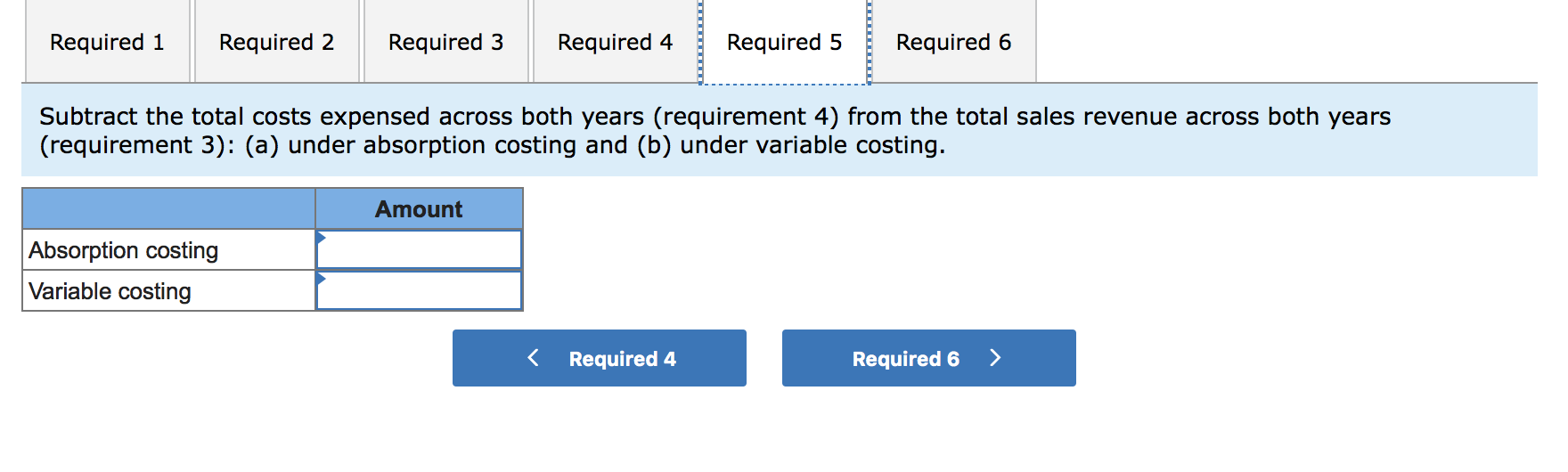
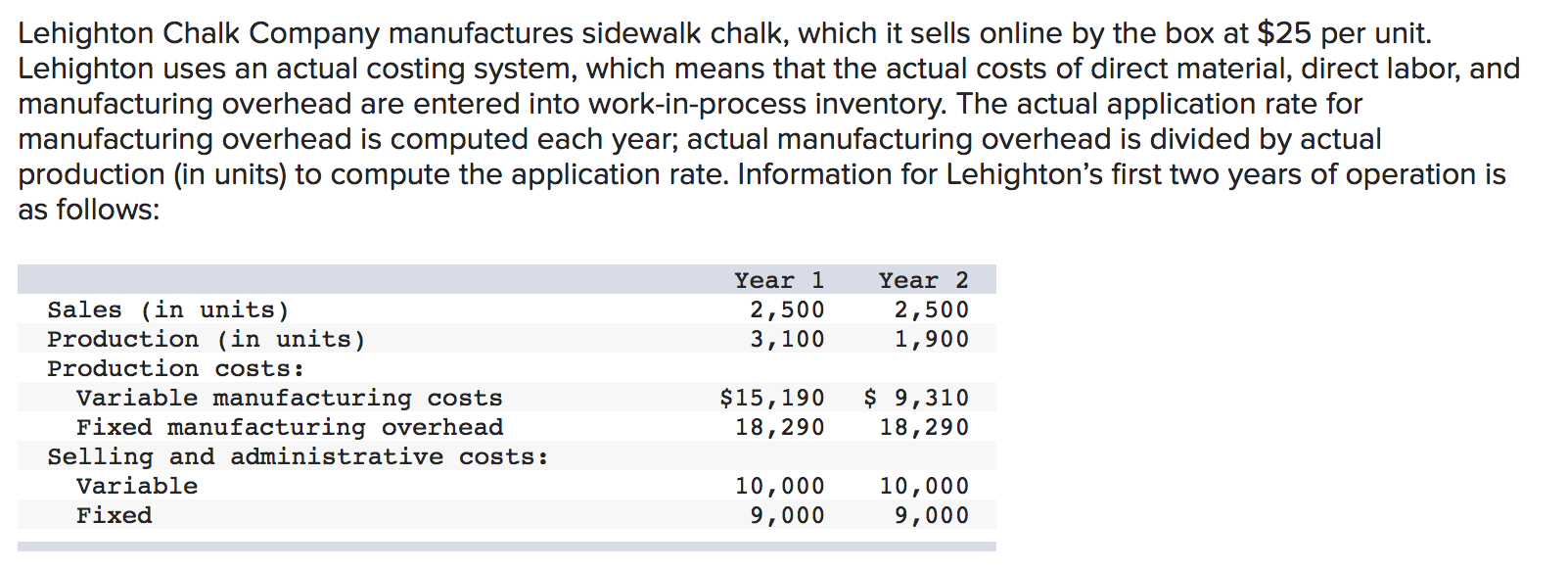
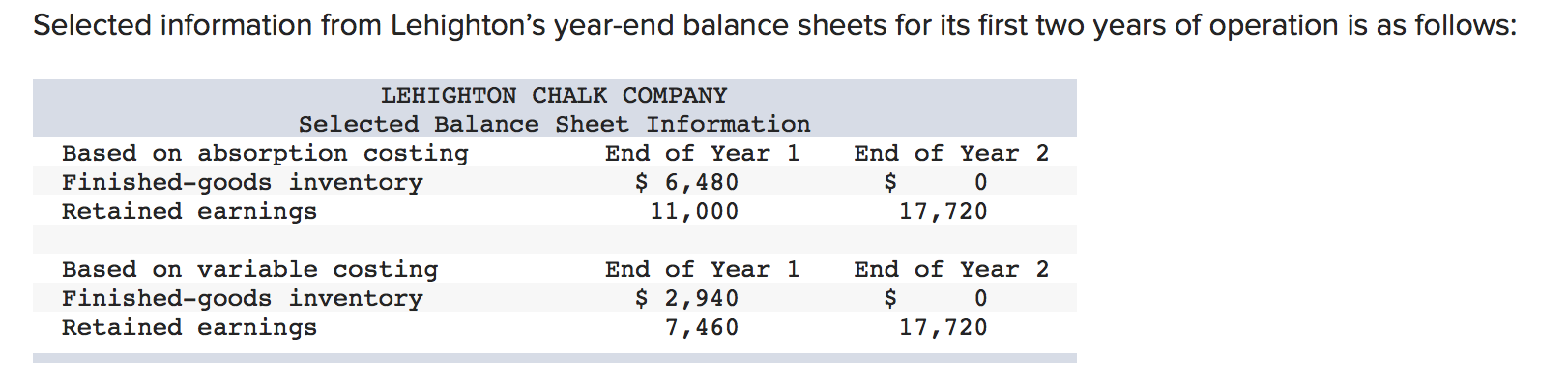

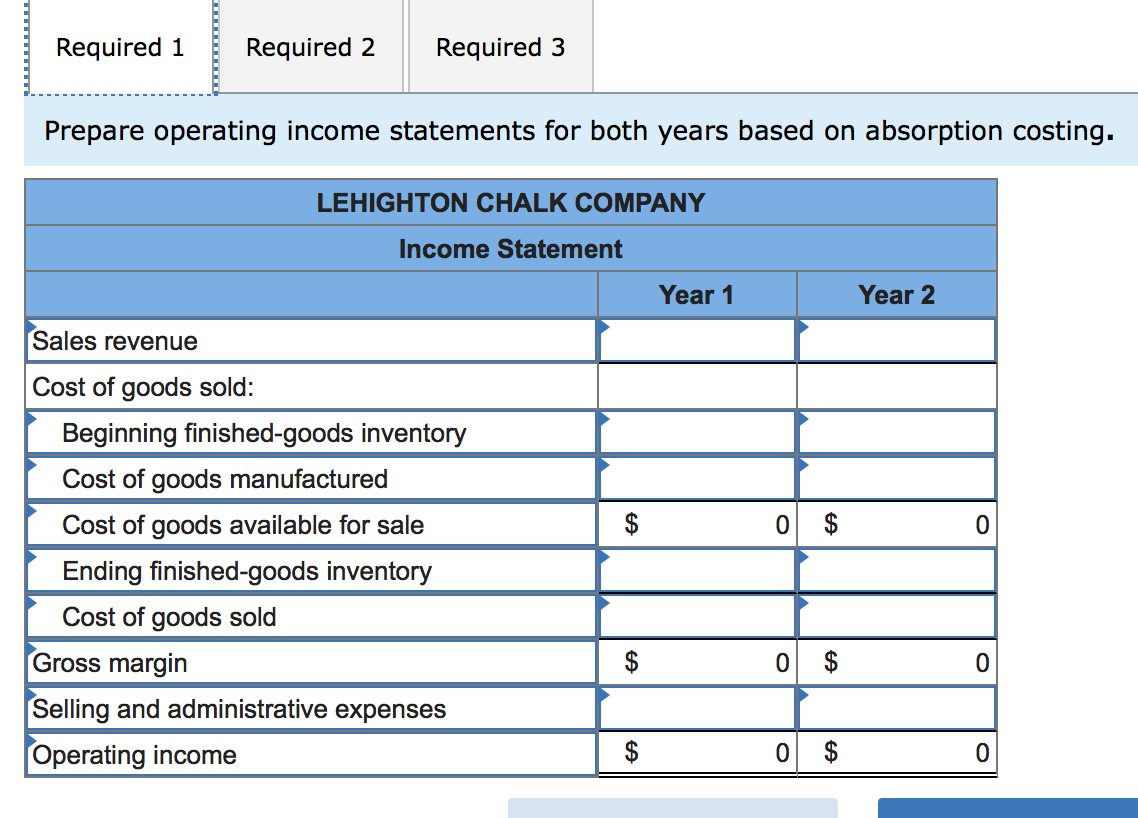
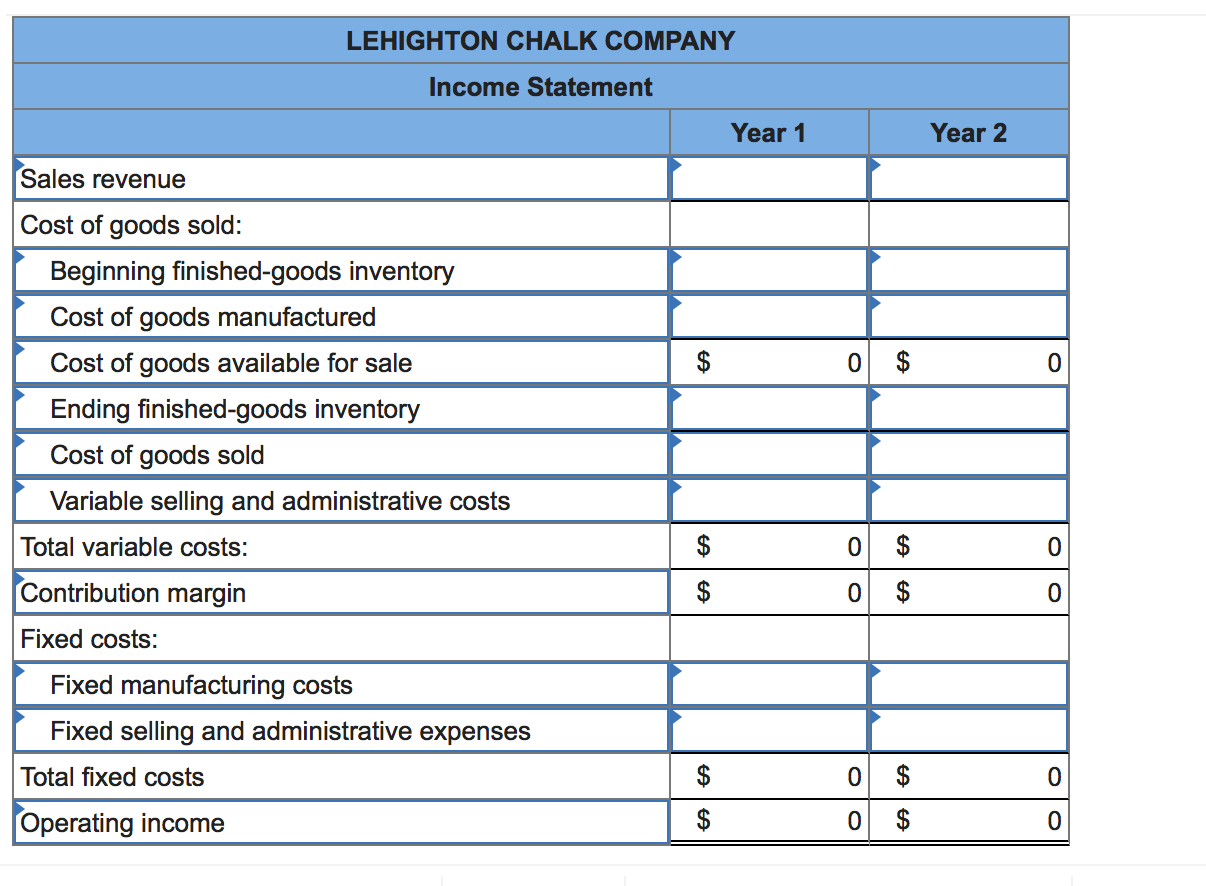
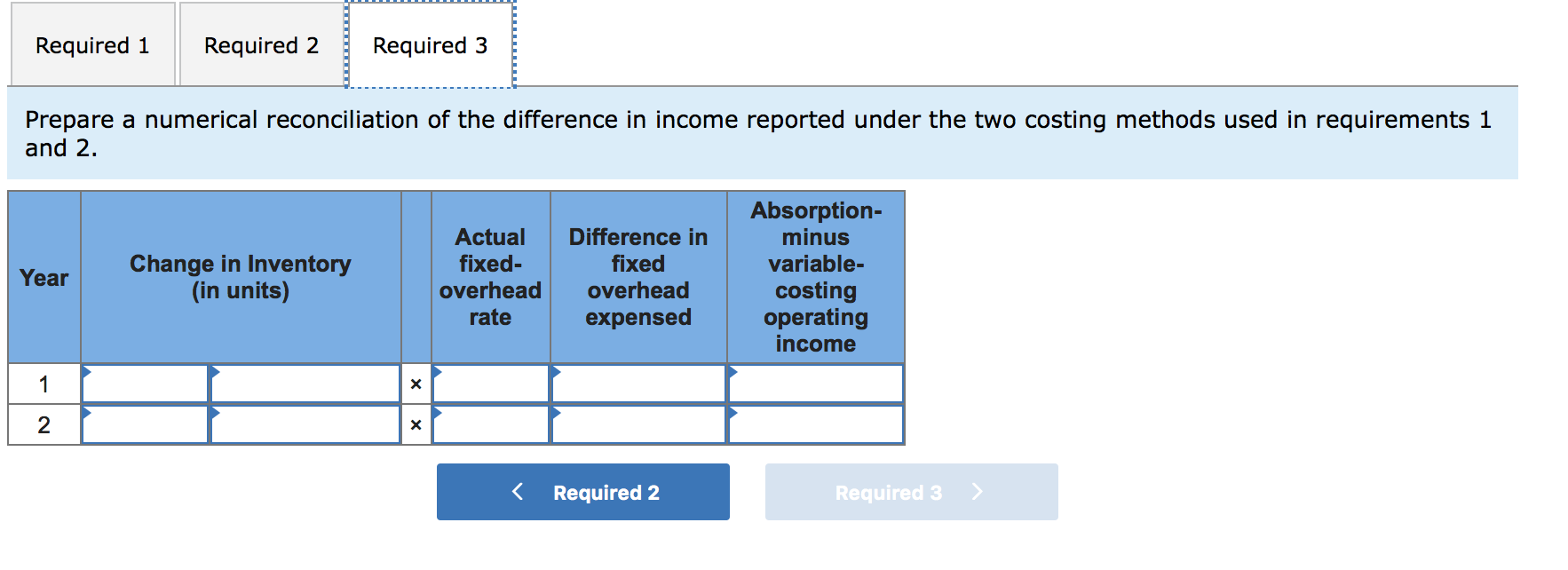
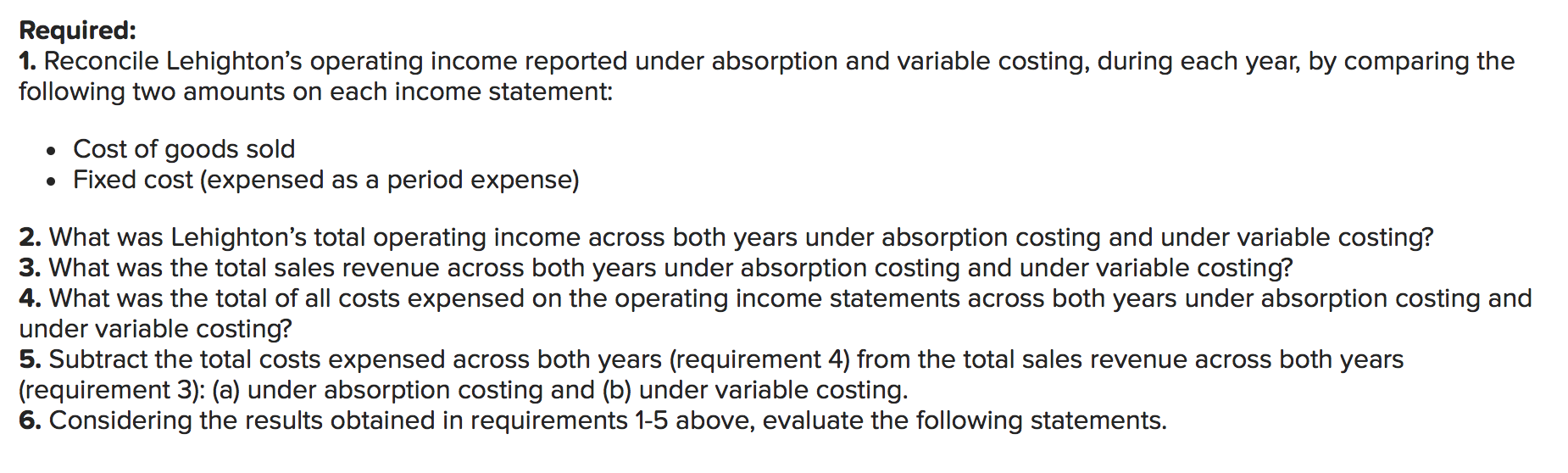
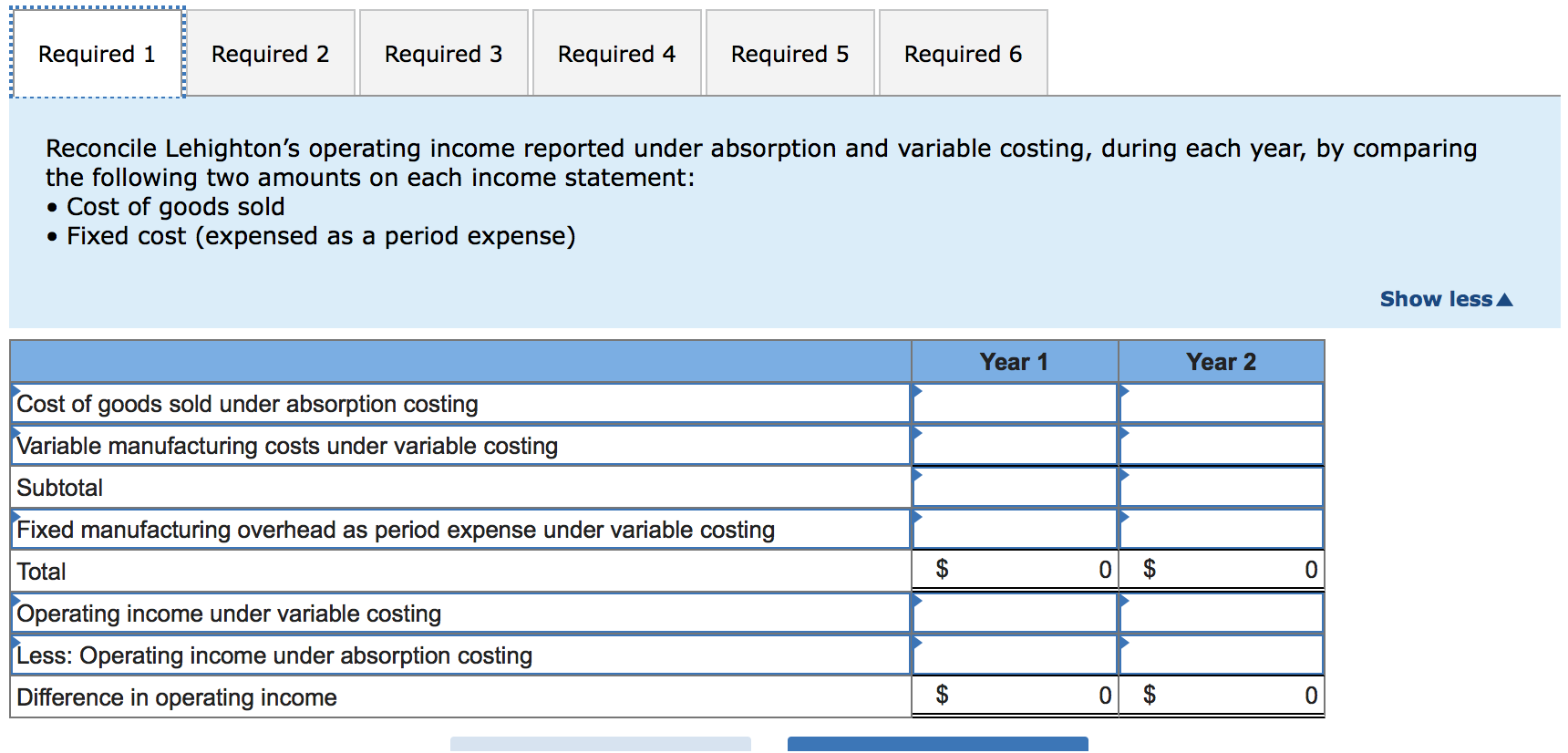
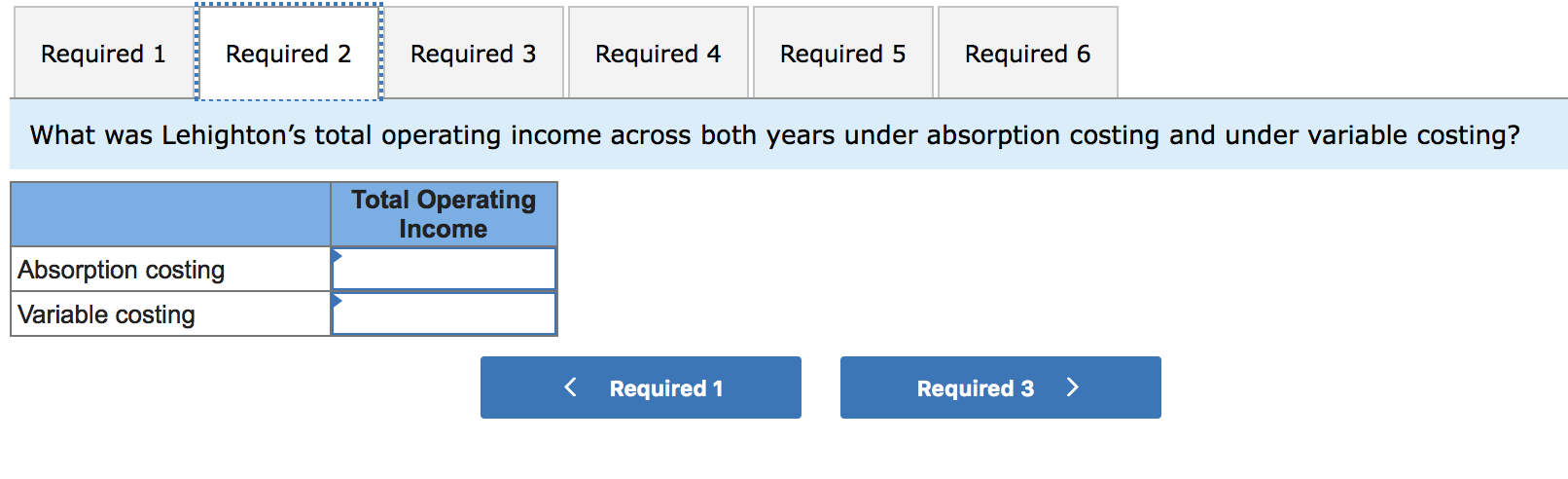
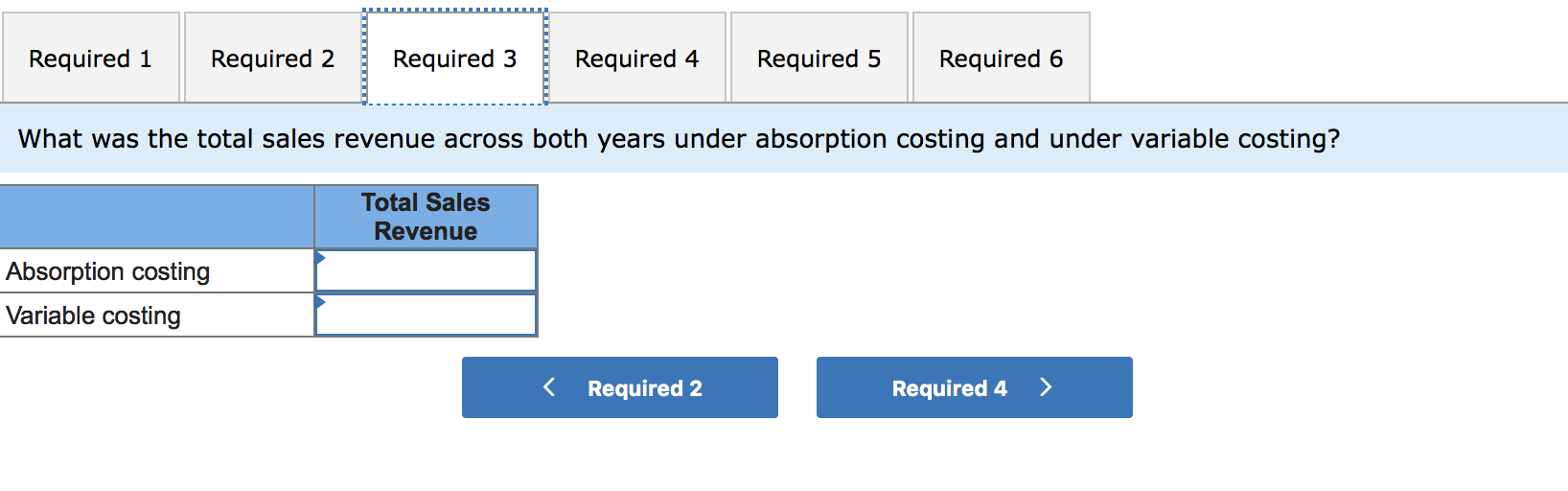
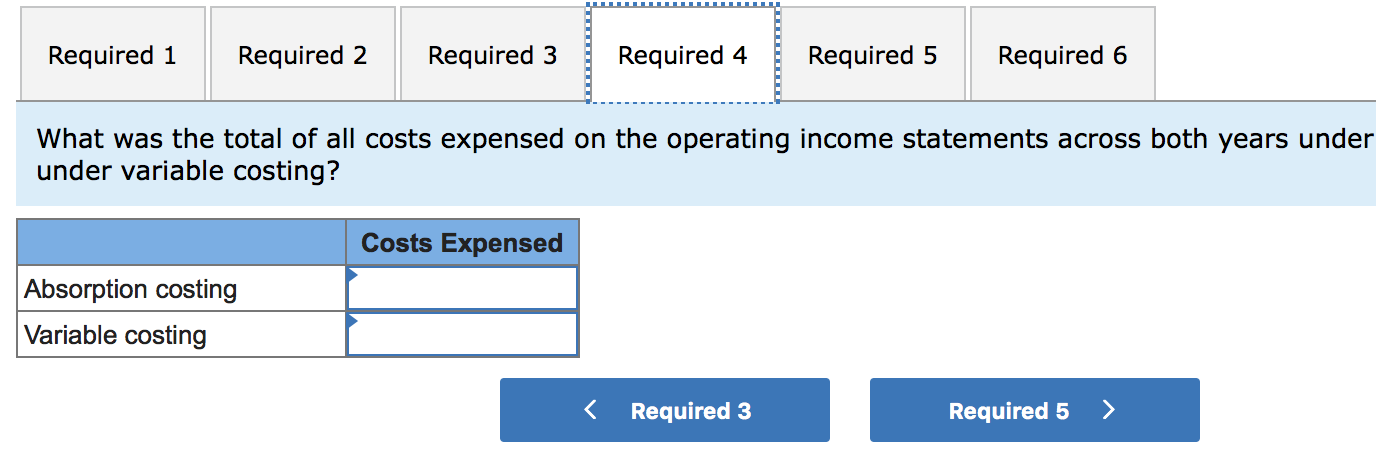
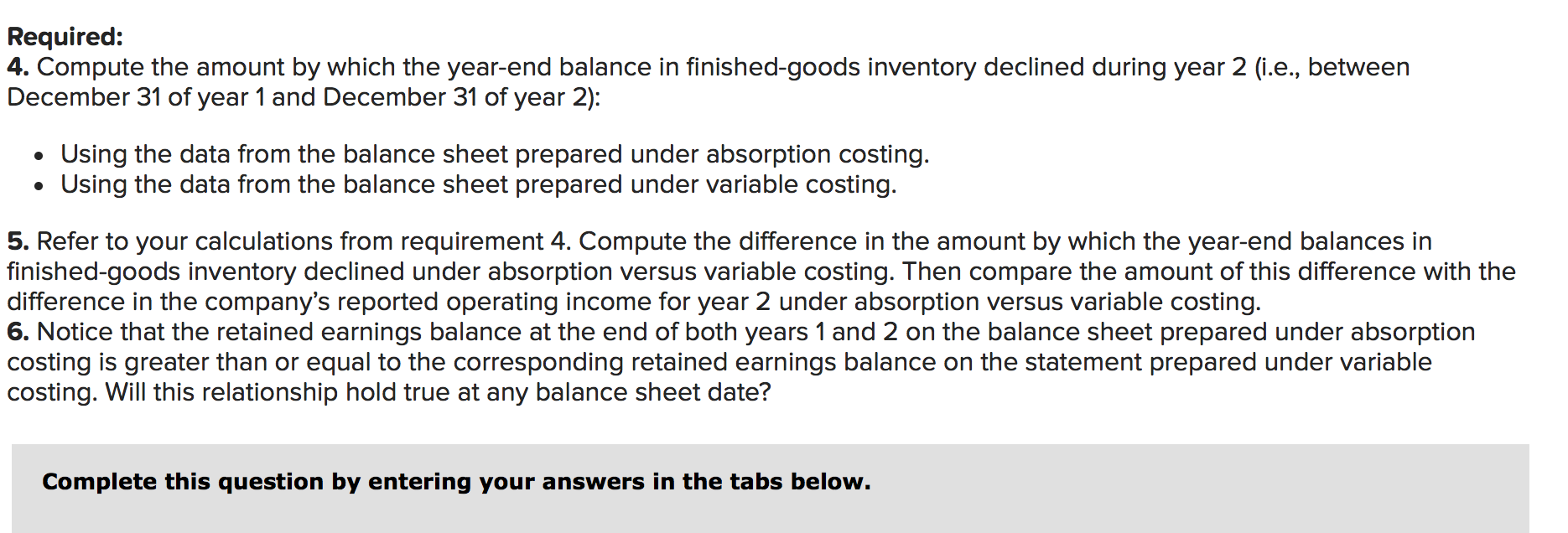
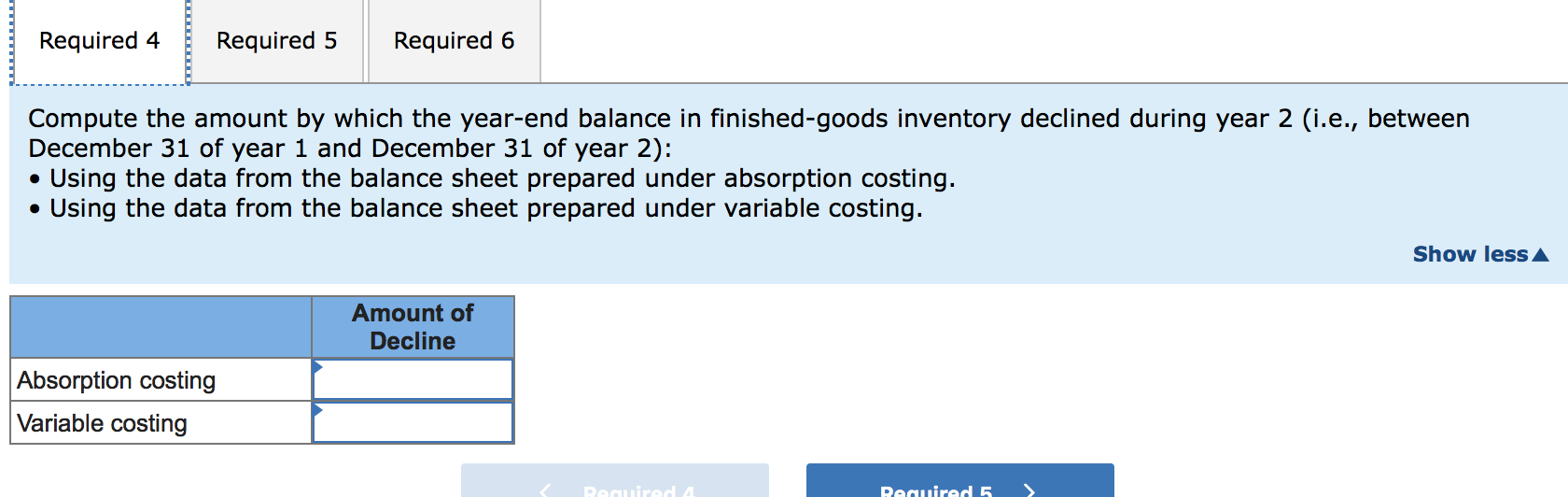
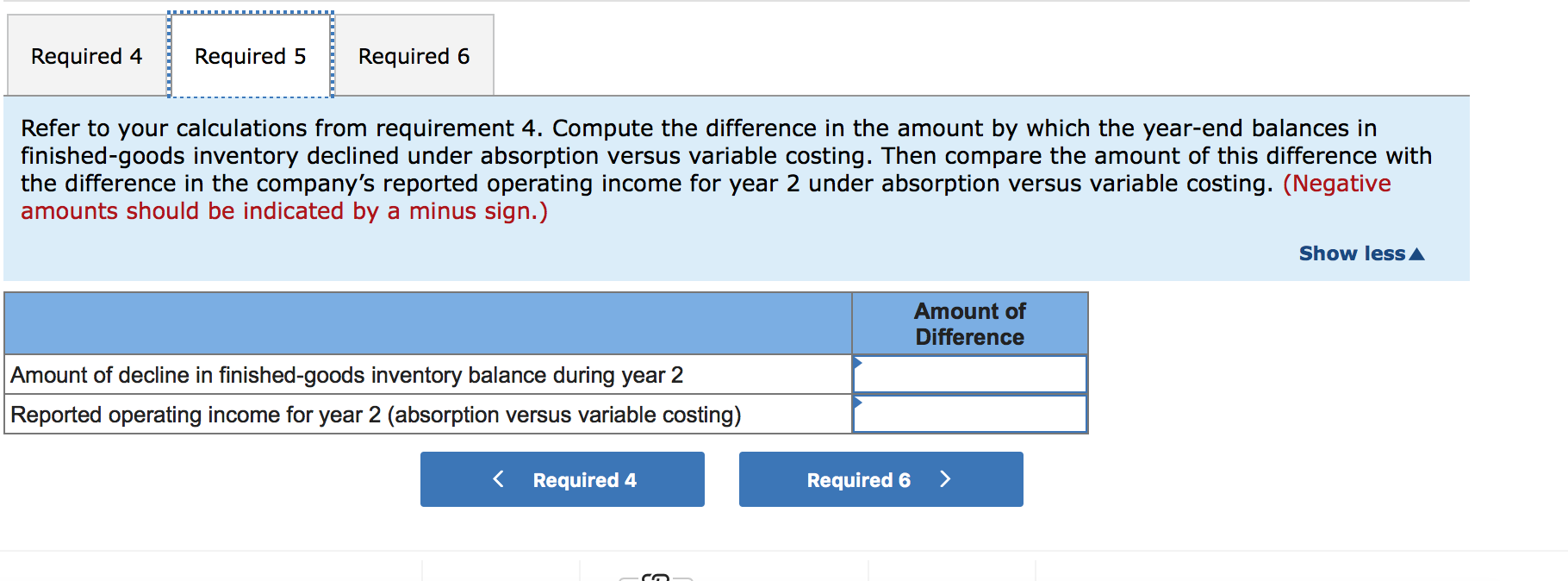
Required 1 Required 2 Required 3 Required 4 Required 5 Required 6 Subtract the total costs expensed across both years (requirement 4) from the total sales revenue across both years (requirement 3): (a) under absorption costing and (b) under variable costing. Amount Absorption costing Variable costing Lehighton Chalk Company manufactures sidewalk chalk, which it sells online by the box at $25 per unit. Lehighton uses an actual costing system, which means that the actual costs of direct material, direct labor, and manufacturing overhead are entered into work-in-process inventory. The actual application rate for manufacturing overhead is computed each year; actual manufacturing overhead is divided by actual production (in units) to compute the application rate. Information for Lehighton's first two years of operation is as follows: Year 1 2,500 3,100 Year 2 2,500 1,900 Sales (in units) Production (in units) Production costs: Variable manufacturing costs Fixed manufacturing overhead Selling and administrative costs: Variable Fixed $15,190 18, 290 $ 9,310 18,290 10,000 9,000 10,000 9,000 Selected information from Lehighton's year-end balance sheets for its first two years of operation is as follows: LEHIGHTON CHALK COMPANY Selected Balance Sheet Information Based on absorption costing End of Year 1 Finished-goods inventory $ 6,480 Retained earnings 11,000 End of Year 2 $ 0 17,720 Based on variable costing Finished-goods inventory Retained earnings End of Year 1 $ 2,940 7,460 End of Year 2 $ 0 17,720 Required: Lehighton Chalk Company had no beginning or ending work-in-process inventories for either year. 1. Prepare operating income statements for both years based on absorption costing. 2. Prepare operating income statements for both years based on variable costing. 3. Prepare a numerical reconciliation of the difference in income reported under the two costing methods used in requirements 1 and 2. Required 1 Required 2 Required 3 Prepare operating income statements for both years based on absorption costing. LEHIGHTON CHALK COMPANY Income Statement Year 1 Year 2 Sales revenue $ 0 0 Cost of goods sold: Beginning finished-goods inventory Cost of goods manufactured Cost of goods available for sale Ending finished-goods inventory Cost of goods sold Gross margin Selling and administrative expenses Operating income 0 $ 0 $ 0 $ 0 LEHIGHTON CHALK COMPANY Income Statement Year 1 Year 2 Sales revenue Cost of goods sold: Beginning finished-goods inventory Cost of goods manufactured Cost of goods available for sale Ending finished-goods inventory Cost of goods sold Variable selling and administrative costs $ $ 0 Total variable costs: A 0 $ 0 Contribution margin 0 $ 0 Fixed costs: Fixed manufacturing costs Fixed selling and administrative expenses Total fixed costs $ 0 $ 0 Operating income $ 0 $ 0 Required 1 Required 2 Required 3 Prepare a numerical reconciliation of the difference in income reported under the two costing methods used in requirements 1 and 2. Year Change in Inventory (in units) Actual fixed- overhead rate Difference in fixed overhead expensed Absorption- minus variable- costing operating income 1 N X Required 1 Required 2 Required 3 Required 4 Required 5 Required 6 What was the total sales revenue across both years under absorption costing and under variable costing? Total Sales Revenue Absorption costing Variable costing Required 1 Required 2 Required 3 Required 4 Required 5 Required 6 What was the total of all costs expensed on the operating income statements across both years under under variable costing? Costs Expensed Absorption costing Variable costing Required 3 Required 5 > Required: 4. Compute the amount by which the year-end balance in finished-goods inventory declined during year 2 (i.e., between December 31 of year 1 and December 31 of year 2): . Using the data from the balance sheet prepared under absorption costing. Using the data from the balance sheet prepared under variable costing. . 5. Refer to your calculations from requirement 4. Compute the difference in the amount by which the year-end balances in finished-goods inventory declined under absorption versus variable costing. Then compare the amount of this difference with the difference in the company's reported operating income for year 2 under absorption versus variable costing. 6. Notice that the retained earnings balance at the end of both years 1 and 2 on the balance sheet prepared under absorption costing is greater than or equal to the corresponding retained earnings balance on the statement prepared under variable costing. Will this relationship hold true at any balance sheet date? Complete this question by entering your answers in the tabs below. Required 4 Required 5 Required 6 Compute the amount by which the year-end balance in finished-goods inventory declined during year 2 (i.e., between December 31 of year 1 and December 31 of year 2): Using the data from the balance sheet prepared under absorption costing. Using the data from the balance sheet prepared under variable costing. . Show less Amount of Decline Absorption costing Variable costing Docuired A. Required 5 Required 4 Required 5 Required 6 Refer to your calculations from requirement 4. Compute the difference in the amount by which the year-end balances in finished-goods inventory declined under absorption versus variable costing. Then compare the amount of this difference with the difference in the company's reported operating income for year 2 under absorption versus variable costing. (Negative amounts should be indicated by a minus sign.) Show less Amount of Difference Amount of decline in finished-goods inventory balance during year 2 Reported operating income for year 2 (absorption versus variable costing) Required 4 Required 6 ro
Step by Step Solution
There are 3 Steps involved in it

Get step-by-step solutions from verified subject matter experts
 Study Help