







Question: Required a. Using the audit program in Figure 15-90, prepare a nonstatistical sampling data sheet for acquisitions following the format in Figure 15-20. Prepare all
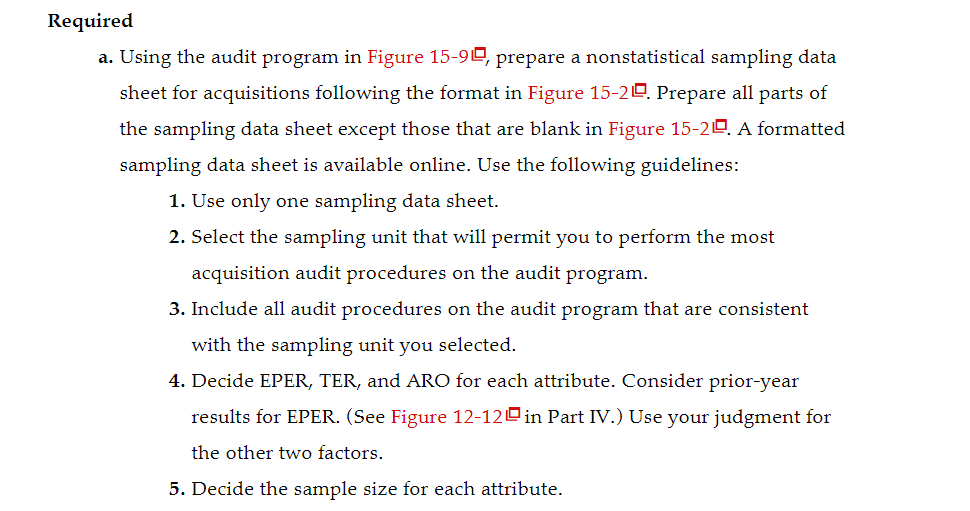
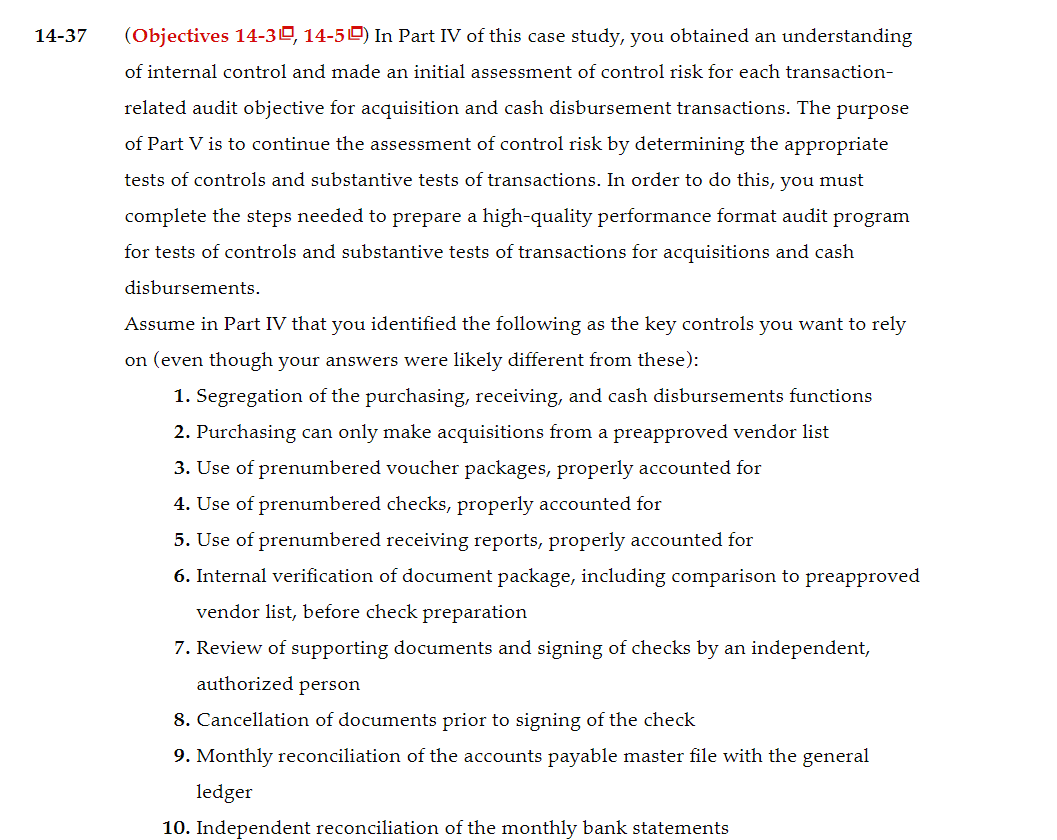
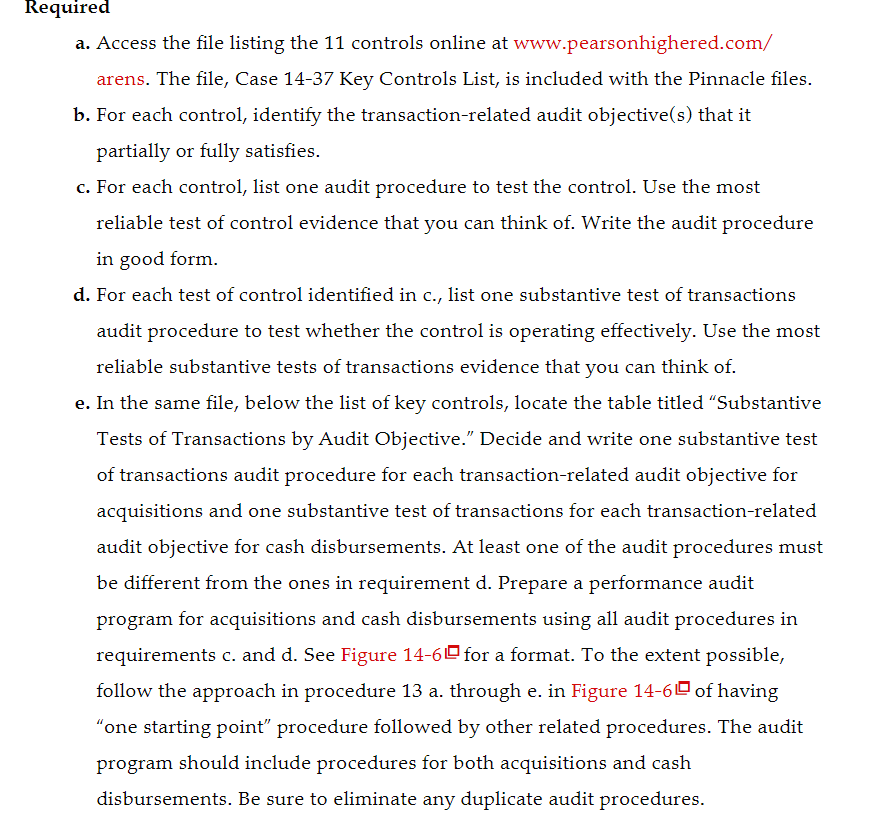
Required a. Using the audit program in Figure 15-90, prepare a nonstatistical sampling data sheet for acquisitions following the format in Figure 15-20. Prepare all parts of the sampling data sheet except those that are blank in Figure 15-20. A formatted sampling data sheet is available online. Use the following guidelines: 1. Use only one sampling data sheet. 2. Select the sampling unit that will permit you to perform the most acquisition audit procedures on the audit program. 3. Include all audit procedures on the audit program that are consistent with the sampling unit you selected. 4. Decide EPER, TER, and ARO for each attribute. Consider prior-year results for EPER. (See Figure 12-12 in Part IV.) Use your judgment for the other two factors. 5. Decide the sample size for each attribute. 14-37 (Objectives 14-30, 14-59) In Part IV of this case study, you obtained an understanding of internal control and made an initial assessment of control risk for each transaction- related audit objective for acquisition and cash disbursement transactions. The purpose of Part V is to continue the assessment of control risk by determining the appropriate tests of controls and substantive tests of transactions. In order to do this, you must complete the steps needed to prepare a high-quality performance format audit program for tests of controls and substantive tests of transactions for acquisitions and cash disbursements. Assume in Part IV that you identified the following as the key controls you want to rely on (even though your answers were likely different from these): 1. Segregation of the purchasing, receiving, and cash disbursements functions 2. Purchasing can only make acquisitions from a preapproved vendor list 3. Use of prenumbered voucher packages, properly accounted for 4. Use of prenumbered checks, properly accounted for 5. Use of prenumbered receiving reports, properly accounted for 6. Internal verification of document package, including comparison to preapproved vendor list, before check preparation 7. Review of supporting documents and signing of checks by an independent, authorized person 8. Cancellation of documents prior to signing of the check 9. Monthly reconciliation of the accounts payable master file with the general ledger 10. Independent reconciliation of the monthly bank statements Required a. Access the file listing the 11 controls online at www.pearsonhighered.com/ arens. The file, Case 14-37 Key Controls List, is included with the Pinnacle files. b. For each control, identify the transaction-related audit objective(s) that it partially or fully satisfies. c. For each control, list one audit procedure to test the control. Use the most reliable test of control evidence that you can think of. Write the audit procedure in good form. d. For each test of control identified in c., list one substantive test of transactions audit procedure to test whether the control is operating effectively. Use the most reliable substantive tests of transactions evidence that you can think of. e. In the same file, below the list of key controls, locate the table titled "Substantive Tests of Transactions by Audit Objective." Decide and write one substantive test of transactions audit procedure for each transaction-related audit objective for acquisitions and one substantive test of transactions for each transaction-related audit objective for cash disbursements. At least one of the audit procedures must be different from the ones in requirement d. Prepare a performance audit program for acquisitions and cash disbursements using all audit procedures in requirements c. and d. See Figure 14-60 for a format. To the extent possible, follow the approach in procedure 13 a. through e. in Figure 14-60 of having "one starting point procedure followed by other related procedures. The audit program should include procedures for both acquisitions and cash disbursements. Be sure to eliminate any duplicate audit procedures. Required a. Using the audit program in Figure 15-90, prepare a nonstatistical sampling data sheet for acquisitions following the format in Figure 15-20. Prepare all parts of the sampling data sheet except those that are blank in Figure 15-20. A formatted sampling data sheet is available online. Use the following guidelines: 1. Use only one sampling data sheet. 2. Select the sampling unit that will permit you to perform the most acquisition audit procedures on the audit program. 3. Include all audit procedures on the audit program that are consistent with the sampling unit you selected. 4. Decide EPER, TER, and ARO for each attribute. Consider prior-year results for EPER. (See Figure 12-12 in Part IV.) Use your judgment for the other two factors. 5. Decide the sample size for each attribute. 14-37 (Objectives 14-30, 14-59) In Part IV of this case study, you obtained an understanding of internal control and made an initial assessment of control risk for each transaction- related audit objective for acquisition and cash disbursement transactions. The purpose of Part V is to continue the assessment of control risk by determining the appropriate tests of controls and substantive tests of transactions. In order to do this, you must complete the steps needed to prepare a high-quality performance format audit program for tests of controls and substantive tests of transactions for acquisitions and cash disbursements. Assume in Part IV that you identified the following as the key controls you want to rely on (even though your answers were likely different from these): 1. Segregation of the purchasing, receiving, and cash disbursements functions 2. Purchasing can only make acquisitions from a preapproved vendor list 3. Use of prenumbered voucher packages, properly accounted for 4. Use of prenumbered checks, properly accounted for 5. Use of prenumbered receiving reports, properly accounted for 6. Internal verification of document package, including comparison to preapproved vendor list, before check preparation 7. Review of supporting documents and signing of checks by an independent, authorized person 8. Cancellation of documents prior to signing of the check 9. Monthly reconciliation of the accounts payable master file with the general ledger 10. Independent reconciliation of the monthly bank statements Required a. Access the file listing the 11 controls online at www.pearsonhighered.com/ arens. The file, Case 14-37 Key Controls List, is included with the Pinnacle files. b. For each control, identify the transaction-related audit objective(s) that it partially or fully satisfies. c. For each control, list one audit procedure to test the control. Use the most reliable test of control evidence that you can think of. Write the audit procedure in good form. d. For each test of control identified in c., list one substantive test of transactions audit procedure to test whether the control is operating effectively. Use the most reliable substantive tests of transactions evidence that you can think of. e. In the same file, below the list of key controls, locate the table titled "Substantive Tests of Transactions by Audit Objective." Decide and write one substantive test of transactions audit procedure for each transaction-related audit objective for acquisitions and one substantive test of transactions for each transaction-related audit objective for cash disbursements. At least one of the audit procedures must be different from the ones in requirement d. Prepare a performance audit program for acquisitions and cash disbursements using all audit procedures in requirements c. and d. See Figure 14-60 for a format. To the extent possible, follow the approach in procedure 13 a. through e. in Figure 14-60 of having "one starting point procedure followed by other related procedures. The audit program should include procedures for both acquisitions and cash disbursements. Be sure to eliminate any duplicate audit procedures
Step by Step Solution
There are 3 Steps involved in it

Get step-by-step solutions from verified subject matter experts
 Study Help