







Question: Required information Problem 9-58 (Static) Activity-Based Costing: Analysis and Visualization (LO 9-5, 6) [The following information applies to the questions displayed below.] Delaware Electronics makes
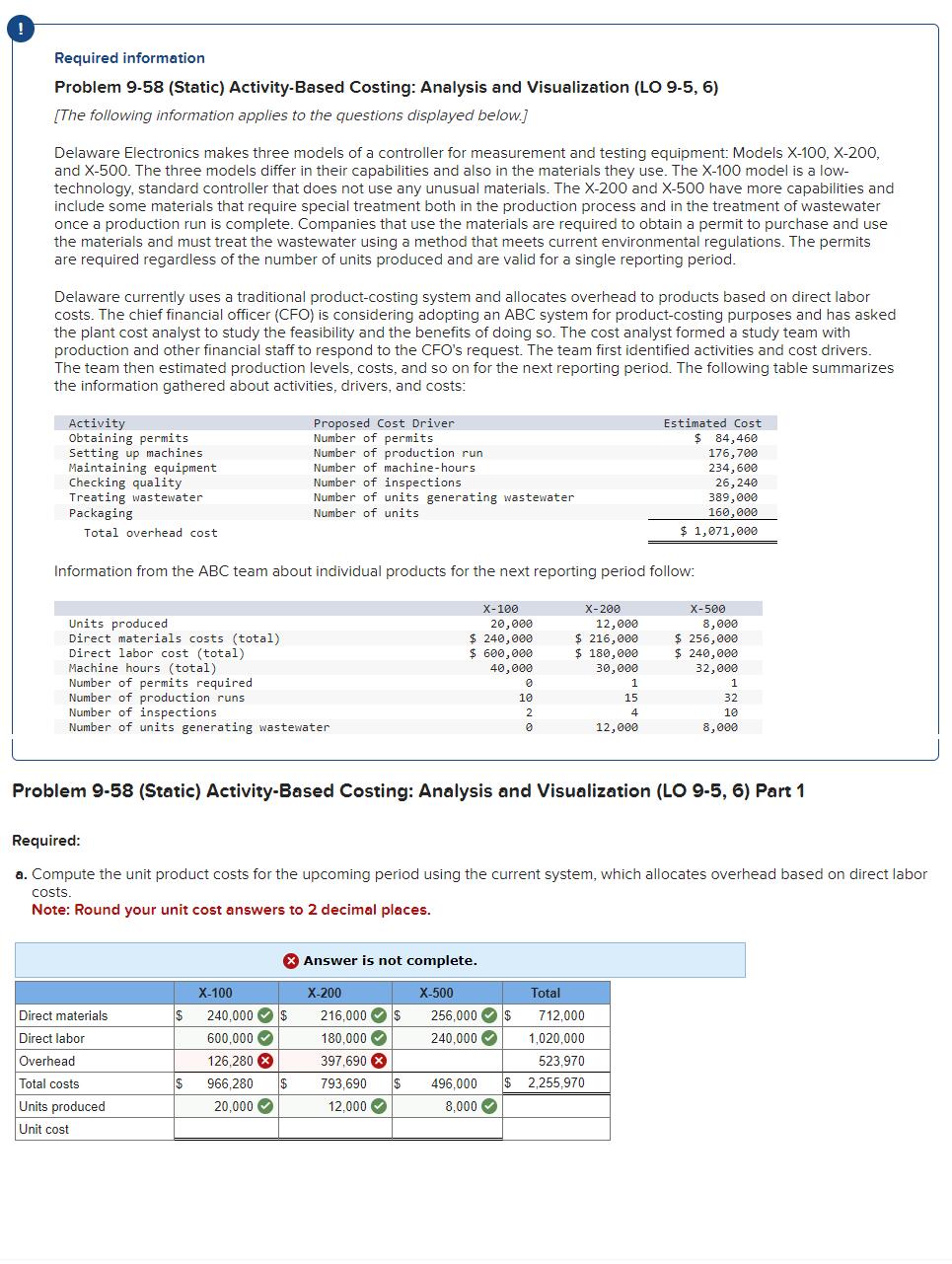
Required information Problem 9-58 (Static) Activity-Based Costing: Analysis and Visualization (LO 9-5, 6) [The following information applies to the questions displayed below.] Delaware Electronics makes three models of a controller for measurement and testing equipment: Models X-100, X-200, and X500. The three models differ in their capabilities and also in the materials they use. The X-100 model is a lowtechnology, standard controller that does not use any unusual materials. The X-200 and X-500 have more capabilities and include some materials that require special treatment both in the production process and in the treatment of wastewater once a production run is complete. Companies that use the materials are required to obtain a permit to purchase and use the materials and must treat the wastewater using a method that meets current environmental regulations. The permits are required regardless of the number of units produced and are valid for a single reporting period. Delaware currently uses a traditional product-costing system and allocates overhead to products based on direct labor costs. The chief financial officer (CFO) is considering adopting an ABC system for product-costing purposes and has asked the plant cost analyst to study the feasibility and the benefits of doing so. The cost analyst formed a study team with production and other financial staff to respond to the CFO's request. The team first identified activities and cost drivers. The team then estimated production levels, costs, and so on for the next reporting period. The following table summarizes the information gathered about activities, drivers, and costs: Information from the ABC team about individual products for the next reporting period follow: Problem 9-58 (Static) Activity-Based Costing: Analysis and Visualization (LO 9-5, 6) Part 1 Required: a. Compute the unit product costs for the upcoming period using the current system, which allocates overhead based on direct labor costs. Note: Round your unit cost answers to 2 decimal places
Step by Step Solution
There are 3 Steps involved in it

Get step-by-step solutions from verified subject matter experts
 Study Help