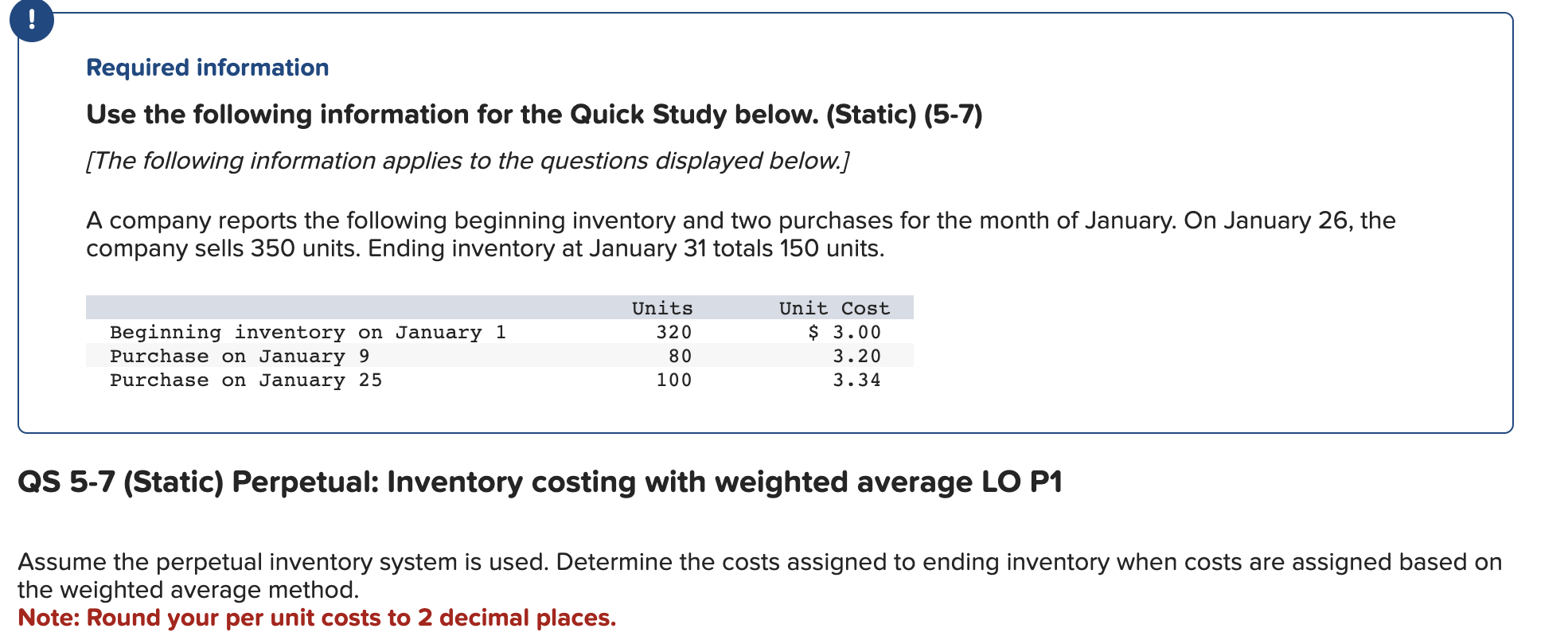
Question: Required information Use the following information for the Quick Study below. (Static) (5-7) [The following information applies to the questions displayed below] A company reports
Required information Use the followingRequired information Use the followingRequired information Use the followingRequired information Use the followingRequired information Use the followingRequired information Use the followingRequired information Use the followingRequired information Use the following
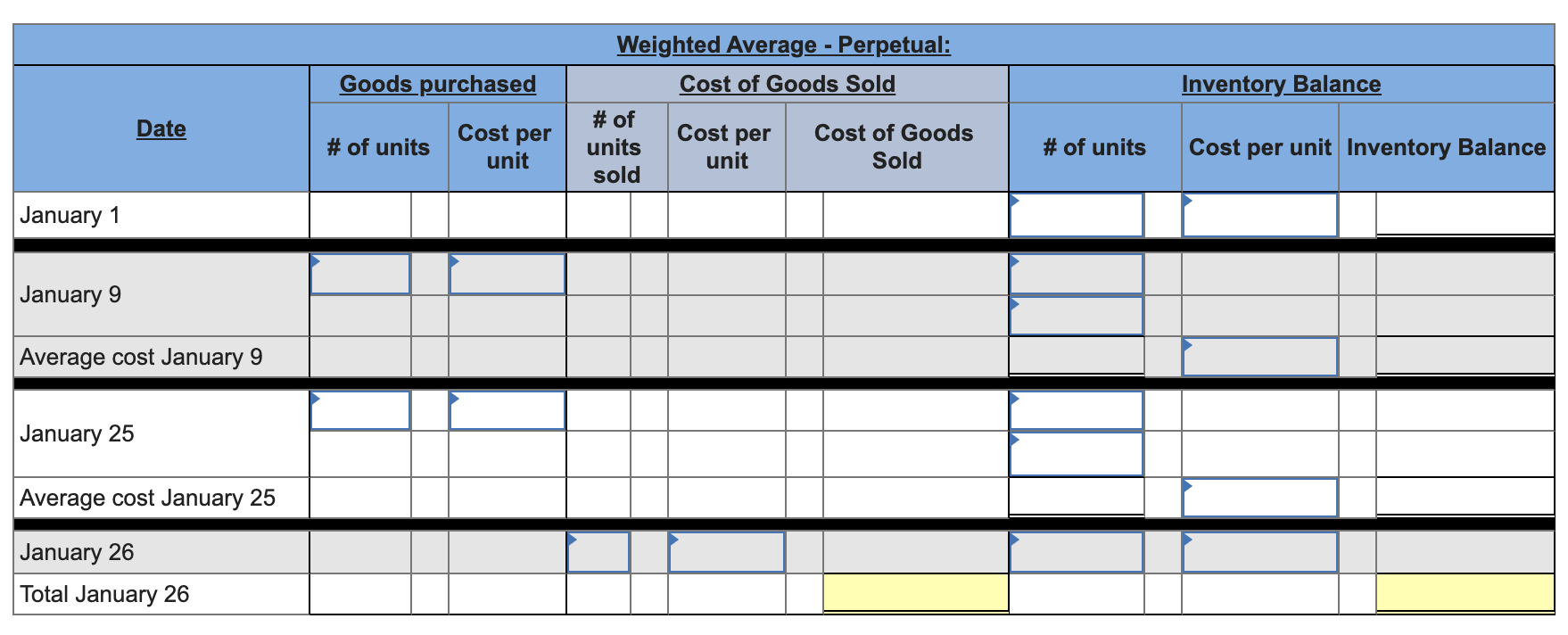
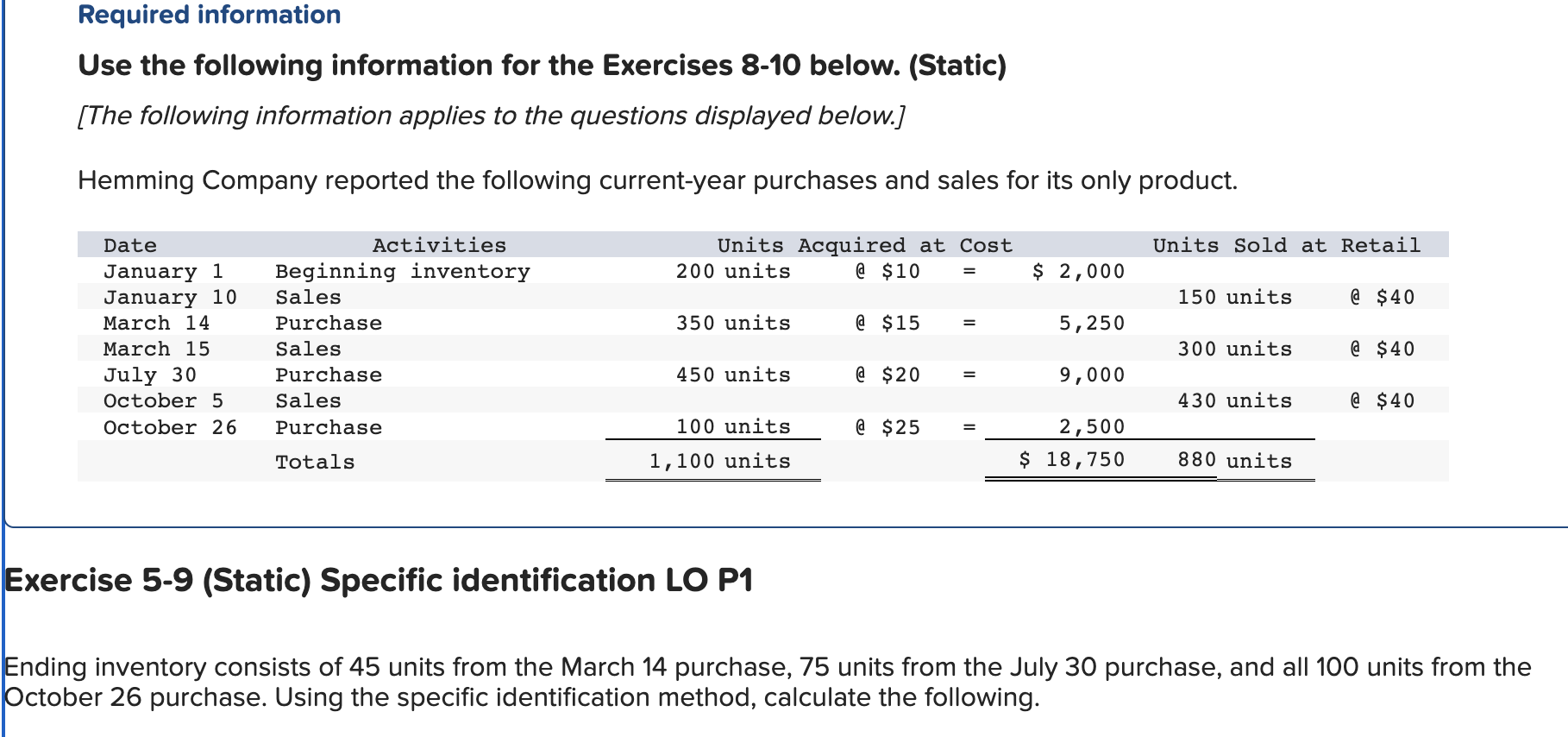
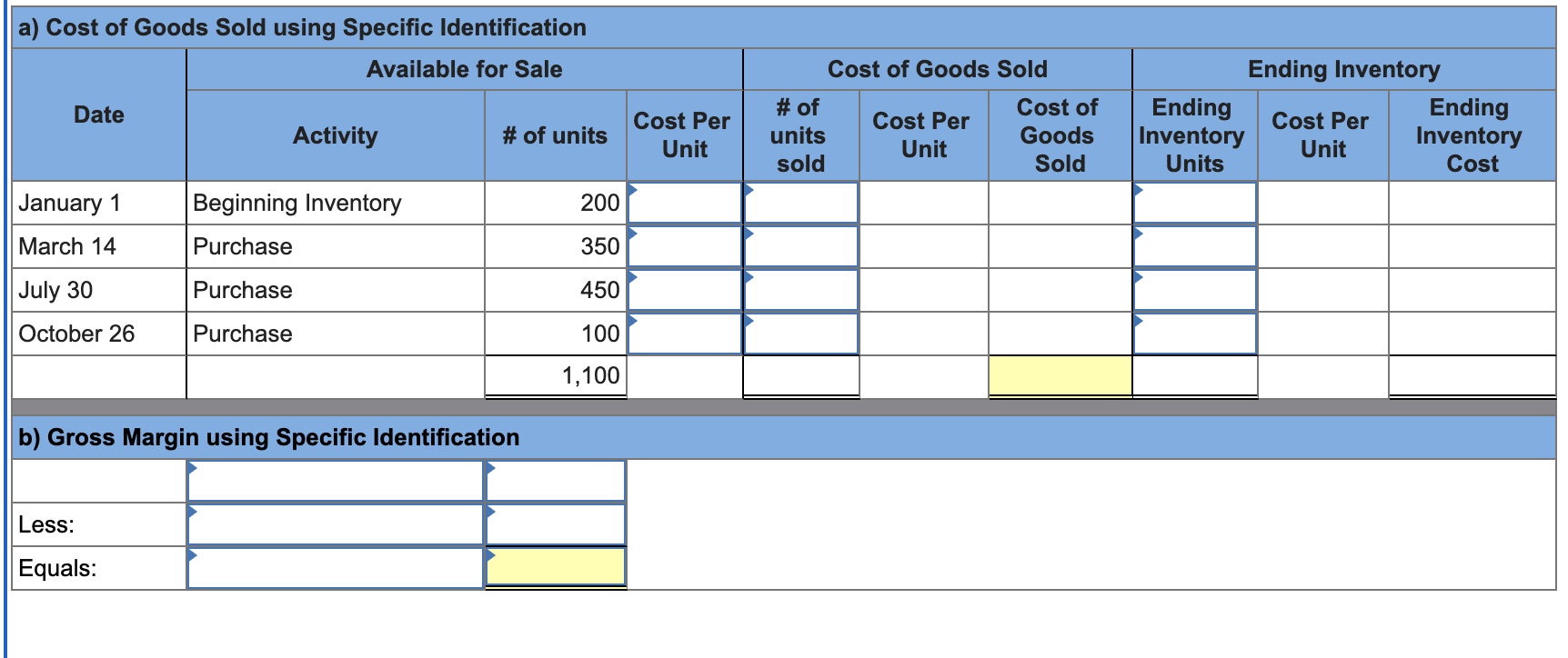
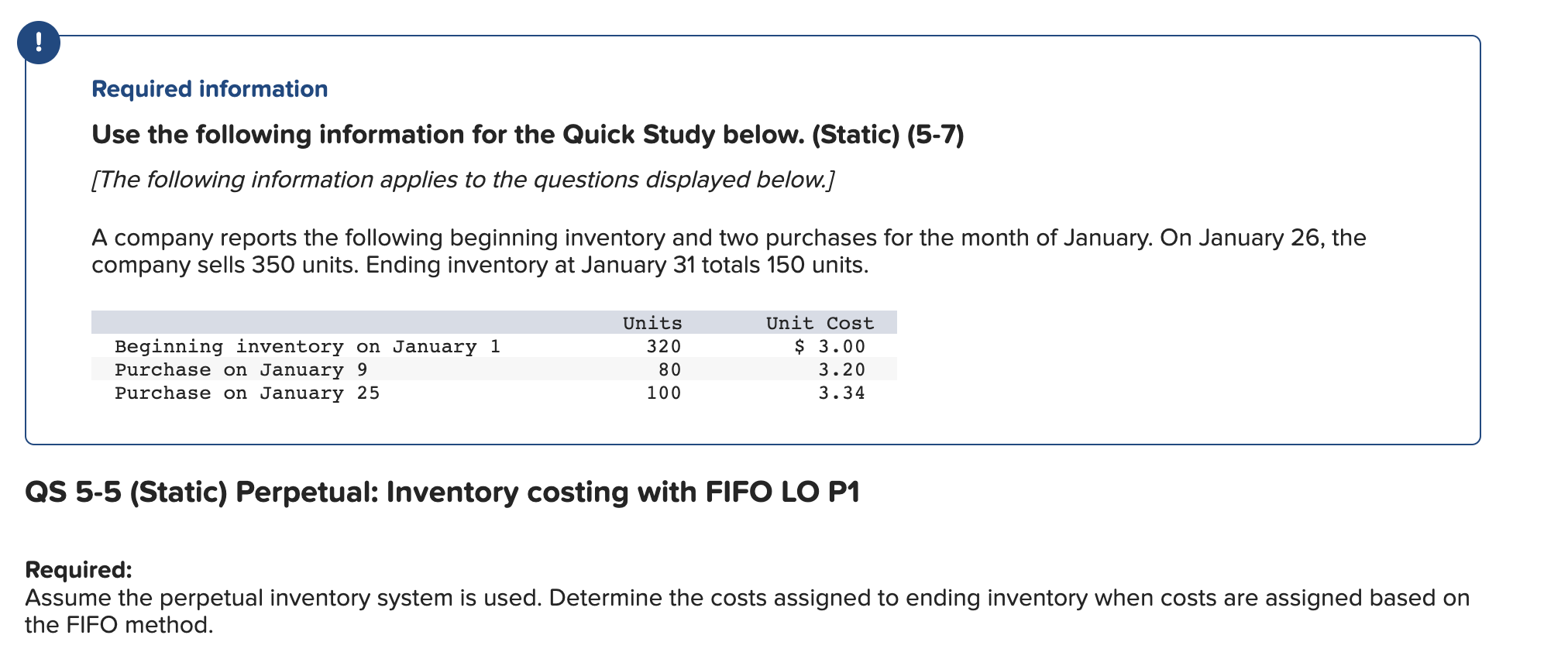
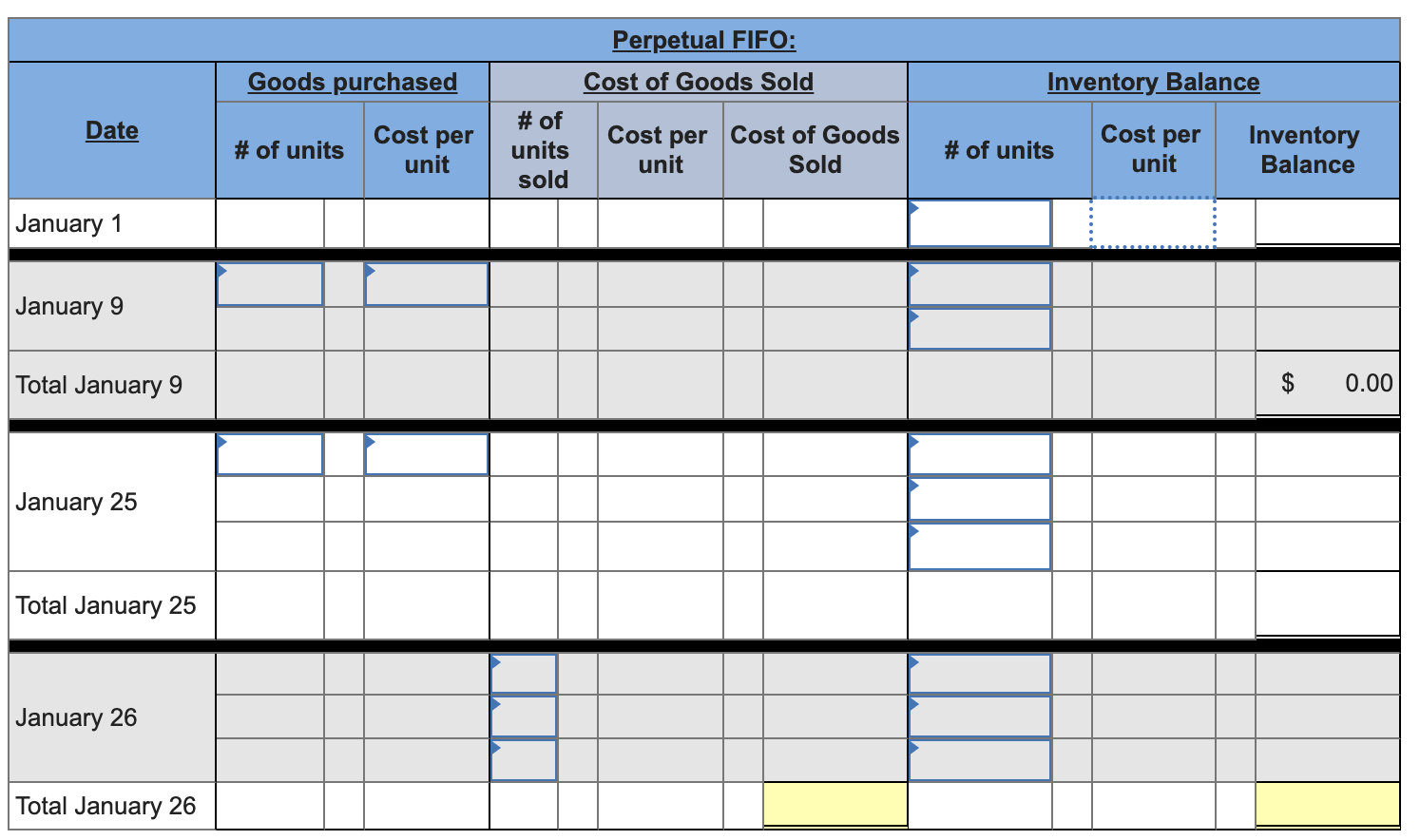
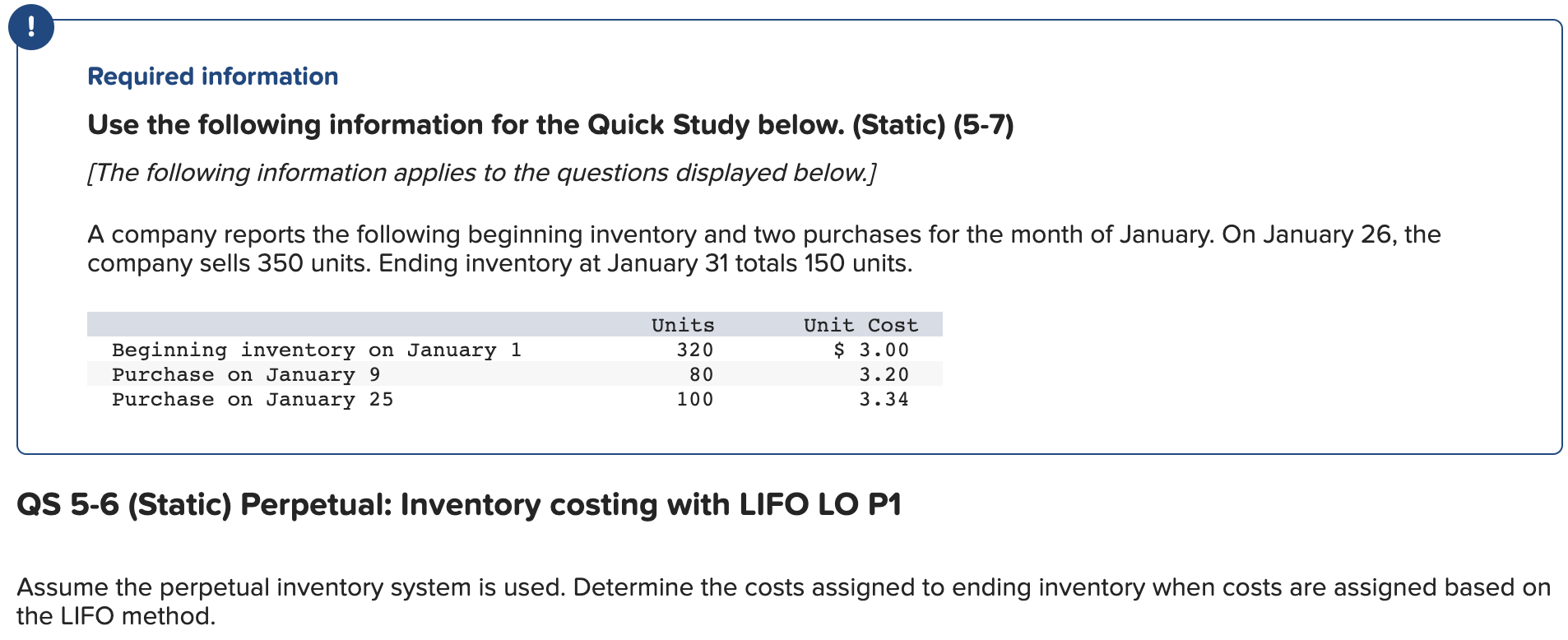
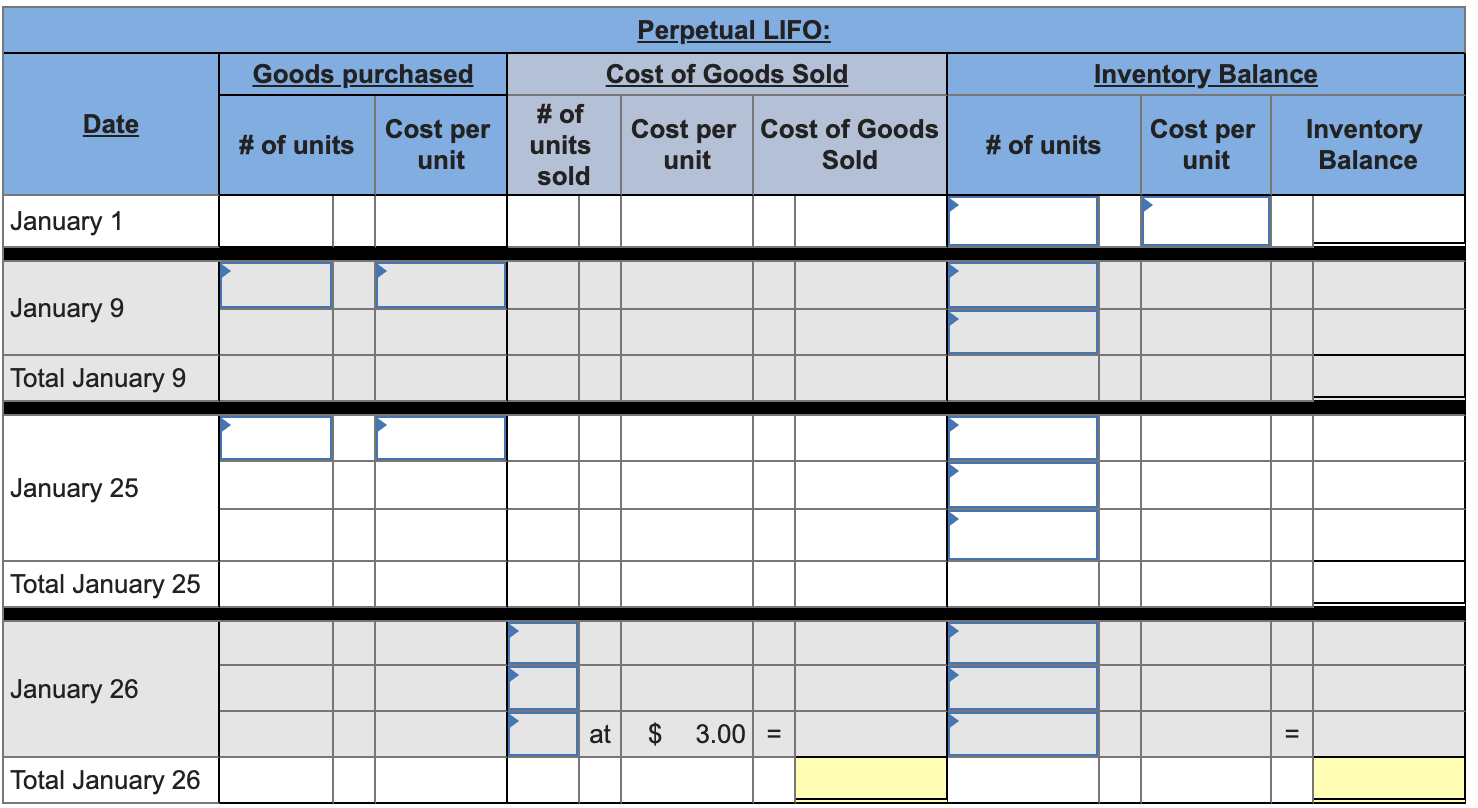
Required information Use the following information for the Quick Study below. (Static) (5-7) [The following information applies to the questions displayed below] A company reports the following beginning inventory and two purchases for the month of January. On January 26, the company sells 350 units. Ending inventory at January 31 totals 150 units. Units Unit Cost Beginning inventory on January 1 320 $ 3.00 Purchase on January 9 80 3.20 Purchase on January 25 100 3.34 05 5-5 (Static) Perpetual: Inventory costing with FIFO LO P1 Required: Assume the perpetual inventory system is used. Determine the costs assigned to ending inventory when costs are assigned based on the FIFO method. Perpetual FIFO: Goods purchased Cost of Goods Sold Inventory Balance Date # of # of units Cost per Cost per Cost of Goods units # of units Cost per Inventory unit unit Sold unit Balance sold January 1 January 9 Total January 9 $ 0.00 January 25 Total January 25 January 26 Total January 26Required information Use the following information for the Quick Study below. (Static) (5-7) [The following information applies to the questions displayed below] A company reports the following beginning inventory and two purchases for the month of January. On January 26, the company sells 350 units. Ending inventory at January 31 totals 150 units. Units Unit Cost Beginning inventory on January 1 320 $ 3.00 Purchase on January 9 80 3.20 Purchase on January 25 100 3.34 05 5-6 (Static) Perpetual: Inventory costing with LIFO LO P1 Assume the perpetual inventory system is used. Determine the costs assigned to ending inventory when costs are assigned based on the LIFO method. Perpetual LIFO: Goods purchased Cost of Goods Sold Inventory Balance Date # of # of units Cost per Cost per Cost of Goods units Cost per Inventory unit unit Sold # of units unit sold Balance January 1 January 9 Total January 9 January 25 Total January 25 January 26 at $ 3.00 Total January 26Required information Use the following information for the Quick Study below. (Static) (5-7) [The following information applies to the questions displayed below. ] A company reports the following beginning inventory and two purchases for the month of January. On January 26, the company sells 350 units. Ending inventory at January 31 totals 150 units. Units Unit Cost Beginning inventory on January 1 320 $ 3.00 Purchase on January 9 80 3.20 Purchase on January 25 100 3.34 GS 5-7 (Static) Perpetual: Inventory costing with weighted average LO P1 Assume the perpetual inventory system is used. Determine the costs assigned to ending inventory when costs are assigned based on the weighted average method. Note: Round your per unit costs to 2 decimal places. Weighted Average - Perpetual: Goods purchased Cost of Goods Sold Inventory Balance Date # of # of units Cost per Cost per Cost of Goods units unit unit Sold # of units Cost per unit Inventory Balance sold January 1 January 9 Average cost January 9 January 25 Average cost January 25 January 26 Total January 26Required information Use the following information for the Exercises 8-10 below. (Static) [ The following information applies to the questions displayed below. ] Hemming Company reported the following currentyear purchases and sales for its only product. Date Activities January 1 Beginning inventory 200 units January 10 Sales March 14 Purchase 350 units March 15 Sales July 30 Purchase 450 units October 5 Sales October 26 Purchase 100 units Totals 1,100 units @ $10 @ $15 @ $20 @ $25 Units Acquired at Cost $ 2,000 5,250 9,000 2,500 $ 18,750 1 50 units 300 units 4 30 units 880 units Units Sold at Retail 9 $40 9 $40 9 $40 xercise 5-9 (Static) Specific identification L0 P1 nding inventory consists of 45 units from the March 14 purchase, 75 units from the July 30 purchase, and all 100 units from the ctober 26 purchase. Using the specific identification method, calculate the following. a) Cost of Goods Sold using Specific Identification Available for Sale Cost of Goods Sold Ending Inventory Date # of units Cost Per # of Cost Per Cost of Ending Cost Per Ending Activity Unit units Unit Goods Inventory Unit Inventory sold Sold Units Cost January 1 Beginning Inventory 200 March 14 Purchase 350 July 30 Purchase 450 October 26 Purchase 100 1, 100 b) Gross Margin using Specific Identification Less: Equals
Step by Step Solution

There are 3 Steps involved in it

1 Expert Approved Answer
Step: 1 Unlock blur-text-image
Question Has Been Solved by an Expert!

Get step-by-step solutions from verified subject matter experts

Step: 2 Unlock
Step: 3 Unlock

Students Have Also Explored These Related Finance Questions!