







Question: . Required Question: . Harley Davidson: An Overreliance on Aging Baby Boomers Alan N. Hoffman Bentley University Natalia Gold Northeastern University Company Background In 1903,
. Required Question: .
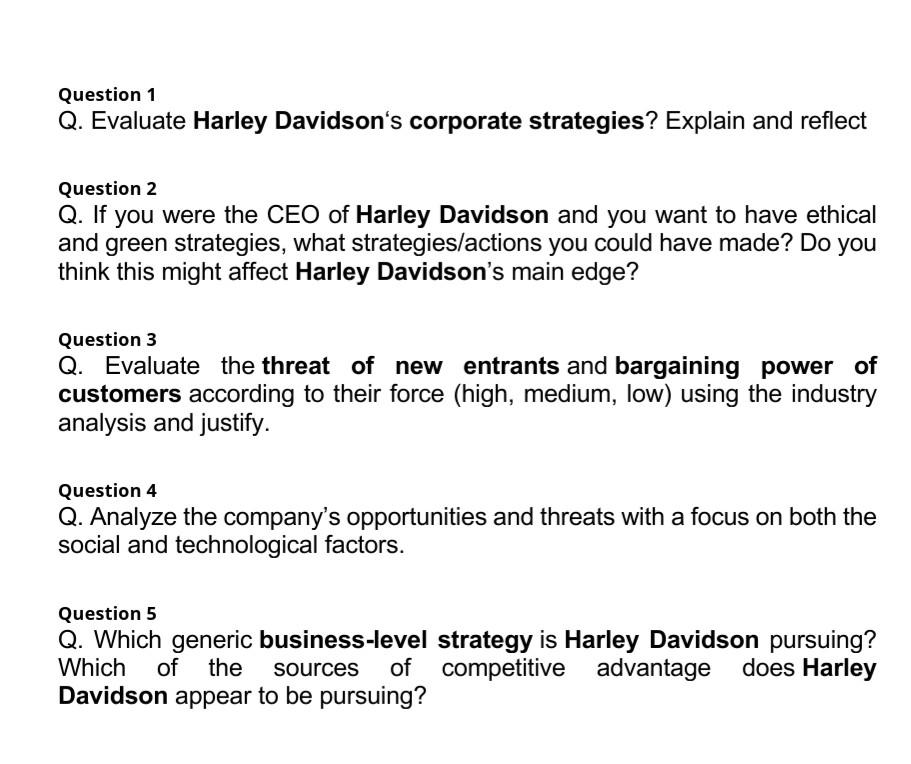
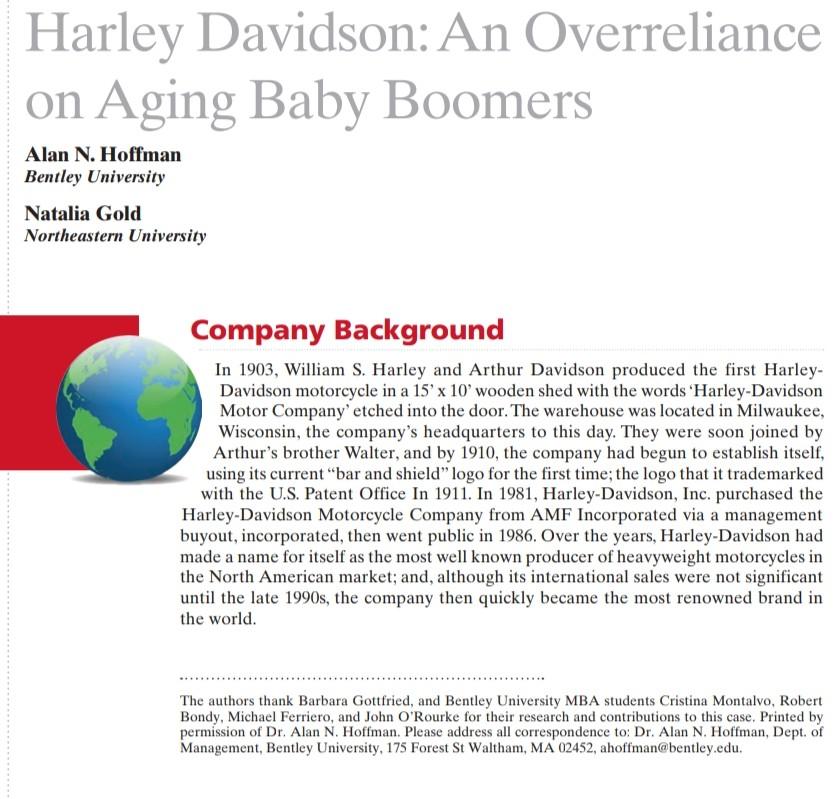
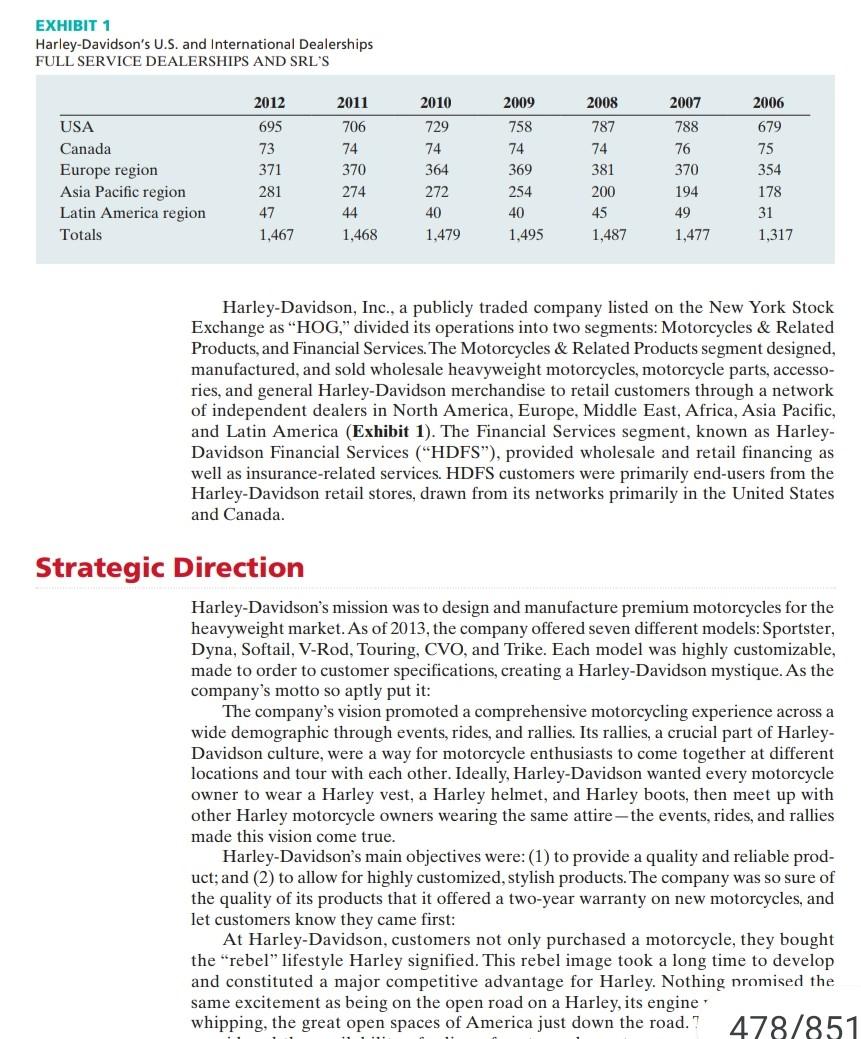
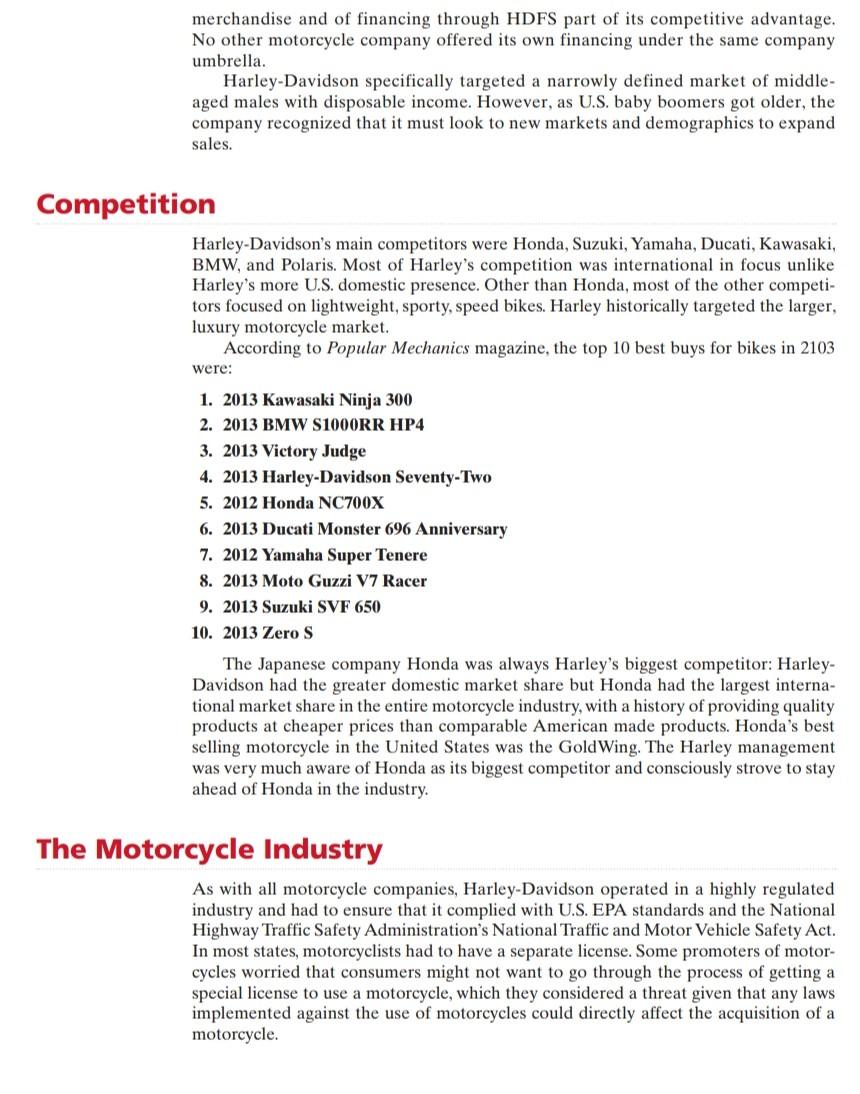
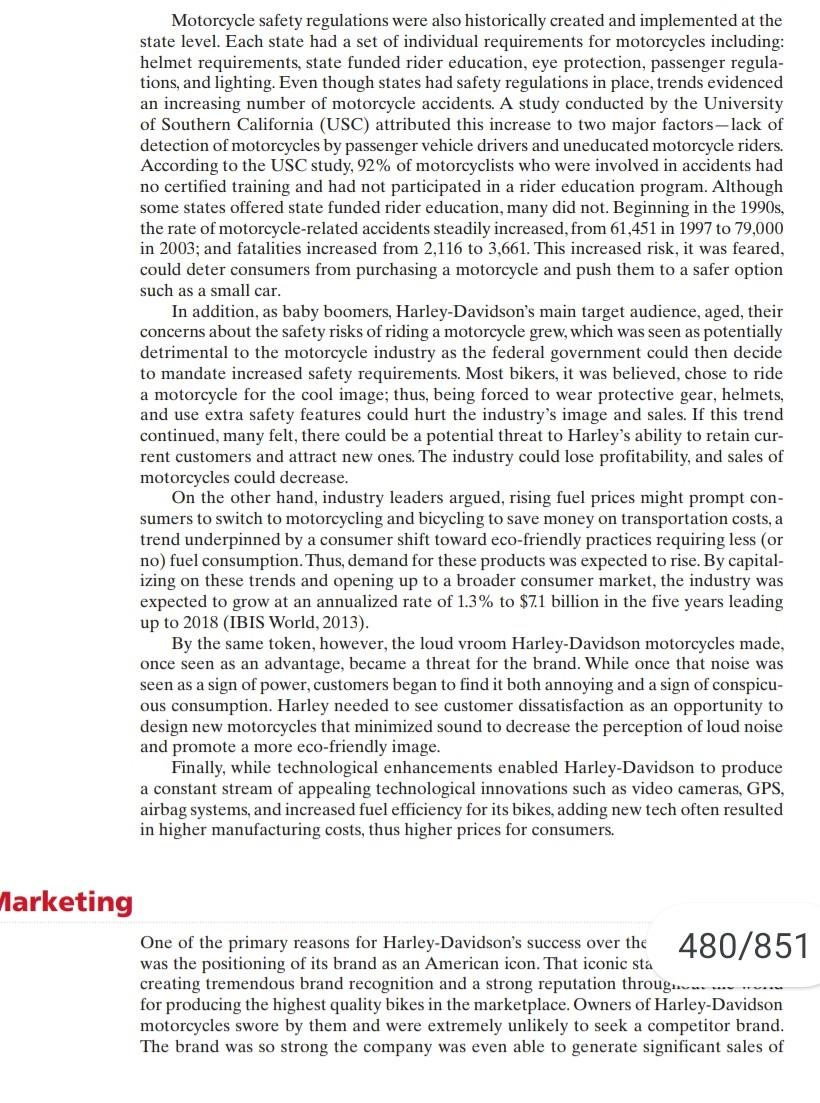
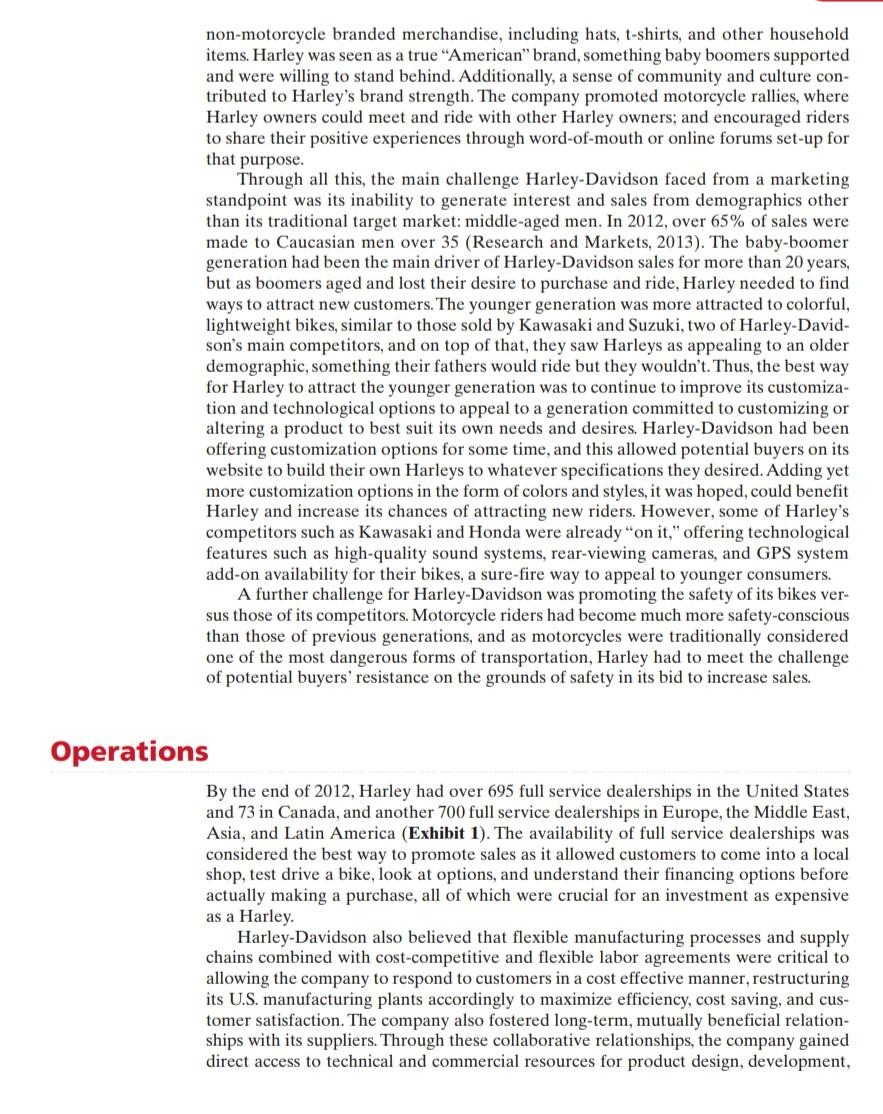
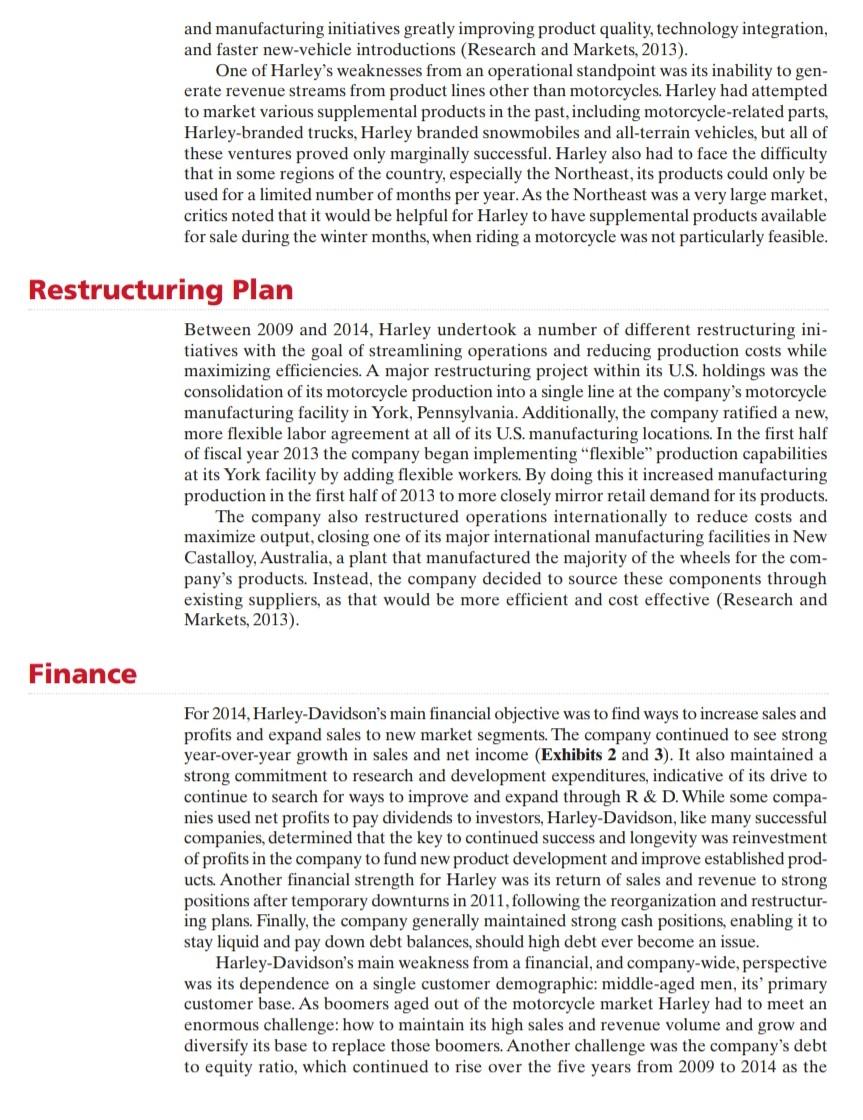
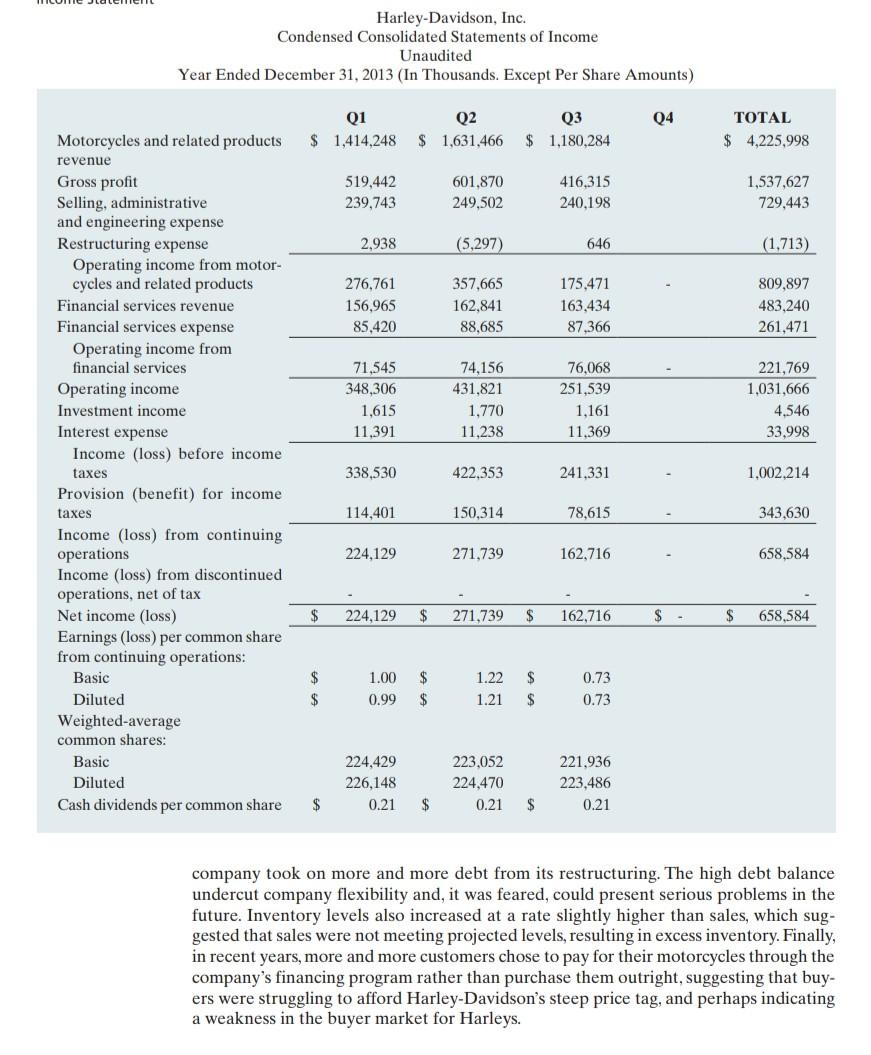
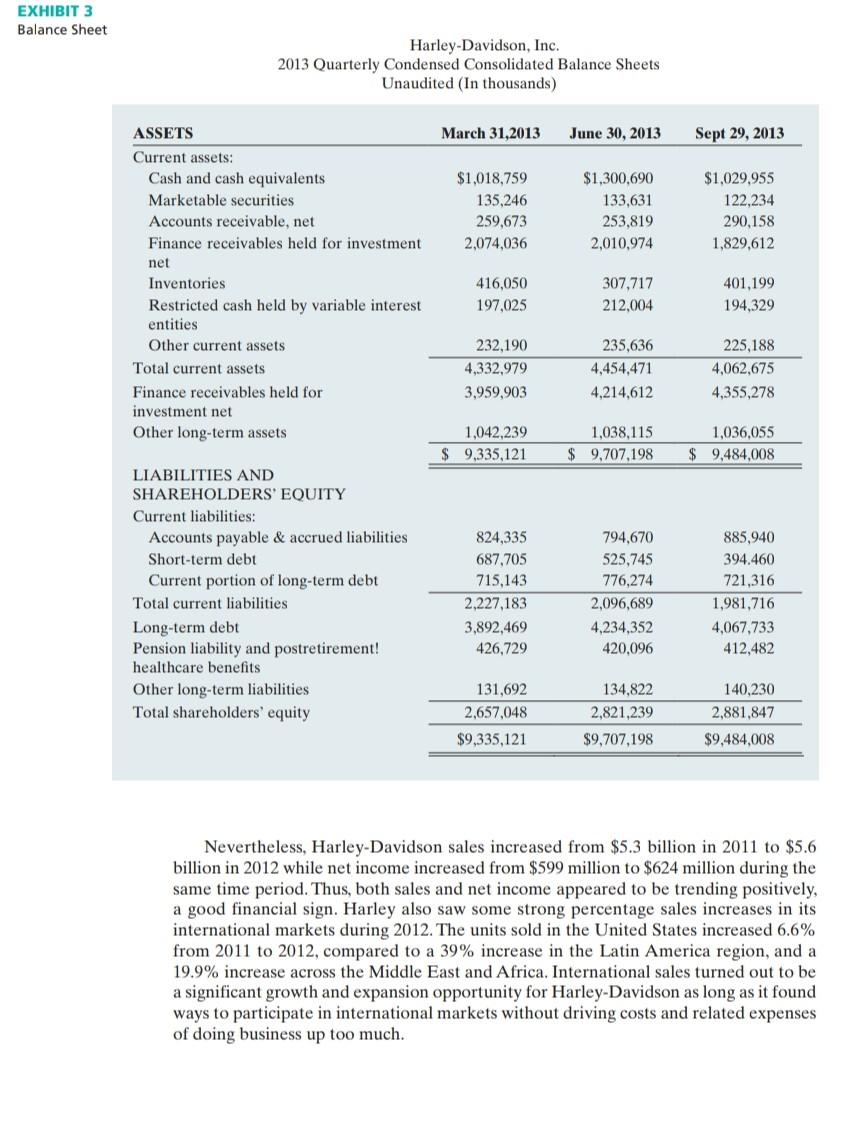
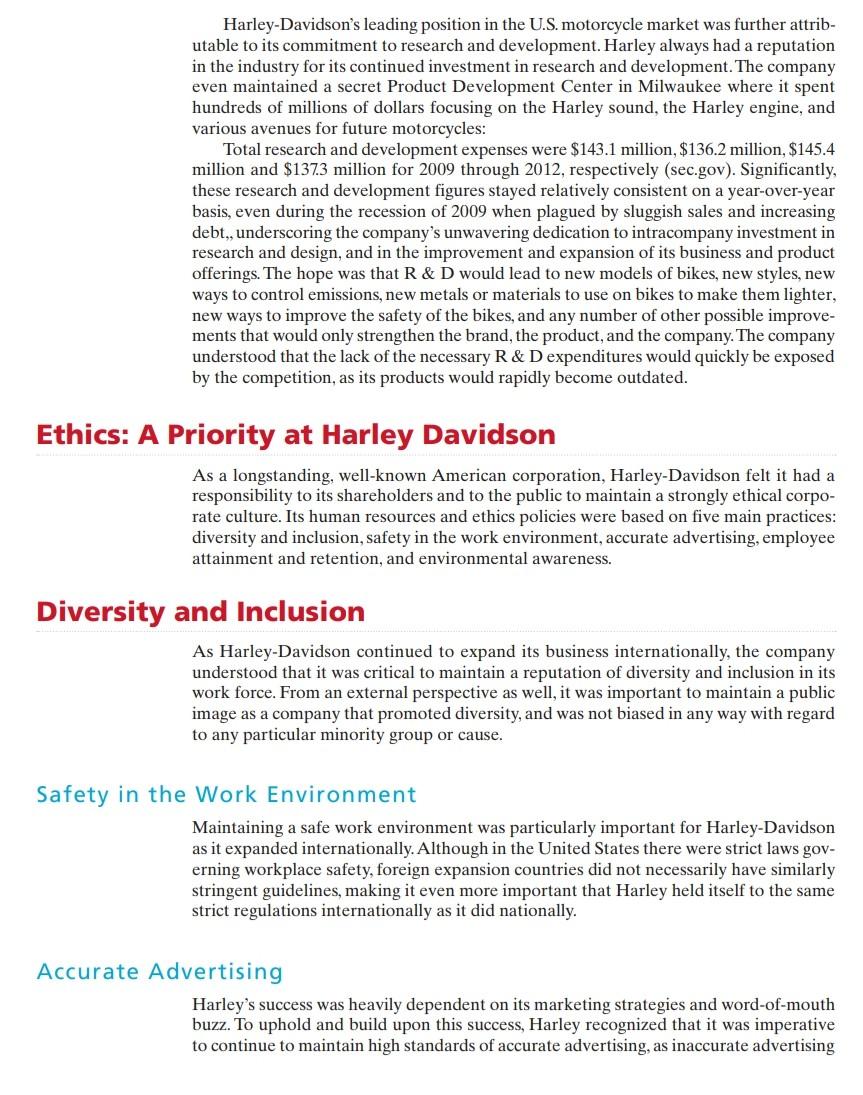
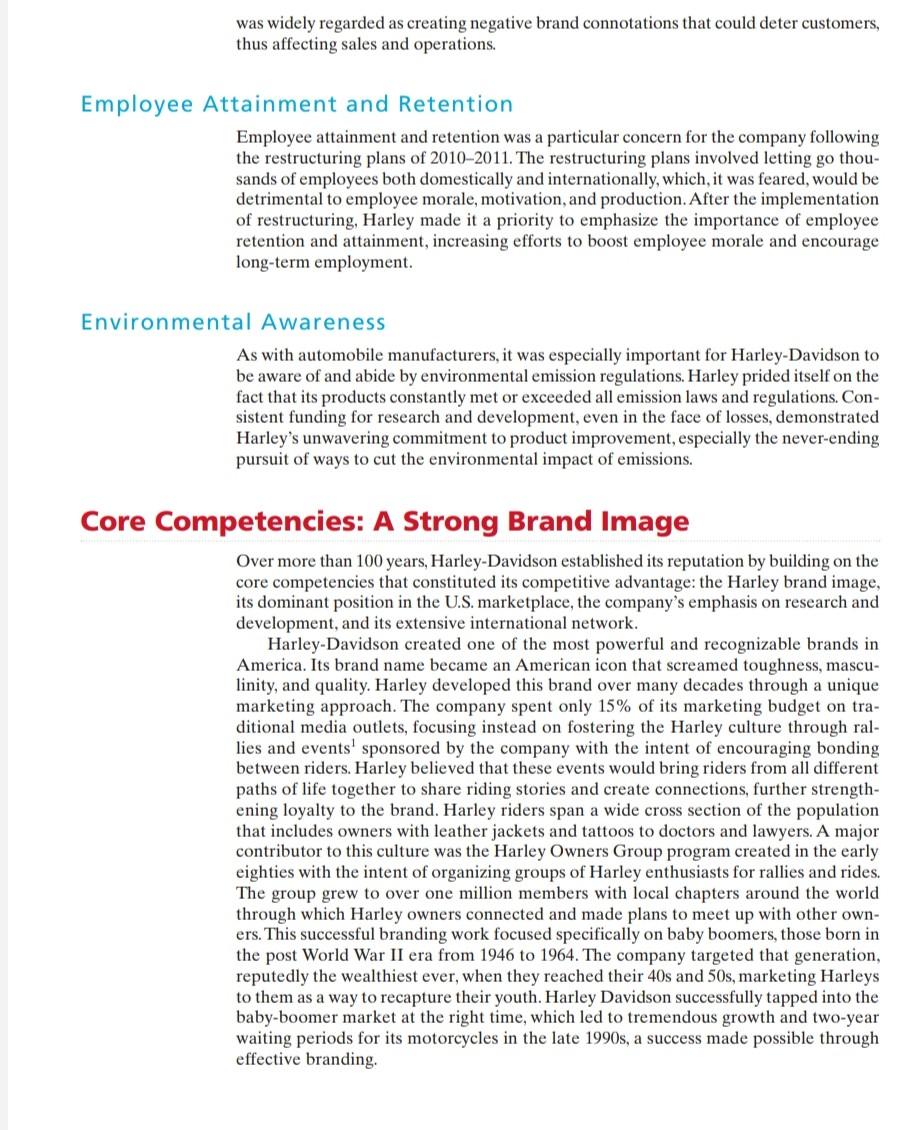
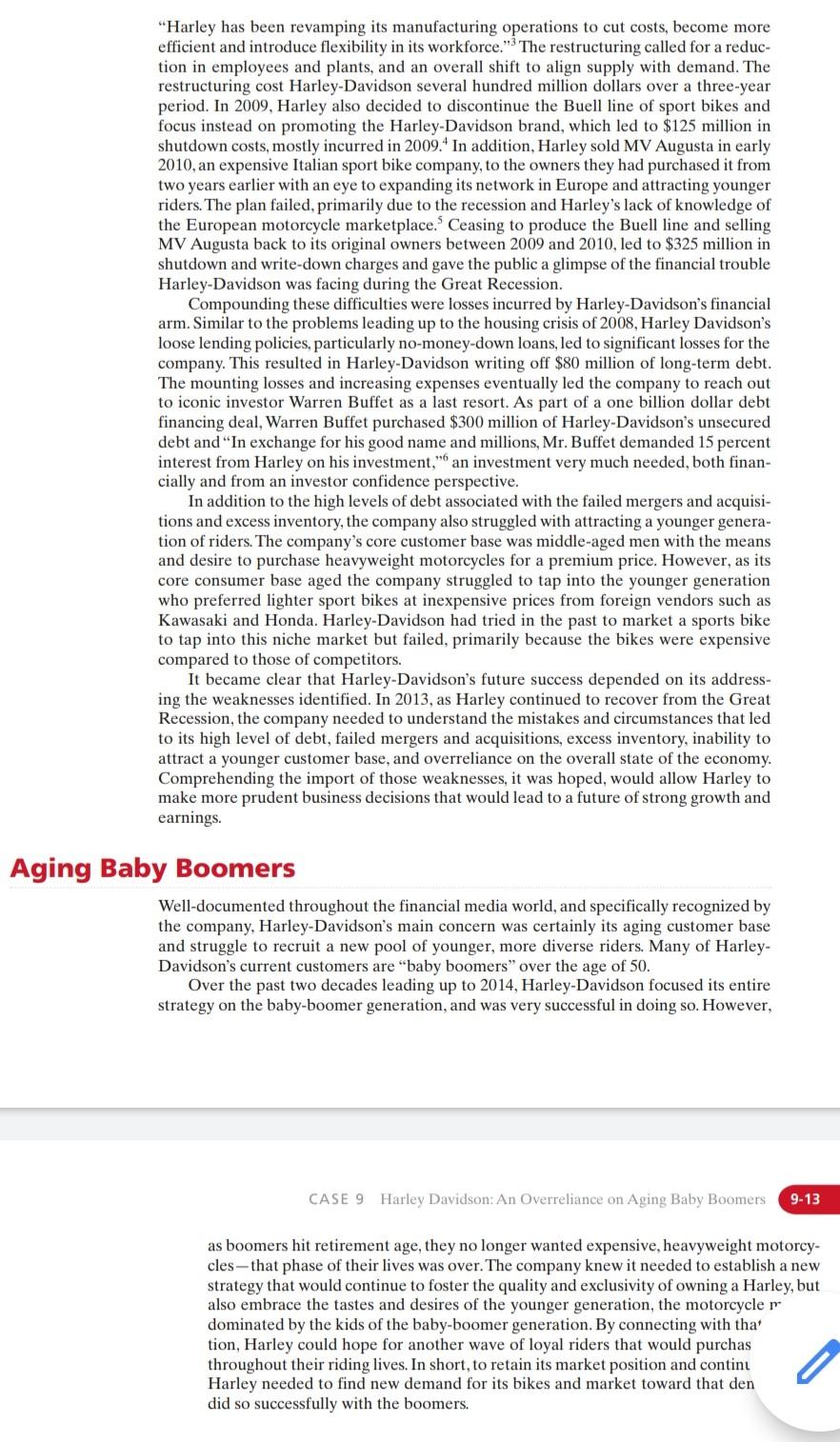
Harley Davidson: An Overreliance on Aging Baby Boomers Alan N. Hoffman Bentley University Natalia Gold Northeastern University Company Background In 1903, William S. Harley and Arthur Davidson produced the first Harley- Davidson motorcycle in a 15' x 10' wooden shed with the words 'Harley-Davidson Motor Company'etched into the door. The warehouse was located in Milwaukee, Wisconsin, the company's headquarters to this day. They were soon joined by Arthur's brother Walter, and by 1910, the company had begun to establish itself, using its current "bar and shield" logo for the first time; the logo that it trademarked with the U.S. Patent Office In 1911. In 1981, Harley-Davidson, Inc. purchased the Harley-Davidson Motorcycle Company from AMF Incorporated via a management buyout, incorporated, then went public in 1986. Over the years, Harley-Davidson had made a name for itself as the most well known producer of heavyweight motorcycles in the North American market; and, although its international sales were not significant until the late 1990s, the company then quickly became the most renowned brand in the world. The authors thank Barbara Gottfried, and Bentley University MBA students Cristina Montalvo, Robert Bondy, Michael Ferriero, and John O'Rourke for their research and contributions to this case, Printed by permission of Dr. Alan N. Hoffman. Please address all correspondence to: Dr. Alan N. Hoffman, Dept. of Management, Bentley University, 175 Forest St Waltham, MA 02452, ahoffman@bentley.edu. EXHIBIT 1 Harley-Davidson's U.S. and International Dealerships FULL SERVICE DEALERSHIPS AND SRL'S 2012 2011 2009 2008 2006 USA Canada Europe region Asia Pacific region Latin America region Totals 695 73 371 281 47 1,467 706 74 370 274 44 1,468 2010 729 74 364 272 40 1,479 758 74 369 254 40 1,495 787 74 381 200 45 1,487 2007 788 76 370 194 679 75 354 178 31 1,317 49 1,477 Harley-Davidson, Inc., a publicly traded company listed on the New York Stock Exchange as "HOG," divided its operations into two segments: Motorcycles & Related Products, and Financial Services. The Motorcycles & Related Products segment designed, manufactured, and sold wholesale heavyweight motorcycles, motorcycle Parts, accesso- ries, and general Harley-Davidson merchandise to retail customers through a network of independent dealers in North America, Europe, Middle East, Africa, Asia Pacific, and Latin America (Exhibit 1). The Financial Services segment, known as Harley- Davidson Financial Services ("HDFS"), provided wholesale and retail financing as well as insurance-related services. HDFS customers were primarily end-users from the Harley-Davidson retail stores, drawn from its networks primarily in the United States and Canada. Strategic Direction Harley-Davidson's mission was to design and manufacture premium motorcycles for the heavyweight market. As of 2013, the company offered seven different models: Sportster, Dyna, Softail, V-Rod, Touring, CVO, and Trike. Each model was highly customizable, made to order to customer specifications, creating a Harley-Davidson mystique. As the company's motto so aptly put it: The company's vision promoted a comprehensive motorcycling experience across a wide demographic through events, rides, and rallies. Its rallies, a crucial part of Harley- Davidson culture, were a way for motorcycle enthusiasts to come together at different locations and tour with each other. Ideally, Harley-Davidson wanted every motorcycle owner to wear a Harley vest, a Harley helmet, and Harley boots, then meet up with other Harley motorcycle owners wearing the same attire-the events, rides, and rallies made this vision come true. Harley-Davidson's main objectives were: (1) to provide a quality and reliable prod- uct; and (2) to allow for highly customized, stylish products. The company was so sure of the quality of its products that it offered a two-year warranty on new motorcycles, and let customers know they came first: At Harley-Davidson, customers not only purchased a motorcycle, they bought the rebel lifestyle Harley signified. This rebel image took a long time to develop and constituted a major competitive advantage for Harley. Nothing promised the same excitement as being on the open road on a Harley, its engine whipping, the great open spaces of America just down the road. ? 478/851 merchandise and of financing through HDFS part of its competitive advantage. No other motorcycle company offered its own financing under the same company umbrella. Harley-Davidson specifically targeted a narrowly defined market of middle- aged males with disposable income. However, as U.S. baby boomers got older, the company recognized that it must look to new markets and demographics to expand sales. Competition Harley-Davidson's main competitors were Honda, Suzuki, Yamaha, Ducati, Kawasaki, BMW, and Polaris. Most of Harley's competition was international in focus unlike Harley's more U.S. domestic presence. Other than Honda, most of the other competi- tors focused on lightweight, sporty, speed bikes. Harley historically targeted the larger, luxury motorcycle market. According to Popular Mechanics magazine, the top 10 best buys for bikes in 2103 were: 1. 2013 Kawasaki Ninja 300 2. 2013 BMW S1000RR HP4 3. 2013 Victory Judge 4. 2013 Harley-Davidson Seventy-Two 5. 2012 Honda NC700X 6. 2013 Ducati Monster 696 Anniversary 7. 2012 Yamaha Super Tenere 8. 2013 Moto Guzzi V7 Racer 9. 2013 Suzuki SVF 650 10. 2013 Zero S The Japanese company Honda was always Harley's biggest competitor: Harley- Davidson had the greater domestic market share but Honda had the largest interna- tional market share in the entire motorcycle industry, with a history of providing quality products at cheaper prices than comparable American made products. Honda's best selling motorcycle in the United States was the GoldWing. The Harley management was very much aware of Honda as its biggest competitor and consciously strove to stay ahead of Honda in the industry. The Motorcycle Industry As with all motorcycle companies, Harley-Davidson operated in a highly regulated industry and had to ensure that it complied with U.S. EPA standards and the National Highway Traffic Safety Administration's National Traffic and Motor Vehicle Safety Act. In most states, motorcyclists had to have a separate license. Some promoters of motor- cycles worried that consumers might not want to go through the process of getting a special license to use a motorcycle, which they considered a threat given that any laws implemented against the use of motorcycles could directly affect the acquisition of a motorcycle. Motorcycle safety regulations were also historically created and implemented at the state level. Each state had a set of individual requirements for motorcycles including: helmet requirements, state funded rider education, eye protection, passenger regula- tions, and lighting. Even though states had safety regulations in place, trends evidenced an increasing number of motorcycle accidents. A study conducted by the University of Southern California (USC) attributed this increase to two major factors - lack of detection of motorcycles by passenger vehicle drivers and uneducated motorcycle riders. According to the USC study, 92% of motorcyclists who were involved in accidents had no certified training and had not participated in a rider education program. Although some states offered state funded rider education, many did not. Beginning in the 1990s, the rate of motorcycle-related accidents steadily increased, from 61,451 in 1997 to 79,000 in 2003; and fatalities increased from 2,116 to 3,661. This increased risk, it was feared, could deter consumers from purchasing a motorcycle and push them to a safer option such as a small car. In addition, as baby boomers, Harley-Davidson's main target audience, aged, their concerns about the safety risks of riding a motorcycle grew, which was seen as potentially detrimental to the motorcycle industry as the federal government could then decide to mandate increased safety requirements. Most bikers, it was believed, chose to ride a motorcycle for the cool image; thus, being forced to wear protective gear, helmets, and use extra safety features could hurt the industry's image and sales. If this trend continued, many felt, there could be a potential threat to Harley's ability to retain cur- rent customers and attract new ones. The industry could lose profitability, and sales of motorcycles could decrease. On the other hand, industry leaders argued, rising fuel prices might prompt con- sumers to switch to motorcycling and bicycling to save money on transportation costs, a trend underpinned by a consumer shift toward eco-friendly practices requiring less (or no) fuel consumption. Thus, demand for these products was expected to rise. By capital- izing on these trends and opening up to a broader consumer market, the industry was expected to grow at an annualized rate of 1.3% to $7.1 billion in the five years leading up to 2018 (IBIS World, 2013). By the same token, however, the loud vroom Harley-Davidson motorcycles made, once seen as an advantage, became a threat for the brand. While once that noise was seen as a sign of power, customers began to find it both annoying and a sign of conspicu- ous consumption. Harley needed to see customer dissatisfaction as an opportunity to design new motorcycles that minimized sound to decrease the perception of loud noise and promote a more eco-friendly image. Finally, while technological enhancements enabled Harley-Davidson to produce a constant stream of appealing technological innovations such as video cameras, GPS, airbag systems, and increased fuel efficiency for its bikes, adding new tech often resulted in higher manufacturing costs, thus higher prices for consumers. Marketing One of the primary reasons for Harley-Davidson's success over the 480/851 was the positioning of its brand as an American icon. That iconic sta creating tremendous brand recognition and a strong reputation throug. for producing the highest quality bikes in the marketplace. Owners of Harley-Davidson motorcycles swore by them and were extremely unlikely to seek a competitor brand. The brand was so strong the company was even able to generate significant sales of non-motorcycle branded merchandise, including hats, t-shirts, and other household items. Harley was seen as a true "American" brand, something baby boomers supported and were willing to stand behind. Additionally, a sense of community and culture con- tributed to Harley's brand strength. The company promoted motorcycle rallies, where Harley owners could meet and ride with other Harley owners; and encouraged riders to share their positive experiences through word-of-mouth or online forums set-up for that purpose. Through all this, the main challenge Harley-Davidson faced from a marketing standpoint was its inability to generate interest and sales from demographics other than its traditional target market: middle-aged men. In 2012, over 65% of sales were made to Caucasian men over 35 (Research and Markets, 2013). The baby-boomer generation had been the main driver of Harley-Davidson sales for more than 20 years, but as boomers aged and lost their desire to purchase and ride, Harley needed to find ways to attract new customers. The younger generation was more attracted to colorful, lightweight bikes, similar to those sold by Kawasaki and Suzuki, two of Harley-David- son's main competitors, and on top of that, they saw Harleys as appealing to an older demographic, something their fathers would ride but they wouldn't. Thus, the best way for Harley to attract the younger generation was to continue to improve its customiza- tion and technological options to appeal to a generation committed to customizing or altering a product to best suit its own needs and desires. Harley-Davidson had been offering customization options for some time, and this allowed potential buyers on its website to build their own Harleys to whatever specifications they desired. Adding yet more customization options in the form of colors and styles, it was hoped, could benefit Harley and increase its chances of attracting new riders. However, some of Harley's competitors such as Kawasaki and Honda were already "on it," offering technological features such as high-quality sound systems, rear-viewing cameras, and GPS system add-on availability for their bikes, a sure-fire way to appeal to younger consumers. A further challenge for Harley-Davidson was promoting the safety of its bikes ver- sus those of its competitors. Motorcycle riders had become much more safety-conscious than those of previous generations, and as motorcycles were traditionally considered one of the most dangerous forms of transportation, Harley had to meet the challenge of potential buyers' resistance on the grounds of safety in its bid to increase sales. Operations By the end of 2012, Harley had over 695 full service dealerships in the United States and 73 in Canada, and another 700 full service dealerships in Europe, the Middle East, Asia, and Latin America (Exhibit 1). The availability of full service dealerships was considered the best way to promote sales as it allowed customers to come into a local shop, test drive a bike, look options, and understand financing options before actually making a purchase, all of which were crucial for an investment as expensive as a Harley. Harley-Davidson also believed that flexible manufacturing processes and supply chains combined with cost-competitive and flexible labor agreements were critical to allowing the company to respond to customers in a cost effective manner, restructuring its U.S. manufacturing plants accordingly to maximize efficiency, cost saving, and cus- tomer satisfaction. The company also fostered long-term, mutually beneficial relation- ships with its suppliers. Through these collaborative relationships, the company gained direct access to technical and commercial resources for product design, development, and manufacturing initiatives greatly improving product quality, technology integration, and faster new-vehicle introductions (Research and Markets, 2013). One of Harley's weaknesses from an operational standpoint was its inability to gen- erate revenue streams from product lines other than motorcycles. Harley had attempted to market various supplemental products in the past, including motorcycle-related parts, Harley-branded trucks, Harley branded snowmobiles and all-terrain vehicles, but all of these ventures proved only marginally successful. Harley also had to face the difficulty that in some regions of the country, especially the Northeast, its products could only be used for a limited number of months per year. As the Northeast was a very large market, critics noted that it would be helpful for Harley to have supplemental products available for sale during the winter months, when riding a motorcycle was not particularly feasible. Restructuring Plan Between 2009 and 2014, Harley undertook a number of different restructuring ini- tiatives with the goal of streamlining operations and reducing production costs while maximizing efficiencies. A major restructuring project within its U.S. holdings was the consolidation of its motorcycle production into a single line at the company's motorcycle manufacturing facility in York, Pennsylvania. Additionally, the company ratified a new, more flexible labor agreement at all of its U.S. manufacturing locations. In the first half of fiscal year 2013 the company began implementing "flexible" production capabilities at its York facility by adding flexible workers. By doing this it increased manufacturing production in the first half of 2013 to more closely mirror retail demand for its products. The company also restructured operations internationally to reduce costs and maximize output, closing one of its major international manufacturing facilities in New Castalloy, Australia, a plant that manufactured the majority of the wheels for the com- pany's products. Instead, the company decided to source these components through existing suppliers, as that would be more efficient and cost effective (Research and Markets, 2013). Finance For 2014, Harley-Davidson's main financial objective was to find ways to increase sales and profits and expand sales to new market segments. The company continued to see strong year-over-year growth in sales and net income (Exhibits 2 and 3). It also maintained a strong commitment to research and development expenditures, indicative of its drive to continue to search for ways to improve and expand through R & D. While some compa- nies used net profits to pay dividends to investors, Harley-Davidson, like many successful companies, determined that the key to continued success and longevity was reinvestment of profits in the company to fund new product development and improve established prod- ucts. Another financial strength for Harley was its return of sales and revenue to strong positions after temporary downturns in 2011, following the reorganization and restructur- ing plans. Finally, the company generally maintained strong cash positions, enabling it to stay liquid and pay down debt balances, should high debt ever become an issue. Harley-Davidson's main weakness from a financial, and company-wide, perspective was its dependence on a single customer demographic: middle-aged men, its' primary customer base. As boomers aged out of the motorcycle market Harley had to meet an enormous challenge: how to maintain its high sales and revenue volume and grow and diversify its base to replace those boomers. Another challenge was the company's debt to equity ratio, which continued to rise over the five years from 2009 to 2014 as the Harley-Davidson, Inc. Condensed Consolidated Statements of Income Unaudited Year Ended December 31, 2013 (In Thousands. Except Per Share Amounts) Q4 Q1 $ 1,414,248 Q2 $ 1,631,466 Q3 $ 1,180,284 TOTAL $ 4,225,998 519,442 239,743 601,870 249,502 416,315 240,198 1,537,627 729,443 2.938 (5,297) 646 (1,713) 276,761 156,965 85.420 357,665 162,841 88,685 175,471 163,434 87.366 809,897 483,240 261,471 71,545 348,306 1,615 11,391 74,156 431,821 1,770 11,238 76,068 251,539 1,161 11,369 221,769 1,031,666 4,546 33,998 Motorcycles and related products revenue Gross profit Selling, administrative and engineering expense Restructuring expense Operating income from motor- cycles and related products Financial services revenue Financial services expense Operating income from financial services Operating income Investment income Interest expense Income (loss) before income taxes Provision (benefit for income taxes Income (loss) from continuing operations Income (loss) from discontinued operations, net of tax Net income (loss) Earnings (loss) per common share from continuing operations: Basic Diluted Weighted average common shares: Basic Diluted Cash dividends per common share 338,530 422,353 241.331 1.002.214 114,401 150,314 78,615 343,630 224,129 271,739 162.716 658,584 $ 224,129 $ 271.739 $ 162,716 $ $ 658,584 $ $ 1.00 0.99 $ $ 1.22 1.21 $ $ 0.73 0.73 224,429 226,148 0.21 223,052 224,470 0.21 221,936 223,486 0.21 $ $ $ company took on more and more debt from its restructuring. The high debt balance undercut company flexibility and, it was feared, could present serious problems in the future. Inventory levels also increased at a rate slightly higher than sales, which sug- gested that sales were not meeting projected levels, resulting in excess inventory. Finally, in recent years, more and more customers chose to pay for their motorcycles through the company's financing program rather than purchase them outright, suggesting that buy- ers were struggling to afford Harley-Davidson's steep price tag, and perhaps indicating a weakness in the buyer market for Harleys. EXHIBIT 3 Balance Sheet Harley-Davidson, Inc. 2013 Quarterly Condensed Consolidated Balance Sheets Unaudited (In thousands) March 31,2013 June 30, 2013 Sept 29, 2013 $1,018,759 135,246 259,673 2,074,036 $1,300,690 133,631 253,819 2,010,974 $1,029,955 122,234 290,158 1,829,612 ASSETS Current assets: Cash and cash equivalents Marketable securities Accounts receivable, net Finance receivables held for investment net Inventories Restricted cash held by variable interest entities Other current assets Total current assets Finance receivables held for investment net Other long-term assets 416,050 197,025 307,717 212,004 401,199 194,329 232,190 4,332,979 3,959,903 235,636 4,454,471 4,214,612 225,188 4,062,675 4,355,278 1,042,239 $ 9,335,121 1,038,115 $ 9,707.198 1,036,055 $ 9,484,008 LIABILITIES AND SHAREHOLDERS' EQUITY Current liabilities: Accounts payable & accrued liabilities Short-term debt Current portion of long-term debt Total current liabilities Long-term debt Pension liability and postretirement! healthcare benefits Other long-term liabilities Total shareholders' equity 824,335 687,705 715,143 2,227,183 3,892,469 426,729 794,670 525,745 776,274 2,096,689 4,234,352 420,096 885,940 394.460 721,316 1,981,716 4,067.733 412,482 131,692 2,657,048 $9,335,121 134,822 2,821,239 $9,707,198 140,230 2,881,847 $9.484,008 Nevertheless, Harley-Davidson sales increased from $5.3 billion in 2011 to $5.6 billion in 2012 while net income increased from $599 million to $624 million during the same time period. Thus, both sales and net income appeared to be trending positively, a good financial sign. Harley also saw some strong percentage sales increases in its international markets during 2012. The units sold in the United States increased 6.6% from 2011 to 2012, compared to a 39% increase in the Latin America region, and a 19.9% increase across the Middle East and Africa. International sales turned out to be a significant growth and expansion opportunity for Harley-Davidson as long as it found ways to participate in international markets without driving costs and related expenses of doing business up too much. Harley-Davidson's leading position in the U.S. motorcycle market was further attrib- utable to its commitment to research and development. Harley always had a reputation in the industry for its continued investment in research and development. The company even maintained a secret Product Development Center in Milwaukee where it spent hundreds of millions of dollars focusing on the Harley sound, the Harley engine, and various avenues for future motorcycles: Total research and development expenses were $143.1 million, $136.2 million, $145.4 million and $137.3 million for 2009 through 2012, respectively (sec.gov). Significantly, these research and development figures stayed relatively consistent on a year-over-year basis, even during the recession of 2009 when plagued by sluggish sales and increasing debt,, underscoring the company's unwavering dedication to intracompany investment in research and design, and in the improvement and expansion of its business and product offerings. The hope was that R & D would lead to new models of bikes, new styles, new ways to control emissions, new metals or materials to use on bikes to make them lighter, new ways to improve the safety of the bikes, and any number of other possible improve- ments that would only strengthen the brand, the product, and the company. The company understood that the lack of the necessary R & D expenditures would quickly be exposed by the competition, as its products would rapidly become outdated. Ethics: A Priority at Harley Davidson As a longstanding, well-known American corporation, Harley-Davidson felt it had a responsibility to its shareholders and to the public to maintain a strongly ethical corpo- rate culture. Its human resources and ethics policies were based on five main practices: diversity and inclusion, safety in the work environment, accurate advertising, employee attainment and retention, and environmental awareness. Diversity and Inclusion As Harley-Davidson continued to expand its business internationally, the company understood that it was critical to maintain a reputation of diversity and inclusion in its work force. From an external perspective as well, it was important to maintain a public image as a company that promoted diversity, and was not biased in any way with regard to any particular minority group or cause. Safety in the Work Environment Maintaining a safe work environment was particularly important for Harley-Davidson as it expanded internationally. Although in the United States there were strict laws gov- erning workplace safety, foreign expansion countries did not necessarily have similarly stringent guidelines, making it even more important that Harley held itself to the same strict regulations internationally as it did nationally. Accurate Advertising Harley's success was heavily dependent on its marketing strategies and word-of-mouth buzz. To uphold and build upon this success, Harley recognized that it was imperative to continue to maintain high standards of accurate advertising, as inaccurate advertising was widely regarded as creating negative brand connotations that could deter customers, thus affecting sales and operations. Employee Attainment and Retention Employee attainment and retention was a particular concern for the company following the restructuring plans of 2010-2011. The restructuring plans involved letting go thou- sands of employees both domestically and internationally, which, it was feared, would be detrimental to employee morale, motivation, and production. After the implementation of restructuring, Harley made it a priority to emphasize the importance of employee retention and attainment, increasing efforts to boost employee morale and encourage long-term employment. Environmental Awareness As with automobile manufacturers, it was especially important for Harley-Davidson to be aware of and abide by environmental emission regulations. Harley prided itself on the fact that its products constantly met or exceeded all emission laws and regulations. Con- sistent funding for research and development, even in the face of losses, demonstrated Harley's unwavering commitment to product improvement, especially the never-ending pursuit of ways to cut the environmental impact of emissions. Core Competencies: A Strong Brand Image Over more than 100 years, Harley-Davidson established its reputation by building on the core competencies that constituted its competitive advantage: the Harley brand image, its dominant position in the U.S. marketplace, the company's emphasis on research and development, and its extensive international network. Harley-Davidson created one of the most powerful and recognizable brands in America. Its brand name became an American icon that screamed toughness, mascu- linity, and quality. Harley developed this brand over many decades through a unique marketing approach. The company spent only 15% of its marketing budget on tra- ditional media outlets, focusing instead on fostering the Harley culture through ral- lies and events' sponsored by the company with the intent of encouraging bonding between riders. Harley believed that these events would bring riders from all different paths of life together to share riding stories and create connections, further strength- ening loyalty to the brand. Harley riders span a wide cross section of the population that includes owners with leather jackets and tattoos to doctors and lawyers. A major contributor to this culture was the Harley Owners Group program created in the early eighties with the intent of organizing groups of Harley enthusiasts for rallies and rides. The group grew to over one million members with local chapters around the world through which Harley owners connected and made plans to meet up with other own- ers. This successful branding work focused specifically on baby boomers, those born in the post World War II era from 1946 to 1964. The company targeted that generation, reputedly the wealthiest ever, when they reached their 40s and 50s, marketing Harleys to them as a way to recapture their youth. Harley Davidson successfully tapped into the baby-boomer market at the right time, which led to tremendous growth and two-year waiting periods for its motorcycles in the late 1990s, a success made possible through effective branding, "Harley has been revamping its manufacturing operations to cut costs, become more efficient and introduce flexibility in its workforce." The restructuring called for a reduc- tion in employees and plants, and an overall shift to align supply with demand. The restructuring cost Harley-Davidson several hundred million dollars over a three-year period. In 2009, Harley also decided to discontinue the Buell line of sport bikes and focus instead on promoting the Harley-Davidson brand, which led to $125 million in shutdown costs, mostly incurred in 2009. In addition, Harley sold MV Augusta in early 2010, an expensive Italian sport bike company, to the owners they had purchased it from two years earlier with an eye to expanding its network in Europe and attracting younger riders. The plan failed, primarily due to the recession and Harley's lack of knowledge of the European motorcycle marketplace. Ceasing to produce the Buell line and selling MV Augusta back to its original owners between 2009 and 2010, led to $325 million in shutdown and write-down charges and gave the public a glimpse of the financial trouble Harley-Davidson was facing during the Great Recession. Compounding these difficulties were losses incurred by Harley-Davidson's financial arm. Similar to the problems leading up to the housing crisis of 2008, Harley Davidson's loose lending policies, particularly no-money-down loans, led to significant losses for the company. This resulted in Harley-Davidson writing off $80 million of long-term debt. The mounting losses and increasing expenses eventually led the company to reach out to iconic investor Warren Buffet as a last resort. As part of a one billion dollar debt financing deal, Warren Buffet purchased $300 million of Harley-Davidson's unsecured debt and "In exchange for his good name and millions, Mr. Buffet demanded 15 percent interest from Harley on his investment," an investment very much needed, both finan- cially and from an investor confidence perspective. In addition to the high levels of debt associated with the failed mergers and acquisi- tions and excess inventory, the company also struggled with attracting a younger genera- tion of riders. The company's core customer base was middle-aged men with the means and desire to purchase heavyweight motorcycles for a premium price. However, as its core consumer base aged the company struggled to tap into the younger generation who preferred lighter sport bikes at inexpensive prices from foreign vendors such as Kawasaki and Honda. Harley-Davidson had tried in the past to market a sports bike to tap into this niche market but failed, primarily because the bikes were expensive compared to those of competitors. It became clear that Harley-Davidson's future success depended on its address- ing the weaknesses identified. In 2013, as Harley continued to recover from the Great Recession, the company needed to understand the mistakes and circumstances that led to its high level of debt, failed mergers and acquisitions, excess inventory, inability to attract a younger customer base, and overreliance on the overall state of the economy. Comprehending the import of those weaknesses, it was hoped, would allow Harley to make more prudent business decisions that would lead to a future of strong growth and earnings. Aging Baby Boomers Well-documented throughout the financial media world, and specifically recognized by the company, Harley-Davidson's main concern was certainly its aging customer base and struggle to recruit a new pool of younger, more diverse riders. Many of Harley- Davidson's current customers are "baby boomers" over the age of 50. Over the past two decades leading up to 2014, Harley-Davidson focused its entire strategy on the baby-boomer generation, and was very successful in doing so. However, CASE 9 Harley Davidson: An Overreliance on Aging Baby Boomers 9-13 as boomers hit retirement age, they no longer wanted expensive, heavyweight motorcy- cles -- that phase of their lives was over. The company knew it needed to establish a new strategy that would continue to foster the quality and exclusivity of owning a Harley, but also embrace the tastes and desires of the younger generation, the motorcycle dominated by the kids of the baby-boomer generation. By connecting with that tion, Harley could hope for another wave of loyal riders that would purchas throughout their riding lives. In short, to retain its market position and continu Harley needed to find new demand for its bikes and market toward that den did so successfully with the boomers. Question 1 Q. Evaluate Harley Davidson's corporate strategies? Explain and reflect Question 2 Q. If you were the CEO of Harley Davidson and you want to have ethical and green strategies, what strategies/actions you could have made? Do you think this might affect Harley Davidson's main edge? Question 3 Q. Evaluate the threat of new entrants and bargaining power of customers according to their force (high, medium, low) using the industry analysis and justify. Question 4 Q. Analyze the company's opportunities and threats with a focus on both the social and technological factors. Question 5 Q. Which generic business-level strategy is Harley Davidson pursuing? Which of the sources of competitive advantage does Harley Davidson appear to be pursuing
Step by Step Solution
There are 3 Steps involved in it
1 Expert Approved Answer
Step: 1 Unlock

Question Has Been Solved by an Expert!
Get step-by-step solutions from verified subject matter experts
Step: 2 Unlock
Step: 3 Unlock
 Study Help