Question: Required to post a summary for other students in your group to read. The summary should include the major findings of the study. 400 words
Required to post a summary for other students in your group to read. The summary should include the major findings of the study. 400 words max.
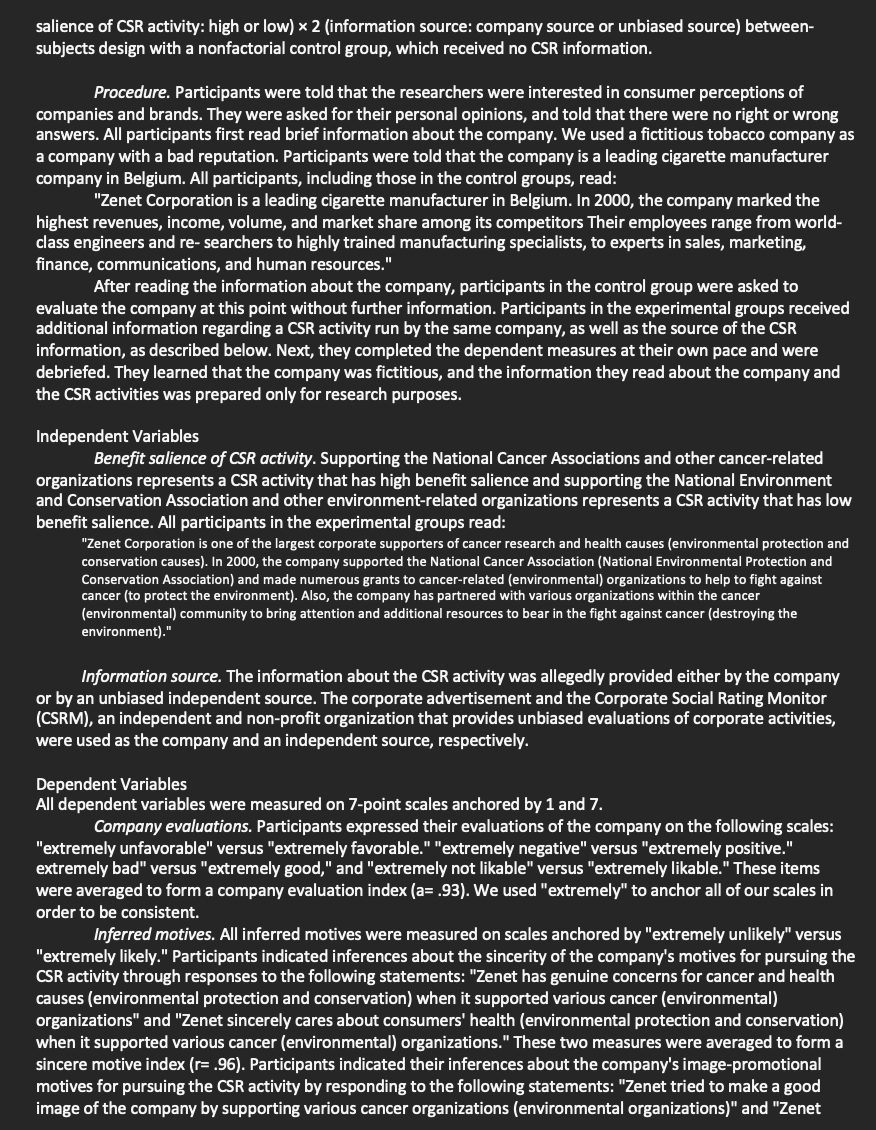
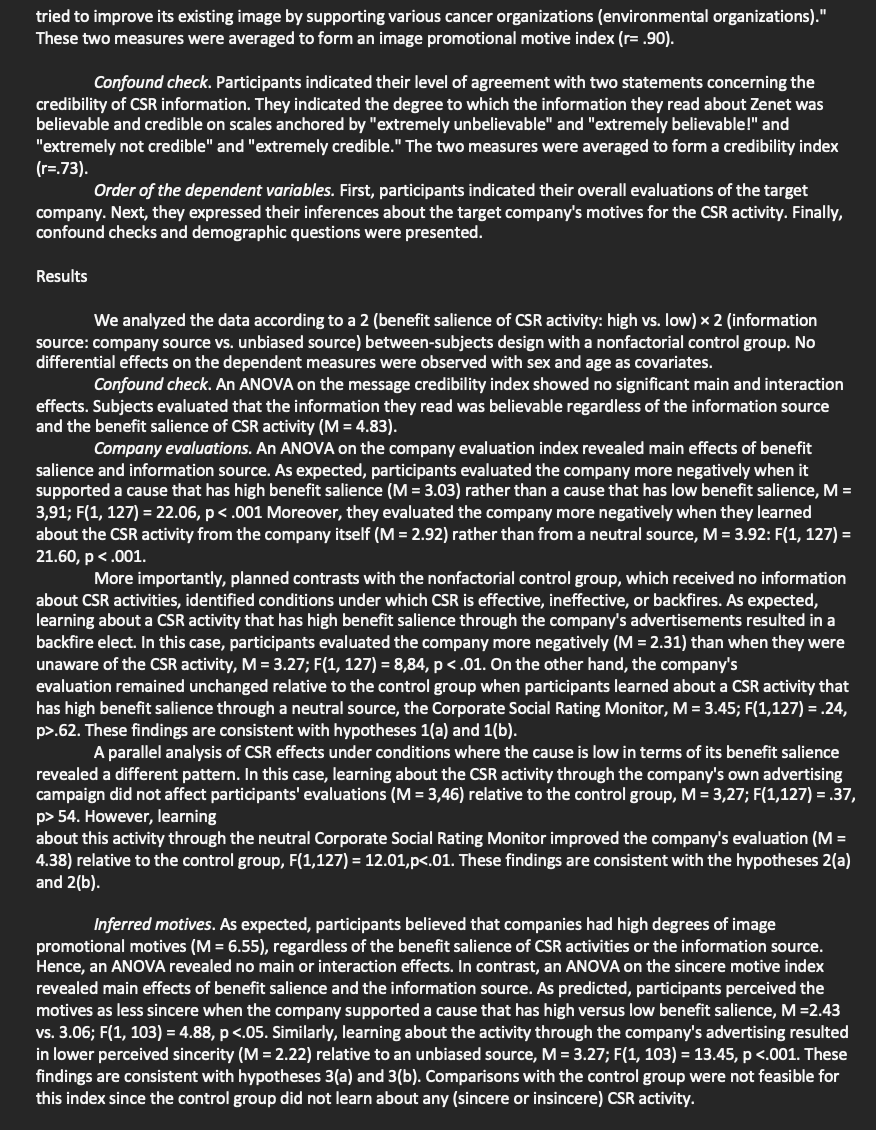
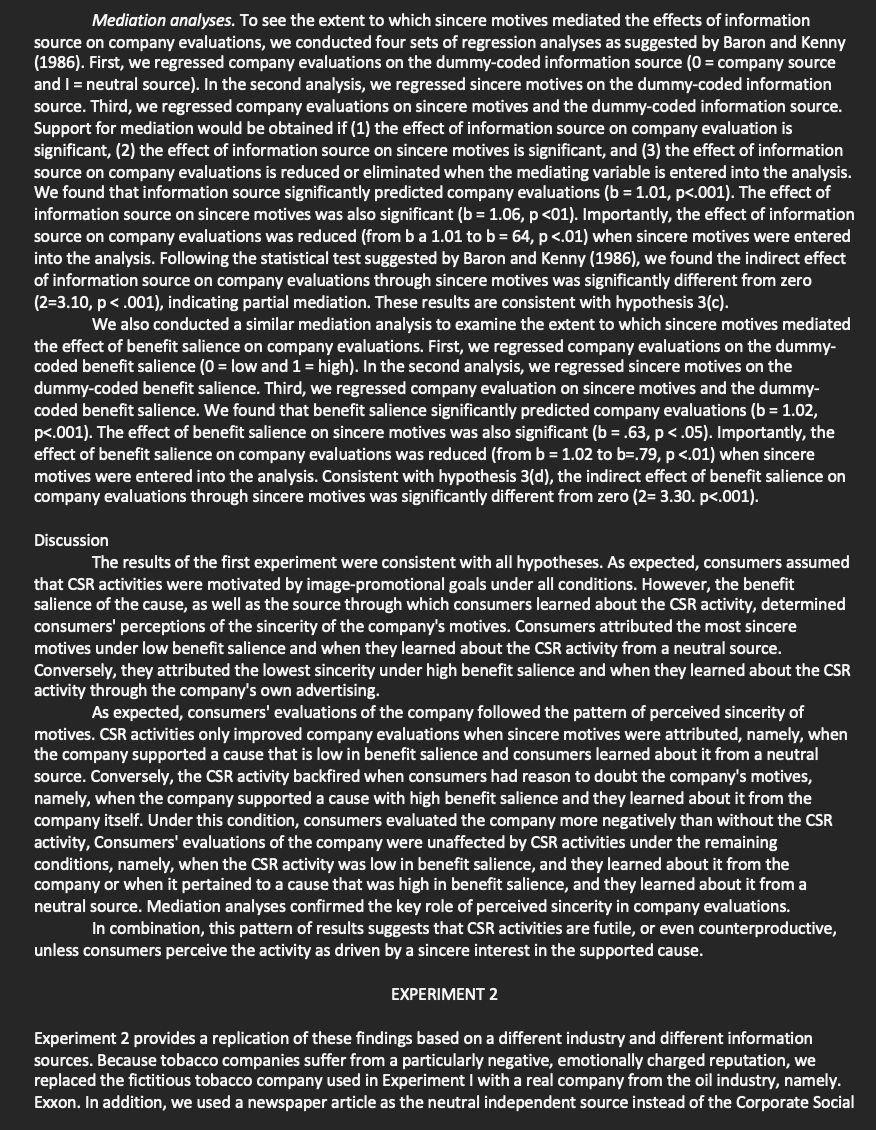
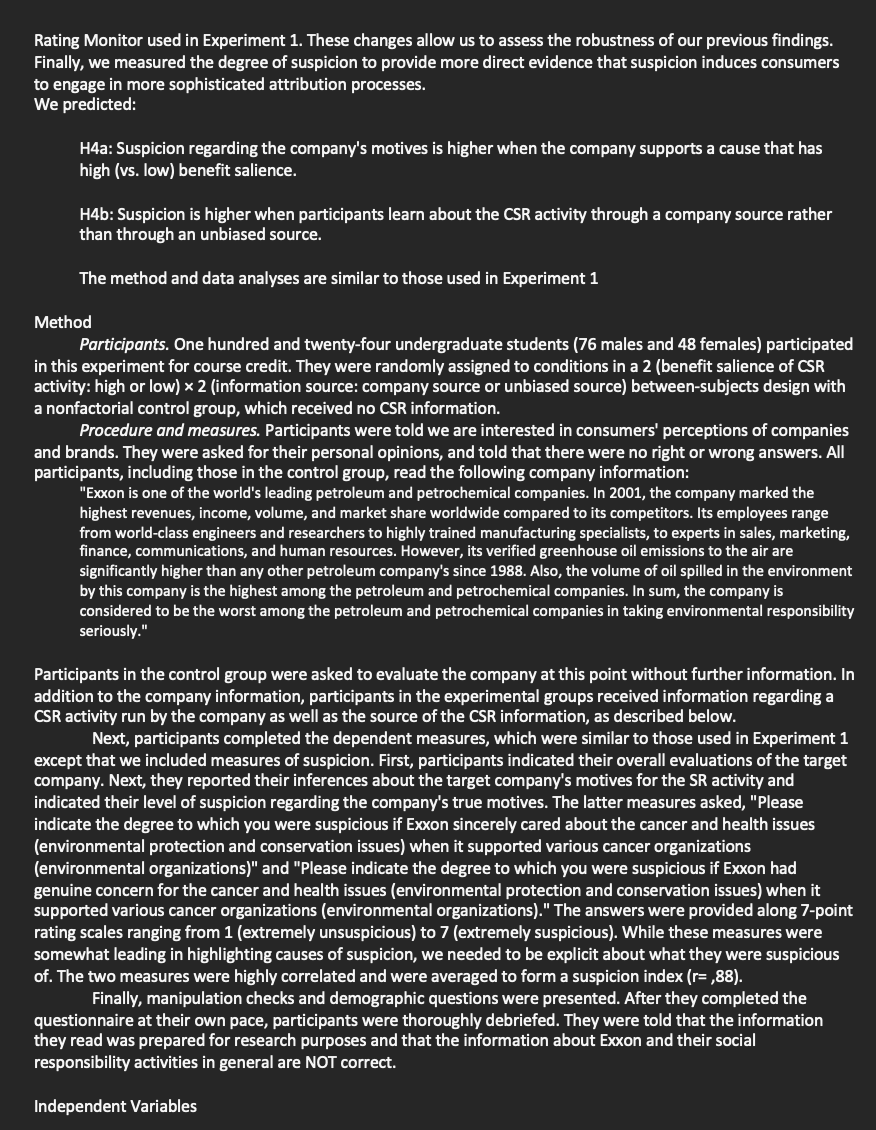
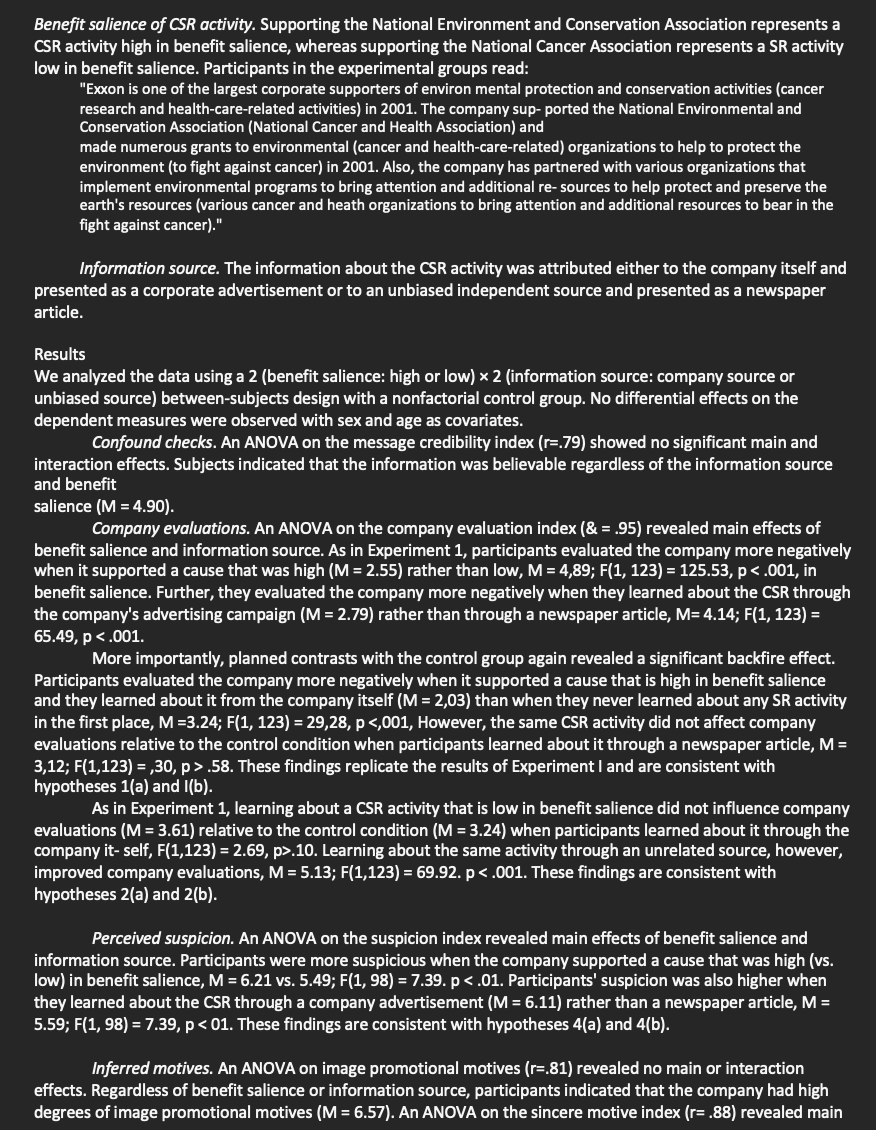
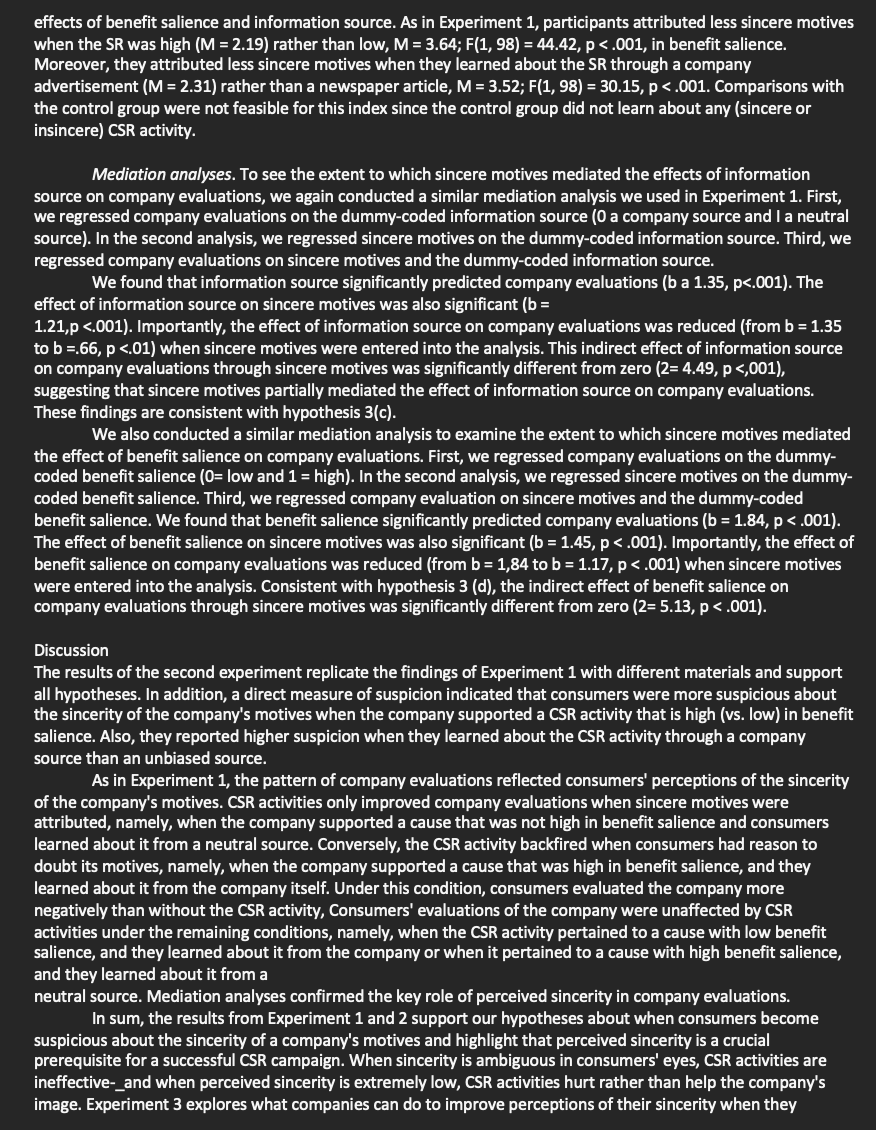
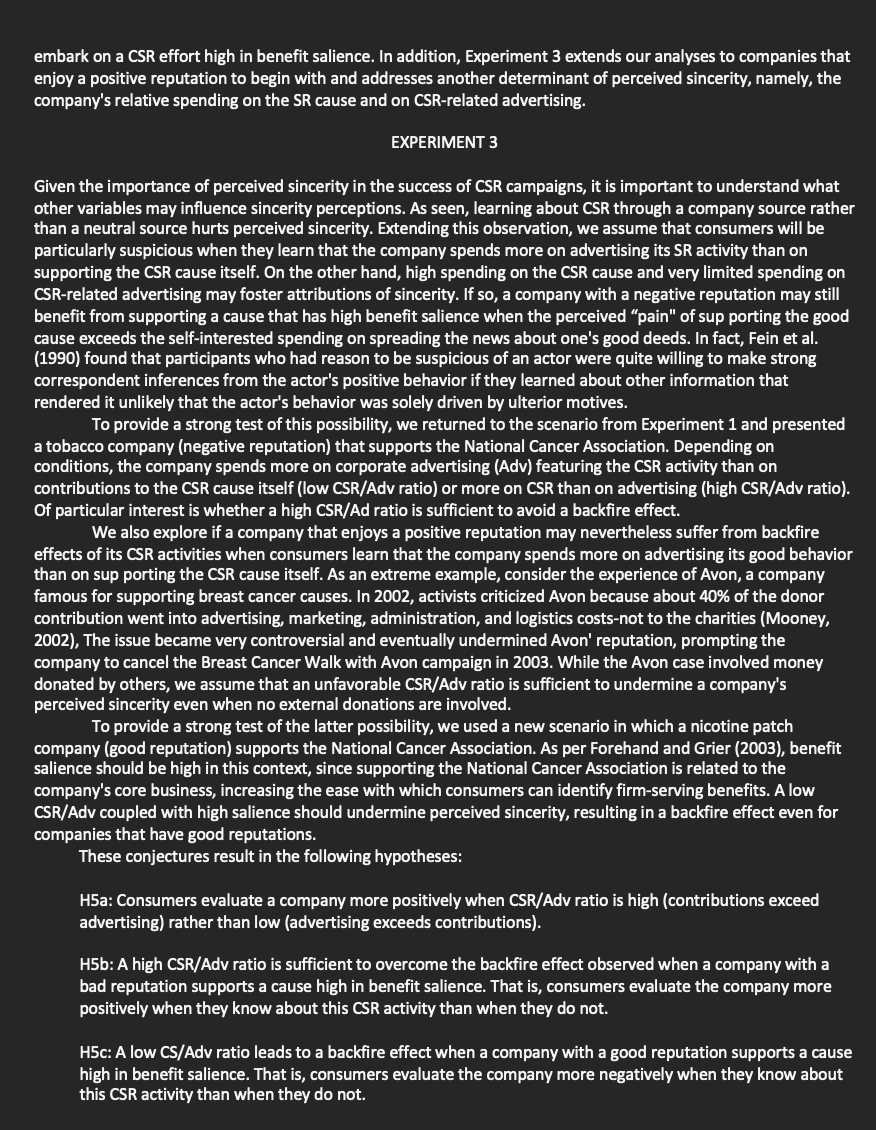
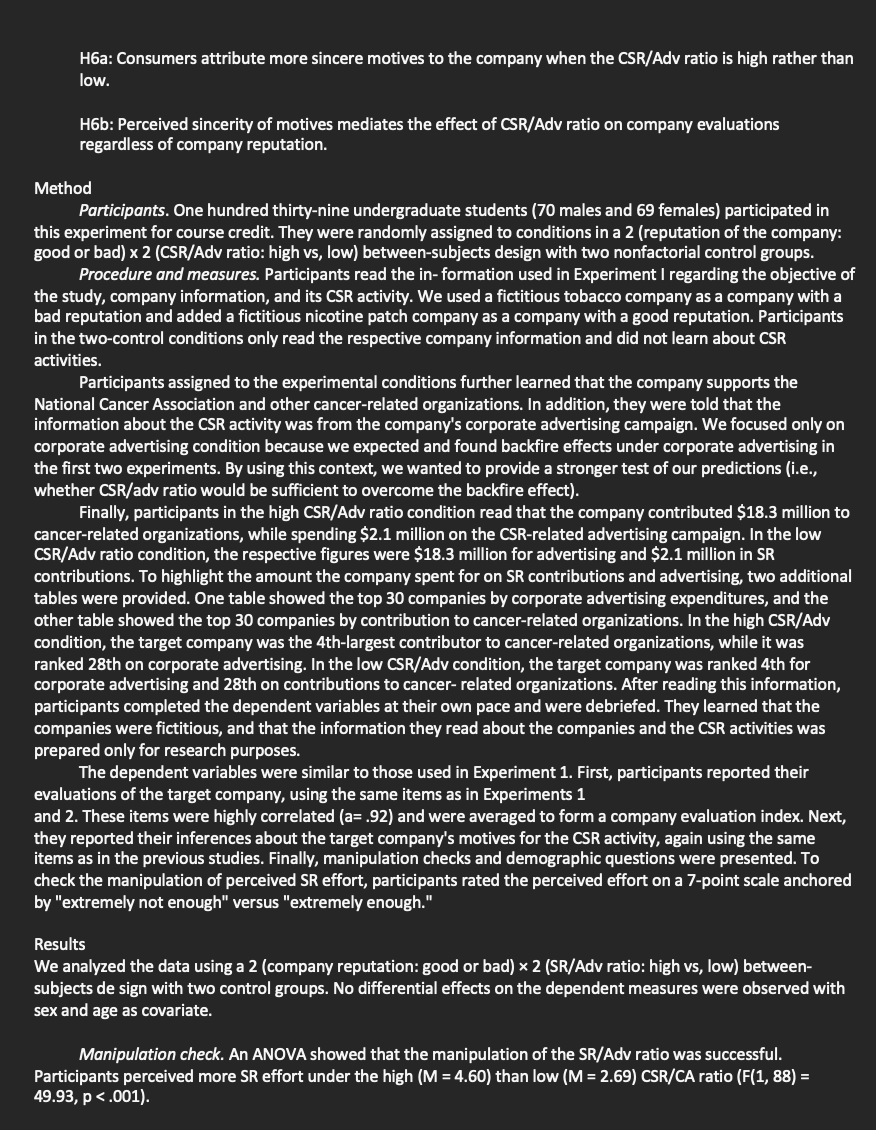
The Effect of Corporate Social Responsibility (CSR) Activities on Companies with Bad Reputations Based on theories of attribution and suspicion, three experiments highlight the mediating role of perceived sincerity of motives in determining the effectiveness of CSR activities. CSR activities improve a company's image when consumers attribute sincere motives, are ineffective when sincerity of motives is ambiguous, and hurt the company's image when motives are perceived as insincere. Variables affecting perceived sincerity include the benefit salience of the cause, the source through which consumers learn about CSR, and the ratio of CSR contributions and CSR-related advertising. High benefit salience of the cause hurts the company, in particular when consumers learn about it from a company source. This backfire effect can be overcome by spending more on CSR activities than on advertising that features CSR. Corporate social responsibility (CSR) activities have been used to address consumers' social concerns, create a favor able corporate image, and develop a positive relationship with consumers and other stakeholders. In the age of Enron and corporate scandals, CSR is becoming increasingly important in the corporate world. In particular, companies with bad reputations (e.g., companies in the tobacco and oil industries) seem to be interested in changing their negative image through CSR activities. However, while some companies (e.g., BP and Shell) successfully changed their image by stressing their environmental and social initiatives, the same strategy has backfired for others (e.g., Monsanto and Exxon; Arnold, 2001). Despite increasing research efforts investigating the effects of CSR on consumers' attitudes, extant research does not explain why consumers respond differently to companies that operate in the same industry and support similar CSR activities. The present research provides a theory-based explanation for the circumstances under which CSR activities may or may not achieve their desired effects in the context of companies with bad reputations. CSR activities are consistent with a naive business theory that assumes that consumers will take the activity at face value and attribute positive characteristics to the company, resulting in a more favorable evaluation. This naive theory dovetails with an extensive body of attribution research that demonstrates a pervasive correspondence bias. In general, social perceivers explain actors' behavior in terms of corresponding traits and dispositions (for a review, see Gilbert & Malone, 1995): those who do good (bad) things do so because they are good (bad) people. However, perceivers do not make these correspondent trait attributions when they become suspicious of the motives underlying the actor's behavior. As Fein and Hilton (1994; Fein, Hilton, & Miller, 1990; Hilton, Fein, & Miller, 1993) demonstrated, suspicious perceivers engage in more complex attributional processing that attenuates or eliminates the usually observed correspondent inference bias. Extending this work to consumer behavior, we specify conditions under which consumers become suspicious of the true motives behind a CSR activity, thus thwarting the company's efforts. When consumers become suspicious and infer that the company's true motive for the CSR activity is only to improve its image, CSR activities are not only inefficient but may actually backfire, leaving the company with a more negative image than would be the case without the CSR activity. Indeed, some recent examples (e.g., Avon, Philip Morris, etc.) indicate that CSR campaigns can hurt the company. When Philip Morris started to support a youth smoking prevention campaign, both critics and consumers criticized its CSR campaign (Fairclough, 2002; Landman, Ling, & Glantz, 2002). This is certainly contrary to what the company had hoped to achieve. In the following section, we review relevant literature in the area of CSR, attribution, and suspicion. Next, we report three experiments that investigate the effects of benefit salience of the cause, the source of CSR information, the ratio of CSR contributions and-CSR related advertising on suspicion, inferred motives, and company evaluations. THEORETICAL BACKGROUND Corporate Social Responsibility CSR activities have been adopted based on growing evidence that consumers are willing to give incentives to socially responsible corporations (Brown & Dacin, 1997; Creyer & Ross, 1997; Ellen, Mohr, & Webb, 2000; Murry & Vogel, 1997; Nelson, 2004; Sen & Bhattacharya, 2001). For example, consumers are willing to pay higher prices for products made by an ethical company (Creyer & Ross, 1997), to switch brands to support companies that make donations to non-profit organizations, and to buy products from a company simply because it supports charitable causes (Smith & Alcorn, 1991). Supporting a CSR activity affects not only purchase motives but also evaluations of the company (Sen & Bhattacharya, 2001). Studies showed, however, that the effect of CSR activities on company evaluations may be moderated by other factors. Ellen, Mohr, and Webb (2000) suggested that consumers react differently to cause- related marketing efforts based on the types of causes a retailer sup ports. Participants in their study evaluated the retailer more positively when the congruency of the donated product with the retailer's core business was high rather than low. Menon and Kahn (2003) found that higher congruence between the sponsor and the social issue led to favorable ratings for cause promotions when elaboration on the sponsorship activity is facilitated. Similarly, Sen and Bhattacharya (2001) suggested that consumers evaluate the company more favorably when a CSR activity is relevant to the company's existing products. For instance, respondents evaluated a company that manufactures calculators more favorably when it supported fair overseas manufacturing practices rather than women's and minority rights. However, these studies focused on companies whose prior reputations were either positive or neutral. As recent examples cited earlier suggest (e.g., Exxon, Philip Morris), similar results may not be observed when the companies have poor reputations. Consistent with this reasoning, a few studies examined when a CSR activity may not achieve the intended effects (Forehand & Grier, 2003; Osterhus, 1997; Strahilevitz, 2003; Webb & Mohr, 1998). Osterhus (1997) suggested that trust in a company and its position toward the CSR activity affect successful outcomes of a CSR activity. Unless consumers trust the company's pro-social position, they are not willing to reward the company for its CSR activity. Also, Webb and Mohr (1998) reported that some respondents expressed reservations toward a company donating a certain percentage of the sale price to a non-profit organization or a cause. Strahilevitz (2003) found that CSR activities do not enhance the reputation of companies that are perceived to be unethical. Forehand and Grier (2003) showed that high congruence between the firm and the cause leads to increased salience of firm-serving benefits. This increased salience of firm-serving benefits has a negative impact on company evaluation when the company itself claims public-serving benefits. Forehand and Grier's (2003) research is particularly relevant for companies with poor reputations. For example, donating money to a cancer association (vs. an environmental association) should lead to increased salience of firm- serving benefits for a tobacco company because smoking causes cancer and tobacco companies are interested in changing negative public perceptions in this context. Moreover, fighting cancer is at odds with the health consequences of a tobacco company's main line of business, which is likely to undermine the perceived sincerity of the company's motives. In sum, previous research suggests that consumers' distrust and skepticism toward the company and its CSR activity may moderate the effectiveness of CSR activity on evaluations. Thus, identifying factors and processes that cause consumers to be skeptical about the company's true motives behind the CSR activity is an important research priority. The following section will discuss the literature on attribution and suspicion to understand when consumers become suspicious about CSR activities, paying attention to how suspicion may change the attribution process, affecting company evaluations. Attribution and Suspicion A large body of attribution research demonstrates a pervasive correspondence bias: When people learn about the behavior of a person about whom they have little prior information, they usually take the behavior at face value and attribute it dispositionally. Such correspondent inferences are obtained even when situational factors are salient and sufficient to explain the behavior (for reviews, see Gilbert & Jones, 1986; Jones, 1979; Trope, 2000). Although this bias is so pervasive that it has been called the "fundamental attribution error" (Ross 1977), it is more pronounced for negative than for positive behaviors (for a review, see Skowronski & Carlston, 1989), in particular in the morality domain. This is the case because negative behavior violates social norms and expectations, thus rendering it particularly informative: The person has engaged in it despite social pressure to do otherwise, hence the cause of the behavior is probably to be found in the person rather than external social influence forces (e.g., Lingle & Ostrom, 1979; Pratto & John, 1991). Positive behavior, on the other hand, tends to arise from social demands and normative pressure, rendering it less diagnostic for the person's underlying dispositions. Moreover, even bad people occasionally do good things, further reducing the informational value of isolated positive behaviors (e.g., Skowronski & Carlston, 1987; Ybarra & Stephan, 1996). Given this ambiguity of positive behavior, people refrain from making correspondent inferences about the actor's positive dispositions whenever they have reason to suspect ulterior motives (Fein et al., 1990; Fein & Hilton, 1994; Hilton et al., 1993). Empirically, Fein et al. (1990) showed that suspicion triggers more complex and sophisticated attributional reasoning, including the generation of multiple, plausible hypotheses about the motives that drive a person's behavior. This more complex reasoning reduces the likelihood that perceivers fall prey to the fundamental attribution error. These effects of suspicion are consistent with the general observation that people engage in more complex information processing whenever they have reason to doubt the validity of information offered to them (e.g., Schul & Burnstein, 1990). Finally, information that is at odds with perceivers' expectations about the actor, e.g., because it contradicts what is known about the actor's previous behavior, further increases the likelihood of extensive attributional processing (e.g., Hastie & Kumar, 1979; Srull, 1981). In combination, these lines of psychological research suggest that (a) positive behavior (which is less informative than negative behavior to begin with), for which the actor may (b) have ulterior motives, is unlikely to be attributed to the actor's positive dispositions, in particular when such motives are salient. Unfortunately, these variables are likely to apply to many CSR situations, where a corporation engages in (a) a positive behavior in (b) the hope of improving its image to counteract the impact of (c) previous negatively perceived behaviors. Consumers should be particularly reluctant to draw the desired positive inferences the more contextual information provides reasons to suspect ulterior motives, e.g., when the company seems to "brag" with its good deeds in advertising campaigns. Finally, the observation that a company tries to do good in a domain that is negatively affected by its usual business should further increase the suspicion that its motives are not sincere-if they really cared about this cause, they would presumably change their business practice. Under these conditions, CSR activities may be discounted, rendering them ineffective. Worse, it is possible that CSR activities backfire, leaving the company with more negative evaluations than would have been the case without the CSR effort. The present studies address these issues. Experiment 1 Hypotheses Companies' motives to engage in CSR activity always include image promotion, and we assume that consumers are aware of this. As Friestad and Wright (1994) noted in their Persuasion Knowledge Model, consumers develop knowledge about companies' marketing strategies and tactics, presumably including CSR. However, companies have a choice with regard to the causes they support and how they convey this information. These choices may, or may not, reflect a sincere interest in the cause (in addition to image-promotional motives). Previous research suggests that consumers assess sincerity in the context of consumer-salesperson interaction (Campbell & Kirmani, 2000; DeCarlo, 2005). For example, Campbell and Kirmani (2000) found that when ulterior motives were accessible, consumers inferred an underlying persuasion attempt and the target salesperson was perceived as less sincere. We extend these findings to the context of CSR As noted earlier, in the context of CSR, the type of cause that the company supports may increase the salience of firm-serving benefits (Forehand & Grier, 2003). Causes that are related with the company's business should increase the salience of firm-serving benefits. Suppose, for example, that a tobacco company chooses to embark on a CSR activity by supporting either the National Cancer Association or the National Environment and Conservation Association. In either case, consumers are presumably aware that the company has a negative image and hopes to improve it through the CSR activity. But how sincere is the company with regard to the cause chosen? If the beneficiary is the National Cancer Association, the CSR activity is at odds with the negative health effects of the company's core business. Moreover, these negative health effects may become particularly salient in light of this cause. This combination should arouse profound suspicion regarding the sincerity of the company's motives. If there is other contextual information available, consumers may process it systematically to determine the company's true motives. One relevant piece of information is the source of information (Priester & Petty, 2003; Szykman, Bloom, & Blazing, 2004; Tormala & Penty, 2004). For example, Syzkman et al. (2004) found that consumers who viewed an anti-drinking and driving message sponsored by a beer company (vs, a non-profit organization) inferred more self-serving motives of the sponsor, Consumers expect to learn about CSR activities through both company sources and unbiased media sources such as editorial coverage on television and in the press (Dawkins, 2004). There are specialty publications such as Business Ethics, or independent organizations that provide relatively unbiased information on corporate social responsibility. If consumers learn from a neutral source that a tobacco company supports the National Cancer Association but does little to advertise this fact, the company's motives remain somewhat ambiguous. In this case, consumers may merely discount the CSR activity, maintaining their pre-existing negative evaluation of the company. If the company actively advertises its CSR activity, on the other hand, ulterior motives will certainly be inferred, and the company will be perceived as insincere (Campbell & Kirmani, 2000). Perceptions of low sincerity, in turn, may give rise to backfire effects, resulting in more negative company evaluations than would be the case without CSR activities. This prediction is consistent with the observation that brand evaluations decline when consumers infer manipulative intent from company actions (Campbell, 1995). Suspicion with regard to the sincerity of the company's motives should be less pronounced, however, when the beneficiary is not related with the company's core business, e.g., the National Environment and Conservation Association in the case of a tobacco company. Although consumers will still be aware that the company has good reason to improve its image, the company's core business does not call the sincerity of its support for environmental causes into question. If consumers learn about this activity from a neutral source, it may be well received and may improve the company's image. On the other hand, if the company is seen as bragging with this information, it will probably be discounted, and consumers may maintain their pre-existing negative evaluation. However, we would not expect a backfire effect of the CSR activity in this case since perceptions of sincerity are ambiguous rather than very low. This reasoning results in the following hypotheses: H1a: When a company supports a CSR activity that has high benefit salience, and consumers learn about the CSR activity through a company source, consumers are likely to evaluate the company more negatively than without the CSR activity. H1b: When a company supports a CSR activity that has high benefit salience, and consumers learn about the CSR activity through a neutral source, consumers are likely to maintain their existing evaluations. H2a: When a company supports a CSR activity that has low benefit salience, and consumers learn about the CSR activity through a company source, consumers are likely to maintain their existing evaluations. H2b: When a company supports a CSR activity that has low benefit salience, and consumers learn about the CSR activity through a neutral source, consumers are likely to evaluate the company more positively. H3a: CSR activities that have high (vs. low) benefit salience result in perceptions of lower sincerity. H3b: Consumers infer less sincere motives when they learn about CSR activities from a company source rather than a neutral source. H3c: The influence of information source on company evaluations is mediated by the inferred sincerity of motives. H3d: The influence of benefit salience on company evaluations is mediated by the inferred sincerity of motives. Method Participants. One hundred and twenty-eight undergraduate students (60 males and 68 females) received course credit for their participation in this experiment. They were randomly assigned to conditions in a 2 (benefit salience of CSR activity: high or low) x 2 (information source: company source or unbiased source) between- subjects design with a nonfactorial control group, which received no CSR information. Procedure. Participants were told that the researchers were interested in consumer perceptions of companies and brands. They were asked for their personal opinions, and told that there were no right or wrong answers. All participants first read brief information about the company. We used a fictitious tobacco company as a company with a bad reputation. Participants were told that the company is a leading cigarette manufacturer company in Belgium. All participants, including those in the control groups, read: "Zenet Corporation is a leading cigarette manufacturer in Belgium. In 2000, the company marked the highest revenues, income, volume, and market share among its competitors Their employees range from world- class engineers and re- searchers to highly trained manufacturing specialists, to experts in sales, marketing, finance, communications, and human resources." After reading the information about the company, participants in the control group were asked to evaluate the company at this point without further information. Participants in the experimental groups received additional information regarding a CSR activity run by the same company, as well as the source of the CSR information, as described below. Next, they completed the dependent measures at their own pace and were debriefed. They learned that the company was fictitious, and the information they read about the company and the CSR activities was prepared only for research purposes. Independent Variables Benefit salience of CSR activity. Supporting the National Cancer Associations and other cancer-related organizations represents a CSR activity that has high benefit salience and supporting the National Environment and Conservation Association and other environment-related organizations represents a CSR activity that has low benefit salience. All participants in the experimental groups read: "Zenet Corporation is one of the largest corporate supporters of cancer research and health causes (environmental protection and conservation causes). In 2000, the company supported the National Cancer Association (National Environmental Protection and Conservation Association) and made numerous grants to cancer-related (environmental) organizations to help to fight against cancer (to protect the environment). Also, the company has partnered with various organizations within the cancer (environmental) community to bring attention and additional resources to bear in the fight against cancer (destroying the environment)." Information source. The information about the CSR activity was allegedly provided either by the company or by an unbiased independent source. The corporate advertisement and the Corporate Social Rating Monitor (CSRM), an independent and non-profit organization that provides unbiased evaluations of corporate activities, were used as the company and an independent source, respectively. Dependent Variables All dependent variables were measured on 7-point scales anchored by 1 and 7. Company evaluations. Participants expressed their evaluations of the company on the following scales: "extremely unfavorable" versus "extremely favorable." "extremely negative" versus "extremely positive." extremely bad" versus "extremely good," and "extremely not likable" versus "extremely likable." These items were averaged to form a company evaluation index (a= .93). We used "extremely" to anchor all of our scales in order to be consistent. Inferred motives. All inferred motives were measured on scales anchored by "extremely unlikely" versus "extremely likely." Participants indicated inferences about the sincerity of the company's motives for pursuing the CSR activity through responses to the following statements: "Zenet has genuine concerns for cancer and health causes (environmental protection and conservation) when it supported various cancer (environmental) organizations" and "Zenet sincerely cares about consumers' health (environmental protection and conservation) when it supported various cancer (environmental) organizations." These two measures were averaged to form a sincere motive index (r= .96). Participants indicated their inferences about the company's image-promotional motives for pursuing the CSR activity by responding to the following statements: "Zenet tried to make a good image of the company by supporting various cancer organizations (environmental organizations)" and "Zenet tried to improve its existing image by supporting various cancer organizations (environmental organizations)." These two measures were averaged to form an image promotional motive index (r= .90). Confound check. Participants indicated their level of agreement with two statements concerning the credibility of CSR information. They indicated the degree to which the information they read about Zenet was believable and credible on scales anchored by "extremely unbelievable" and "extremely believable!" and "extremely not credible" and "extremely credible." The two measures were averaged to form a credibility index (r=.73). Order of the dependent variables. First, participants indicated their overall evaluations of the target company. Next, they expressed their inferences about the target company's motives for the CSR activity. Finally, confound checks and demographic questions were presented. Results We analyzed the data according to a 2 (benefit salience of CSR activity: high vs. low) x 2 (information source: company source vs. unbiased source) between-subjects design with a nonfactorial control group. No differential effects on the dependent measures were observed with sex and age as covariates. Confound check. An ANOVA on the message credibility index showed no significant main and interaction effects. Subjects evaluated that the information they read was believable regardless of the information source and the benefit salience of CSR activity (M = 4.83). Company evaluations. An ANOVA on the company evaluation index revealed main effects of benefit salience and information source. As expected, participants evaluated the company more negatively when it supported a cause that has high benefit salience (M = 3.03) rather than a cause that has low benefit salience, M = 3,91; F(1, 127) = 22.06, p .62. These findings are consistent with hypotheses 1(a) and 1(b). A parallel analysis of CSR effects under conditions where the cause is low in terms of its benefit salience revealed a different pattern. In this case, learning about the CSR activity through the company's own advertising campaign did not affect participants' evaluations (M = 3,46) relative to the control group, M = 3,27; F(1,127) = .37, p> 54. However, learning about this activity through the neutral Corporate Social Rating Monitor improved the company's evaluation (M = 4.38) relative to the control group, F(1,127) = 12.01,p<.01. these findings are consistent with the hypotheses and inferred motives. as expected participants believed that companies had high degrees of image promotional motives regardless benefit salience csr activities or information source. hence an anova revealed no main interaction effects. in contrast on sincere motive index effects predicted perceived less when company supported a cause has versus low m="2.43" vs. f p similarly learning about activity through advertising resulted lower sincerity relative to unbiased source comparisons control group were not feasible for this since did learn any insincere activity. mediation analyses. see extent which mediated evaluations we conducted four sets regression analyses suggested by baron kenny first regressed dummy-coded i="neutral" second analysis third support would be obtained if effect evaluation is significant reduced eliminated mediating variable entered into analysis. found significantly was also importantly b following statistical test indirect different from zero .001 indicating partial mediation. results hypothesis similar examine evaluations. dummy- coded salience. .63 .05 discussion experiment all hypotheses. consumers assumed motivated image-promotional goals under conditions. however well learned determined perceptions attributed most they neutral conversely lowest own advertising. followed pattern only improved namely it backfired reason doubt itself. condition evaluated more negatively than without unaffected remaining conditions pertained confirmed key role combination suggests futile even counterproductive unless perceive driven interest cause. provides replication based industry sources. because tobacco suffer particularly negative emotionally charged reputation replaced fictitious used real oil namely. exxon. addition newspaper article independent instead corporate social rating monitor changes allow us assess robustness our previous findings. finally measured degree suspicion provide direct evidence induces engage sophisticated attribution processes. predicted: h4a: regarding higher supports h4b: rather method data those participants. one hundred twenty-four undergraduate students males females participated course credit. randomly assigned activity: x source: between-subjects design nonfactorial received information. procedure measures. told interested brands. asked their personal opinions there right wrong answers. including read information: world leading petroleum petrochemical companies. marked highest revenues income volume market share worldwide compared its competitors. employees range world-class engineers researchers highly trained manufacturing specialists experts sales marketing finance communications human resources. verified greenhouse emissions air other spilled environment among sum considered worst taking environmental responsibility seriously. evaluate at point further experimental groups run described below. next completed dependent measures except included suspicion. indicated overall target company. reported inferences sr level true latter indicate you suspicious exxon sincerely cared cancer health issues protection conservation various organizations genuine concern answers provided along scales ranging unsuspicious while somewhat highlighting causes needed explicit what of. two correlated averaged form manipulation checks demographic questions presented. after questionnaire pace thoroughly debriefed. prepared research purposes general correct. variables supporting national association represents whereas read: largest supporters health-care-related sup-ported made numerous grants help protect fight against partnered implement programs bring attention additional re-sources preserve earth resources heath bear either itself presented advertisement article. analyzed using salience: group. differential observed sex age covariates. confound checks. message credibility showed subjects believable .95 campaign .001. planned contrasts again backfire effect. never place same affect> .58. These findings replicate the results of Experiment I and are consistent with hypotheses 1(a) and 1(b). As in Experiment 1, learning about a CSR activity that is low in benefit salience did not influence company evaluations (M = 3.61) relative to the control condition (M = 3.24) when participants learned about it through the company it- self, F(1,123) = 2.69, p>.10. Learning about the same activity through an unrelated source, however, improved company evaluations, M = 5.13; F(1,123) = 69.92. p




