Question: resolve for respond to a class mate Edith Meaders 9 hours ago Week 4 Discussion * Digital technologies are allowing, even forcing, businesses to examine
resolve for respond to a class mate
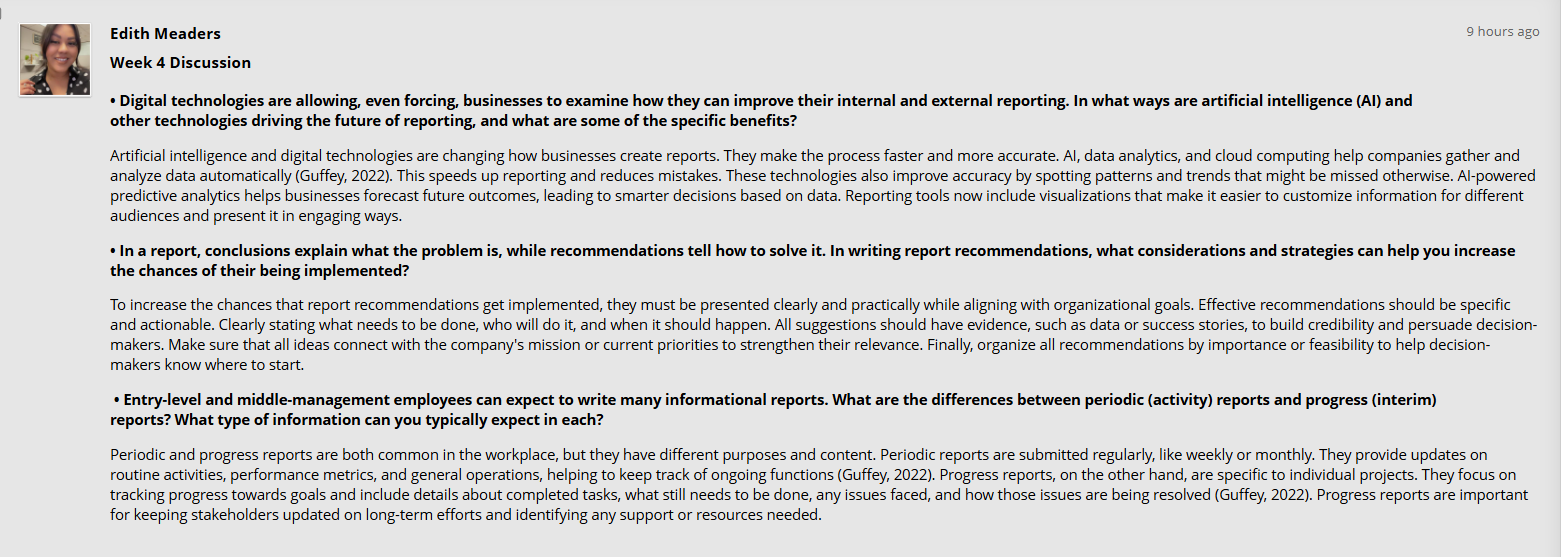
Edith Meaders 9 hours ago Week 4 Discussion * Digital technologies are allowing, even forcing, businesses to examine how they can improve their internal and external reporting. In what ways are artificial intelligence (Al) and other technologies driving the future of reporting, and what are some of the specific benefits? Artificial intelligence and digital technologies are changing how businesses create reports. They make the process faster and more accurate. Al, data analytics, and cloud computing help companies gather and analyze data automatically (Guffey, 2022). This speeds up reporting and reduces mistakes. These technologies also improve accuracy by spotting patterns and trends that might be missed otherwise. Al-powered predictive analytics helps businesses forecast future outcomes, leading to smarter decisions based on data. Reporting tools now include visualizations that make it easier to customize information for different audiences and present it in engaging ways. * In areport, conclusions explain what the problem is, while recommendations tell how to solve it. In writing report recommendations, what considerations and strategies can help you increase the chances of their being implemented? To increase the chances that report recommendations get implemented, they must be presented clearly and practically while aligning with organizational goals. Effective recommendations should be specific and actionable. Clearly stating what needs to be done, who will do it, and when it should happen. All suggestions should have evidence, such as data or success stories, to build credibility and persuade decision- makers. Make sure that all ideas connect with the company's mission or current priorities to strengthen their relevance. Finally, organize all recommendations by importance or feasibility to help decision- makers know where to start. * Entry-level and middle-management employees can expect to write many informational reports. What are the differences between periodic (activity) reports and progress (interim) reports? What type of information can you typically expect in each? Periodic and progress reports are both common in the workplace, but they have different purposes and content. Periodic reports are submitted regularly, like weekly or monthly. They provide updates on routine activities, performance metrics, and general operations, helping to keep track of ongoing functions (Guffey, 2022). Progress reports, on the other hand, are specific to individual projects. They focus on tracking progress towards goals and include details about completed tasks, what still needs to be done, any issues faced, and how those issues are being resolved (Guffey, 2022). Progress reports are important for keeping stakeholders updated on long-term efforts and identifying any support or resources needed









 Study Help