







Question: Review the case study that opens this chapter and look at the section Today's Marketers Face Challenges and Opportunities. If you could advise the U.S.
Review the case study that opens this chapter and look at the section "Today's Marketers Face Challenges and Opportunities." If you could advise the U.S. government, would you increase regulation around those challenges? Why or why not? Offer specific examples. 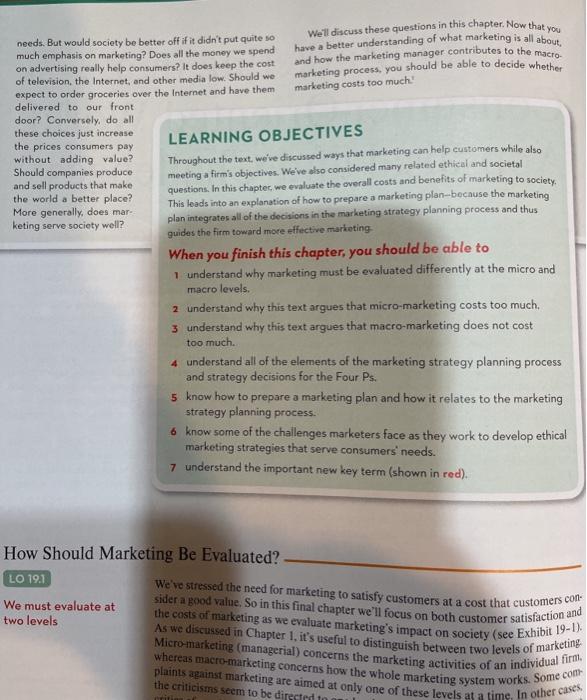
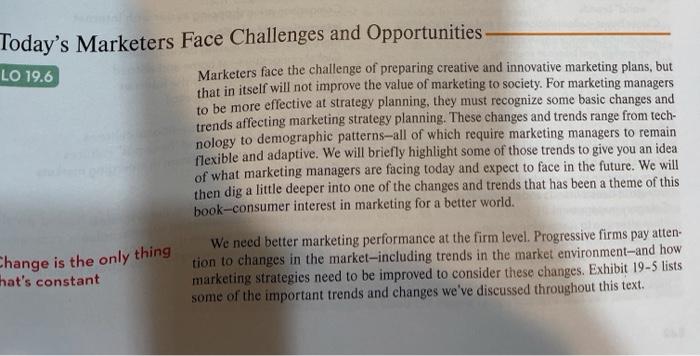
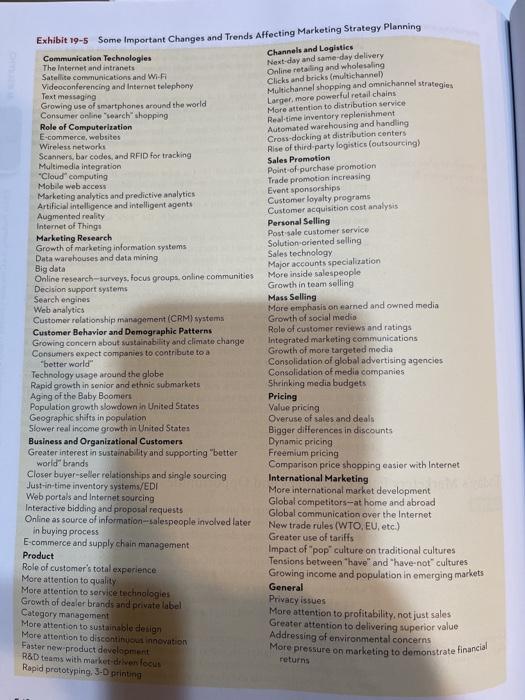
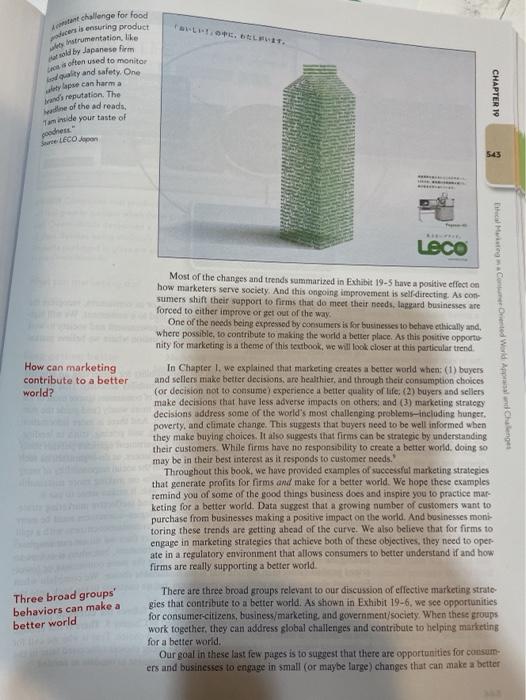
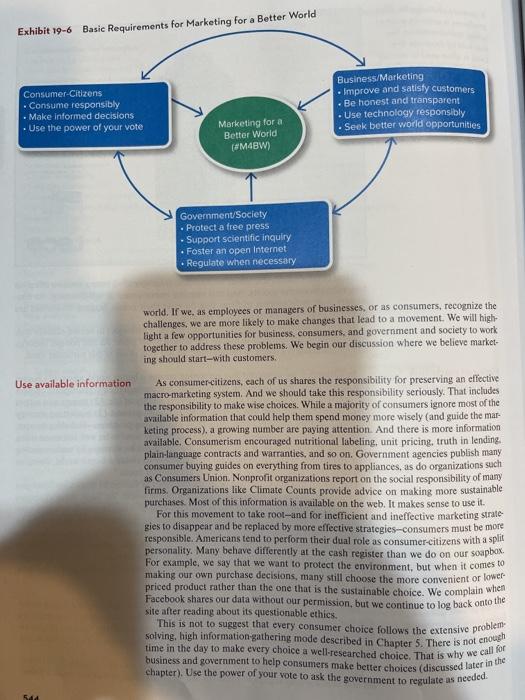
Ethical Marketing in a Consumer-Oriented World: Appraisal and Challenges 527 Although consumers want marketplace choice. we're not there yet globally. Consider people living in a rural village in Mosambique. While inexpensive mobile phone service brings them access to the Internet access to running wa fer and electricity remains intermittent for many. The only affordable choices for food may be what is grown nearby a limited selection. The nearest store may be dozens of miles away and contain only a few hundred packaged goods, In Mozambique and many other parts of the world, people are just a natural disaster (perhaps a drought or typhoon) from widespread starvation or malnutrition While social media and the Internet offor a glimpse of the quality of life in more advanced economies, the vast majority of consumer-citizens in developing countries still wonder if they'll ever have choices among a wide variety of goods and services-and the income to buy them-that most consumers in the United States, Canada, and other advanced economies take for granted The challenges faced by consumers and marketing man agers in advanced economies seem trivial in comparison Amazon tries to figure out how to deliver packages in four hours by drone, Walmart must decide which 50,000 items it will stock, including which for all of it kinds of Cheerios (Original, Frosted, Honey Nut Medley Crunch Cinnamon Burst...you get the picture) and how many stylos offroren French fries (straight cut. crinkle cut, steak cut, waffled seasoned, and more) to carry. The supercenter user data to decide which product assortment will deliver the most profits in each store, but what about the consumer trying to decide among all those choices? Many Americans don't want to make the trip to the grocery store or wait for a delivery-they expect immediate gratification. They expect the corner convenience store to have a selection of froren gourmet dinners that can be prepared in minutes. Or if that's too much hassle Grubhub delivers focal restaurant fare within the hour. And Starbucks has our caffe latte ready when we pull up a the drive-through at 700 in the morning Fow of the world's consumers can expect and get so much of what they want. Do consumers need or want all these options? Are they more satisfied with products that better meet their individual choices or are they overwhelmed by too much choice? Much national attention is now directed toward prob loms of obesity, especially among children in the United States, more than a third of children and adolescents are overweight. The surge of obesity among children is. global trend. Nutritionists say that in the United States and elsewhere, the key culprits are too much fat, starch. salt and sugar in diets. World Health Organization experts say that today's levels of childhood obesity will lead to an explosion of illnesses (such as heart disease type 2 diabe ter, and hypertension drain economie, create enormous suffering, and cause premature deaths. Many nutritionists and public health officials blame "big food-processed food and fast food Whose responsibility is it to fix these global problems? Consider Nestle, which now defines itself as a nutrition, health and wellness company and cut levels of fat, salt and sugar from thousands of its products. Is Nestle making a better world or is it simply responding to a growing number of health-conscious consumers? Maybe both as most of its customers don't know Nestl also works hard to eliminate slavery and child labor from its supply chain. And in Africa, i produce iron-enhanced soup cubes to fight anemia What should government's role be? In some places. rego- lation nudges consumer behavior. For example, France and San Francisco initiated a "soda tax on sugary drinks. In other places, calories must be prominently displayed on restaurant menus. Should consumers have the right to choose high-calorie or high-fat foods if that's what they want? Should they pay more for their choice? Should gov. ernment help customers make more informed decisions? And what if their choices raise health care costs for others? When you think about the contrast between problems of starvation and too much fast food, it's not hard to decide which consumers are better off. But is that just a straw man comparison? Is the situation in less developed nations one extreme, with the situation in the United States and similar societies just as extreme-only in a different way? What is the role of marketing? Effective marketing pito vides customers with choices that meet their wants and We'll discuss these questions in this chapter. Now that you have a better understanding of what marketing is all about, and how the marketing manager contributes to the macro marketing process, you should be able to decide whether needs. But would society be better off if it didn't put quite so much emphasis on marketing? Does all the money we spend on advertising really help consumers? It does keep the cost of television, the Internet, and other media low. Should we expect to order groceries over the Internet and have them marketing costs too much! delivered to our front door? Conversely, do all these choices just increase the prices consumers pay LEARNING OBJECTIVES without adding value? Throughout the text, we've discussed ways that marketing can help customers while also Should companies produce and sell products that make meeting a firm's objectives. We've also considered many related ethical and societal the world a better place? questions. In this chapter, we evaluate the overall costs and benefits of marketing to society, More generally, does mar-- This leads into an explanation of how to prepare a marketing plan-because the marketing keting serve society well? plan integrates all of the decisions in the marketing strategy planning process and thus guides the firm toward more effective marketing When you finish this chapter, you should be able to 1 understand why marketing must be evaluated differently at the micro and macro levels. 2 understand why this text argues that micro-marketing costs too much. 3 understand why this text argues that macro-marketing does not cost too much. 4 understand all of the elements of the marketing strategy planning process and strategy decisions for the Four Ps. 5 know how to prepare a marketing plan and how it relates to the marketing strategy planning process. 6 know some of the challenges marketers face as they work to develop ethical marketing strategies that serve consumers' needs. 7 understand the important new key term (shown in red). How Should Marketing Be Evaluated? LO 19.1 We must evaluate at two levels We've stressed the need for marketing to satisfy customers at a cost that customers con sider a good value. So in this final chapter we'll focus on both customer satisfaction and the costs of marketing as we evaluate marketing's impact on society (see Exhibit 19-1). As we discussed in Chapter 1, it's useful to distinguish between two levels of marketing Micro marketing (managerial) concerns the marketing activities of an individual firm. whereas macro-marketing concerns how the whole marketing system works. Some com plaints against marketing are aimed at only one of these levels at a time. In other cases titi the criticisins seem to be directed Today's Marketers Face Challenges and Opportunities LO 19.6 Marketers face the challenge of preparing creative and innovative marketing plans, but that in itself will not improve the value of marketing to society. For marketing managers to be more effective at strategy planning, they must recognize some basic changes and trends affecting marketing strategy planning. These changes and trends range from tech- nology to demographic patterns all of which require marketing managers to remain flexible and adaptive. We will briefly highlight some of those trends to give you an idea of what marketing managers are facing today and expect to face in the future. We will then dig a little deeper into one of the changes and trends that has been a theme of this book-consumer interest in marketing for a better world. Change is the only thing We need better marketing performance at the firm level. Progressive firms pay atten tion to changes in the market-including trends in the market environment-and how marketing strategies need to be improved to consider these changes. Exhibit 19-5 lists some of the important trends and changes we've discussed throughout this text. hat's constant Exhibit 19-5 Some Important Changes and Trends Affecting Marketing Strategy Planning Communication Technologies Channels and Logistics Next day and same-day delivery The Internet and intranets Satellite communications and Wi-Fi Online retailing and wholesaling Clicks and bricks (multichannel) Videoconferencing and Internet telephony Text messaging Multichannel shopping and omnichannel strategies Growing use of smartphones around the world Larger, more powerful retail chains Consumer online search shopping More attention to distribution service Real-time inventory replenishment Role of Computerization Automated warehousing and handling E-commerce, websites Cross-docking at distribution centers Wireless networks Rise of third-party logistics (outsourcing) Scanners, bar codes, and RFID for tracking Multimedia integration Sales Promotion "Cloud computing Point of purchase promotion Trade promotion increasing Mobile web access Marketing analytics and predictive analytics Event sponsorships Artificial intelligence and intelligent agents Customer loyalty programs Augmented reality Customer acquisition cost analysis Internet of Thing! Personal Selling Marketing Research Post-sale customer service Growth of marketing information systems Solution-oriented selling Data warehouses and data mining Sales technology Big data Major accounts specialization Online research-surveys, focus groups, online communities More inside salespeople Decision support systems Growth in team selling Search engines Mass Selling Web analytics More emphasis on earned and owned media Customer relationship management (CRM) systems Growth of social media Customer Behavior and Demographic Patterns Role of customer reviews and ratings Growing concern about sustainability and climate change Integrated marketing communications Consumers expect companies to contribute to a Growth of more targeted media "better world" Consolidation of global advertising agencies Technology usage around the globe Consolidation of media companies Rapid growth in senior and ethnic submarkets Shrinking media budgets Aging of the Baby Boomert Pricing Population growth slowdown in United States Value pricing Geographic shifts in population Overuse of sales and deals Slower real income growth in United States Bigger differences in discounts Business and Organizational Customers Dynamic pricing Greater interest in sustainability and supporting "better Freemium pricing world" brands Comparison price shopping casier with Internet Closer buyer-seller relationships and single sourcing International Marketing Just-in-time inventory systems/EDI Web portals and Internet sourcing More international market development Interactive bidding and proposal requests Global competitors--at home and abroad Online as source of information--salespeople involved later Global communication over the Internet in buying process New trade rules (WTO, EU, etc.) E-commerce and supply chain management Greater use of tariffs Product Impact of "pop culture on traditional cultures Role of customer's total experience Tensions between "have" and have not cultures More attention to quality Growing income and population in emerging markets More attention to service technologies General Growth of dealer brands and private label Privacy issues More attention to profitability, not just sales More attention to sustainable design Greater attention to delivering superior value Addressing of environmental concerns Faster new product development More pressure on marketing to demonstrate financial returns Category management More attention to discontinuous innovation R&D teams with market devenfocus Rapid prototyping, 3-D printing Ant challenge for food dos sensuring product ! offen used to monitor y otrumentation like sold by Japanese firm od quality and safety One type can harma d's reputation. The wide of the ad reads side your taste of LECO Japon CHAPTER 19 pooches 545 Leco Most of the changes and trends summarized in Exhibit 19-5 have a positive effect on how marketers serve society. And this ongoing improvement is self-directing. As con sumers shift their support to firms that do meet their needs. lagard businesses are forced to either improve or get out of the way. One of the needs being expressed by consumers is for businesses to behave ethically and where possible to contribute to making the world a better place. As this positive opporto nity for marketing is a theme of this tebook, we will look closer at this particular trend Deco World And Changes How can marketing contribute to a better world? In Chapter 1, we explained that marketing creates a better world when: (1) buyers and sellers make better decisions are healthier, and through their consumption choices (or decision not to consume) experience a better quality of life: (2) buyers and sellers make decisions that have less adverse impacts on others, and (3) marketing strategy decisions address some of the world's most challenging problems including hunger. poverty, and climate change. This suggests that buyers need to be well informed when they make buying choices. It also suggests that firms can be strategic by understanding their customers. While firms have no responsibility to create a better world doing so may be in their best interest as it responds to customer needs. Throughout this book, we have provided examples of successful marketing strategies that generate profits for firms and make for a better world. We hope these cxamples remind you of some of the good things business does and inspire you to practice mar keting for a better world. Data suggest that a growing number of customers want to purchase from businesses making a positive impact on the world. And businesses moni toring these trends are getting ahead of the curve. We also believe that for firms to engage in marketing strategies that achieve both of these objectives, they need to oper ate in a regulatory environment that allows consumers to better understand if and how firms are really supporting a better world Three broad groups' behaviors can make a better world There are three broad groups relevant to our discussion of effective marketing strate gies that contribute to a better world. As shown in Exhibit 19-6, we see opportunities for consumer-citizens, business/marketing, and government/society. When these groups work together, they can address global challenges and contribute to helping marketing for a better world. Our goal in these last few pages is to suggest that there are opportunities for consum ers and businesses to engage in small (or maybe large) changes that can make a better page 1 of case study 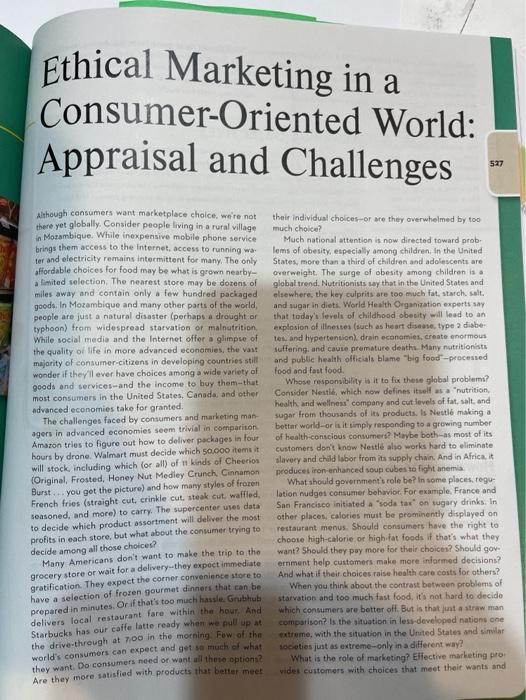
page 2 of case study
sections on case study
Step by Step Solution
There are 3 Steps involved in it
1 Expert Approved Answer
Step: 1 Unlock

Question Has Been Solved by an Expert!
Get step-by-step solutions from verified subject matter experts
Step: 2 Unlock
Step: 3 Unlock
 Study Help