







Question: Robert L Daft- theroy and organization design 12 e chapter 13 case - The Daily Tribune Analyze the sources of conflict in this situation, applying
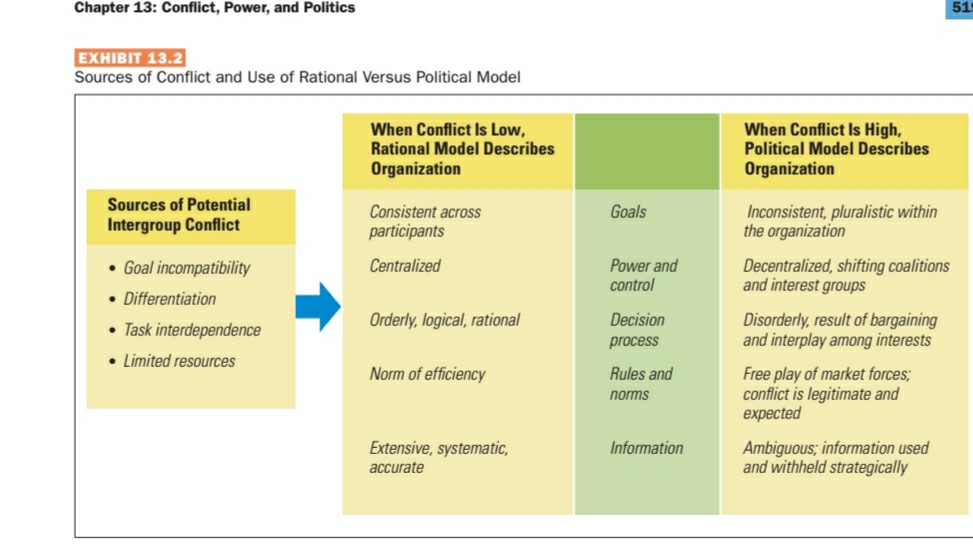
Robert L Daft- theroy and organization design 12 e chapter 13 case - The Daily Tribune Analyze the sources of conflict in this situation, applying the information in Exhibit 13.2 in the textbook.
.
The Daily Tribune is the only daily newspaper serving a six-county region of eastern Tennessee. Even though its staff is small and it serves a region of mostly small towns and rural areas, the Tribune has won numerous awards for news coverage and photojournalism from the Tennessee Press Association and other organizations. Rick Arnold became news editor almost 20 years ago. He has spent his entire career with the Tribune and feels a great sense of pride that it has been recognized for its journalistic integrity and balanced coverage of issues and events. The paper has been able to attract bright, talented young writers and photographers thanks largely to Ricks commitment and his support of the news staff. In his early years, the newsroom was a dynamic, exciting place to workreporters thrived on the fast pace and the chance to occasionally scoop the major daily paper in Knoxville. But times have changed at the Daily Tribune. Over the past five years or so, the advertising department has con- tinued to grow, in terms of both staff and budget, while the news department has begun to shrink. Advertising pays the bills, publisher John Freeman reminded everyone at this months managers meeting. Today, advertisers can go to direct mail, cable television, even the Internet, if they dont like what were doing for them. Rick has regularly clashed with the advertising department regarding news stories that are critical of major advertisers, but the conflicts have increased dramatically over the past few years. Now, Freeman is encouraging greater horizontal collaboration, as he calls it, asking that managers in the news department and the ad department consult with one another regarding issues or stories that involve the papers major advertisers. The move was prompted in part by a growing number of complaints from advertisers about stories they deemed unfair. We print the news, Freeman said, and I understand that sometimes weve got to print things that some people wont like. But weve got to find ways to be more advertiser-friendly. If we work together, we can develop strategies that both present good news coverage and serve to attract more advertisers. Rick left the meeting fuming, and he didnt fail to make his contempt for the new advertiser-friendly approach known to all, including the advertising manager, Fred Thomas, as he headed down the hallway back to the news- room. Lisa Lawrence, his managing editor, quietly agreed but pointed out that advertisers were readers too, and the newspaper had to listen to all its constituencies. If we dont handle this carefully, well have Freeman and Thomas in here dictating to us what we can write and what we cant. Lawrence has worked with Rick since he first came to the paper, and even though the two have had their share of conflicts, the relationship is primarily one of mutual respect and trust. Lets just be careful, she emphasized. Read the stories about big advertisers a little more carefully, make sure we can defend whatever we print, and it will all work out. I know this blurring of the line between advertising and editorial rubs you the wrong way, but Thomas is a rea- sonable man. We just need to keep him in the loop. Late that afternoon, Rick received a story from one of his corresponding reporters that had been in the works for a cou- ple of days. East Tennessee Healthcorp (ETH), which operated a string of health clinics throughout the region, was closing three of its rural clinics because of mounting financial woes. The reporter, Elisabeth Fraley, lived in one of the communities and had learned about the closings from her neighbor, who worked as an accountant for ETH, before the announcement had been made just this afternoon. Fraley had written a com- pelling human-interest story about how the closings would leave people in two counties with essentially no access to healthcare, while clinics in larger towns that didnt really need them were being kept open. She had carefully interviewed both former patients of the clinics and ETH employees, in- cluding the director of one of the clinics and two high-level managers at the corporate office, and she had carefully docu- mented her sources. After this mornings meeting, Rick knew he should consult with Lisa Lawrence, since East Tennessee Healthcorp was one of the Tribunes biggest advertisers, but Lawrence had left for the day. And he simply couldnt bring himself to consult with the advertising departmentthat po- litical nonsense was for Lawrence to handle. If he held the story for Lawrences approval, it wouldnt make the Sunday edition. His only other option was to write a brief story sim- ply reporting the closings and leaving out the human-interest aspect. Rick was sure the major papers from Knoxville and other nearby cities would have the report in their Sunday papers, but none of them would have the time to develop as comprehensive and interesting an account as Fraley had pre- sented. With a few quick keystrokes to make some minor edi- torial changes, Rick sent the story to production. When he arrived at work the next day, Rick was called immediately to the publishers office. He knew it was bad news for Freeman to be in on a Sunday. After some general yelling and screaming, Rick learned that tens of thousands of copies of the Sunday paper had been destroyed and a new edition printed. The advertising manager had called Freeman at home in the wee hours of Sunday morning and informed him of the ETH story, which was appearing the same day the corporation was running a full-page ad touting its service to the small towns and rural communities of East Tennessee. The storys accurate, and I assumed youd want to take advantage of a chance to scoop the big papers, Rick began, but Freeman cut his argument short. You could have just reported the basic facts without implying that the company doesnt care about the people of this region. The next time something like this happens, youll find yourself and your reporters standing in the unemployment line! Rick had heard it before, but somehow this time he almost believed it. What happened to the days when the primary purpose of a newspaper was to present the news? Rick mumbled. Now, it seems we have to dance to the tune played by the ad department.
Chapter 13: Conflict, Power, and Politics 51: EXHIBIT 13.2 Sources of Conflict and Use of Rational Versus Political Model When Conflict Is Low, Rational Model Describes Organization When Conflict Is High, Political Model Describes Organization Sources of Potential Intergroup Conflict Goals Consistent across participants Inconsistent, pluralistic within the organization Centralized Power and control Decentralized, shifting coalitions and interest groups Goal incompatibility Differentiation Task interdependence Limited resources Orderly, logical, rational Decision process Norm of efficiency Rules and norms Disorderly, result of bargaining and interplay among interests Free play of market forces; conflict is legitimate and expected Information Extensive, systematic, accurate Ambiguous, information used and withheld strategicallyStep by Step Solution
There are 3 Steps involved in it

Get step-by-step solutions from verified subject matter experts
 Study Help