







Question: sample problem with explanation shown first. problem to be solved is below the sample problem. When analyzing a replacement project, you must find the cash
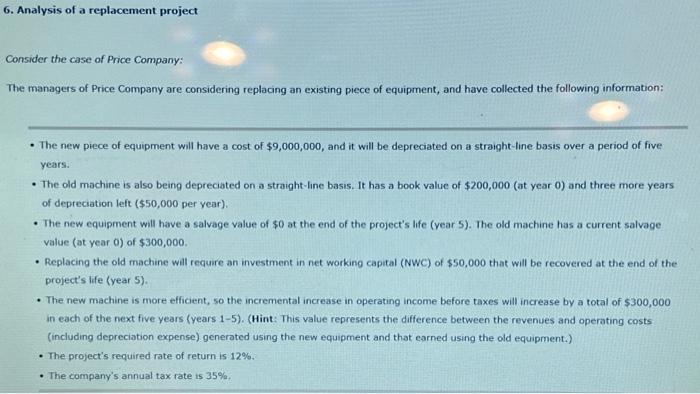
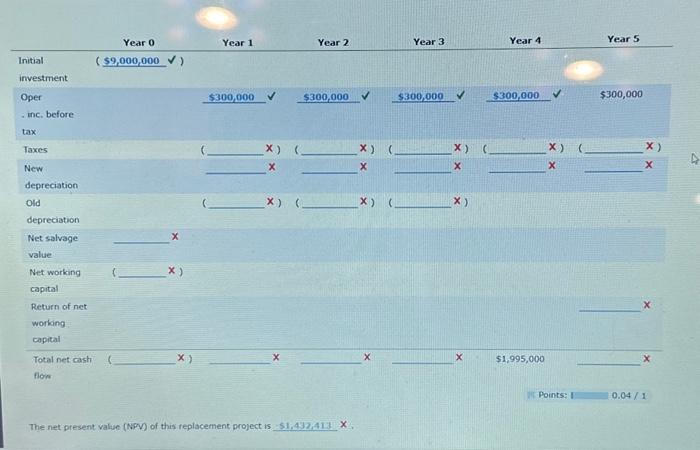
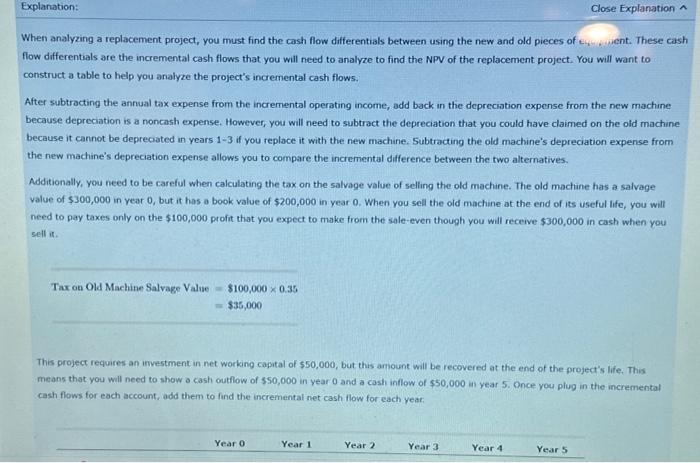
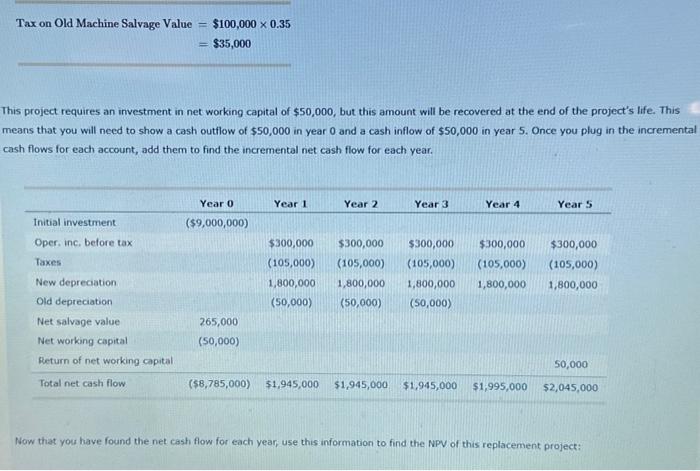
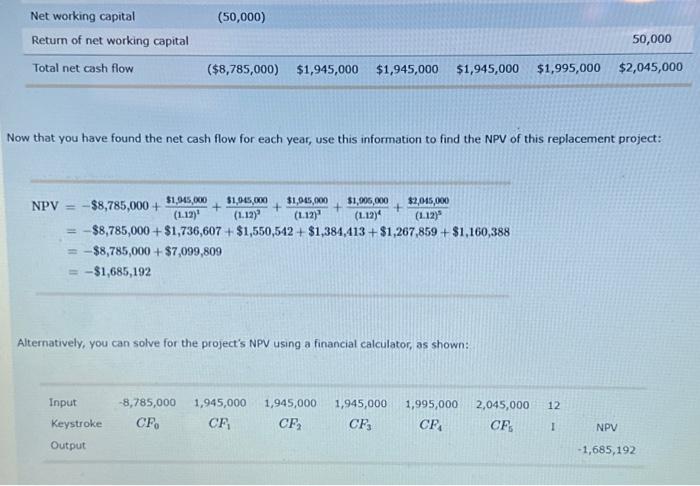
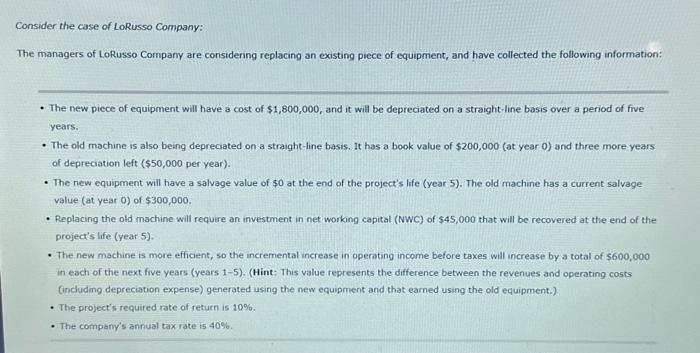
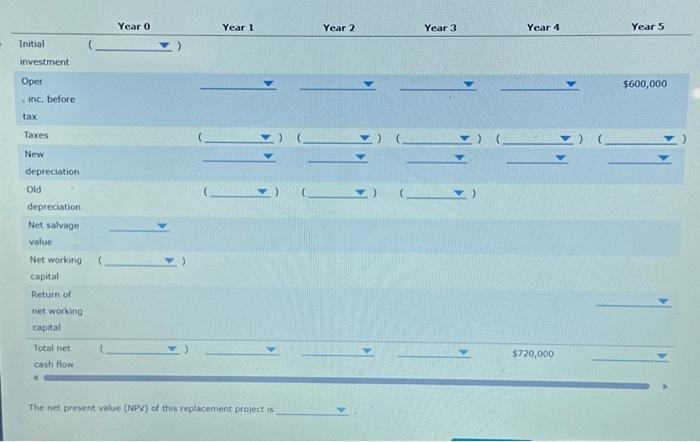
When analyzing a replacement project, you must find the cash flow differentials between using the new and old pieces of low differentials are the incremental cash flows that you will need to analyze to find the NPV of the replacement project. You will want to construct a table to help you analyze the project's incremental cash flows. After subtracting the annual tax expense from the incremental operating income, add back in the depreciation expense from the new machine because depreciation is a noncash expense. However, you will need to subtract the depreciation that you could have claimed on the old machine because it cannot be depreciated in years 1-3 if you replace it with the new machine. Subtracting the old machine's depreciation expense from the new machine's depreciation expense allows you to compare the incremental difference between the two alternatives. Additionally, you need to be careful when calculating the tax on the salvage value of selling the old machine. The old machine has a salvage value of $300,000 in year 0 , but it has a book value of $200,000 in year 0 . When you sell the old machine at the end of its useful life, you will need to pay taxes only on the $100,000 profit that you expect to make from the sale-even though you will receive $300,000 in cash when you sell it. TaxonOldMachineSalvageValue=$100,0000.35=$35,000 This project requires an imvestment in net working capital of $50,000, but this amount will be recovered at the end of the project's life. This means that you will need to show a cash outflow of $50,000 in year 0 and a cosh inflow of $50,000 in year 5 . Once you plug in the incremental cash flows for each account, add them to find the incremental net cash flow for each year: TaxonOldMachineSalvageValue=$100,0000.35=$35,000 This project requires an investment in net working capital of $50,000, but this amount will be recovered at the end of the project's life. This means that you will need to show a cash outflow of $50,000 in year 0 and a cash inflow of $50,000 in year 5 . Once you plug in the incremental cash flows for each account, add them to find the incremental net cash flow for each year. Now that you have found the net cash flow for each year, use this information to find the NPV of this replacement project: Now that you have found the net cash flow for each year, use this information to find the NPV of this replacement project: NPV=$8,785,000+(1.12)1$1,95,000+(1.12)3$1,055,000+(1.12)3$1,05,000+(1.12)4$1,006,000+(1.12)5$2,015,000=$8,785,000+$1,736,607+$1,550,542+$1,384,413+$1,267,859+$1,160,388=$8,785,000+$7,099,809=$1,685,192 Alternatively, you can solve for the project's NPV using a financial calculator, as shown: Consider the case of LoRusso Company: The managers of LoRusso Compary are considering replacing an existing piece of equipment, and have collected the following information: - The new piece of equipment will have a cost of $1,800,000, and it wil be depreciated on a straight-line basis over a period of five years. - The old machine is also being depreciated on a straight-line basis. It has a book value of $200,000 (at year 0 ) and three more years of depreciation left ($50,000 per year). - The new equipment will have a salvage value of $0 at the end of the project's life (year 5 ). The old machine has a current salvage value (at year 0 ) of $300,000. - Replacing the old machine will require an investment in net working capital (NWC) of $45,000 that will be recovered at the end of the project's life (year 5 ). - The new machine is more efficient, so the incremental increase in operating income before taxes will increase by a total of $600,000 in each of the next five years (years 15 ). (Hint: This value represents the difference between the revenues and operating costs (including depreciation expense) generated using the new equipment and that earned using the old equipment.) - The project's required rate of return is 10%. - The company's annual tax rate is 40%
Step by Step Solution
There are 3 Steps involved in it

Get step-by-step solutions from verified subject matter experts
 Study Help