







Question: save it blank. 4. Compute the variable overhead spending and efficiency variances. begin{tabular}{ll} Spending Variance & $ Efficiency Variance & $ end{tabular} 5. Prepare
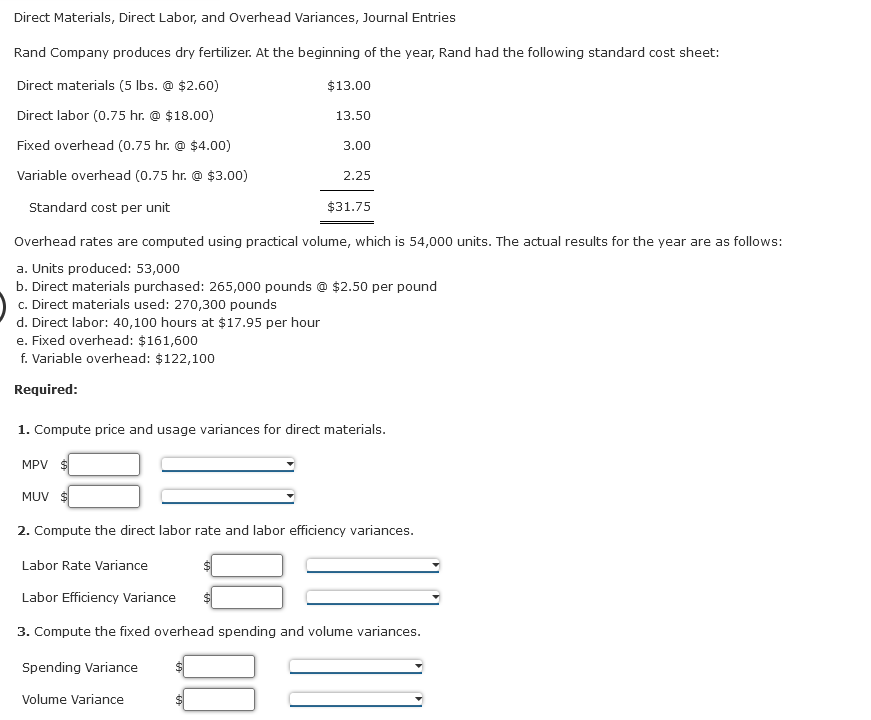
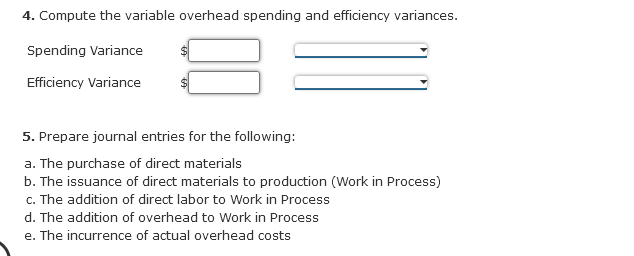
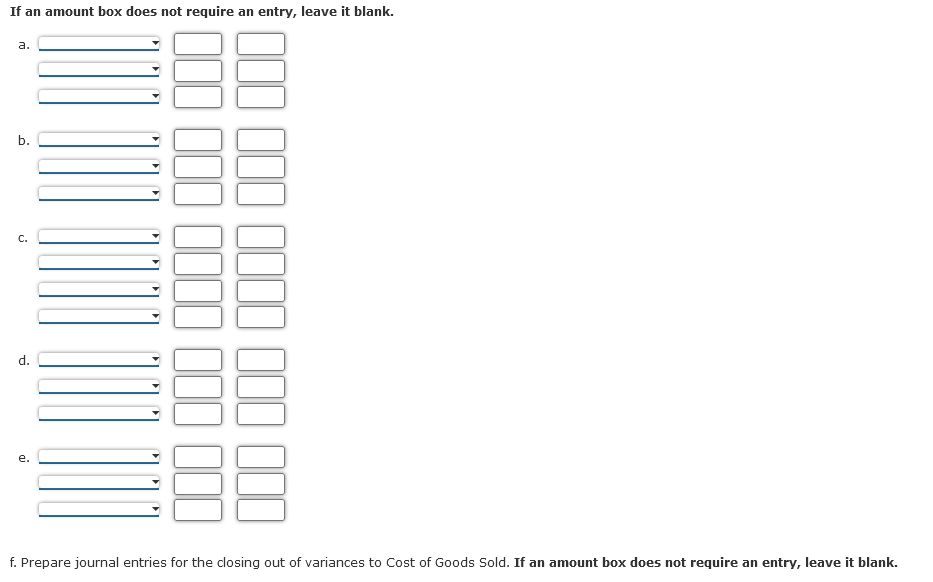
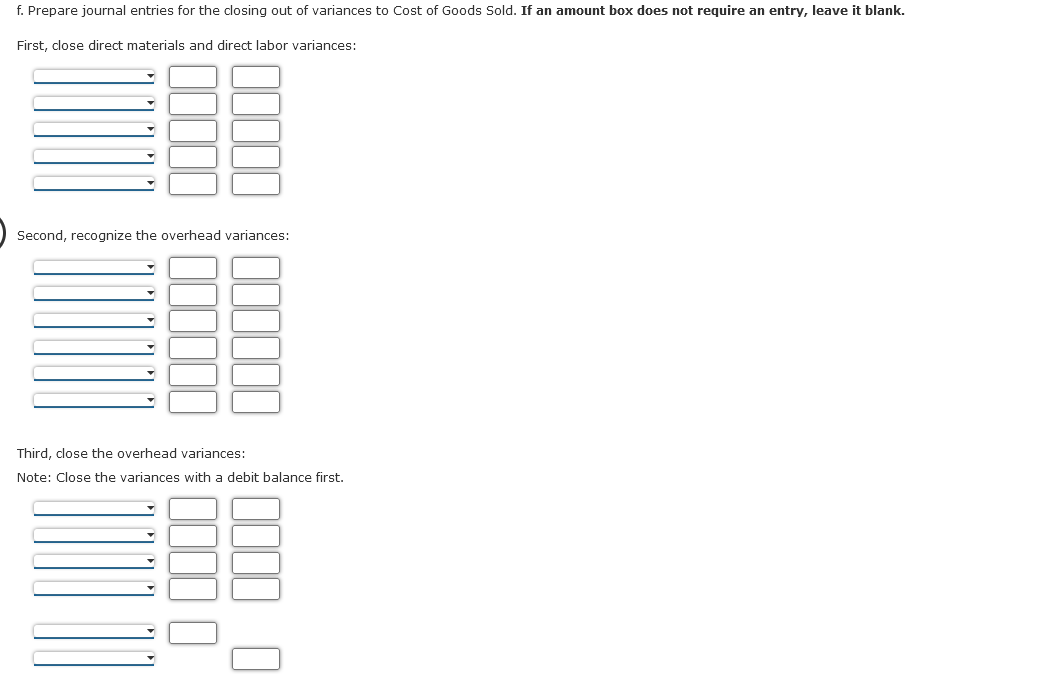
save it blank. 4. Compute the variable overhead spending and efficiency variances. \begin{tabular}{ll} Spending Variance & $ \\ Efficiency Variance & $ \end{tabular} 5. Prepare journal entries for the following: a. The purchase of direct materials b. The issuance of direct materials to production (Work in Process) c. The addition of direct labor to Work in Process d. The addition of overhead to Work in Process e. The incurrence of actual overhead costs f. Prepare journal entries for the closing out of variances to Cost of Goods Sold. If an amount box does not require an entry, leave it blank. First, close direct materials and direct labor variances: Third, close the overhead variances: Note: Close the variances with a debit balance first. Direct Materials, Direct Labor, and Overhead Variances, Journal Entries Rand Company produces dry fertilizer. At the beginning of the year, Rand had the following standard cost sheet: Overhead rates are computed using practical volume, which is 54,000 units. The actual results for the year are as follows: a. Units produced: 53,000 b. Direct materials purchased: 265,000 pounds @ $2.50 per pound c. Direct materials used: 270,300 pounds d. Direct labor: 40,100 hours at $17.95 per hour e. Fixed overhead: $161,600 f. Variable overhead: $122,100 Required: 1. Compute price and usage variances for direct materials. MPVMUV$ 2. Compute the direct labor rate and labor efficiency variances. Labor Rate Variance $ Labor Efficiency Variance $ 3. Compute the fixed overhead spending and volume variances. Spending Variance $ Volume Variance $
Step by Step Solution
There are 3 Steps involved in it

Get step-by-step solutions from verified subject matter experts
 Study Help