Question: Scenario: Next Generation Analytics (NGA) secures a new contract for a large data project that has a quick turnaround. They need to expand their workforce
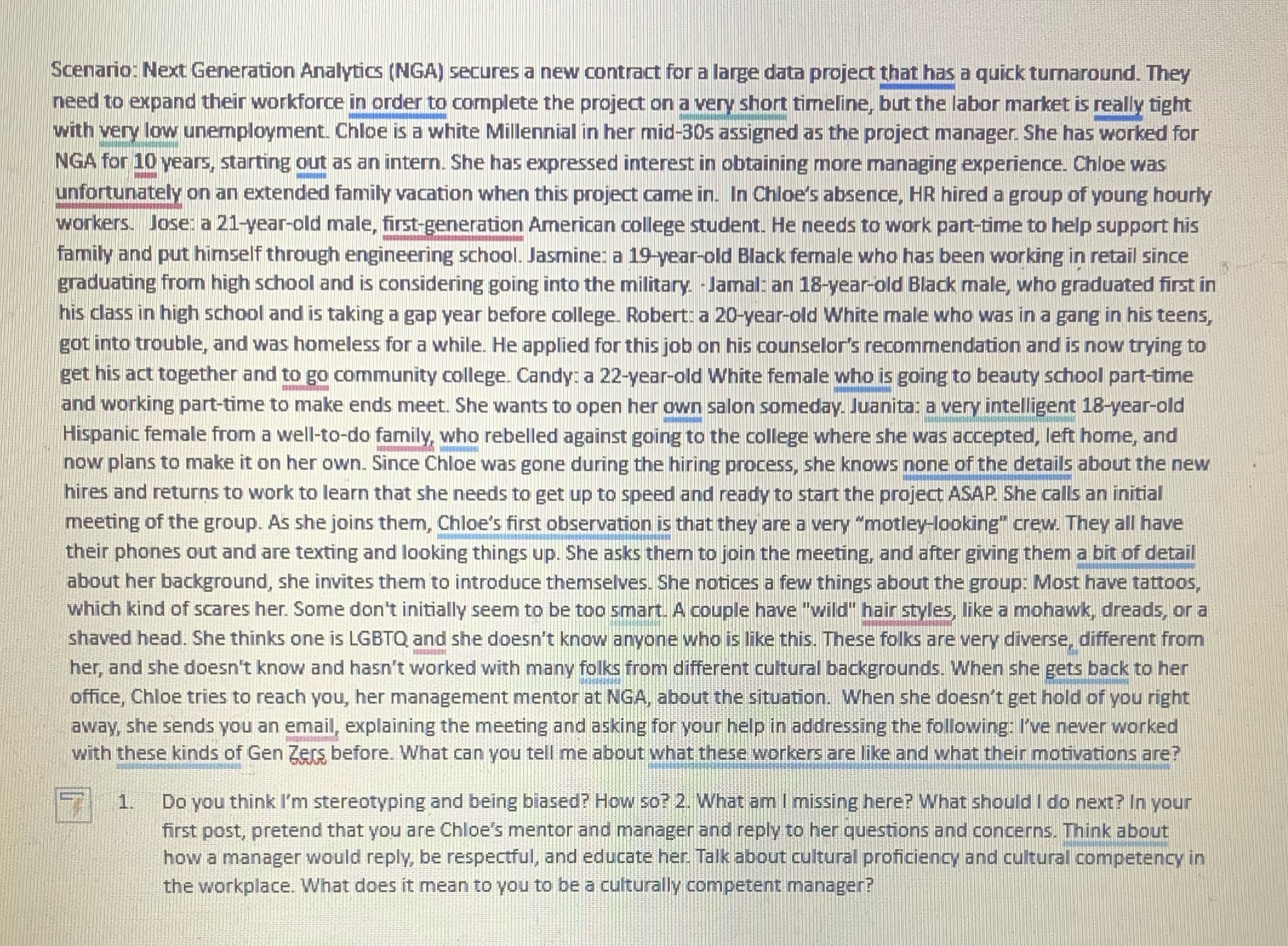
Scenario: Next Generation Analytics (NGA) secures a new contract for a large data project that has a quick turnaround. They need to expand their workforce in order to complete the project on a very short timeline, but the labor market is really tight with very low unemployment. Chloe is a white Millennial in her mid-30s assigned as the project manager. She has worked for NGA for 10 years, starting out as an intern. She has expressed interest in obtaining more managing experience. Chloe was unfortunately on an extended family vacation when this project came in. In Chloe's absence, HR hired a group of young hourly workers. Jose: a 21-year-old male, first-generation American college student. He needs to work part-time to help support his family and put himself through engineering school. Jasmine: a 19-year-old Black female who has been working in retail since graduating from high school and is considering going into the military. - Jamal: an 18-year-old Black male, who graduated first in his class in high school and is taking a gap year before college. Robert: a 20-year-old White male who was in a gang in his teens, got into trouble, and was homeless for a while. He applied for this job on his counselor's recommendation and is now trying to get his act together and to go community college. Candy: a 22-year-old White female who is going to beauty school part-time and working part-time to make ends meet. She wants to open her own salon someday. Juanita: a very intelligent 18-year-old Hispanic female from a well-to-do family, who rebelled against going to the college where she was accepted, left home, and now plans to make it on her own. Since Chloe was gone during the hiring process, she knows none of the details about the new hires and returns to work to learn that she needs to get up to speed and ready to start the project ASAP. She calls an initial meeting of the group. As she joins them, Chloe's first observation is that they are a very "motley-looking" crew. They all have their phones out and are texting and looking things up. She asks them to join the meeting, and after giving them a bit of detail about her background, she invites them to introduce themselves. She notices a few things about the group: Most have tattoos, which kind of scares her. Some don't initially seem to be too smart. A couple have "wild" hair styles, like a mohawk, dreads, or a shaved head. She thinks one is LGBTQ and she doesn't know anyone who is like this. These folks are very diverse, different from her, and she doesn't know and hasn't worked with many folks from different cultural backgrounds. When she gets back to her office, Chloe tries to reach you, her management mentor at NGA, about the situation. When she doesn't get hold of you right away, she sends you an email, explaining the meeting and asking for your help in addressing the following: I've never worked with these kinds of Gen Zers before. What can you tell me about what these workers are like and what their motivations are? .Do you think I'm stereotyping and being biased? How so? 2. What am I missing here? What should I do next? In your first post, pretend that you are Chloe's mentor and manager and reply to her questions and concerns. Think about how a manager would reply, be respectful, and educate her. Talk about cultural proficiency and cultural competency in the workplace. What does it mean to you to be a culturally competent manager









 Study Help