Question: SEC 10-K FINANCIAL STATEMENT ANALYSIS PROJECT PLEASE READ THE INSTRUCTIONS BELOW CAREFULLY 1. Read the VSBDC Financial Statement Resource Guide and familiarize IT with the
SEC 10-K FINANCIAL STATEMENT ANALYSIS PROJECTSEC 10-K FINANCIAL STATEMENT ANALYSIS PROJECTSEC 10-K FINANCIAL STATEMENT ANALYSIS PROJECTSEC 10-K FINANCIAL STATEMENT ANALYSIS PROJECTSEC 10-K FINANCIAL STATEMENT ANALYSIS PROJECT
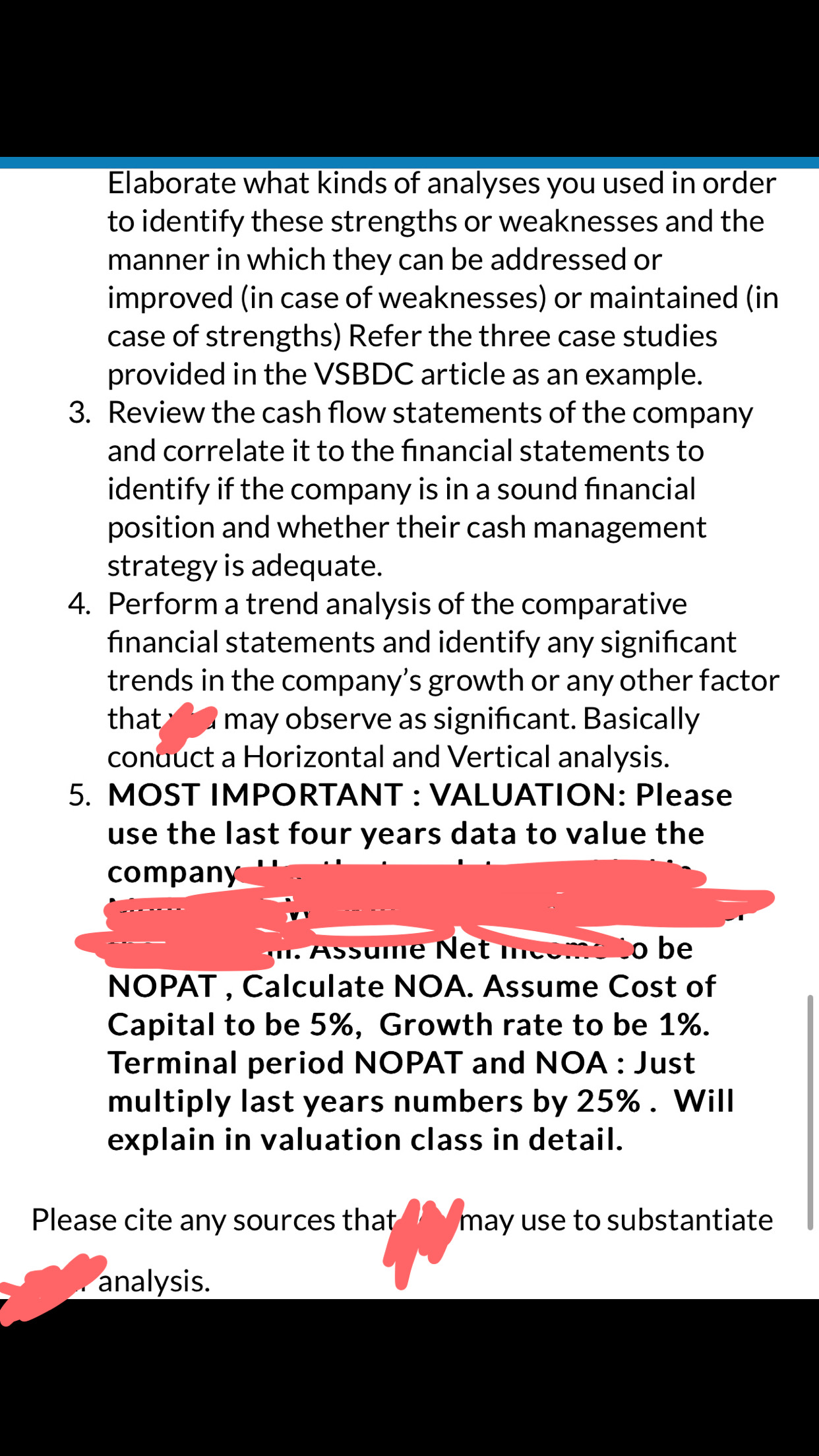
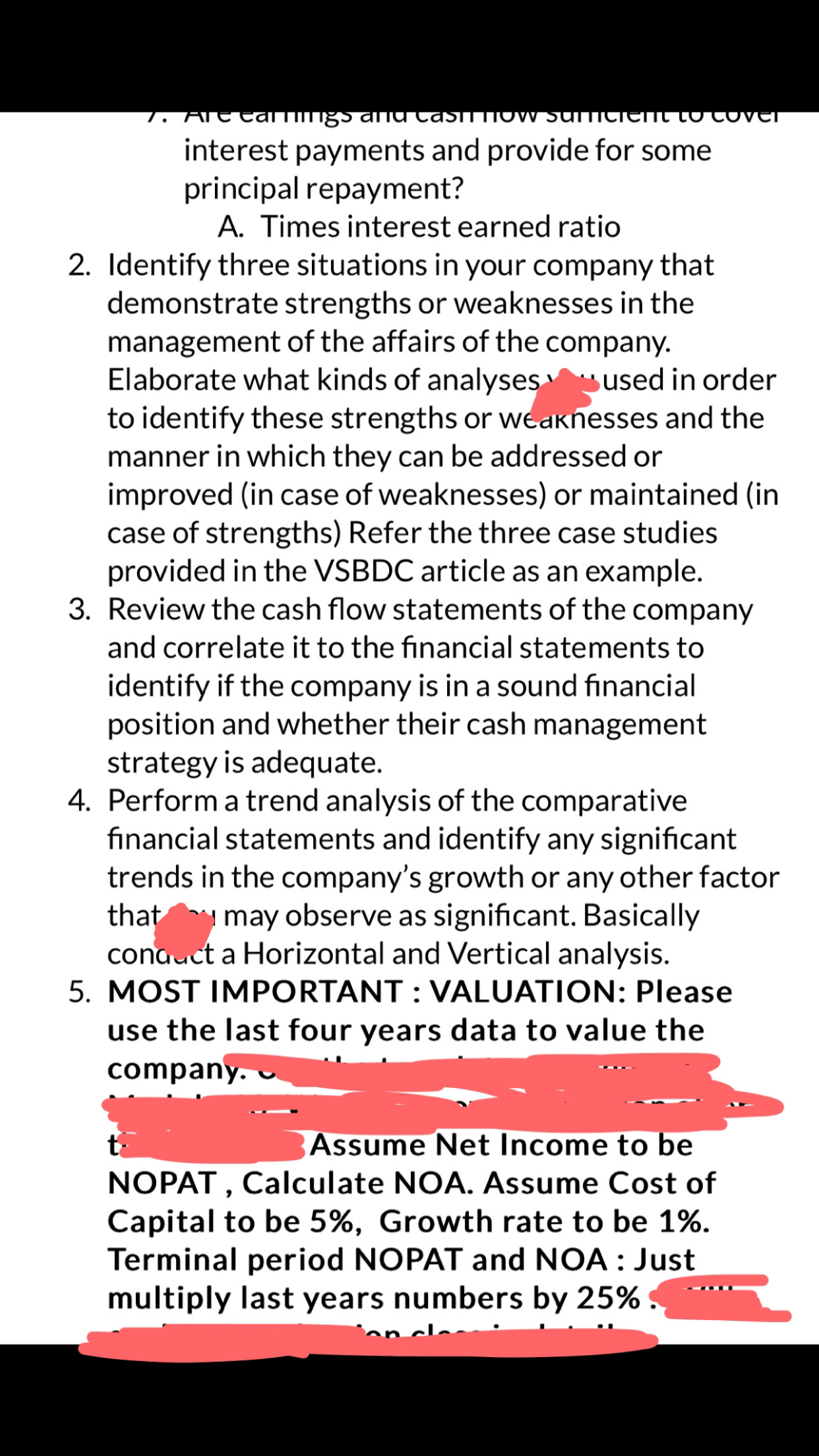
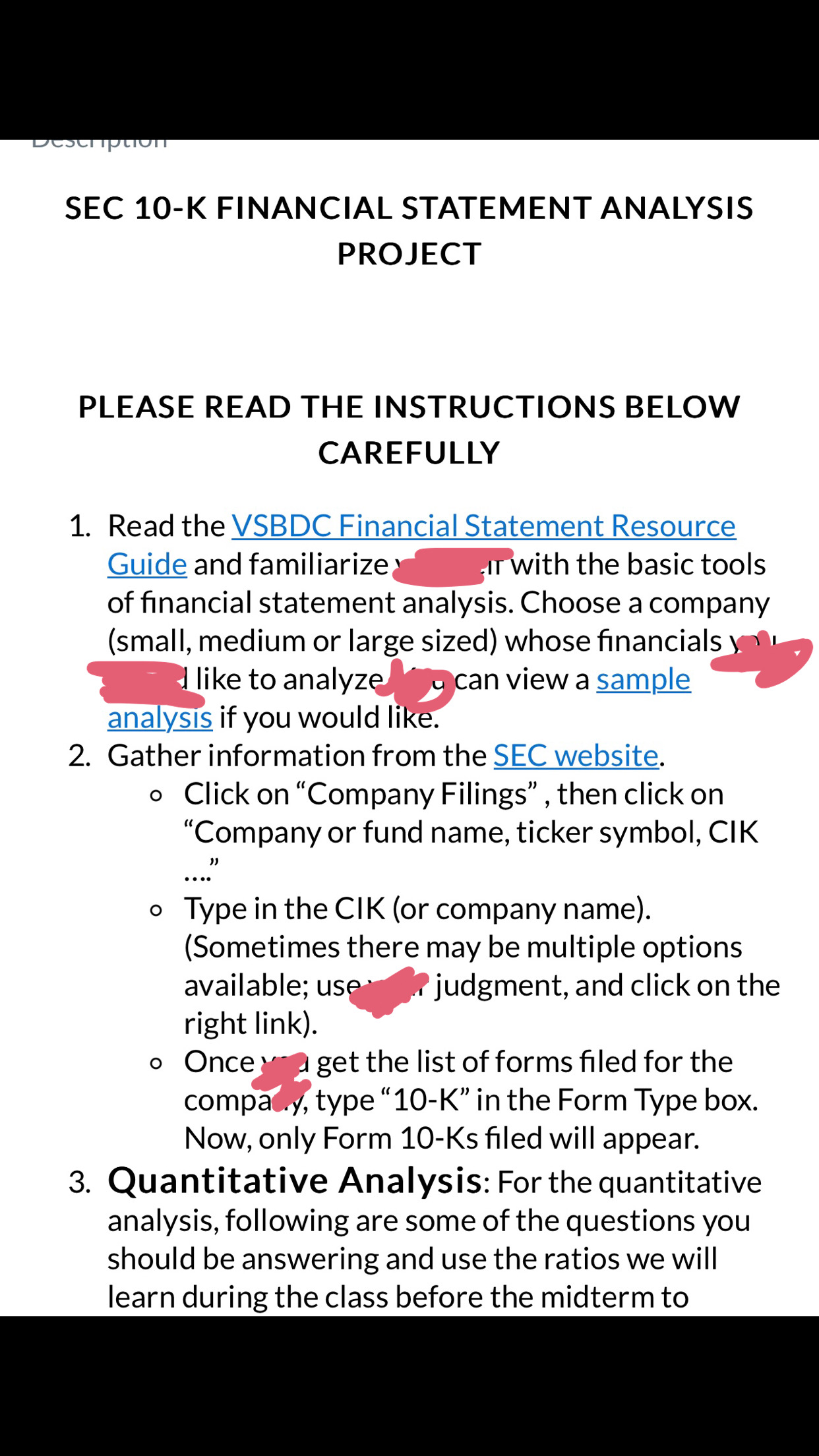
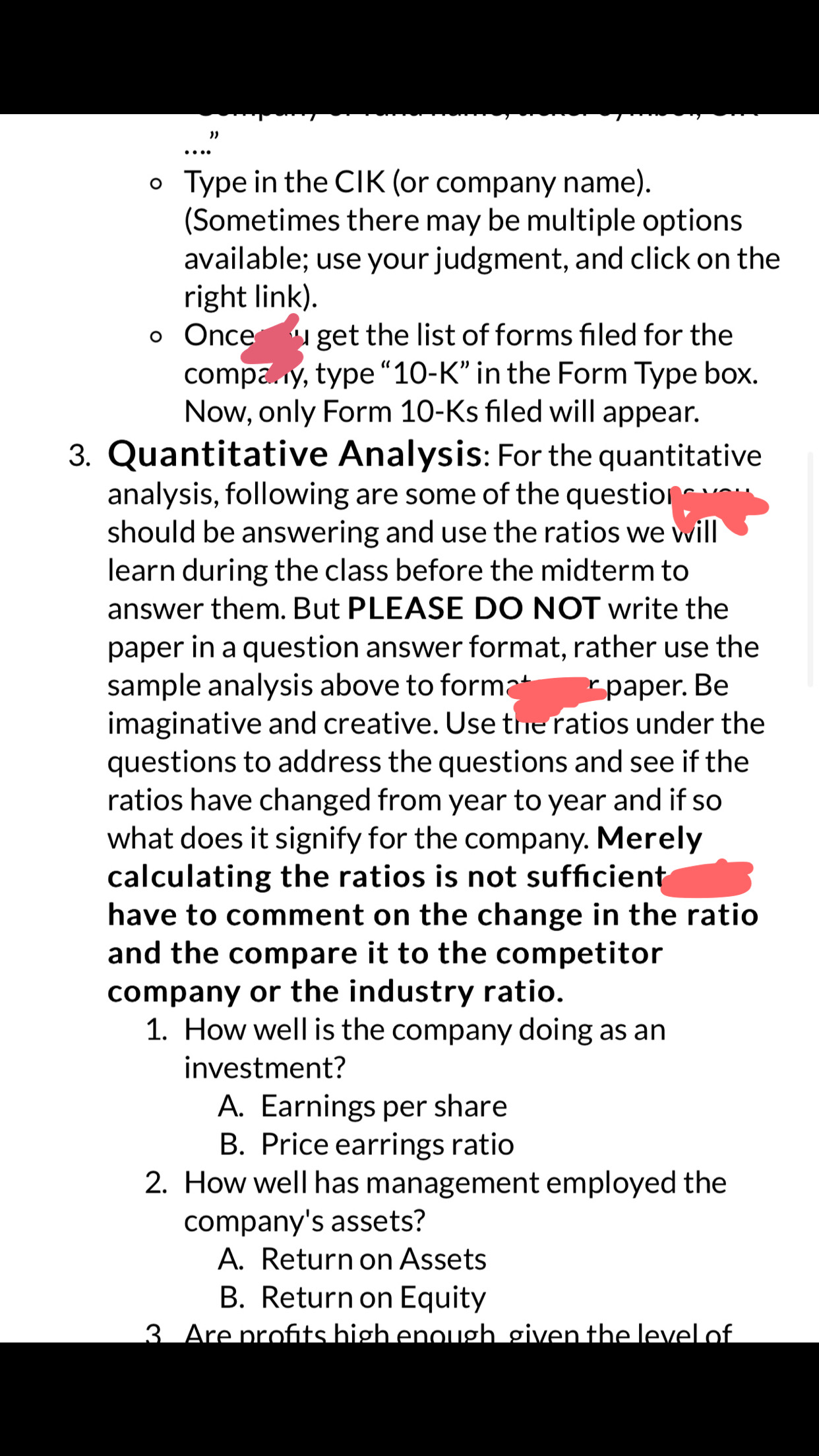
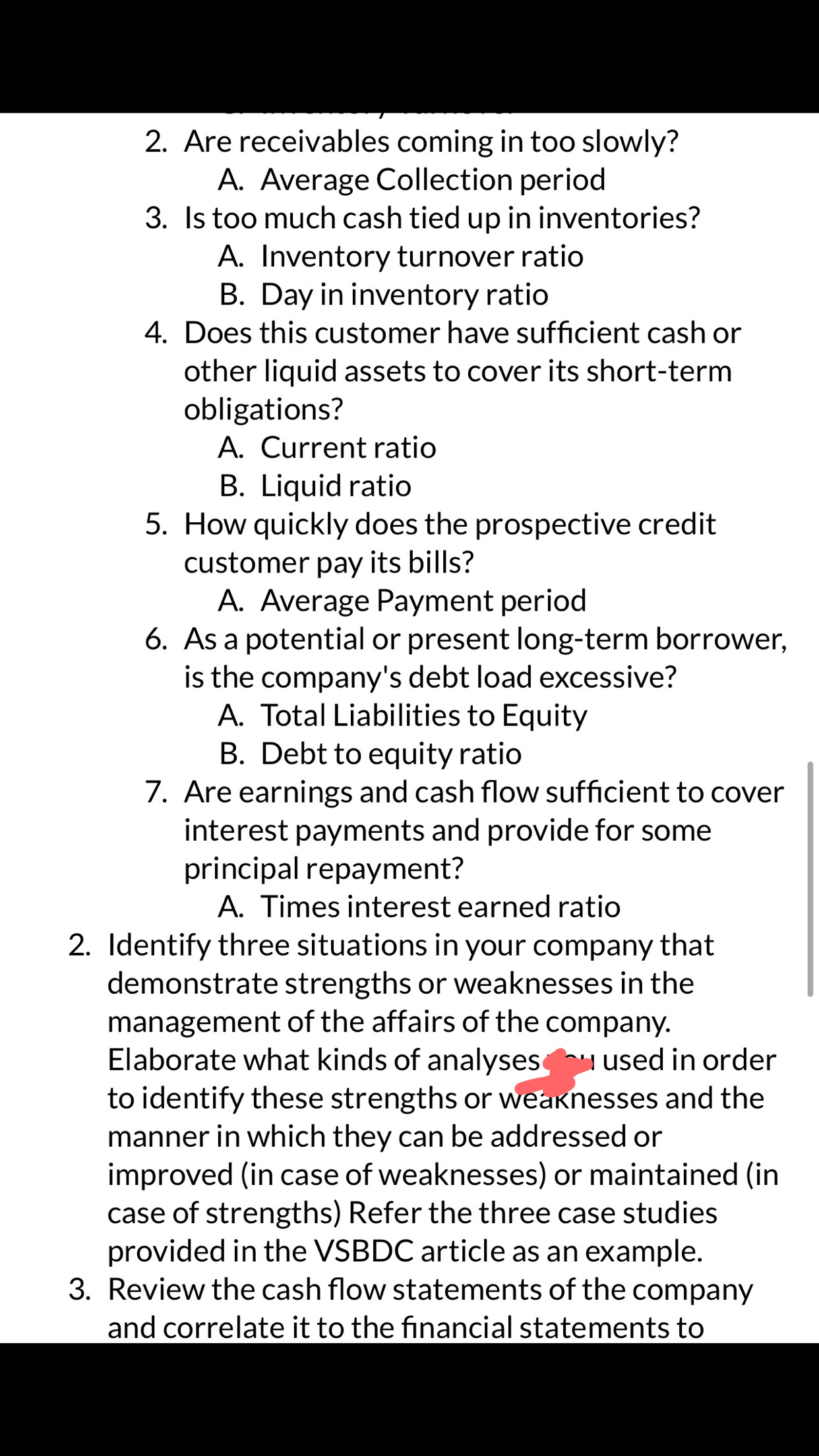
SEC 10-K FINANCIAL STATEMENT ANALYSIS PROJECT PLEASE READ THE INSTRUCTIONS BELOW CAREFULLY 1. Read the VSBDC Financial Statement Resource Guide and familiarize IT with the basic tools of financial statement analysis. Choose a company (small, medium or large sized) whose financials like to analyze we can view a sample analysis if you would like. 2. Gather information from the SEC website. o Click on "Company Filings" , then click on "Company or fund name, ticker symbol, CIK . . .. o Type in the CIK (or company name). (Sometimes there may be multiple options available; use judgment, and click on the right link). o Once a get the list of forms filed for the company, type "10-K" in the Form Type box. Now, only Form 10-Ks filed will appear. 3. Quantitative Analysis: For the quantitative analysis, following are some of the questions you should be answering and use the ratios we will learn during the class before the midterm to. . .. o Type in the CIK (or company name). (Sometimes there may be multiple options available; use your judgment, and click on the right link). o Once I get the list of forms filed for the company, type "10-K" in the Form Type box. Now, only Form 10-Ks filed will appear. 3. Quantitative Analysis: For the quantitative analysis, following are some of the question should be answering and use the ratios we will learn during the class before the midterm to answer them. But PLEASE DO NOT write the paper in a question answer format, rather use the sample analysis above to format paper. Be imaginative and creative. Use the ratios under the questions to address the questions and see if the ratios have changed from year to year and if so what does it signify for the company. Merely calculating the ratios is not sufficient have to comment on the change in the ratio and the compare it to the competitor company or the industry ratio. 1. How well is the company doing as an investment? A. Earnings per share B. Price earrings ratio 2. How well has management employed the company's assets? A. Return on Assets B. Return on Equity 3 Are profits high enough given the level of. Are receivables coming in too slowly? A. Average Collection period . Istoo much cash tied up in inventories? A. Inventory turnover ratio B. Day in inventory ratio . Does this customer have sufficient cash or other liquid assets to cover its short-term obligations? A. Currentratio B. Liquid ratio . How quickly does the prospective credit customer pay its bills? A. Average Payment period . As a potential or present long-term borrower, is the company's debt load excessive? A. Total Liabilities to Equity B. Debt to equity ratio . Are earnings and cash flow sufficient to cover interest payments and provide for some principal repayment? A. Times interest earned ratio 2. ldentify three situations in your company that demonstrate strengths or weaknesses in the management of the affairs of the company. Elaborate what kinds of analyses#gs used in order to identify these strengths or weaknesses and the manner in which they can be addressed or improved (in case of weaknesses) or maintained (in case of strengths) Refer the three case studies provided in the VSBDC article as an example. . Review the cash flow statements of the company and correlate it to the financial statements to Elaborate what kinds of analyses you used in order to identify these strengths or weaknesses and the manner in which they can be addressed or improved (in case of weaknesses) or maintained (in case of strengths) Refer the three case studies provided in the VSBDC article as an example. . Review the cash flow statements of the company and correlate it to the financial statements to identify if the company is in a sound financial position and whether their cash management strategy is adequate. . Perform a trend analysis of the comparative financial statements and identify any significant trends in the company's growth or any other factor that may observe as significant. Basically conduct a Horizontal and Vertical analysis. . MOST IMPORTANT : VALUATION: Please use the last four years data to value the NOPAT, Calculate NOA. Assume Cost of Capital to be 5%, Growth rate to be 1%. Terminal period NOPAT and NOA : Just multiply last years numbers by 25% . Will explain in valuation class in detail. Please cite any sources thaWnay use to substantiate analysis. interest payments and provide for some principal repayment? A. Times interest earned ratio 2. ldentify three situations in your company that demonstrate strengths or weaknesses in the management of the affairs of the company. Elaborate what kinds of analyse used in order to identify these strengths or w esses and the manner in which they can be addressed or improved (in case of weaknesses) or maintained (in case of strengths) Refer the three case studies provided in the VSBDC article as an example. . Review the cash flow statements of the company and correlate it to the financial statements to identify if the company is in a sound financial position and whether their cash management strategy is adequate. . Perform a trend analysis of the comparative financial statements and identify any significant trends in the company's growth or any other factor tha may observe as significant. Basically conauct a Horizontal and Vertical analysis. . MOST IMPORTANT : VALUATION: Please use the last four years data to value the Assume Net Income to be NOPAT, Calculate NOA. Assume Cost of Capital to be 5%, Growth rate to be 1%. Terminal period NOPAT and NOA : Just multiply last years numbers by 25%
Step by Step Solution

There are 3 Steps involved in it

1 Expert Approved Answer
Step: 1 Unlock blur-text-image

Question Has Been Solved by an Expert!

Get step-by-step solutions from verified subject matter experts

Step: 2 Unlock
Step: 3 Unlock

Students Have Also Explored These Related Finance Questions!