







Question: Section 3: Directions: Using F.R.C.P. as your guide, please explain the different requirements for serving a summons, subpoena, or complaint as opposed to serving pleadings
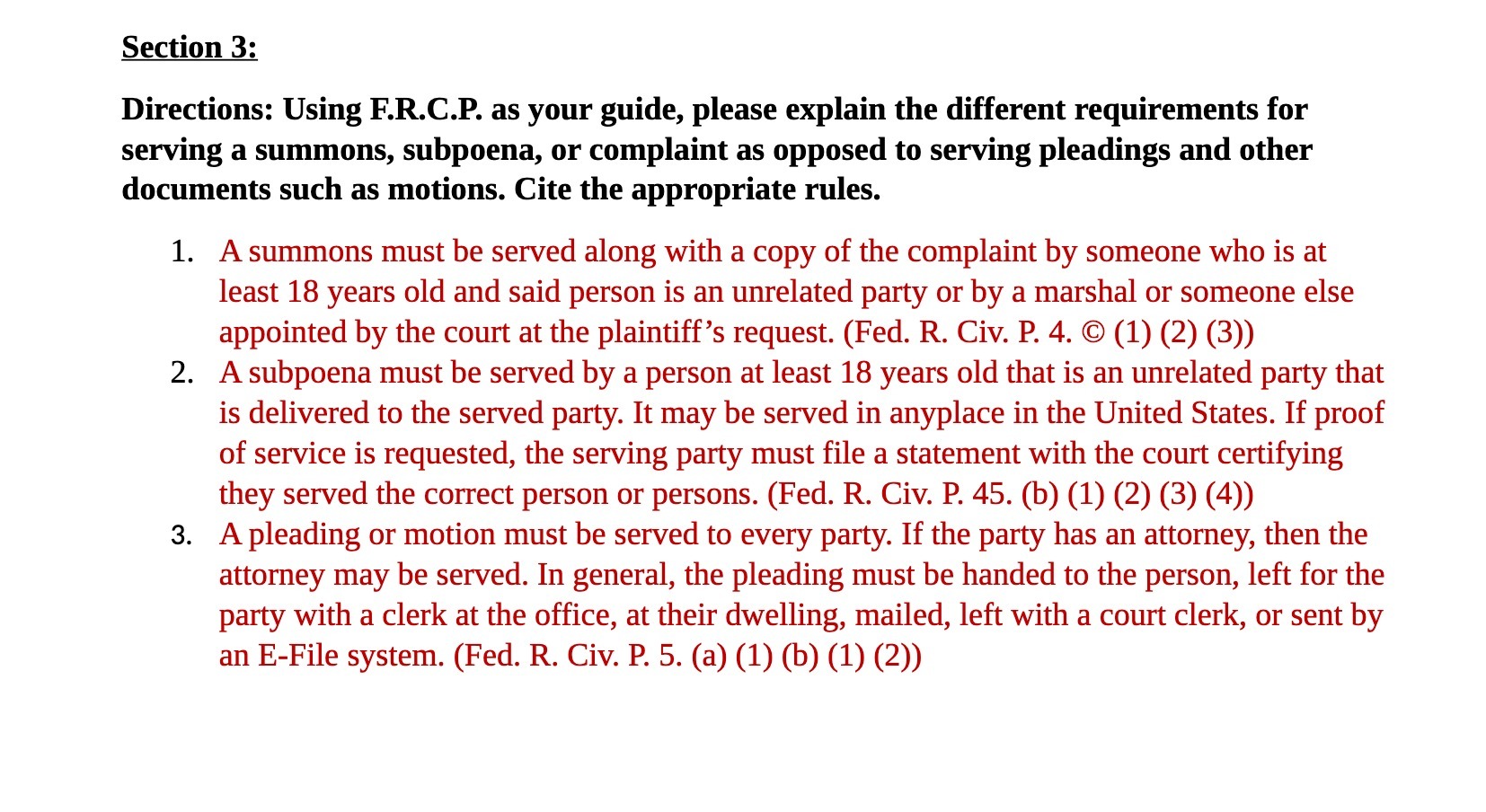
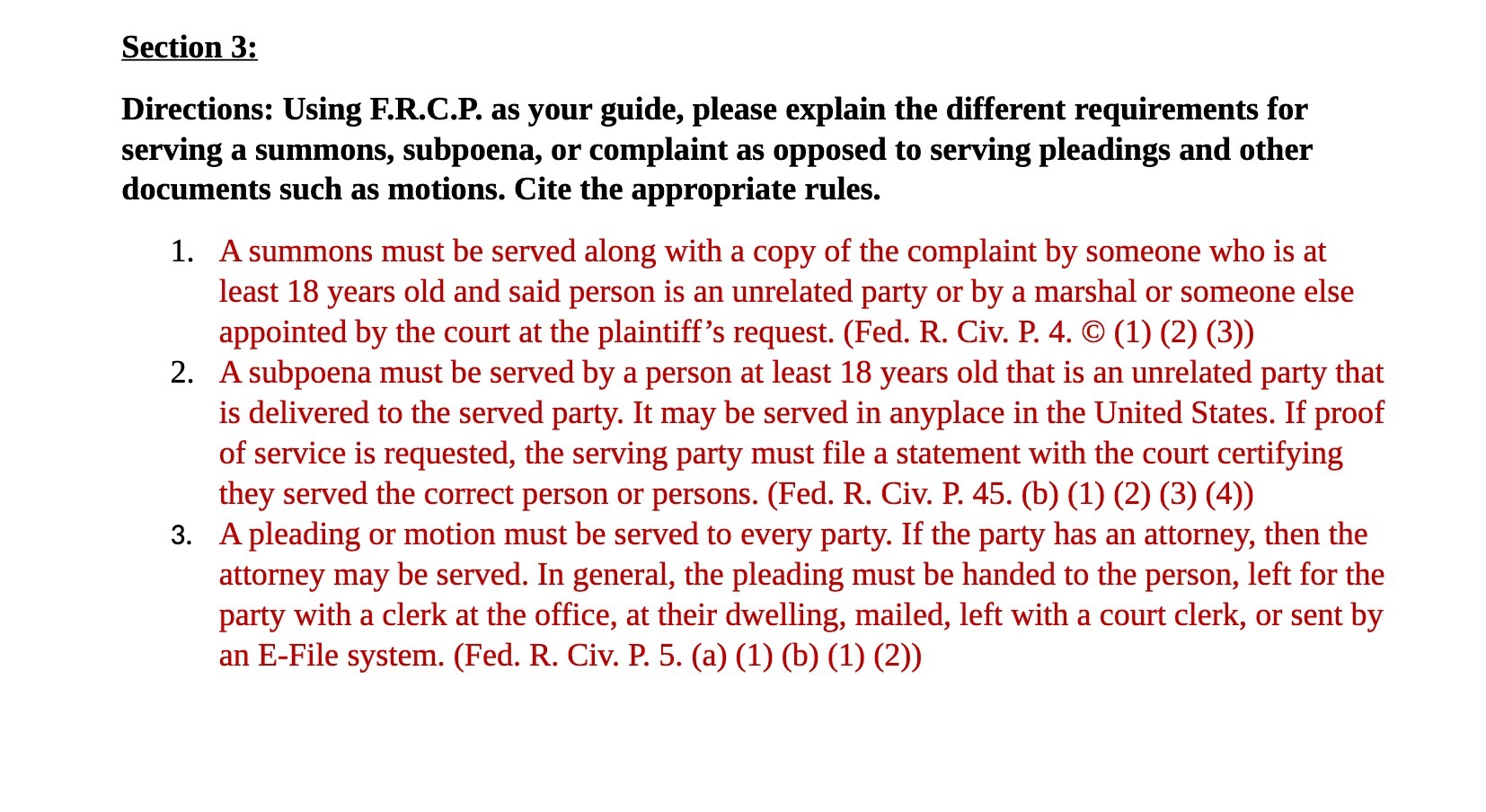
Section 3: Directions: Using F.R.C.P. as your guide, please explain the different requirements for serving a summons, subpoena, or complaint as opposed to serving pleadings and other documents such as motions. Cite the appropriate rules. 1. A summons must be served along with a copy of the complaint by someone who is at least 18 years old and said person is an unrelated party or by a marshal or someone else appointed by the court at the plaintiff's request. (Fed. R. Civ. P. 4. (1) (2) (3)) 2. A subpoena must be served by a person at least 18 years old that is an unrelated party that is delivered to the served party. It may be served in anyplace in the United States. If proof of service is requested, the serving party must file a statement with the court certifying they served the correct person or persons. (Fed. R. Civ. P. 45. (b) (1) (2) (3) (4)) 3. A pleading or motion must be served to every party. If the party has an attorney, then the attorney may be served. In general, the pleading must be handed to the person, left for the party with a clerk at the office, at their dwelling, mailed, left with a court clerk, or sent by an E-File system. (Fed. R. Civ. P. 5. (a) (1) (b) (1) (2))
Step by Step Solution
There are 3 Steps involved in it

Get step-by-step solutions from verified subject matter experts
 Study Help