







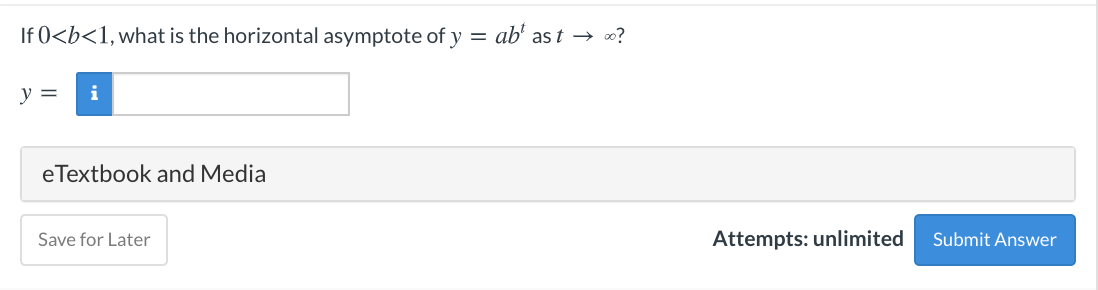
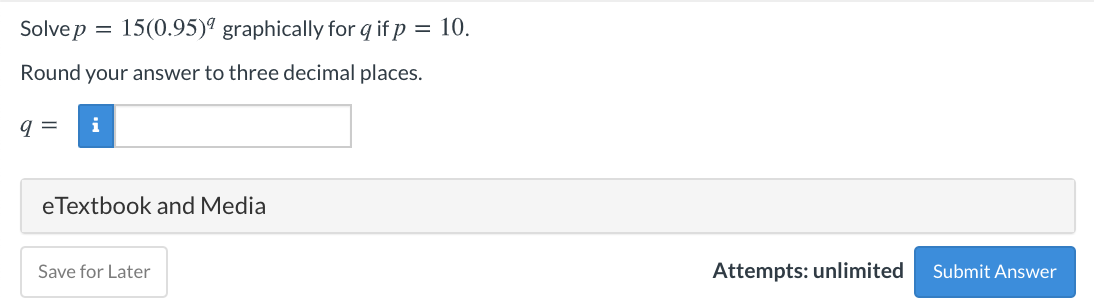
Question: Section 4.3 #5 If 0 >? y e Textbook and Media Save for Later Attempts: unlimited Submit AnswerSolvep = 15(0.95)9 graphically for qif p =
Section 4.3
#5
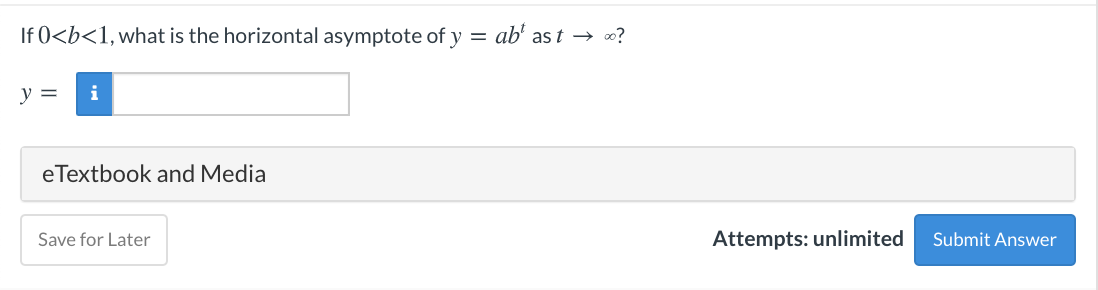
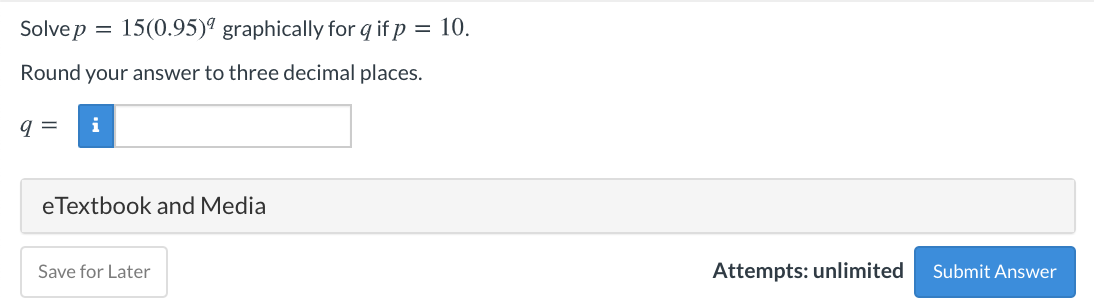
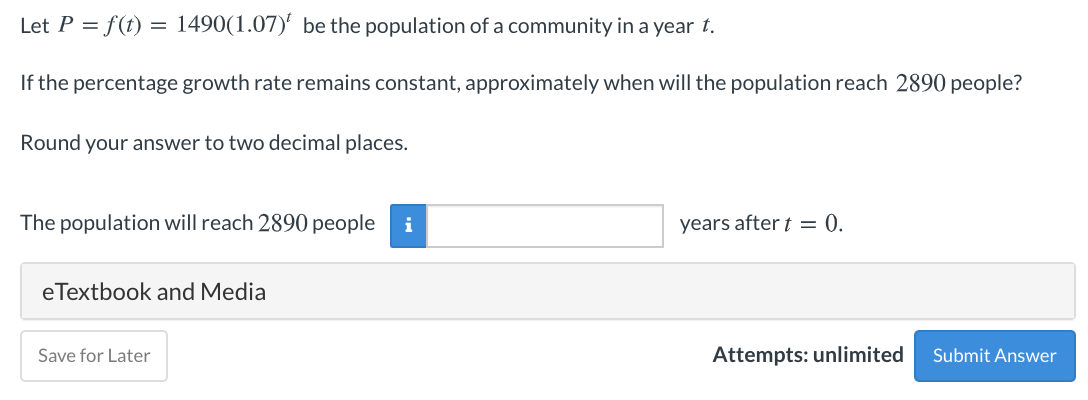
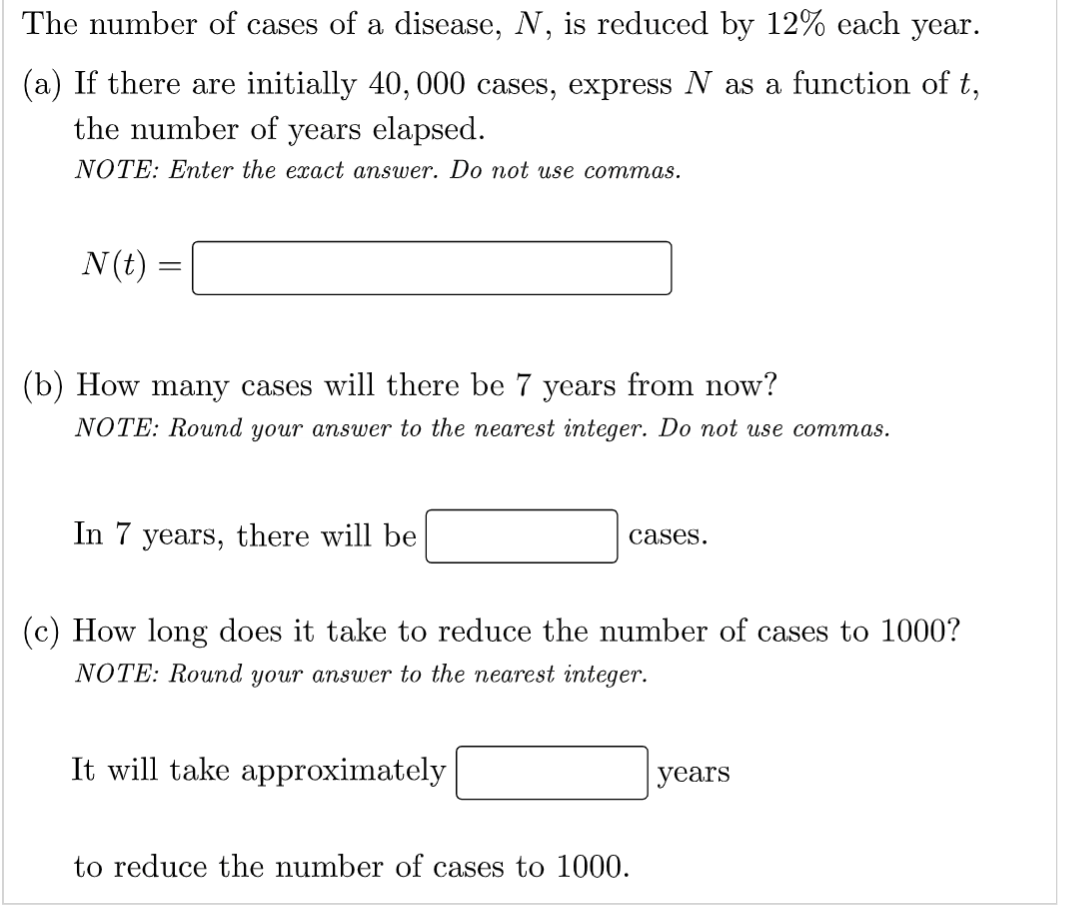
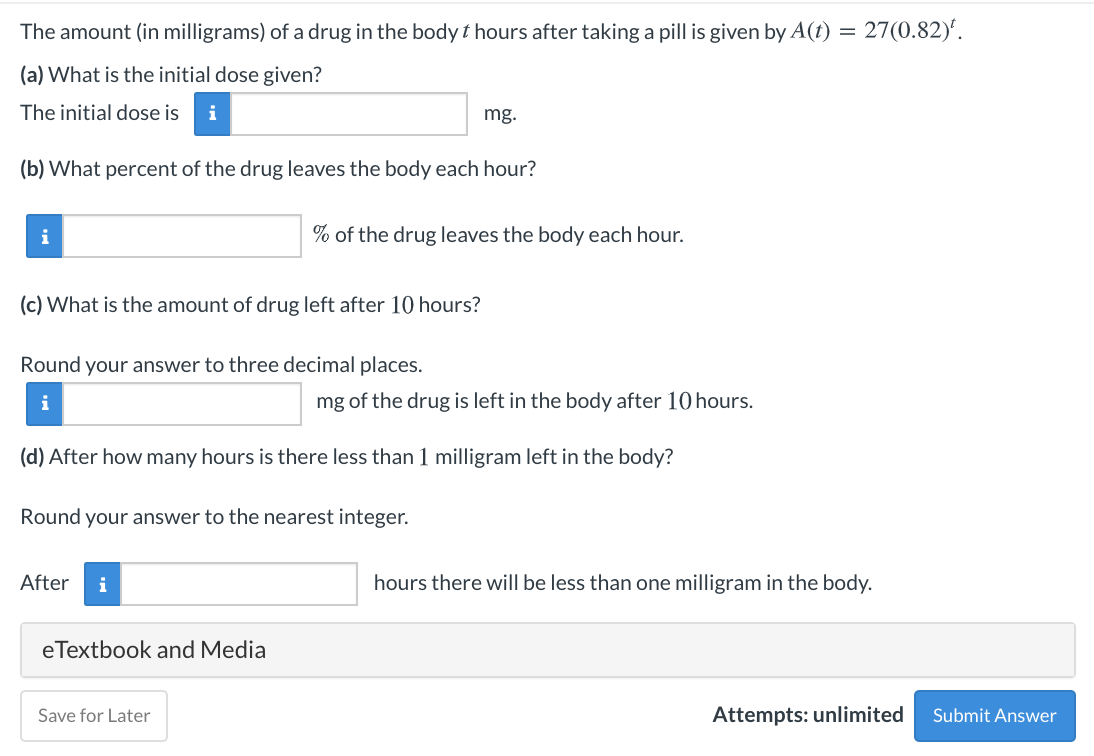
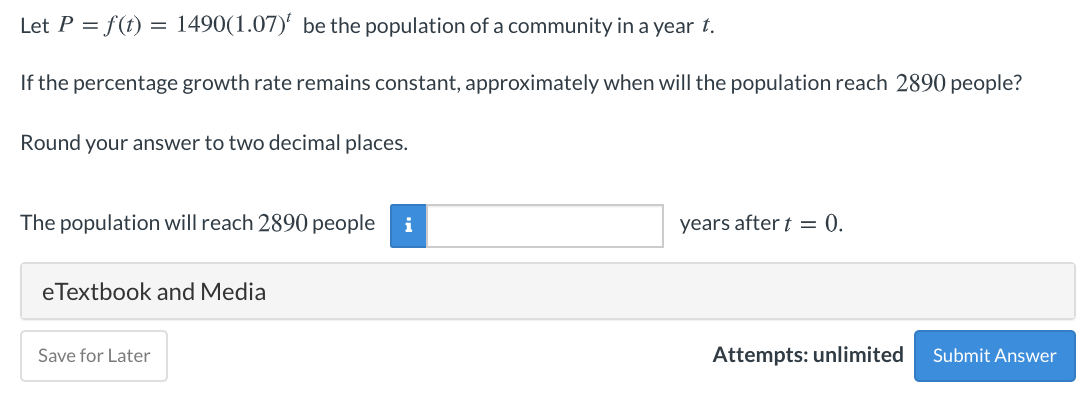
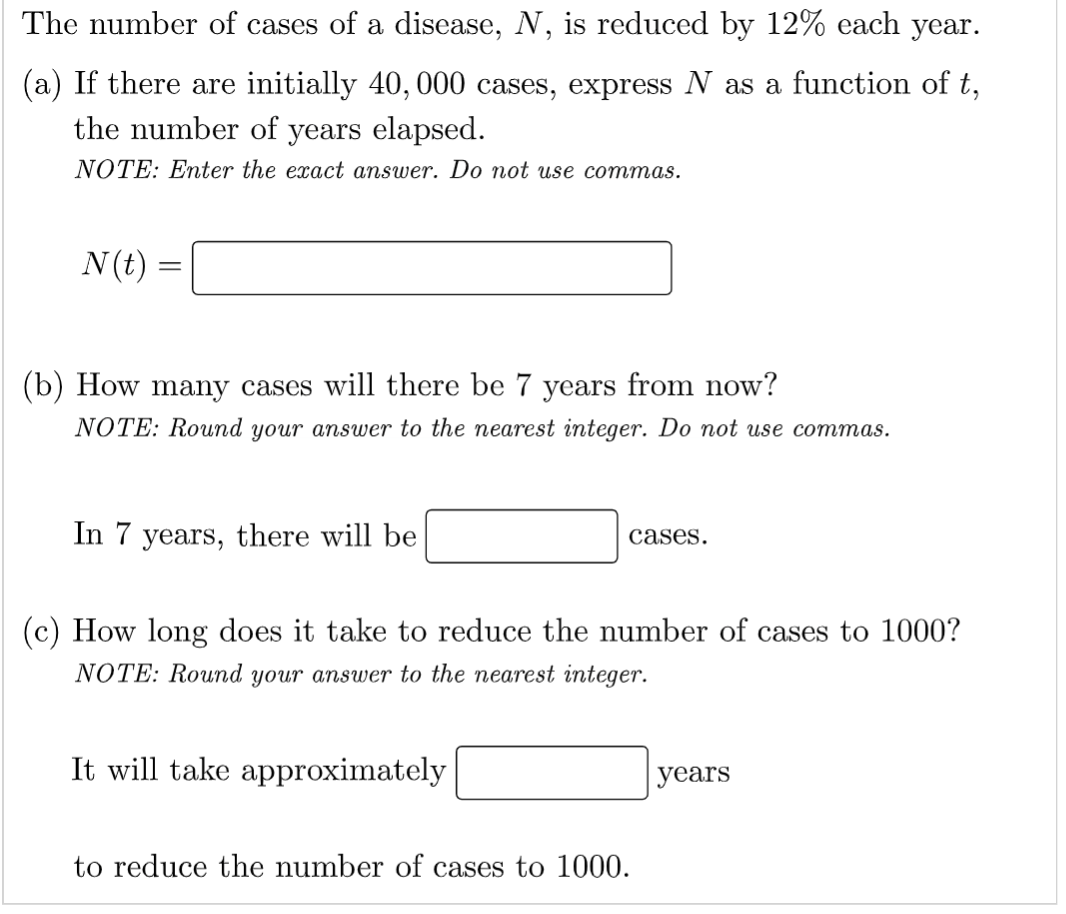
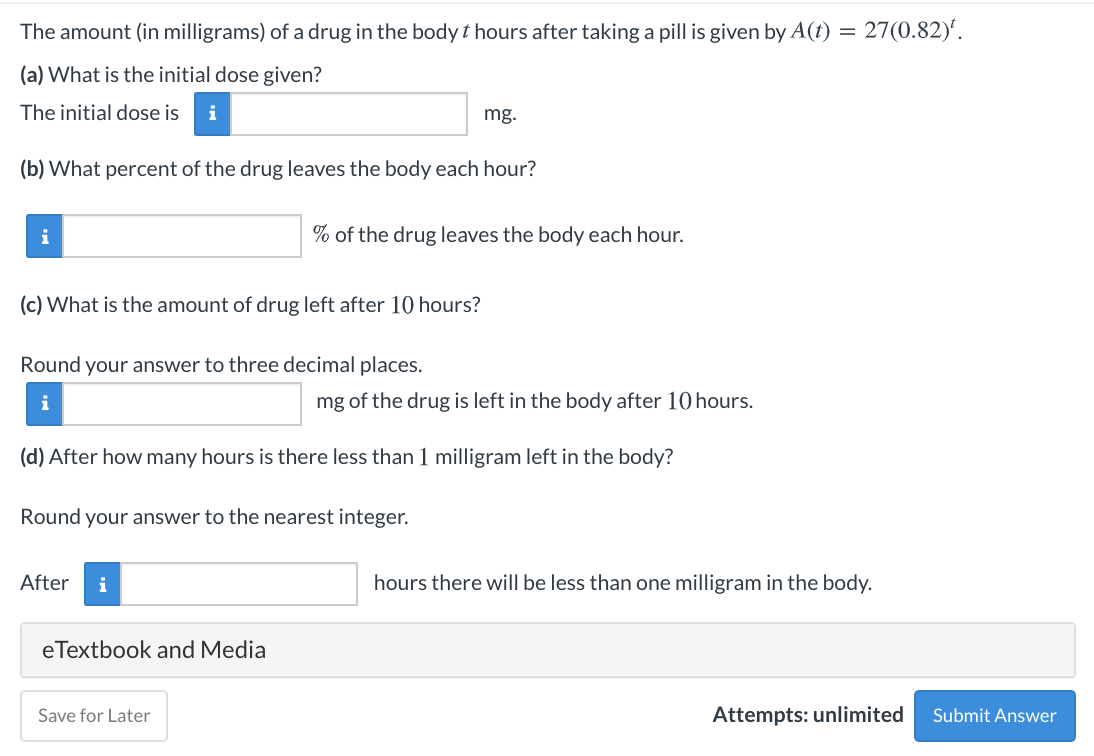
If 0 >? y e Textbook and Media Save for Later Attempts: unlimited Submit AnswerSolvep = 15(0.95)9 graphically for qif p = 10. Round your answer to three decimal places. eTextbook and Media Save for Later Attempts: unlimited Submit AnswerLet P = f(t) = 1490(1.07)' be the population of a community in a year t. If the percentage growth rate remains constant, approximately when will the population reach 2890 people? Round your answer to two decimal places. The population will reach 2890 people i years after t = 0. eTextbook and Media Save for Later Attempts: unlimited Submit AnswerThe number of cases of a disease, N , is reduced by 12% each year. (a) If there are initially 40, 000 cases, express N as a function of t, the number of years elapsed. NOTE: Enter the exact answer. Do not use commas. (b) How many cases will there be 7 years from now? NOTE: Round your answer to the nearest integer. Do not use commas. In 7 yeaIS, there will be [: cases. (0) How long does it take to reduce the number of cases to 1000? NOTE: Round your answer to the nearest integer. It will take approximately [:1 years to reduce the number of cases to 1000. The amount (in milligrams} of a drug in the bodyt hours after taking a pill is given by A(t) = 27(032)'. (a) What is the initial dose given? (b) What percent of the drug leaves the body each hour? i % of the drug leaves the body each hour. ((3) What is the amount of drug left after 10 hours? Round your answer to three decimal places. i mg of the drug is left in the body after 10 hours. (d) After how many hours is there less than] milligram left in the body? Round your answer to the nearest integer. After I: hours there will be less than one milligram in the body. eTextbook and Media Save for Later Attempts: unlimited
Step by Step Solution
There are 3 Steps involved in it

Get step-by-step solutions from verified subject matter experts
 Study Help