Question: Section 7 Case study with four tasks - 15 marks Case Study - Victorian Steel Fabricators If you prefer, you can download a PDF version
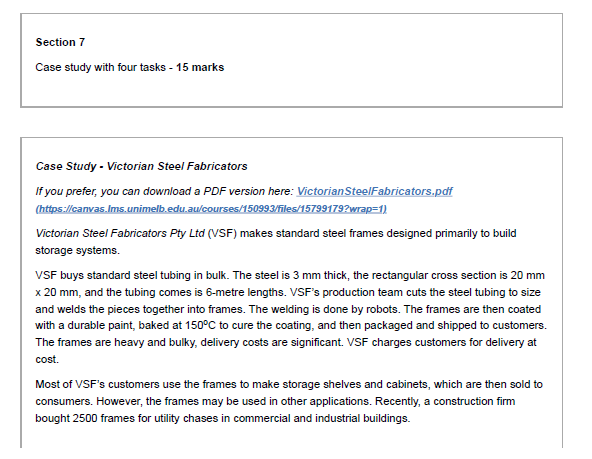
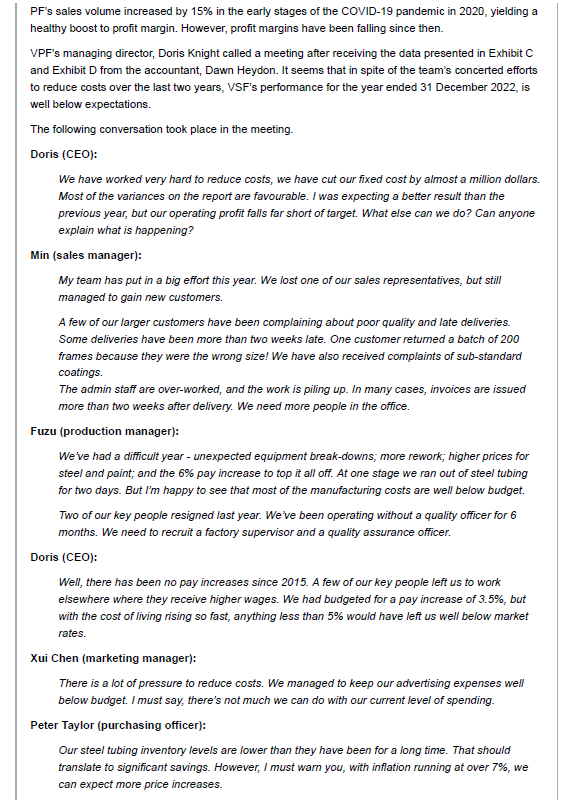
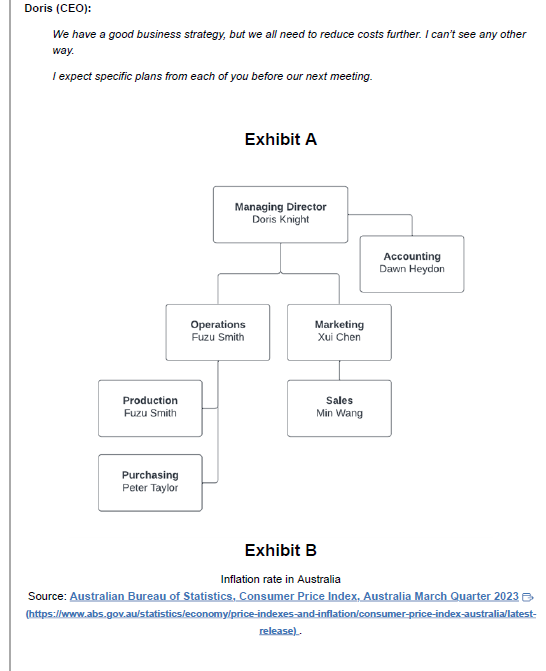
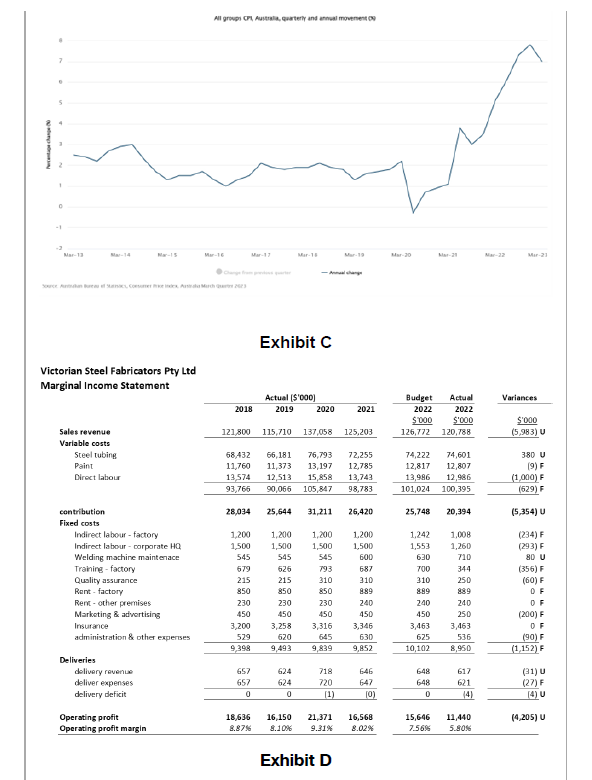
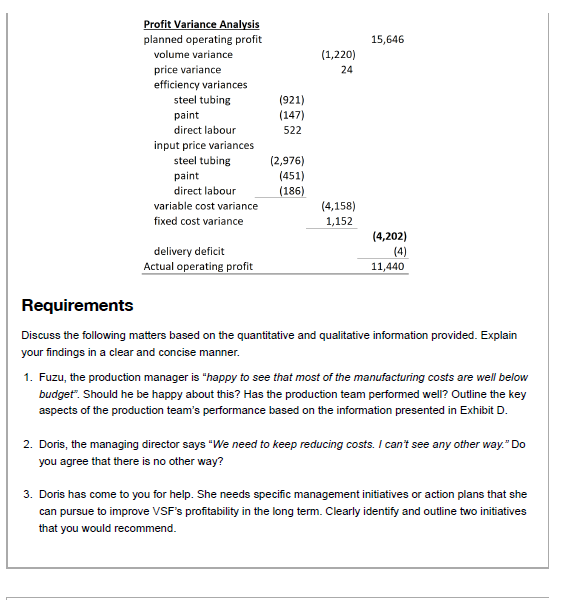
Section 7 Case study with four tasks - 15 marks Case Study - Victorian Steel Fabricators If you prefer, you can download a PDF version here: Victorian SteelFabricators.pdf (https//canvas.Ims. unimelb.edu.au/courses/150993/files/15799179?wrap=1) Victorian Steel Fabricators Pty Lid (VSF) makes standard steel frames designed primarily to build storage systems. VSF buys standard steel tubing in bulk. The steel is 3 mm thick, the rectangular cross section is 20 mm x 20 mm, and the tubing comes is 6-metre lengths. VSF's production team cuts the steel tubing to size and welds the pieces together into frames. The welding is done by robots. The frames are then coated with a durable paint, baked at 150"C to cure the coating, and then packaged and shipped to customers. The frames are heavy and bulky, delivery costs are significant. VSF charges customers for delivery at cost. Most of VSF's customers use the frames to make storage shelves and cabinets, which are then sold to consumers. However, the frames may be used in other applications. Recently, a construction firm bought 2500 frames for utility chases in commercial and industrial buildings.PF's sales volume increased by 15% in the early stages of the COVID-19 pandemic in 2020, yielding a healthy boost to profit margin. However, profit margins have been falling since then. VPF's managing director, Doris Knight called a meeting after receiving the data presented in Exhibit C and Exhibit D from the accountant, Dawn Heydon. It seems that in spite of the team's concerted efforts to reduce costs over the last two years, VSF's performance for the year ended 31 December 2022, is well below expectations. The following conversation took place in the meeting. Doris (CEO): We have worked very hard to reduce costs, we have cut our fixed cost by almost a million dollars. Most of the variances on the report are favourable. I was expecting a better result than the previous year, but our operating profit falls far short of target. What else can we do? Can anyone explain what is happening? Min (sales manager): My team has put in a big effort this year. We lost one of our sales representatives, but still managed to gain new customers. A few of our larger customers have been complaining about poor quality and late deliveries. Some deliveries have been more than two weeks late. One customer returned a batch of 200 frames because they were the wrong size! We have also received complaints of sub-standard coatings. The admin staff are over-worked, and the work is piling up. In many cases, invoices are issued more than two weeks after delivery. We need more people in the office. Fuzu (production manager): We've had a difficult year - unexpected equipment break-downs; more rework; higher prices for steel and paint; and the 6% pay increase to top it all off. At one stage we ran out of steel tubing for two days. But I'm happy to see that most of the manufacturing costs are well below budget. Two of our key people resigned last year. We've been operating without a quality officer for 6 months. We need to recruit a factory supervisor and a quality assurance officer. Doris (CEO): Well, there has been no pay increases since 2015. A few of our key people left us to work elsewhere where they receive higher wages. We had budgeted for a pay increase of 3.5%, but with the cost of living rising so fast, anything less than 5% would have left us well below market rates. Xui Chen (marketing manager): There is a lot of pressure to reduce costs. We managed to keep our advertising expenses well below budget. I must say, there's not much we can do with our current level of spending. Peter Taylor (purchasing officer): Our steel tubing inventory levels are lower than they have been for a long time. That should translate to significant savings. However, I must warn you, with inflation running at over 7%, we can expect more price increases.\f\fProfit Variance Analysts planned operating profit 15,545 volume variance 1,220] price yarla nI:e 24 efficiency ya ri a n res steel tubing t'zlt paint [14H direct labour 522 input price variances steel tubing [LEt paint {-1151} directlabour [13H variable cost yariance t4,1531| fixed cost variance 1,152 [4.21.12] deli-very deficit {4] Actual operating prot 11,441] Requirements Discuss the following matters based on the quantitative and qualitative information provided. Explain your ndings in a clear and concise manner. 1. Fuzu, the production manager is \"happy to see that most of the manufacturing costs are weft .tretow budget'. Should he be happy about this? Has the production team performed well? Outline the key aspects of the production team's performance based on the information presented in Exhibit D. 2. Don's, the managing director says \"We need to keep reducing costs. .I'earr't see any other way.\" Do you agree that there is no other way? 3. Beds has some to you for help. She needs specic management initiatives or action plans that she can pursue to improve 'JSF's protability in the long term. Clearly identify and outline two initiatives that you would recommend
Step by Step Solution
There are 3 Steps involved in it
1 Expert Approved Answer
Step: 1 Unlock
Question Has Been Solved by an Expert!
Get step-by-step solutions from verified subject matter experts
Step: 2 Unlock
Step: 3 Unlock
Students Have Also Explored These Related Accounting Questions!









 Study Help