







Question: SECTION V - TRANSLATING BINARY NUMBERS TO HEXADECIMAL NUMBERS - 5 POINTS In computers and digital technology, a nibble ( pronounced NIHB - uhl; sometimes
SECTION V TRANSLATING BINARY NUMBERS TO HEXADECIMAL NUMBERS POINTS
In computers and digital technology, a nibble pronounced NIHBuhl; sometimes spelled nybble is four binary digits or half of an eightbit byte. A nibble can be conveniently represented by one hexadecimal digit.
Enter the binary number into the table from right to left skipping the "Enter decimal number" cell adding the preceding zeros to the beginning of the number to make it digits.
Calculate the decimal number for each nibble and enter it into the "Enter decimal number" cell.
Translate the decimal number to the hexadecimal number. Be careful to place them in the same order.
Use the Ox prefix to indicate that it is a hexadecimal number in the Hex Number column.
Binary Number
Hex Number
Enter hex number
Enter hex number
Revised Fall
Page
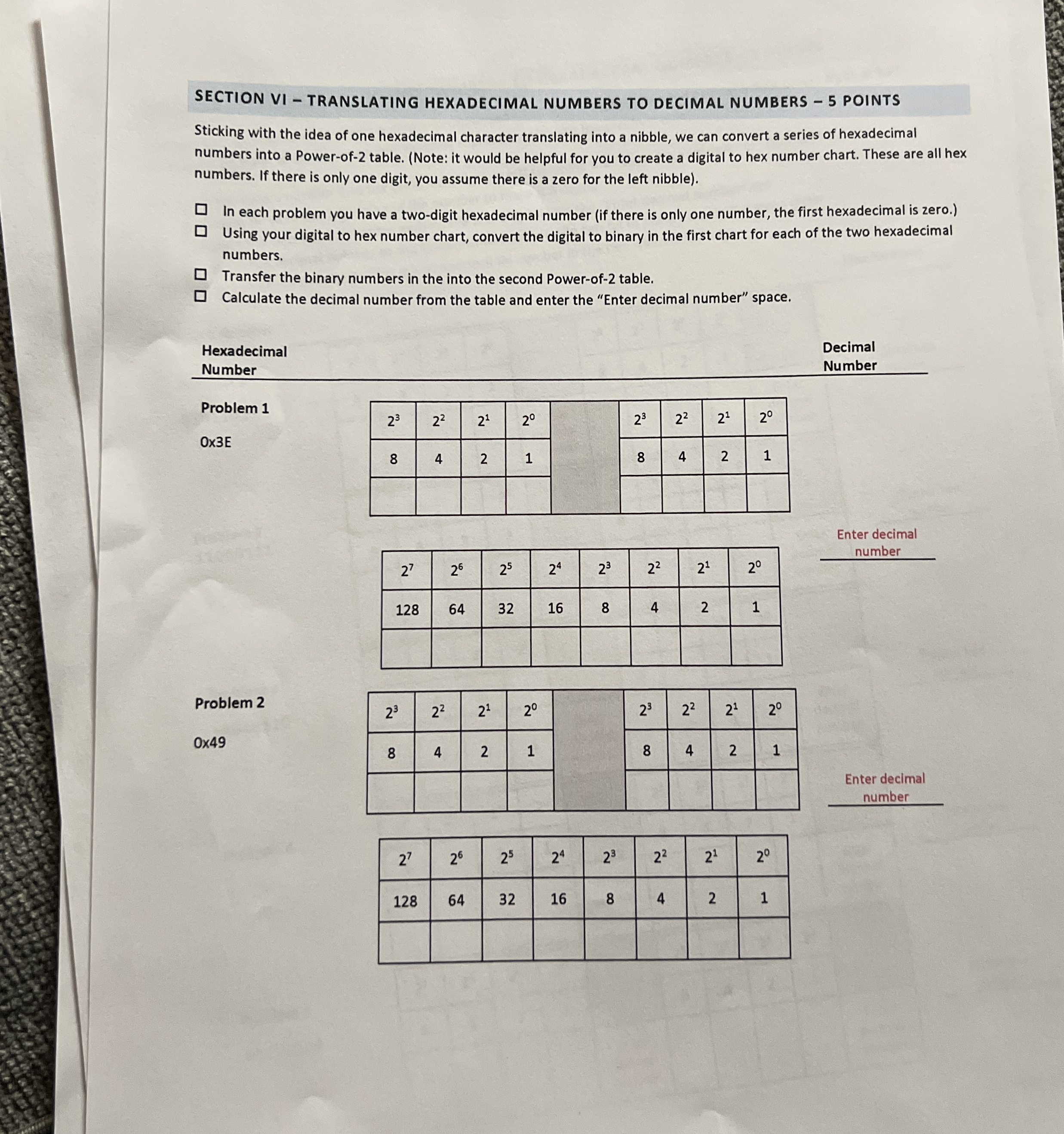
SECTION VI TRANSLATING HEXADECIMAL NUMBERS TO DECIMAL NUMBERS POINTS
Sticking with the idea of one hexadecimal character translating into a nibble, we can convert a series of hexadecimal numbers into a Powerof table. Note: it would be helpful for you to create a digital to hex number chart. These are all hex numbers. If there is only one digit, you assume there is a zero for the left nibble
In each problem you have a twodigit hexadecimal number if there is only one number, the first hexadecimal is zero.
Using your digital to hex number chart, convert the digital to binary in the first chart for each of the two hexadecimal numbers.
Transfer the binary numbers in the into the second Powerof table.
Calculate the decimal number from the table and enter the "Enter decimal number" space.
Hexadecimal
Decimal
Number
Number
Problem
OxE
table
Step by Step Solution
There are 3 Steps involved in it
1 Expert Approved Answer
Step: 1 Unlock

Question Has Been Solved by an Expert!
Get step-by-step solutions from verified subject matter experts
Step: 2 Unlock
Step: 3 Unlock
 Study Help