Question: See the chart below and answer the questions 1-Study the official chart. Based on what you see, analyze what the structure of the organization suggestsas
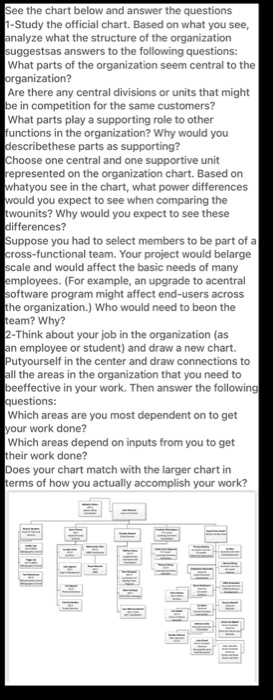
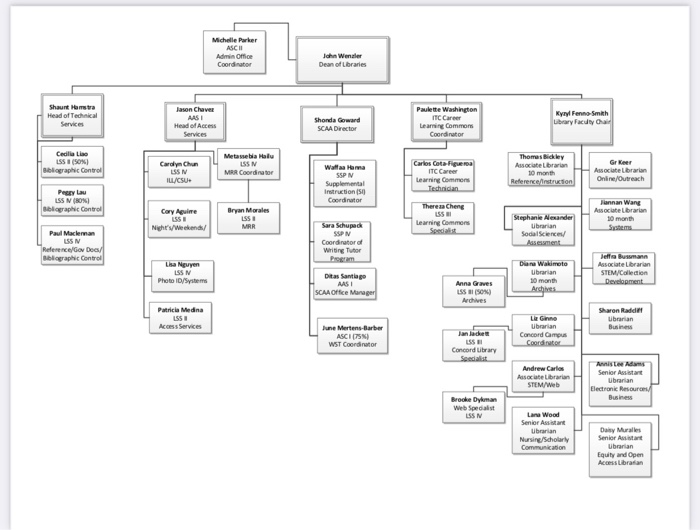
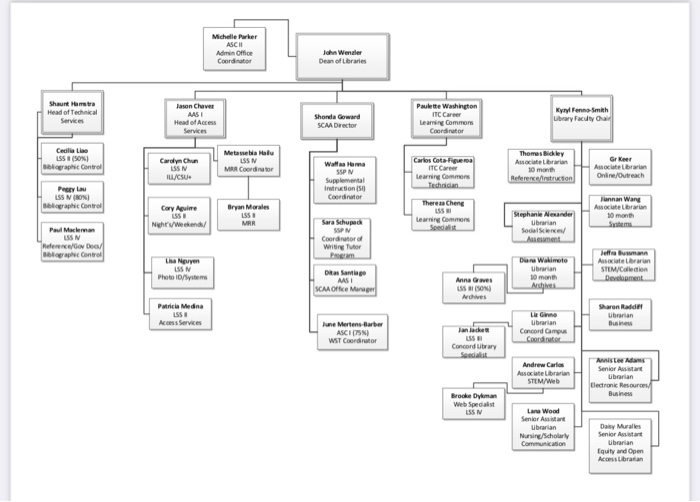
See the chart below and answer the questions 1-Study the official chart. Based on what you see, analyze what the structure of the organization suggestsas answers to the following questions: What parts of the organization seem central to the organization? Are there any central divisions or units that might be in competition for the same customers? What parts play a supporting role to other functions in the organization? Why would you describethese parts as supporting? Choose one central and one supportive unit represented on the organization chart. Based on whatyou see in the chart, what power differences would you expect to see when comparing the twounits? Why would you expect to see these differences? Suppose you had to select members to be part of a cross-functional team. Your project would belarge scale and would affect the basic needs of many employees. (For example, an upgrade to acentral software program might affect end-users across the organization.) Who would need to beon the team? Why? 2-Think about your job in the organization (as an employee or student) and draw a new chart. Putyourself in the center and draw connections to all the areas in the organization that you need to beeffective in your work. Then answer the following questions: Which areas are you most dependent on to get your work done? Which areas depend on inputs from you to get their work done? Does your chart match with the larger chart in terms of how you actually accomplish your work? Michelle Parker ASCHI Admin Office Coordinator John Wenter Dean of Libraries Shaunt Harrastra Head of Technical Services Jason Chavez AASI Head of Access Services Shonda Goward SCAA Director Paulette Washington ITC Career Learning Commons Coordinator Kynyl Fenno-Smith Library Faculty Cadilla Line LSS (SON) Bibliographic Control Carolyn Chun LSS ILL/CSU Metassebila Hole LSSM MRR Coordinator Carlos Cota Figueroa ITC Career Learning Commons Technidan Wall Hora SSPM Supplemental Instruction Coordinator Thomas Bickley Associate Librarian 10 month ReferenceAnstruktion Grkeer Associate Librarian Online/Outreach Pesey Law ISS NON Bibliographic Control Cay guire) Night's/Weekend Bryan Morales LSS # MRR There Cheng 55 Learning Commons Jangan Wang Associate Librarian 10 month Paul Maclean USSM Reference/Gov Dec/ Mbliographic Control Sara Schupack SSPN Coordinator of Writing Tutor Stephanie Alexander Ubrarian Social Sciences Assessment Lisa Nguyen LSS Photo ID/System Jelfa Bussmann Associate Librarian STEM/Collection Dropment Diana Wakimoto Ubrarian 10 month Archives Ditas Santiago AASI SCAA Office Manager Anna Guves LSS (50%) Archives Patricia Medina LSS Access Services Sharon Raddir Ubrarian Business June Mertens-Barber ASCINI WST Coordinator Liz Ginne Ubrarian Concord Campus Coordinator Jan Jacken LSS Concord Ubrary Sedalist Andrew Carlos Associate Librarian STEM/Web Anni Mam Senior Assistant Ubrarian Electronic Resource Business Brooke Dylman Web Specialist LSS Lana Wood Senior Assistant Ubrarian Nursing/Scholarly Communication Daisy Muralles Senior Asia Ubrarian Equity and Open Access Librarian . 2. Study the official chart. Based on what you see, analyze what the structure of the organization suggests as answers to the following questions: What parts of the organization seem central to the organization? Are there any central divisions or units that might be in competition for the same customers? What parts play a supporting role to other functions in the organization? Why would you describe these parts as supporting? Choose one central and one supportive unit represented on the organization chart. Based on what you see in the chart, what power differences would you expect to see when comparing the two units? Why would you expect to see these differences? Suppose you had to select members to be part of a cross-functional team. Your project would be large scale and would affect the basic needs of many employees. (For example, an upgrade to a central software program might affect end-users across the organization.) Who would need to be on the team? Why? 3. Think about your job in the organization (as an employee or student) and draw a new chart. Put yourself in the center and draw connections to all the areas in the organization that you need to be effective in your work. Then answer the following questions: Which areas are you most dependent on to get your work done? Which areas depend on inputs from you to get their work done? Does your chart match with the larger chart in terms of how you actually accomplish your work? . . . 2. Study the official chart. Based on what you see, analyze what the structure of the organization suggests as answers to the following questions: What parts of the organization seem central to the organization? Are there any central divisions or units that might be in competition for the same customers? What parts play a supporting role to other functions in the organization? Why would you describe these parts as supporting? Choose one central and one supportive unit represented on the organization chart. Based on what you see in the chart, what power differences would you expect to see when comparing the two units? Why would you expect to see these differences? Suppose you had to select members to be part of a cross-functional team. Your project would be large scale and would affect the basic needs of many employees. (For example, an upgrade to a central software program might affect end-users across the organization.) Who would need to be on the team? Why? 3. Think about your job in the organization (as an employee or student) and draw a new chart. Put yourself in the center and draw connections to all the areas in the organization that you need to be effective in your work. Then answer the following questions: Which areas are you most dependent on to get your work done? Which areas depend on inputs from you to get their work done? Does your chart match with the larger chart in terms of how you actually accomplish your work? Michelle Parker ASCHI Admin Office Coordinator John Wenzler Dean of Libraries Shaunt Homer Head of Technical Services Jason Chaves AASI Head of Access Services Shorda Goward SCAA Director Paulette Washington ITC Career Learning Commons Coordinator Kyay Fenno-Smith Library Faculty Cecilia Line LSS (SON) Bibliographic Control Carolyn Chun ESS 1L/CSU Metanetia Holu LSSN MR Coordinator Thomas Bickley Associate Librarian 10 month Referereston Grkeer Associate Librarian Online/Outreach Wall Hora SSPN Supplemental Instructions Coordinator Pesey LSS NON Bibliographic Control Carlos Cota Figueroa ITC Career Learning Commons Technidan Theresa Cheng 155 Learning Commons Cory Aquine Night Weekend annan Wang Assoterrian 10 month Bryan Morales LSS MRR is Paul Maclean ISSN Mater/ Dood Blographic Control Sara Schupack SSPN Coordinatore Writer Stephanie Neander Ubrarian Social Science Asset the Nguyen ISSN Photo ID/System Jouwman Associate Librarian STEM/Collection Dement Diana Wakimto Ubrarian 10 month Das Santiago AASI SCAA Office Manager Anna Graves LSSON Archives Patricia Medina Access Services Sharon Radom Ubrarian Business June Mertens-Barber ASCI75 WST Coordinator Ubrarian Concordam Coordinator 155 Concord Library Andrew Carlos Associate Librarian STUM/Web Senior Asta Ubranian Electronic Resource Business Brooke Dyman Web Specialist LSS Lana Wood Senior Ass Ubrarian Nursing/Scholarly Communication Daisy Muralles Senior Asstart Ubrarian Equity and Open Acos Librarian See the chart below and answer the questions 1-Study the official chart. Based on what you see, analyze what the structure of the organization suggestsas answers to the following questions: What parts of the organization seem central to the organization? Are there any central divisions or units that might be in competition for the same customers? What parts play a supporting role to other functions in the organization? Why would you describethese parts as supporting? Choose one central and one supportive unit represented on the organization chart. Based on whatyou see in the chart, what power differences would you expect to see when comparing the twounits? Why would you expect to see these differences? Suppose you had to select members to be part of a cross-functional team. Your project would belarge scale and would affect the basic needs of many employees. (For example, an upgrade to acentral software program might affect end-users across the organization.) Who would need to beon the team? Why? 2-Think about your job in the organization (as an employee or student) and draw a new chart. Putyourself in the center and draw connections to all the areas in the organization that you need to beeffective in your work. Then answer the following questions: Which areas are you most dependent on to get your work done? Which areas depend on inputs from you to get their work done? Does your chart match with the larger chart in terms of how you actually accomplish your work? Michelle Parker ASCHI Admin Office Coordinator John Wenter Dean of Libraries Shaunt Harrastra Head of Technical Services Jason Chavez AASI Head of Access Services Shonda Goward SCAA Director Paulette Washington ITC Career Learning Commons Coordinator Kynyl Fenno-Smith Library Faculty Cadilla Line LSS (SON) Bibliographic Control Carolyn Chun LSS ILL/CSU Metassebila Hole LSSM MRR Coordinator Carlos Cota Figueroa ITC Career Learning Commons Technidan Wall Hora SSPM Supplemental Instruction Coordinator Thomas Bickley Associate Librarian 10 month ReferenceAnstruktion Grkeer Associate Librarian Online/Outreach Pesey Law ISS NON Bibliographic Control Cay guire) Night's/Weekend Bryan Morales LSS # MRR There Cheng 55 Learning Commons Jangan Wang Associate Librarian 10 month Paul Maclean USSM Reference/Gov Dec/ Mbliographic Control Sara Schupack SSPN Coordinator of Writing Tutor Stephanie Alexander Ubrarian Social Sciences Assessment Lisa Nguyen LSS Photo ID/System Jelfa Bussmann Associate Librarian STEM/Collection Dropment Diana Wakimoto Ubrarian 10 month Archives Ditas Santiago AASI SCAA Office Manager Anna Guves LSS (50%) Archives Patricia Medina LSS Access Services Sharon Raddir Ubrarian Business June Mertens-Barber ASCINI WST Coordinator Liz Ginne Ubrarian Concord Campus Coordinator Jan Jacken LSS Concord Ubrary Sedalist Andrew Carlos Associate Librarian STEM/Web Anni Mam Senior Assistant Ubrarian Electronic Resource Business Brooke Dylman Web Specialist LSS Lana Wood Senior Assistant Ubrarian Nursing/Scholarly Communication Daisy Muralles Senior Asia Ubrarian Equity and Open Access Librarian . 2. Study the official chart. Based on what you see, analyze what the structure of the organization suggests as answers to the following questions: What parts of the organization seem central to the organization? Are there any central divisions or units that might be in competition for the same customers? What parts play a supporting role to other functions in the organization? Why would you describe these parts as supporting? Choose one central and one supportive unit represented on the organization chart. Based on what you see in the chart, what power differences would you expect to see when comparing the two units? Why would you expect to see these differences? Suppose you had to select members to be part of a cross-functional team. Your project would be large scale and would affect the basic needs of many employees. (For example, an upgrade to a central software program might affect end-users across the organization.) Who would need to be on the team? Why? 3. Think about your job in the organization (as an employee or student) and draw a new chart. Put yourself in the center and draw connections to all the areas in the organization that you need to be effective in your work. Then answer the following questions: Which areas are you most dependent on to get your work done? Which areas depend on inputs from you to get their work done? Does your chart match with the larger chart in terms of how you actually accomplish your work? . . . 2. Study the official chart. Based on what you see, analyze what the structure of the organization suggests as answers to the following questions: What parts of the organization seem central to the organization? Are there any central divisions or units that might be in competition for the same customers? What parts play a supporting role to other functions in the organization? Why would you describe these parts as supporting? Choose one central and one supportive unit represented on the organization chart. Based on what you see in the chart, what power differences would you expect to see when comparing the two units? Why would you expect to see these differences? Suppose you had to select members to be part of a cross-functional team. Your project would be large scale and would affect the basic needs of many employees. (For example, an upgrade to a central software program might affect end-users across the organization.) Who would need to be on the team? Why? 3. Think about your job in the organization (as an employee or student) and draw a new chart. Put yourself in the center and draw connections to all the areas in the organization that you need to be effective in your work. Then answer the following questions: Which areas are you most dependent on to get your work done? Which areas depend on inputs from you to get their work done? Does your chart match with the larger chart in terms of how you actually accomplish your work? Michelle Parker ASCHI Admin Office Coordinator John Wenzler Dean of Libraries Shaunt Homer Head of Technical Services Jason Chaves AASI Head of Access Services Shorda Goward SCAA Director Paulette Washington ITC Career Learning Commons Coordinator Kyay Fenno-Smith Library Faculty Cecilia Line LSS (SON) Bibliographic Control Carolyn Chun ESS 1L/CSU Metanetia Holu LSSN MR Coordinator Thomas Bickley Associate Librarian 10 month Referereston Grkeer Associate Librarian Online/Outreach Wall Hora SSPN Supplemental Instructions Coordinator Pesey LSS NON Bibliographic Control Carlos Cota Figueroa ITC Career Learning Commons Technidan Theresa Cheng 155 Learning Commons Cory Aquine Night Weekend annan Wang Assoterrian 10 month Bryan Morales LSS MRR is Paul Maclean ISSN Mater/ Dood Blographic Control Sara Schupack SSPN Coordinatore Writer Stephanie Neander Ubrarian Social Science Asset the Nguyen ISSN Photo ID/System Jouwman Associate Librarian STEM/Collection Dement Diana Wakimto Ubrarian 10 month Das Santiago AASI SCAA Office Manager Anna Graves LSSON Archives Patricia Medina Access Services Sharon Radom Ubrarian Business June Mertens-Barber ASCI75 WST Coordinator Ubrarian Concordam Coordinator 155 Concord Library Andrew Carlos Associate Librarian STUM/Web Senior Asta Ubranian Electronic Resource Business Brooke Dyman Web Specialist LSS Lana Wood Senior Ass Ubrarian Nursing/Scholarly Communication Daisy Muralles Senior Asstart Ubrarian Equity and Open Acos Librarian
There are 3 Steps involved in it
Step: 1 Unlock

Step: 2 Unlock
Step: 3 Unlock








 Study Help