







Question: select a topic of immediate practical importance that affects the community. Write a clear statement of purpose and submit the proposal to your instructor. The
select a topic of immediate practical importance that affects the community. Write a clear statement of purpose and submit the proposal to your instructor. The statement of purpose should identify the topic and scope of the proposed paper. The professor will accept or reject the topic using the pass / fail criteria in eConestoga. A F in the grade book indicates the topic must be modified.
Deliverables:
i. Proposal. Statement of purpose submitted in the text box in the course shell. (Pass / Fail)
Phase 1: Preliminary submission
a. Complete an audience/purpose profile (See Figure 2.2 in the textbook or Word template in eConestoga Week 2 content).
b. Develop a tree chart of possible questions (See Figure 7.3 in the textbook).
c. Complete a preliminary project management plan. The example is provided in the week 3 class PowerPoint.
Deliverables:
Submissions must be in MS Word. One file or two. Worth 5% of the overall course grade.
a. Audience/purpose profile - maximum two pages
b. Research questions- maximum two pages
c. Project Management Plan- maximum one page
Phase 2: Collecting and organizing data (Research process)
In this stage, you are expected to perform research on the topic that you have selected. It is always a good practice to start with general reference sources for an overview.
Explain the strategy that you used to perform your research. Evaluate and interpret your findings.
Bullet point format is acceptable.
Questions identified in the phase 1 tree chart should be addressed.
Make a working outline (See Figure 19.5 in the textbook).
Deliverables:
Submissions must be in MS Word. One file or two. Worth 5% of the overall course grade.
a. Research evaluation report along with findings- maximum three pages
b. Working outline- maximum two pages
Phase 3: Final Report
a. Use APA@Conestoga for appropriate format and citations.
b. Proper paraphrasing must be used. Direct copying is not acceptable without quotations.
c. Proofread carefully and add all needed supplements (title page, table of contents, abstract, summary, appendix, glossary). See section 19 of the textbook.
Deliverables:
Submissions must be in MS Word. One file or two. Worth 15% of the overall course grade.
a. Final analytical report- Max 20 pages.
b. Separate submission of updated project management plan indicating which group members focused on which parts of the assignmentless than one page.
All submissions must be in Microsoft Word.
This assignment includes the following stages. topic submission (topic selected: industrial pollution) Collecting data and Organizing the Report Writing the report All submissions must be in Microsoft Word. Instructor Approval / Topic Selection: Each group must select a topic of immediate practical importance that affects the community(industrial pollution, etc). Write a clear statement of purpose and submit the proposal of topic to your instructor. The statement of purpose should identify the topic and scope of the proposed paper. The professor will accept or reject the topic using the pass / fail criteria. If fail the topic must be modified. Deliverables: i. Proposal. Statement of purpose submitted in the text box in the course shell. (Pass / Fail)
need to submit statement of purpose for selected topic. explain topic and the scope of the proposed topic
Preliminary project management plan submission a. Complete an audience/purpose profile (See Figure 2.2 in the textbook or Word template in eConestoga Week 2 content). b. Develop a tree chart of possible questions (See Figure 7.3 in the textbook). c. Complete a preliminary project management plan. The example is provided in the week 3 class PowerPoint. Deliverables: Submissions must be in MS Word. One file or two. Worth 5% of the overall course grade. a. Audience/purpose profile - maximum two pages b. Research questions- maximum two pages c. Project Management Plan- maximum one page
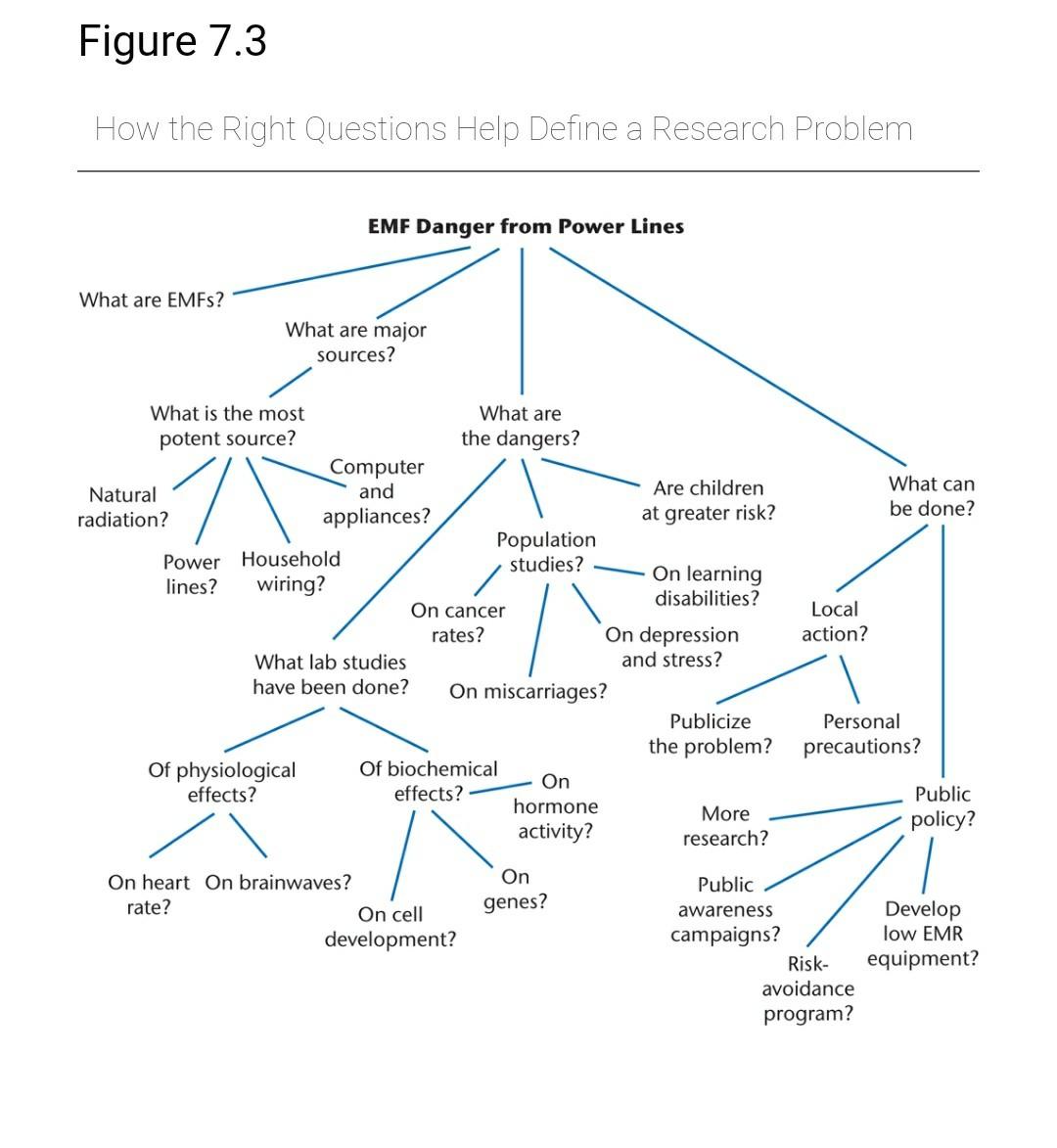
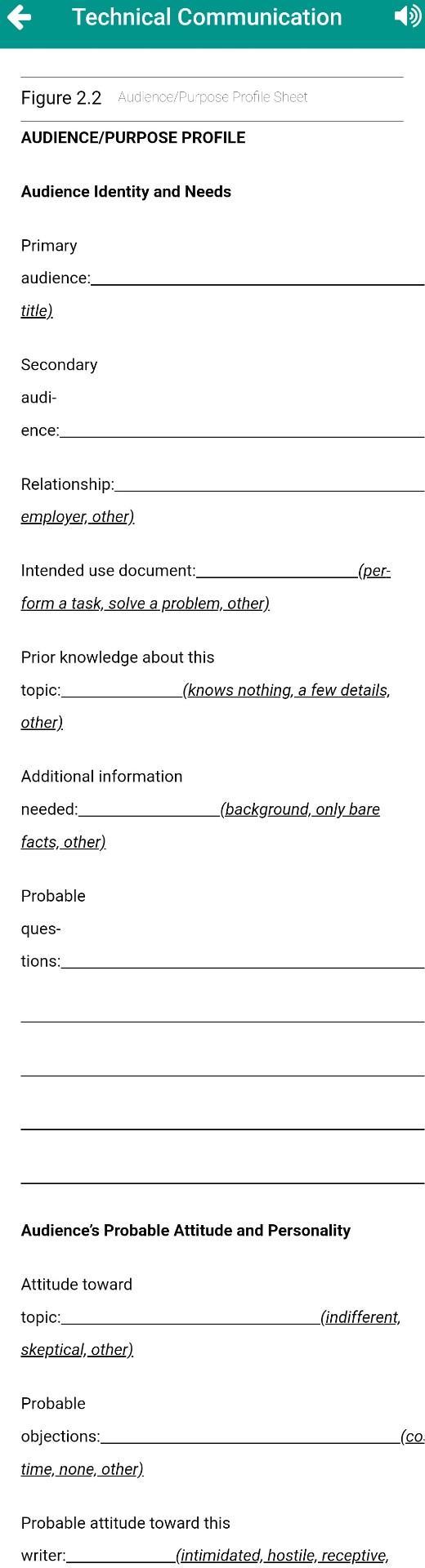
Figure 7.3 How the Right Questions Help Define a Research Problem EMF Danger from Power Lines What are EMFs? What are major sources? What can be done? What is the most What are potent source? the dangers? Computer Natural and Are children radiation? appliances? at greater risk? Population Power Household studies? On learning lines? wiring? disabilities? On cancer rates? On depression What lab studies and stress? have been done? On miscarriages? Publicize the problem? Of physiological Of biochemical On effects? effects? hormone More activity? research? Local action? Personal precautions? Public policy? On heart On brainwaves? rate? On cell development? On genes? Public awareness campaigns? Risk- avoidance program? Develop low EMR equipment? Technical Communication Figure 2.2 Audience/Purpose Profile Sheet AUDIENCE/PURPOSE PROFILE Audience Identity and Needs Primary audience: title) Secondary audi- ence: Relationship: employer, other) Intended use document: (per- form a task, solve a problem, other). Prior knowledge about this topic: (knows nothing, a few details, other) Additional information needed: (background, only bare facts, other) Probable ques- tions: Audience's Probable Attitude and Personality Attitude toward topic: (indifferent, skeptical, other). Probable objections: (co time, none, other) Probable attitude toward this writer: (intimidated, hostile, receptive
Step by Step Solution
There are 3 Steps involved in it

Get step-by-step solutions from verified subject matter experts
 Study Help