







Question: select and answer two questions please do not answer copy paste digital firm management hw 10. In the fall of 2014, Chad Kartchner, senior manager
select and answer two questions
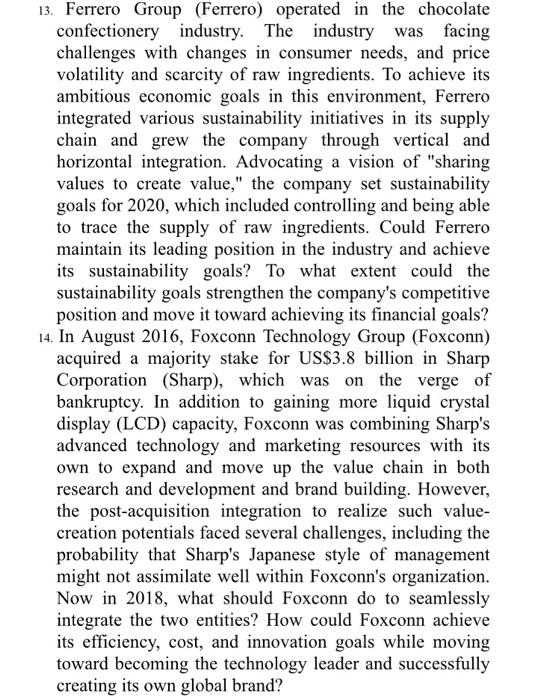
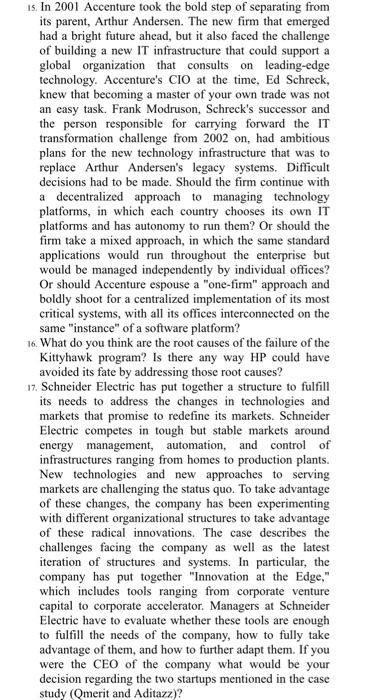
10. In the fall of 2014, Chad Kartchner, senior manager of marketing and product management at Honeywell Aerospace (HA), pondered how technology could transform the way aircraft were maintained. He had heard a lot of buzz about cognitive analytics, an artificial intelligence term referring to the use of computer models and algorithms to simulate human thought through self- learning systems, data mining. pattern recognition, and natural language processing. The sheer volume of parts and the time-sensitive nature of repairs in the aviation industry made it complicated to identify problems and address them quickly. If you were the CEO of the company, how would you to tap into the benefits of cognitive analytic solutions for Honeywell Aerospace and its customers? 11. At the end of 2012, the chief information officer (CIO) at UCB, a global pharmaceutical company based in Brussels, started to implement analytics as a service. Between 2012 and 2016, he put this vision into practice, introducing agile sprints and proving the competence of analytics within the organization, and at the beginning of 2016, he felt the company was ready to upgrade its analytics capability. As he prepared to meet with UCB's chief executive officer in March 2016, the CIO considered how to advise the board as the organization worked to make an impact with analytics and big data against the backdrop of digital turbulence in its strategic environment. What was the best location for analytics roles and responsibilities within the organization? 12. In January 2016, the program director of Royal FloraHolland and a supply chain consultant met to develop a supply chain strategy that would allow Royal FloraHolland to adapt to the changing competitive environment that jeopardized its business model. Royal FloraHolland was the largest floriculture auction organization in the world, selling more than 30 million flowers and plants daily. Located in the Netherlands, Royal FloraHolland was a co-operative owned by 4,500 growers. A century-long tradition, where buyers purchased flowers and plants through the Dutch flower auction clock, was being threatened. Pressures facing Royal FloraHolland included emerging global competition, industry consolidation, and customers bypassing the auction process to buy directly from the growers. Discuss the opportunities and challenges that lay ahead for the organization. 13. Ferrero Group (Ferrero) operated in the chocolate confectionery industry. The industry . was facing challenges with changes in consumer needs, and price volatility and scarcity of raw ingredients. To achieve its ambitious economic goals in this environment, Ferrero integrated various sustainability initiatives in its supply chain and grew the company through vertical and horizontal integration. Advocating a vision of "sharing values to create value," the company set sustainability goals for 2020, which included controlling and being able to trace the supply of raw ingredients. Could Ferrero maintain its leading position in the industry and achieve its sustainability goals? To what extent could the sustainability goals strengthen the company's competitive position and move it toward achieving its financial goals? 14. In August 2016, Foxconn Technology Group (Foxconn) acquired a majority stake for US$3.8 billion in Sharp Corporation (Sharp), which was on the verge of bankruptcy. In addition to gaining more liquid crystal display (LCD) capacity, Foxconn was combining Sharp's advanced technology and marketing resources with its own to expand and move up the value chain in both research and development and brand building. However, the post-acquisition integration to realize such value- creation potentials faced several challenges, including the probability that Sharp's Japanese style of management might not assimilate well within Foxconn's organization. Now in 2018, what should Foxconn do to seamlessly integrate the two entities? How could Foxconn achieve its efficiency, cost, and innovation goals while moving toward becoming the technology leader and successfully creating its own global brand? is. In 2001 Accenture took the bold step of separating from its parent, Arthur Andersen. The new firm that emerged had a bright future ahead, but it also faced the challenge of building a new IT infrastructure that could support a global organization that consults on leading-edge technology. Accenture's CIO at the time. Ed Schreck, knew that becoming a master of your own trade was not an easy task. Frank Modruson, Schreck's successor and the person responsible for carrying forward the IT transformation challenge from 2002 on, had ambitious plans for the new technology infrastructure that was to replace Arthur Andersen's legacy systems. Difficult decisions had to be made. Should the firm continue with a decentralized approach to managing technology platforms, in which each country chooses its own IT platforms and has autonomy to run them? Or should the firm take a mixed approach, in which the same standard applications would run throughout the enterprise but would be managed independently by individual offices? Or should Accenture espouse a "one-firm" approach and boldly shoot for a centralized implementation of its most critical systems, with all its offices interconnected on the same "instance of a software platform? 16. What do you think are the root causes of the failure of the Kittyhawk program? Is there any way HP could have avoided its fate by addressing those root causes? 17. Schneider Electric has put together a structure to fulfill its needs to address the changes in technologies and markets that promise to redefine its markets. Schneider Electric competes in tough but stable markets around energy management, automation, and control of infrastructures ranging from homes to production plants. New technologies and new approaches to serving markets are challenging the status quo. To take advantage of these changes, the company has been experimenting with different organizational structures to take advantage of these radical innovations. The case describes the challenges facing the company as well as the latest iteration of structures and systems. In particular, the company has put together "Innovation at the Edge," which includes tools ranging from corporate venture capital to corporate accelerator. Managers at Schneider Electric have to evaluate whether these tools are enough to fulfill the needs of the company, how to fully take advantage of them, and how to further adapt them. If you were the CEO of the company what would be your decision regarding the two startups mentioned in the case study (Omerit and Aditazz) please do not answer copy paste
digital firm management hw 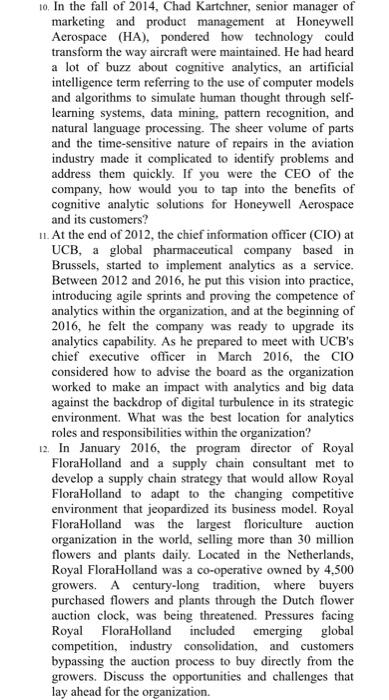
Step by Step Solution
There are 3 Steps involved in it
1 Expert Approved Answer
Step: 1 Unlock

Question Has Been Solved by an Expert!
Get step-by-step solutions from verified subject matter experts
Step: 2 Unlock
Step: 3 Unlock
 Study Help