







Question: Select the experiments that use a randomized comparative design. Environmental scientists are concerned with the effects of nitrogen on the drinking water supply. Hundreds of
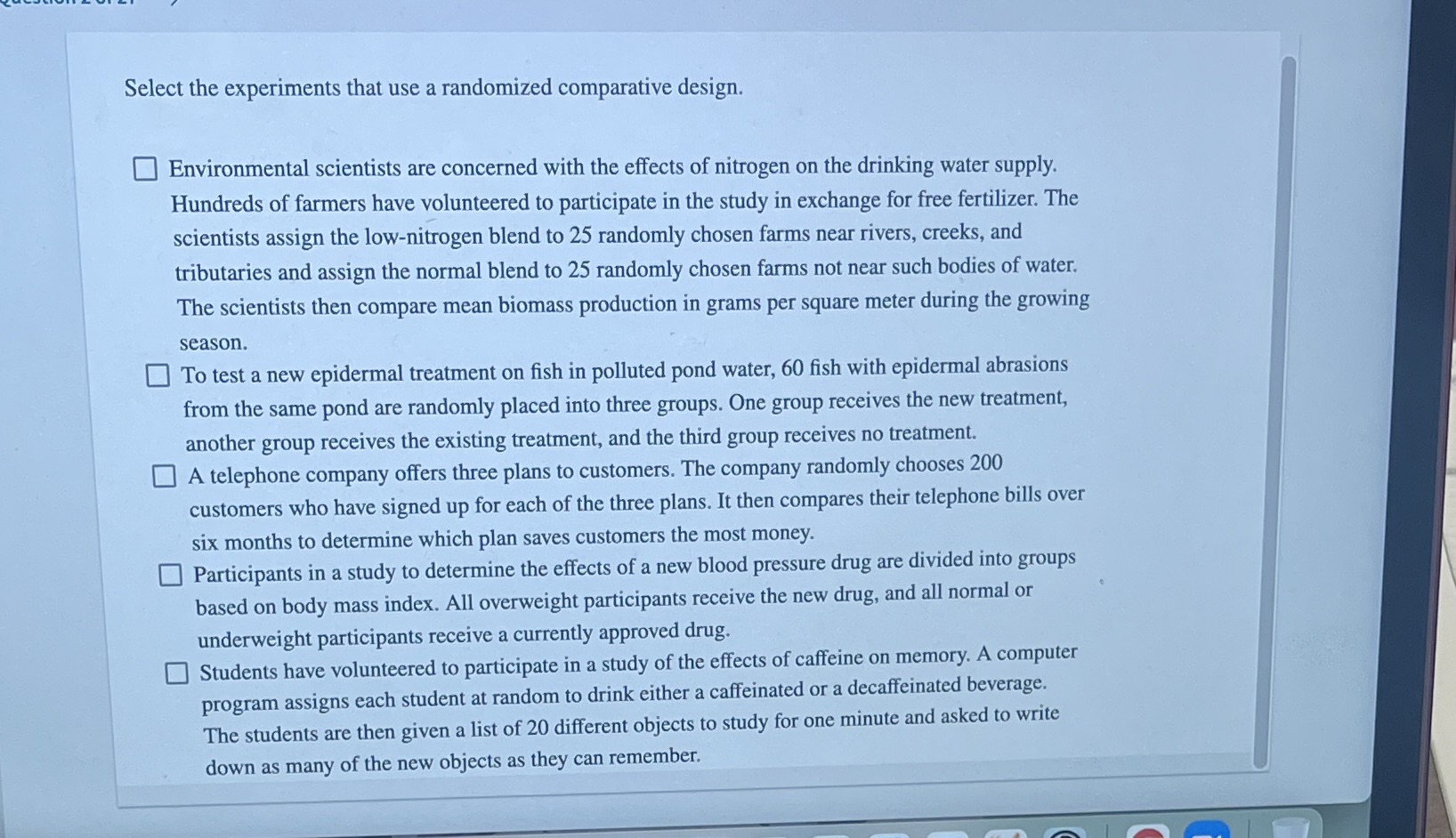
Select the experiments that use a randomized comparative design. Environmental scientists are concerned with the effects of nitrogen on the drinking water supply. Hundreds of farmers have volunteered to participate in the study in exchange for free fertilizer. The scientists assign the low-nitrogen blend to 25 randomly chosen farms near rivers, creeks, and tributaries and assign the normal blend to 25 randomly chosen farms not near such bodies of water. The scientists then compare mean biomass production in grams per square meter during the growing season. To test a new epidermal treatment on fish in polluted pond water, 60 fish with epidermal abrasions from the same pond are randomly placed into three groups. One group receives the new treatment, another group receives the existing treatment, and the third group receives no treatment. A telephone company offers three plans to customers. The company randomly chooses 200 customers who have signed up for each of the three plans. It then compares their telephone bills over six months to determine which plan saves customers the most money. Participants in a study to determine the effects of a new blood pressure drug are divided into groups based on body mass index. All overweight participants receive the new drug, and all normal or underweight participants receive a currently approved drug. Students have volunteered to participate in a study of the effects of caffeine on memory. A computer program assigns each student at random to drink either a caffeinated or a decaffeinated beverage. The students are then given a list of 20 different objects to study for one minute and asked to write down as many of the new objects as they can remember
Step by Step Solution
There are 3 Steps involved in it

Get step-by-step solutions from verified subject matter experts
 Study Help