







Question: Send me an answer asap within 1 hour GAP: Bridging the Gaps in its Offerings Gap Inc., headquartered at San Francisco Bay Area, is a
Send me an answer asap within 1 hour
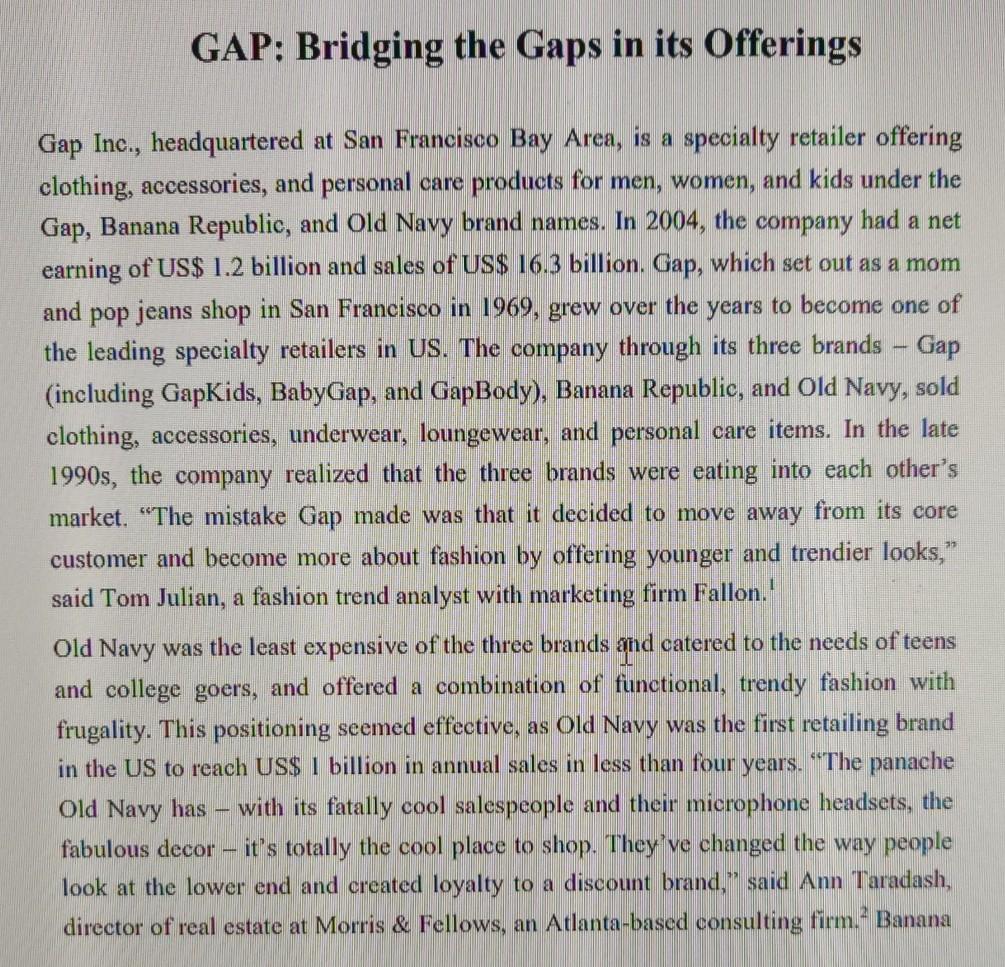
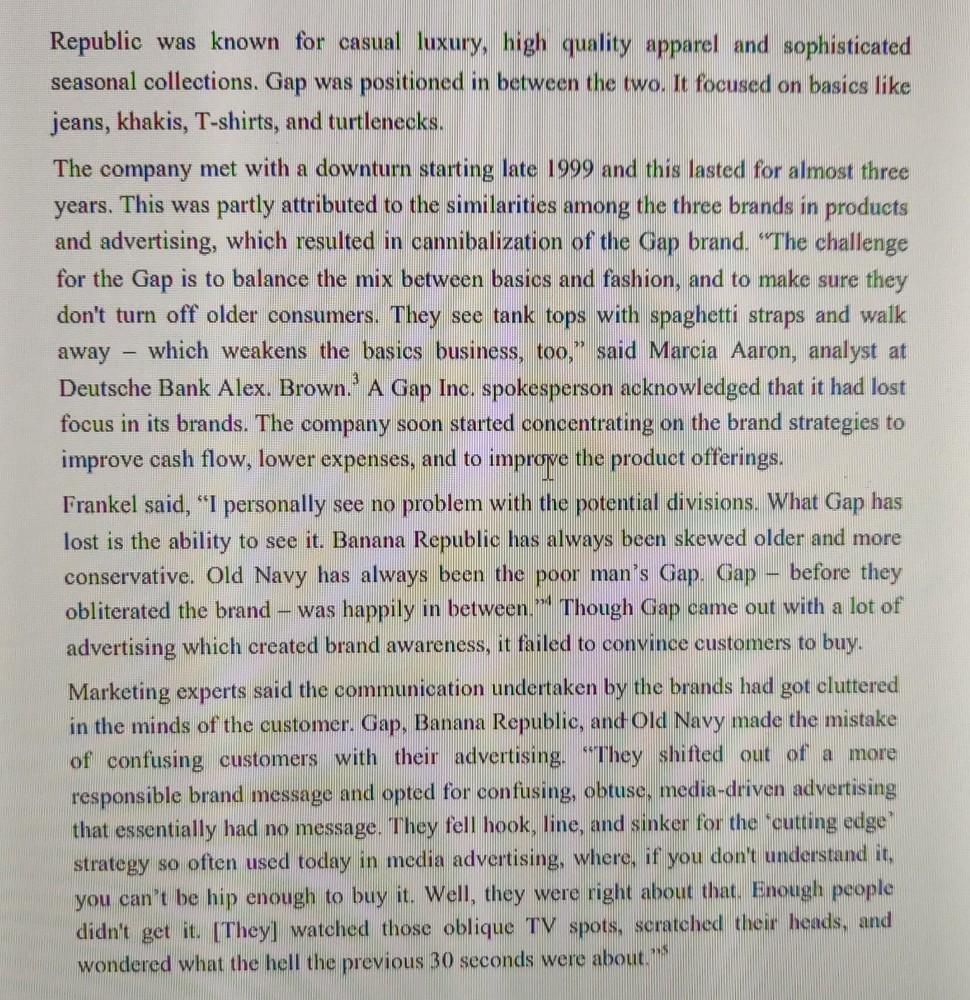
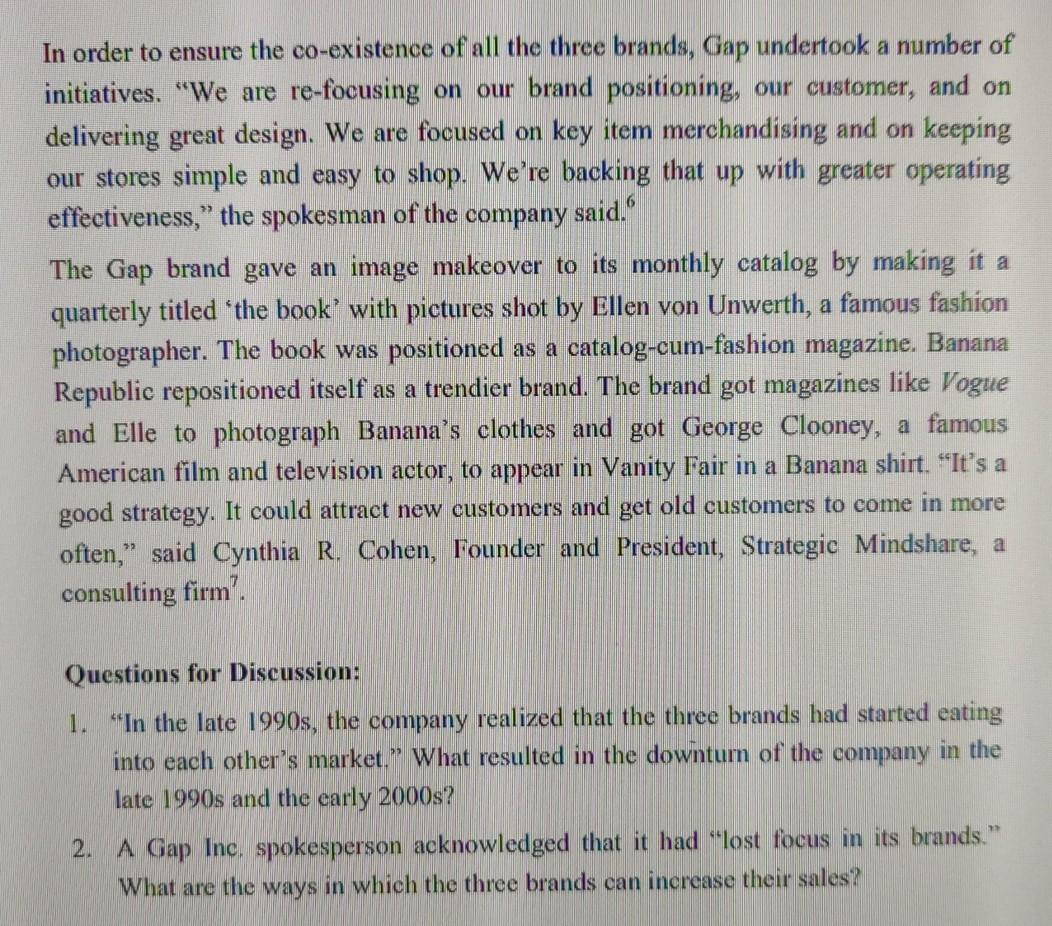
GAP: Bridging the Gaps in its Offerings Gap Inc., headquartered at San Francisco Bay Area, is a specialty retailer offering clothing, accessories, and personal care products for men, women, and kids under the Gap, Banana Republic, and Old Navy brand names. In 2004, the company had a net earning of US$ 1.2 billion and sales of US$ 16.3 billion. Gap, which set out as a mom and pop jeans shop in San Francisco in 1969, grew over the years to become one of the leading specialty retailers in US. The company through its three brands Gap (including GapKids, BabyGap, and GapBody), Banana Republic, and Old Navy, sold clothing, accessories, underwear, loungewear, and personal care items. In the late 1990s, the company realized that the three brands were eating into each other's market. "The mistake Gap made was that it decided to move away from its core customer and become more about fashion by offering younger and trendier looks," said Tom Julian, a fashion trend analyst with marketing firm Fallon.' Old Navy was the least expensive of the three brands and catered to the needs of teens and college goers, and offered a combination of functional, trendy fashion with frugality. This positioning seemed effective, as Old Navy was the first retailing brand in the US to reach US$ 1 billion in annual sales in less than four years. "The panache Old Navy has with its fatally cool salespeople and their microphone headsets, the fabulous decor it's totally the cool place to shop. They've changed the way people look at the lower end and created loyalty to a discount brand, said Ann Taradash, director of real estate at Morris & Fellows, an Atlanta-based consulting firm. Banana Republic was known for casual luxury, high quality apparel and sophisticated seasonal collections. Gap was positioned in between the two. It focused on basics like jeans, khakis, T-shirts, and turtlenecks. The company met with a downturn starting late 1999 and this lasted for almost three years. This was partly attributed to the similarities among the three brands in products and advertising, which resulted in cannibalization of the Gap brand. "The challenge for the Gap is to balance the mix between basics and fashion, and to make sure they don't turn off older consumers. They see tank tops with spaghetti straps and walk away - which weakens the basics business, too, said Marcia Aaron, analyst at Deutsche Bank Alex. Brown.' A Gap Inc. spokesperson acknowledged that it had lost focus in its brands. The company soon started concentrating on the brand strategies to improve cash flow, lower expenses, and to improve the product offerings. Frankel said, I personally see no problem with the potential divisions. What Gap has lost is the ability to see it. Banana Republic has always been skewed older and more conservative. Old Navy has always been the poor man's Gap. Gap - before they obliterated the brand - was happily in between. Though Gap came out with a lot of advertising which created brand awareness, it failed to convince customers to buy. Marketing experts said the communication undertaken by the brands had got cluttered in the minds of the customer. Gap, Banana Republic, and Old Navy made the mistake of confusing customers with their advertising. "They shifted out of a more responsible brand message and opted for confusing, obtuse, media-driven advertising that essentially had no message. They fell hook, line, and sinker for the 'cutting edge strategy so often used today in media advertising, where, if you don't understand it, you can't be hip enough to buy it. Well, they were right about that. Enough people didn't get it. Theyl watched those oblique TV spots, scratched their heads, and wondered what the hell the previous 30 seconds were about In order to ensure the co-existence of all the three brands, Gap undertook a number of initiatives. "We are re-focusing on our brand positioning, our customer, and on delivering great design. We are focused on key item merchandising and on keeping our stores simple and easy to shop. We're backing that up with greater operating effectiveness," the spokesman of the company said. The Gap brand gave an image makeover to its monthly catalog by making it a quarterly titled 'the book' with pictures shot by Ellen von Unwerth, a famous fashion photographer. The book was positioned as a catalog-cum-fashion magazine. Banana Republic repositioned itself as a trendier brand. The brand got magazines like Vogue and Elle to photograph Banana's clothes and got George Clooney, a famous American film and television actor, to appear in Vanity Fair in a Banana hirt. It's a good strategy. It could attract new customers and get old customers to come in more often," said Cynthia R. Cohen, Founder and President, Strategic Mindshare, a consulting firm. Questions for Discussion: 1. "In the late 1990s, the company realized that the three brands had started eating into each other's market. What resulted in the downtum of the company in the late 1990s and the early 2000s? 2. A Gap Inc. spokesperson acknowledged that it had lost focus in its brands." What are the ways in which the three brands can increase their salesStep by Step Solution
There are 3 Steps involved in it
1 Expert Approved Answer
Step: 1 Unlock

Question Has Been Solved by an Expert!
Get step-by-step solutions from verified subject matter experts
Step: 2 Unlock
Step: 3 Unlock
 Study Help