







Question: SESSEN (c.) In the code, inside main!), show where the return addresses are. In other words, point to where the return address is for each
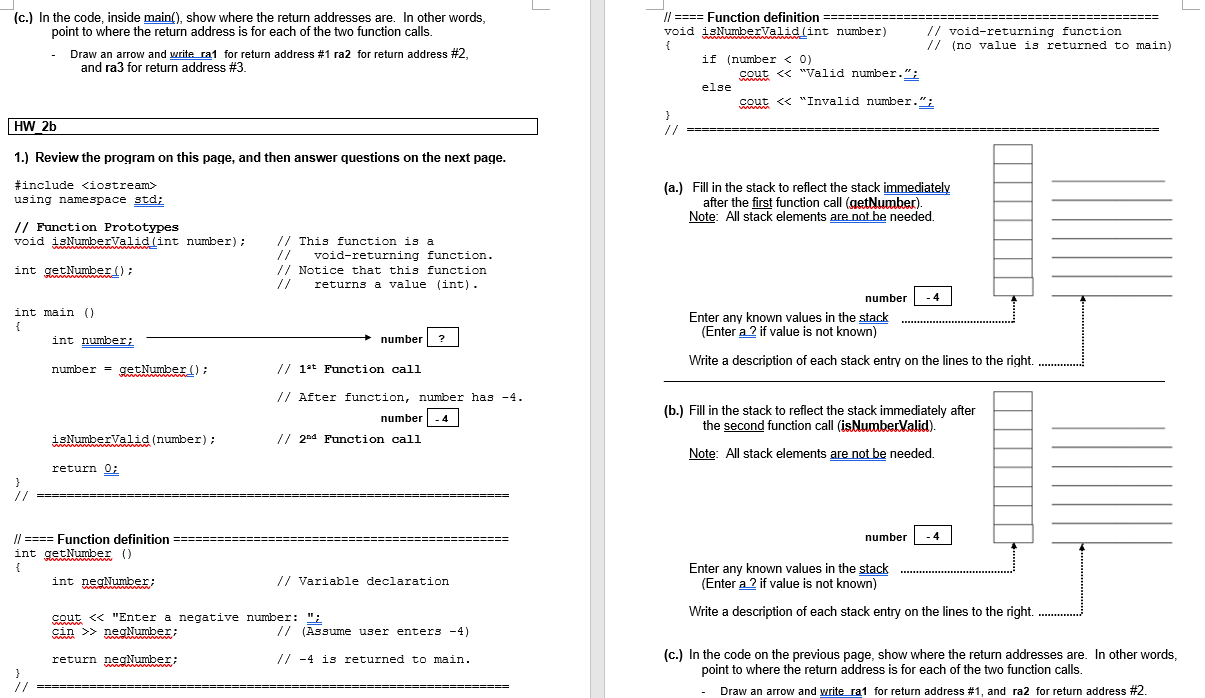
SESSEN (c.) In the code, inside main!), show where the return addresses are. In other words, point to where the return address is for each of the two function calls. Draw an arrow and write ra1 for return address #1 ra2 for return address #2, and ra3 for return address #3 // ==== Function definition ========= void igNumberValidint number) // void-returning function { // (no value is returned to main) if (number using namespace std; // Function Prototypes void isNumberValid (int number); // This function is a // void-returning function. int getNumber(); // Notice that this function // returns a value (int). (a.) Fill in the stack to reflect the stack immediately after the first function call (getNumber). Note: All stack elements are not be needed. number int main() { int number; Enter any known values in the stack (Enter a 2 if value is not known) number number = getNumber(); Write a description of each stack entry on the lines to the right.......... // 1st Function call // After function, number has -4. number // 20d Function call (b.) Fill in the stack to reflect the stack immediately after the second function call (isNumber Valid). isNumberValid (number); Note: All stack elements are not be needed. return 0; // number -4 // ==== Function definition int get Number () { int negNumber; // Variable declaration Enter any known values in the stack (Enter a 2 if value is not known) Write a description of each stack entry on the lines to the right. cout > negNumber; // (Assume user enters -4) return negNumber; // -4 is returned to main. (c.) In the code on the previous page, show where the return addresses are. In other words, point to where the return address is for each of the two function calls. Draw an arrow and write rat for return address #1, and ra2 for return address #2. SESSEN (c.) In the code, inside main!), show where the return addresses are. In other words, point to where the return address is for each of the two function calls. Draw an arrow and write ra1 for return address #1 ra2 for return address #2, and ra3 for return address #3 // ==== Function definition ========= void igNumberValidint number) // void-returning function { // (no value is returned to main) if (number using namespace std; // Function Prototypes void isNumberValid (int number); // This function is a // void-returning function. int getNumber(); // Notice that this function // returns a value (int). (a.) Fill in the stack to reflect the stack immediately after the first function call (getNumber). Note: All stack elements are not be needed. number int main() { int number; Enter any known values in the stack (Enter a 2 if value is not known) number number = getNumber(); Write a description of each stack entry on the lines to the right.......... // 1st Function call // After function, number has -4. number // 20d Function call (b.) Fill in the stack to reflect the stack immediately after the second function call (isNumber Valid). isNumberValid (number); Note: All stack elements are not be needed. return 0; // number -4 // ==== Function definition int get Number () { int negNumber; // Variable declaration Enter any known values in the stack (Enter a 2 if value is not known) Write a description of each stack entry on the lines to the right. cout > negNumber; // (Assume user enters -4) return negNumber; // -4 is returned to main. (c.) In the code on the previous page, show where the return addresses are. In other words, point to where the return address is for each of the two function calls. Draw an arrow and write rat for return address #1, and ra2 for return address #2
Step by Step Solution
There are 3 Steps involved in it

Get step-by-step solutions from verified subject matter experts
 Study Help