Question: -Should they geographically expand? if so, where and why? -Should they expand their services? If so, how and why? -Should they target new customers? If
-Should they geographically expand? if so, where and why?
-Should they expand their services? If so, how and why?
-Should they target new customers? If so, who and how?
-What are the implications of these choices for Q's business model and staffing model?
-What about cost and investment implications?
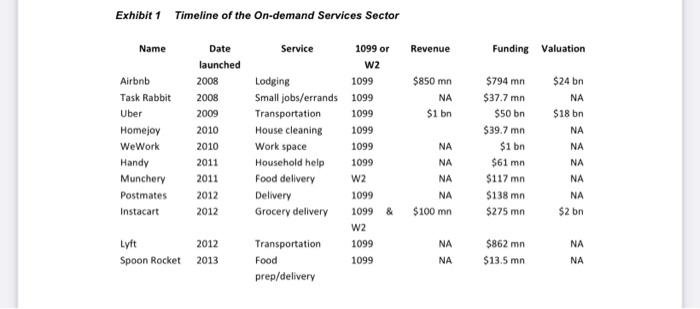
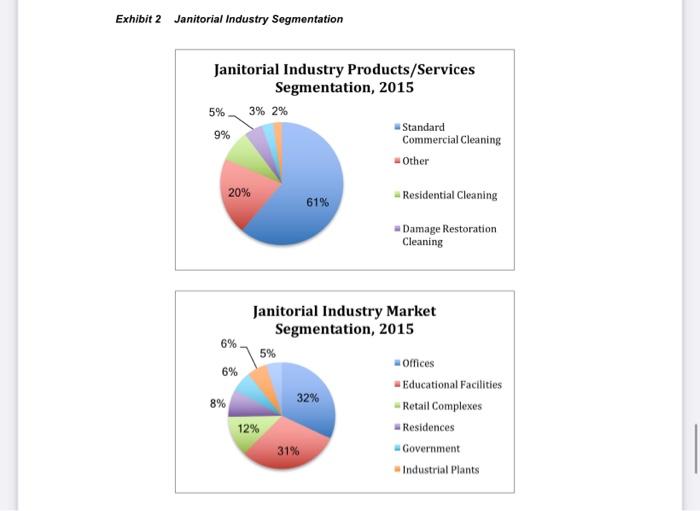
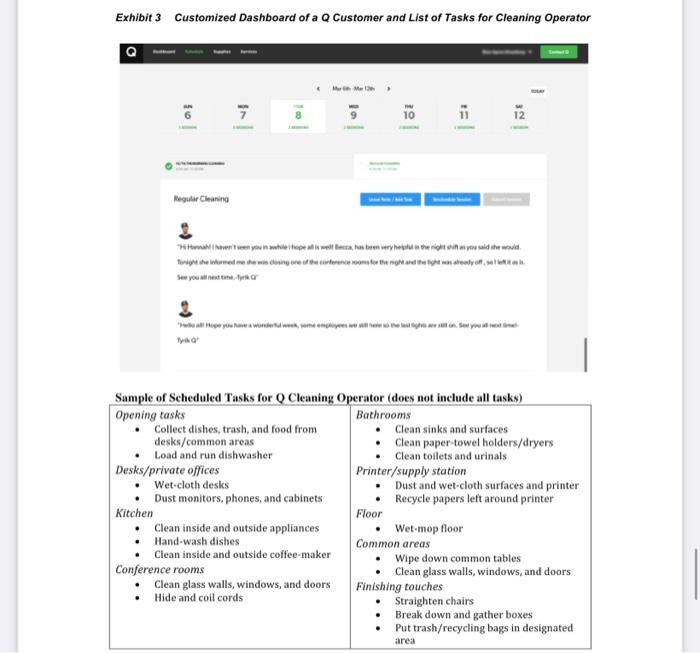
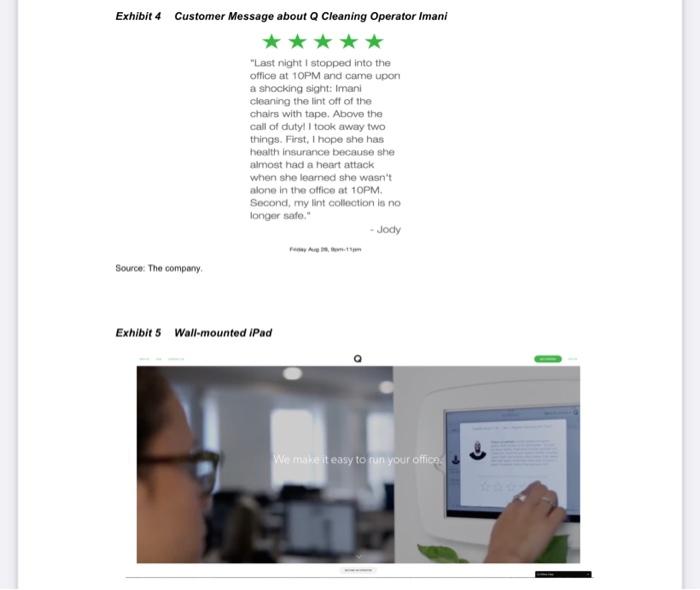
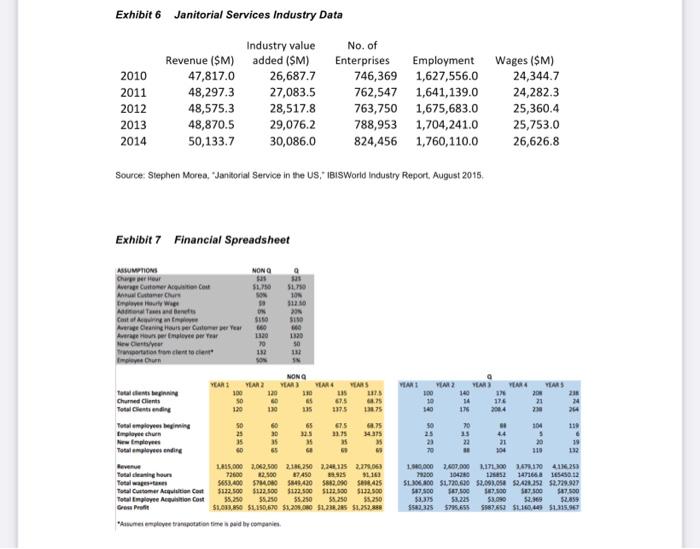
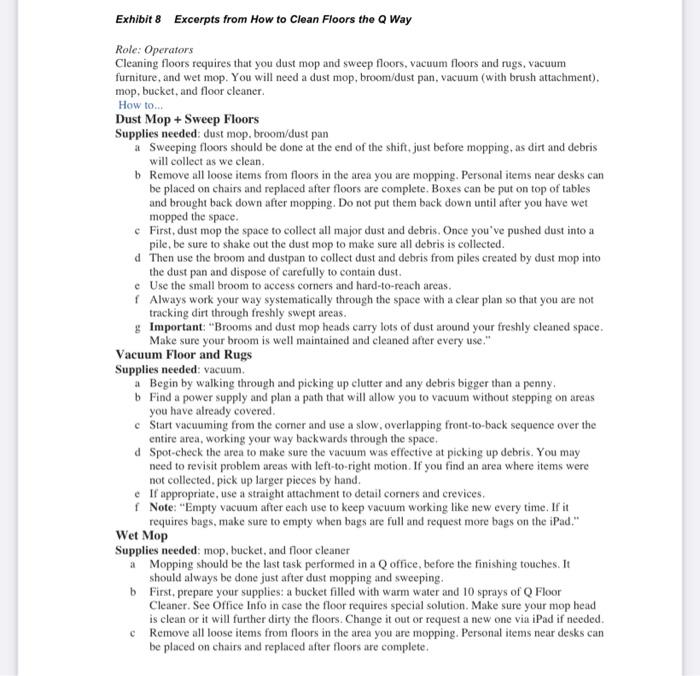
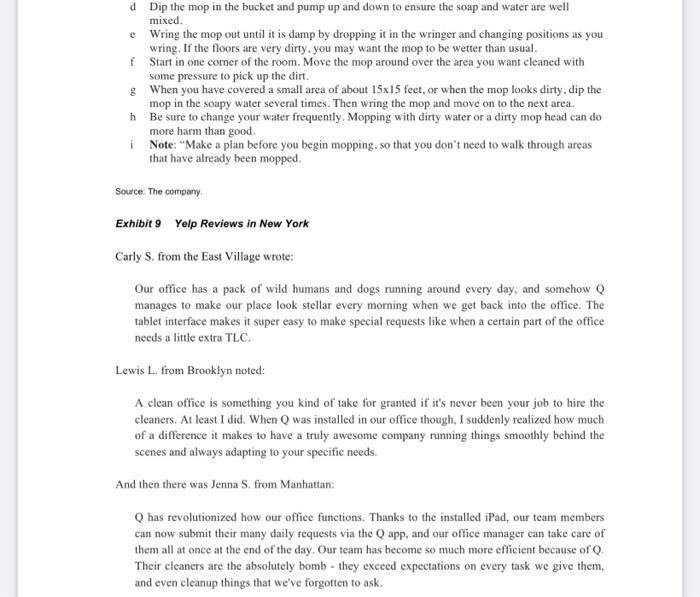
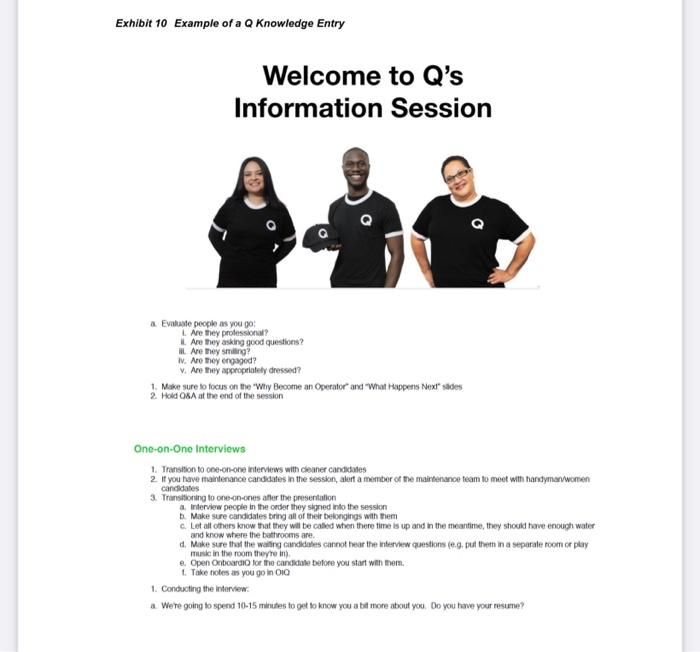
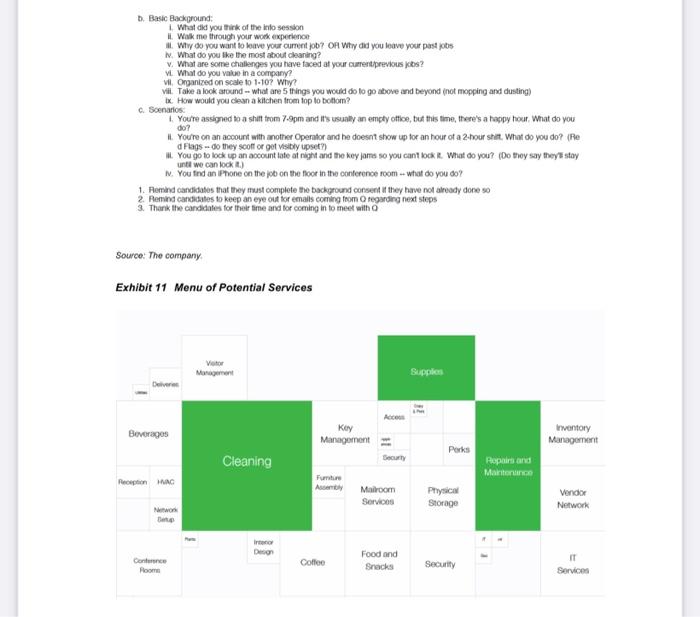
Managed by Q Zeynep Ton and Cate Reavis The original thesis is, if our people are so amazing and our technology is so amazing, eventually office managers will turn to us for everything. So we'll effectively aggregate the demand for all of the goods, services, and technology that's required to run the office. And that's the bet we're making - Dan Teran, cofounder and CEO Managed by Q I've never worked for a company like this. You're going to have to kick me out of because I'm never leaving. On my day off. I wear my Q jacket. -Allen Erickson, cleaning operator, Managed by Q It was the end of July 2015 and Dan Teran had reason to be pleased with his 15-month-old on demand office cleaning and maintenance company. Managed by Q ---known affectionately just as "Q." The startup was named after Q, the R&D wizard in the James Bond movies who made sure Bond was fitted out with whatever gadgets he might need, and it was the firm's ultimate goal to provide its customers not only with clean floors and windows but with whatever they might need in managing their physical space. Q had recently raised $15 million in a Series A round and had expanded from New York to Chicago and San Francisco, with high customer satisfaction in all three markets. As CEO, Teran had no doubt that he wanted to keep growing--the question was how. Should it focus on acquiring more customers in its existing markets and increasing revenue from each customer by offering more services? Or should it keep expanding into new markets? MANAGED BY Q Zeynep Ton and Cate Reavis As an on-demand company. Q had entered a space bursting with startups and with venture capital firms (VCs) eager to invest in them since the launch of the on-demand car service Uber in 2009. VC investment in on-demand startups topped S4.12 billion in 2014, having increased 514% over the previous year.' (See Exhibit 1 for funding and valuation information for select on-demand service providers.) Most on-demand companies used independent contractors (called "1099ers" in reference to tax form 1099, which contractors had to file annually) and so had Q, at first. But it soon chose a different path. Now Q hired its employees, paid and trained them more than the industry standard, offered them stable schedules, and provided opportunities for success and growth. Teran did not want to compromise that way of doing business as Q grew. Company Background Q's founders, Dan Teran and Saman Rahmanian, met at Prehype, a venture development firm, and found that they shared a fascination with design and how it could be used to create great experiences. Teran had worked in many startups and as a community organizer in Baltimore, Maryland and Rahmanian had been successful in advertising. The two also shared their dissatisfaction with the maintenance services in their housing co-ops. Rahmanian was on the board of his co-op and in charge of dealing with the maintenance company. "The service was terrible," he explained. There was no transparency. There was a clear contract of the tasks that were supposed to be done on a daily basis but you couldn't ensure or enforce that the cleaner vacuumed the hallways and did everything that he was supposed to do on a day-to-day basis. Communication was also tough The maintenance company was still operating in an analogue world. I had to leave voicemails. 1 had to fax documents to get work approved. It dawned on Teran and Rahmanian that, merging their interests in design and technology, they could develop a fully transparent way to manage a physical space, including cleaning and maintenance. They envisioned a wall-mounted iPad with a customized dashboard that would list all the tasks to be done and show customers when each task had been taken care of. The opportunity was big. The $51 billion janitorial service industry was highly fragmented. Of the nearly 860,000 janitorial services in the United States, employing 1.8 million people, 96% had fewer than five employees. Office-cleaning services accounted for 32% of the industry's revenue (see Exhibit 2). The top three companies took in 10% of the revenue. The biggest player, ABM Industries, served commercial buildings and residential complexes and offered janitorial services, parking, facility solutions, building solutions, security, and other services, Janitorial services accounted for more than 50% of its $2.7 billion revenue. To improve service, it had recently introduced a digital quality-assurance program that gave customers access to cleaning schedules and work-order status. Two other well-known players were Jani-King International, a commercial cleaning company with more than 10,000 U.S. franchises and revenue of $662.8 million, and Service MasterClean, with more than 4,000 franchises and revenue of $3299 million Teran and Rahmanian initially approached co-op boards with their startup idea but quickly found office managers a better target customer. "Office managers have decision-making authority." Teran pointed out. "They want less confusion, fewer logistics and vendors to worry about ... We pitched our idea to 25 or 30 office managers and 15 or 20 of them signed up on the spot for service before we had built anything. That was convincing enough for us to build the software and the supply back- end." Q's Service Offering In April 2014. Managed by Q launched in New York, with Teran as CEO and Rahmanian as Chief Product Officer. They conceived Q as an office cleaning company that also provided maintenance and office-supplies services, but focused their sales pitch on cleaning. The plan was that once customers got a taste of Q's high-quality cleaning service, they would come back to Q for its other services. Target customers were companies that occupied 6,000-20.000 square feet of space in Class B and C commercial buildings. Such companies typically had 50-150 employees in each location. Q's services included cleaning offices, conference rooms, workstations, and kitchens, detailing floors: and taking out the trash and recycling. The company charged S25/hour per cleaner, with a two-hour minimum. Maintenance services ranged from relatively simple tasks like changing light bulbs, assembling furniture, and packing and unpacking boxes to jobs like painting, carpentry, and light plumbing and electrical work. Q charged from $40 to $80/hour, depending on the complexity of the job, with a two-hour minimum. For its office supplies service, automatically refilled a company's supply of trash bags, paper towels, soap, copy paper, pens and pencils, and printer cartridges An office manager received a monthly invoice from that could include four line items cleaning (based on number of hours), maintenance work, cleaning supplies (a monthly subscription to cover the cost of supplies used), and office supplies. Technology was a key part of Q's offering, as the firm sought to differentiate itself by providing fully transparent services. Qgave customers an iPad with a customized dashboard which listed the tasks requested by the office manager (see Exhibit 3). Some tasks might come with photos showing, for a example, exactly where to put washed dishes. The office manager could also access the dashboard from his or her own computer. Either way, he or she could monitor when the cleaners came and what they did, adjust the cleaning tasks, and send messages and feedback to the cleaner or to the account manager, known as the QM (see Exhibit 4). Through the iPad (Exhibit 5). office managers could request maintenance services if, for instance, they needed a desk assembled, furniture moved, or shelves mounted. If a customer needed a job done that fell outside the scope of maintenance--say, installing a new security system - would refer it to a vendor. Customers could also use the iPad to order office supplies such as printer cartridges, pens, and paper and could add items to the basic list that provided. For the cleaners, Q developed an app that provided a customized task list to check off during each cleaning as well as the cleaner's schedule and maps to all locations. The app enabled cleaners to communicate directly both with and with the customer's office manager if any problems or questions came up during a job. Evolution of Q's Employment Model When started, the contractor model was popular among on-demand startups offering cleaning and maintenance services, Handy, for example, provided cleaning, plumbing, handyman, and other household services in 28 cities and enlisted about 10,000 independent contractors. Homejoy a cleaning service, also used independent contractors, but closed in July 2015 due to lawsuits in which cleaners claimed that they were being misclassified as independent contractors At first, the contractor model seemed the only way to run an on-demand commercial cleaning and maintenance company. Competition was based largely on price and at 5.9% of sales, profit margins were low (see Exhibit 6). Labor was the janitorial industry's largest operating expense -54% of revenue in 2015. Companies tended to invest little in their employees, the average annual wage was just over $15,000 and turnover was high Q initially subcontracted cleaners from commercial cleaning companies. After some basic training on cleaning protocol and how to use the iPad to check in and out of jobs the cleaners were given their customer accounts and their Q-branded uniform and away they went. But three months into the launch, the founders determined that the subcontractor model would not work long term. Subcontractors varied too much in how well they did their jobs. "We realized we hadn't quite accounted for something." Teran noted. "No amount of beautifully designed software could make up for bad office cleaning, or even worse, employees acting unprofessionally while donning our logo.*** a Teran wanted more control over quality. "We wanted a company that people remembered for how well it did its job," he explained. "We wanted people to not just clean a desk. We wanted them to arrange everything in straight angles. We wanted to create a lot of positive touch points with our customers. We also wanted to be able to hire people committed to the long-term success of the company and not just looking to pick up a paycheck." The subcontractor model also defied the founders' vision of building an all-inclusive company where everyone's work satisfaction was equally important and everyone was dedicated to the company's success. In short, the envisioned a company where the cleaners and the management did not see themselves as "us" and "them." Inspired by companies like UPS and Costco that had created scalable businesses that took care of their employees, Teran and Rahmanian set out to do the same. Q Operators Every employee whether he or she was a software engineer at headquarters (HQ) or out cleaning offices -- was called an operator." Those working at customer sites were called field operators. As of late July 2015. Q employed 177 field operators in New York, 23 in Chicago, and 47 in San Francisco They varied in age and education. Teran and Chris Davis, who led finance and administration, believed that paying field operators more than industry average and investing in them could help Q succeed by reducing turnover costs and increasing customer retention (see Exhibit 7 for a simple calculation). They worked on creating a system that could leverage investment in field operators. Compensation and Benefits Cleaning operators earned $12.50/hour and got a $.25 raise every six months. Helpers and handymen, who provided maintenance services, earned $20/hour and $40-845/hour, respectively. All operators were paid for travel time between jobs. Those working at least 30 hours a week received free health insurance, 40 hours of vacation, a 401(k) plan, and workers' compensation. Roughly 25% of cleaning operators worked 40 hours a week, usually at night (70% of cleaning jobs had to be done after 5:00pm); most requested less time for personal reasons. Most handymen worked 20-30 hours a week. In late summer 2015. Q was about to implement a bonus plan that could amount to 15% of operator pay and that would depend on several metrics including on-time performance, customer satisfaction, supervisor feedback, and operator referrals. Hiring Q posted positions on Craigslist, Indeed, and other sites. But more than half of its cleaning operator applicants learned about it from other operators, friends and relatives of operators, or others who already knew about Q, including job placement programs. Cleaning experience was a plus, but not required. Having integrity and a good work ethic were required. "We want great people that we can train to do the job well," explained Anthony Fears, manager of people operations for New York. Becoming a Q cleaning operator began with three online applications. The first asked for basic information, including why the applicant wanted to work at Q and whether or not he or she was authorized to work in the United States. The second asked questions like "What would you do if you realize the office you are cleaning is out of paper towels?" to give Q an idea of the applicant's professionalism and ability to communicate in writing. The third was focused on cleaning quality and tasks. For example, applicants were shown a photo of a kitchen and asked how they would clean it. Those who passed the online process were invited to attend an information session on Q's history. culture, and values, and what the job of a Q cleaning operator entailed. Applicants were told about benefits and promotion opportunities, for example, they could work their way up to become mentors, helping train operators-in-training in the field, or supervisors, managing up to four operators. Mentors and supervisors were all promoted from within-one had to start as an operator. Applicants also learned about the role of technology, namely, the iPad and the operator app. After the session, applicants met one-on-one with a member of the people operations team so the company could get a better sense of their fit with their availability, whether they wanted full-time or part-time work, and if they were interested in being on call to fill in if someone called in sick (they were paid for their time on call even if they ended up not being needed). Those who were a good fit were given a conditional job offer and asked to attend training sessions. Operators interested in maintenance work, either as a helper or a handyman, went through a similar process, including a one-on-one interview with the manager of maintenance operations. Training Q's training sessions started with a three-hour session at Q's office on how to clean the way" (Exhibit 8) and how to download and use the Q dashboard on the iPad and the operator app. Operators then received their uniforms and IDs. Hands-on training began within a few days: two three-hour sessions on Q's cleaning procedures with a mentor. An operator-in-training then had to participate in two to three deep cleans, after which he or she was rated by supervisors. (Deep cleaning sessions were more thorough than regular cleaning and were performed for every new client, free of charge, before regular cleaning commenced. For a medium-sized office, it took six cleaners four to five hours. The final training step was a quiz on Q's policies and cleaning procedures. For those who passed the quiz and had sufficient ratings from their supervisors, the conditional job offer became a real job and they were assigned accounts. Those whose scores or ratings were not good enough could get up to five mentor sessions. If they still couldn't pass, the conditional job offer was rescinded. The operator-in-training carned S10/hour. Handyman candidates were supervised by a senior handyman for five projects to assess their skills and teach them the way to do things like paint a wall or mount a TV. Trainces camned $20/hour. Job Design Cleaning operators were typically assigned several accounts, visiting each a few times a week. A typical customer used 50-60 hours of cleaning per month. tried to schedule the same operator to the same account unless the customer requested otherwise. On any given evening, an operator could have two or three jobs. Q's capacity utilization was 80%. When a cleaning operator went to a site, he or she checked in with the iPad, which listed the required tasks. Operators were expected to do the work in accordance with Q's standardized cleaning procedures and were encouraged to finish all the tasks even if it took longer than expected, either due to problems or because the office manager had added tasks to the list. (QMs and office mangers agreed on the list of tasks and how long they would take based on the first few cleaning sessions. which were considered to be calibration periods.) Through the operator app, operators could inform Q of problems they saw or suggestions for improvement. They were also encouraged to identify maintenance issues. A cleaner who noticed that the office had a new flat-screen television that needed mounting would send a message to the office manager suggesting that he or she contact Q's maintenance service. Cleaning operators were also in charge of reordering and restocking cleaning and office supplies. When they finished their tasks, they checked them off on their operator app or the office iPad. Sometimes, they wrote notes to the office manager. Helpers and handymen (15% of field operators) performed maintenance services. Cleaning operators staffed about 80% of helper jobs. Requests for helpers and handymen tended to be unpredictable and typically had to be filled within a few hours. When Q received a request, the maintenance operations team asked a series of questions and requested photos to understand the job so that it could assign the right operator. While on-site, the operator was in contact with the maintenance operations team at Q's office to make sure he or she had whatever was needed. As Harrison Johnson, who led maintenance in New York, noted: We want helpers and handymen to always feel like they have a person that is watching out for them, that they can always reach out to versus calling in to a help center or submitting a support request. We want to reinforce that they are part of a team. If they are having a serious issue and they don't know what to do, I will pull someone else and I'll send them over to that job site, no additional charge to the customer, paying both people for the time, but knowing that, ultimately, the end result of this person learning how to do the job by seeing someone else doing it and actually completing the job is much better for the customer. And it's better for the team, psychologically. Nobody wants to be left alone on a job site not knowing what to do. Customer Service Operators were encouraged to do whatever it took to deliver great service. Teran noted, "We're never going to tell a customer that we're cheapest, but we will provide the best quality. I think it's a dangerous thing for a service company to start a race to the bottom." QMs were continually in communication with office managers through the iPad, phone, email, or face-to-face visits. Office managers could add tasks and could work with QMs to adjust the length of cleaning sessions. Customer feedback was crucial. As Teran explained, "We talked to a lot of people who owned cleaning companies before we launched and they told us that no news is good news and that we're crazy for asking for feedback. Our belief is that no news means that our customers are in the process of finding another cleaning service." Office managers could also rate the operators after each cleaning, which they did 20% of the time. Ratings were based on checking in and out on time. completion of all tasks, and a customer's perception of the quality of the service. Senior VP of operations Armando Roman said. "The rating is from one to five stars. And I can tell you for a fact that we jump through the roof if we see anything that is below five stars." As of June 2015. Q had a high customer retention rate (over 90%) and had overwhelmingly positive Yelp reviews in all three markets in which it operated. (See Exhibit 9 for a few reviews.) Q Culture Operators often used the term "Q" to express how to be or do something, "We have a code that tells what it means to be Q." Teran explained. "People will see something or someone and say either that's very Q or it's not." Being Q meant solving hard problems, because those were the ones worth solving. It meant believing that technology could help people do their jobs, but could not do their jobs for them. It also meant communicating fearlessly. The original core value of transparency was a big part of being Q. Transparency set Q apart in the janitorial and maintenance space and made it casier for the company to spot problems and continuously improve. Customers were asked to provide continual feedback on their operator and on any other services so that the company could keep improving. QMs were encouraged to conduct outreach to office managers to assess the health of the account and spot problems. Q employees were encouraged to communicate back to Q on what was working and what wasn't through the operator app, emails to their managers, and monthly surveys. When an operator suggested an idea to HQ, it was passed on to the appropriate process owner. Someone at HQ would get back to the operator, who would then know that he or she had been heard. Q management, in turn, shared information with its operators. The same updates I share with my board, I'll share with our operators," Teran said. Another big part of being Q was community: belonging to an inclusive company which valued the contributions of every operator and where operators knew they could not do their jobs alone. Q's office space had a lounge for everybody to use. When on-call cleaners did not have an assignment, they spent time at the office. Others were welcome to stop by any time. Allen Erickson, a cleaning operator explained: "Walking into Q's office is like walking into Cheers. Everybody knows your name." He considered his extended family: "I grew up with my aunt and uncle in Queens. We lived in a three-floor house and every Saturday was chore day. We cleaned from the basement all the way to the attie. My aunt and uncle bred me for this job. I call my job my 'everyday Saturday chores." The sense of community was exemplified by the "Town Hall," held every six weeks and attended by all operators in a city. Management provided updates on the business, new products and technology, and training methods. Operators could ask questions, complain, and suggest improvements. The gatherings culminated in awards for the operators who had received the most five-star ratings, had been the most punctual, and had received the most complimentary note from a customer Community building extended beyond Q's offices and into the field. Every new employee, even those in management, had to do at least one deep cleaning during his or her first week. This ensured that all employees at understood and had empathy for the role of the cleaning operator. Cleaners were occasionally amazed to find Teran working next to them during a deep clean. Organization and Decision Making Q had a clear separation of headquarters functions and city functions. HQ functions were responsible for developing applications, acquiring customers, setting salaries and benefits, and standardizing procedures and policies. There were about 20 people involved in software development alone. City functions, led by a general manager (GM) who reported to Teran, were responsible for day-to-day operations in each city. This operational autonomy ensured the flexibility to align with local needs. Cities were staffed with account managers, managers for the cleaning, maintenance, and supplies businesses, and people operations, responsible for hiring and training, In building the management team, the founders looked for people who were aligned with their vision. For example, Laura Casting recalls that when she interviewed for a GM role in New York, the founders talked about their philosophy concerning the operator base and how every operator was equal. "They told me that I had to fully get the philosophy." Castaing added. Q's employee focus also made it an attractive place for seasoned managers like Chris Davis. Having worked in several startups, he joined Q in February 2015. Apart from the market opportunity, he was attracted to Q because of the management. "Dan and Saman are super-inspiring," he said. I love the idea of what they're trying to do with employees. I think that my philosophy as a manager had always been to trust my employees, to respect my employees, and give them the flexibility to prove themselves ... And to actually meet a company, trying to do it as a company and not just as me alone, I think really inspired me and was the biggest piece of why I joined. Q Knowledge While city autonomy was crucial, so was operational consistency. To that end, Roman oversaw the development of Knowledge, a centralized digital respository of company policies, processes, and procedures that each location was expected to follow. For example, Q Knowledge included a section called "The Info Session Playbook," which provided step-by-step instructions for how to run an information session (see Exhibit 10). While many people contributed to Knowledge, the Q Knowledge Manager, who was part of the HQ team, owned the content and was the only one who could change it or add to it. Noting the important role that Q Knowledge would play as the company grew, Roman recognized the tension between enforcing consistency and encouraging each city to operate autonomously: If you look at the spectrum, we can be extremely prescriptive or extremely lenient... I want to find exactly what processes we care about and document them. If we want to be consistent across the board, the only way to do it is by referencing Q Knowledge. My worst nightmare is being in 20 cities and cach city operating totally different from one another. From a management perspective, that would be impossible to control. Roman predicted that as Q expanded, 80% of Knowledge content would consist of standardized policies and processes for the entire company and 20% would be location specific. He gave an example of a process that was a good candidate for standardization: "When a customer requests an extra day of cleaning, we should have a common process that explains how to staff that request. Currently, all three cities do this differently. We haven't figured out the best way yet." Funding At the closing of its Series A in June 2015. Q had raised a total of $17.4 million since its launch. In August 2014, it had raised $775,000 in an angel round. One of the investors, Scott Belsky, was also an early investor in Uber. In November 2014. Q raised another $1.65 million from four investors, including the VCs Homebrew and RRE Ventures, both of which went on to invest in the Series A. Steve Schlafman from RRE Ventures, the lead investor in the Series A, had met Q's founders before the angel round. Although he was impressed, he found Q's business to be incredibly operationally complex." RRE wanted to see more evidence of Q's success before investing in it, so Schlafman hired Q to clean RRE's offices and watched Q progress. Schlafman explained, "I went to their launch party and I saw the product and I was just blown away by the way they were thinking... The software was gorgeous. You walked into their office and you felt the brand has just hit you in the face." One of the attractive points for RRE Ventures was Q's opportunity to grow. As Schlafman explained: Cleaning is recurring, Cleaning is frequent... What I realized is that this could be a volume play where, if you get in for cleaning initially, then you can use that to build trust and quality around the service. And then they'll trust you to do other things. Those other things are office supplies. And then it's going to be maintenance and then it's going to be shipping and then who knows where they take it. Belsky agreed: "I was impressed by the potential for customers to rely on Q for other services such as ordering more office/cleaning supplies, handymen, etc... The interface of Q has the potential to revolutionize many industries that operate underneath."" How to Grow? Since its founding, Q grew about 33% each month. By July 2015, it was providing services for 228 accounts in New York, 25 in Chicago (entered in April 2015), and 28 in San Francisco (entered in June 2015). serving 1% of target market in New York and less than 1% in Chicago and San Francisco. In a given month, about 70% of a typical customer's spending came from office cleaning. The rest came from maintenance and supplies. The gross margins for maintenance was the highest. followed by cleaning and supplies. Q expected all three city markets to be profitable by the end of 2016 In Q's Series A pitch during late Spring 2015. Teran estimated that by December 2015, the company would expand into Boston, Atlanta, and Washington, DC and would serve over 1,400 offices. Teran explained, "Once you've validated the concepts, you either need to put your foot on the gas and go or it's very likely that somebody else will try and do it... We have a copycat in Berlin. They're literally using the graphics from our website, they're using the language that we use they're clones." A copycat had also emerged in Chicago and there were rumors that another was being incubated in San Francisco But Teran was also aware of the challenges of scaling up a business like Q: "The supply side is challenging. The product is really good and it solves a real need, but it's not just software, right? So if you were just like a pure software business, you can set up new servers very easily. But when you're dealing with a living, breathing workforce that needs to be trained and provided for you can't just set up another server to do that." There was more than one way to grow, and Teran still wasn't sure which would be best for Q and its people. One option was to go ahead with its plans to enter new markets. But during Q's expansion into Chicago and San Francisco, it had found that each new market posed different challenges. Chicago was a different real estate market than New York. It had more consolidated commercial land ownership, which meant more managed properties and fewer of the commercial buildings that were the best fit for Q. In San Francisco, Q faced a different labor market. As Castaing explained, "There are a lot of on-demand startups there. We had to figure out, is the pay going to be different? Where do we advertise to attract the people we need?" Nevertheless, Q had easily secured customers, hired employees, and received high customer satisfaction ratings in both locations. If Q expanded geographically, were Boston, Atlanta, and Washington, DC the ideal markets to enter? They had attractive demand, but were there other factors--and perhaps booby traps to consider? Another option for growth was acquiring more customers in existing markets and offering more services. After all, Teran and Rahmanian's initial plan had been to create an operating system that would manage all aspects of the physical space (see Exhibit 11). Office managers already loved using their QiPads to order supplies and ask for maintenance. To a limited extent, they could also use that same platform to find third-party vendors for work that did not do. So far, less than 5% of Q's sales came from such use of its platform, but Q could, if it chose, provide a much wider selection of carefully vetted third-party vendors, Investors were excited about the platform business, which not only appeared more scalable--since Q only had to match customers to vendors without doing any of the actual work - but also had high margins. No matter which growth strategy Teran chose, he was determined not to pursue it at the expense of the business model and culture that had made Q so successful and given everyone involved so much satisfaction-up to now Exhibit 1 Timeline of the On-demand Services Sector Name Revenue Funding Valuation 1099 $850 mn NA $1 bn Airbnb Task Rabbit Uber Homejoy WeWork Handy Munchery Postmates Instacart Date launched 2008 2008 2009 2010 2010 2011 2011 2012 2012 Service 1099 or W2 Lodging Small jobs/errands 1099 Transportation 1099 House cleaning 1099 Work space 1099 Household help 1099 Food delivery W2 Delivery 1099 Grocery delivery 1099 & W2 Transportation 1099 Food 1099 prep/delivery $794 mn $37.7 mn $50 bn $39.7mn $1 bn $61 mn $117mn $138mn $275 mn $24 bn NA $18 bn NA NA NA NA NA NA NA NA NA $100 mm $2 bn NA NA Lyft Spoon Rocket 2012 2013 $862 mn $13.5 mm NA NA Exhibit 2 Janitorial Industry Segmentation Janitorial Industry Products/Services Segmentation, 2015 5% 3% 2% Standard 9% Commercial Cleaning Other 20% 61% Residential Cleaning Damage Restoration Cleaning Janitorial Industry Market Segmentation, 2015 6% 5% 6% Offices Educational Facilities 8% 32% Retail Complexes 12% Residences 31% Government Industrial Plants Exhibit 3 Customized Dashboard of a Q Customer and List of Tasks for Cleaning Operator Marta 10 7 10 Regular Cleaning haven't seen you in white hope as well becca, has been very health right as you said he would Torte med en redenen omstrender hellope you a wondertus, .. Sample of Scheduled Tasks for ( Cleaning Operator (does not include all tasks) Opening tasks Bathrooms . Collect dishes, trash, and food from Clean sinks and surfaces desks/common areas Clean paper towel holders/dryers Load and run dishwasher Clean toilets and urinals Desks/private offices Printer/supply station Wet-cloth desks Dust and wet-cloth surfaces and printer Dust monitors, phones, and cabinets Recycle papers left around printer Kitchen Floor Clean inside and outside appliances Wet-mop floor Hand-wash dishes Common areas Clean inside and outside coffee maker Wipe down common tables Conference rooms Clean glass walls, windows and doors Clean glass walls, windows, and doors Finishing touches Hide and coil cords Straighten chairs Break down and gather boxes Put trash/recycling bags in designated area Exhibit 4 Customer Message about Q Cleaning Operator Imani ***** "Last night I stopped into the office at 10PM and came upon a shocking sight: Imani cleaning the lint off of the chalrs with tape. Above the call of duty! I took away two things. First, I hope she has health insurance because she almost had a heart attack when she learned she wasn't alone in the office at 10PM Second, mylint collection is no longer safe." - Jody Source: The company Exhibits Wallmounted IPad We make it easy to run your office 3 Exhibit 6 Janitorial Services Industry Data 2010 2011 2012 2013 2014 Industry value Revenue (SM) added ($M) 47,817.0 26,687.7 48,297.3 27,083.5 48,575.3 28,517.8 48,870.5 29,076.2 50,133.7 30,086.0 No. of Enterprises Employment 746,369 1,627,556.0 762,547 1,641,139.0 763,750 1,675,683.0 788,953 1,704,241.0 824,456 1,760,110.0 Wages ($M) 24,344.7 24,282.3 25,360.4 25,753.0 26,626.8 Source: Stephen Morea, "Janitorial Service in the US," IBISWorld Industry Report. August 2015, Exhibit 7 Financial Spreadsheet NONG sus SL750 $12. ASSUMPTION Chapter Average Customer Cow Ar Cute Cher verly Wig AB Cost of Aer Cleaning House Customer Average os persone year wentyr Tortos from the tochet men NO NE ON 680 120 70 130 SON 640 1320 so NE VART YEAR YEAR YEAR 140 YEARS 200 WE 10 SET 11 176 2014 24 264 05 ** RAR: 20 13 4.4 22 21 304 " 100 100 5 20 SE SE H HE NONG YEAR ARZ YEAR YERS 120 30 IS Chemed clients 50 60 67.5 Total Cleaning 130 130 17.5 175 Total employees SO 60 loyeeshur 2.75 25 30 25 14.35 New Employees Totalmending 50 115,000 2,062.500 2.106.250 2.24.125 2.21.06) Total cleaning 72600 2.500 7450 91.163 Total wat 5653,400 114005848,420 5812.00 S.425 Total Customer cost $122.500 $122.500 $122.500 $122.500 $132.500 Total Employee Augustin Cost 55,250 55.250 55.250 55.250 55.250 Gret $1.033.80 $150,870 $120.000 $2.232.285 $1.252.888 Anestration time suid by companies 23 70 19 112 52568 1.000.000 2.000.000 1700 17,170 418.253 200 104210 12821471668 16545012 $1.306.00 $1,720,620 52,093.08 $242252 2.729.927 5.100 2.300 $3,500 $12.00 $3.375 $3,225 $3.090 2.16 $25 $52.375 5795,655 5987.2 S11604 1.6 OSS Exhibit 8 Excerpts from How to Clean Floors the Q Way Role: Operators Cleaning floors requires that you dust mop and sweep floors, vacuum floors and rugs, vacuum furniture, and wet mop. You will need a dust mop, broom/dust pan, vacuum (with brush attachment). mop, bucket, and floor cleaner. How to... Dust Mop + Sweep Floors Supplies needed: dust mop, broom/dust pan & Sweeping floors should be done at the end of the shift, just before mopping, as dirt and debris will collect as we clean b Remove all loose items from floors in the area you are mopping. Personal items near desks can be placed on chairs and replaced after floors are complete. Boxes can be put on top of tables and brought back down after mopping. Do not put them back down until after you have wet mopped the space. First, dust mop the space to collect all major dust and debris. Once you've pushed dust into a pile, be sure to shake out the dust mop to make sure all debris is collected d Then use the broom and dustpan to collect dust and debris from piles created by dust mop into the dust pan and dispose of carefully to contain dust. e Use the small broom to access corners and hard-to-reach areas. Always work your way systematically through the space with a clear plan so that you are not tracking dirt through freshly swept areas. Important : "Brooms and dust mop heads carry lots of dust around your freshly cleaned space. Make sure your broom is well maintained and cleaned after every use." Vacuum Floor and Rugs Supplies needed: vacuum. a Begin by walking through and picking up clutter and any debris bigger than a penny, b Find a power supply and plan a path that will allow you to vacuum without stepping on areas you have already covered c Start vacuuming from the corner and use a slow,overlapping front-to-back sequence over the entire area, working your way backwards through the space d Spot-check the area to make sure the vacuum was effective at picking up debris. You may need to revisit problem areas with left-to-right motion. If you find an area where items were not collected pick up larger pieces by hand. . If appropriate, use a straight attachment to detail comers and crevices. Note: "Empty vacuum after each use to keep vacuum working like new every time. If it requires bags, make sure to empty when bags are full and request more bags on the iPad." Wet Mop Supplies needed: mop, bucket, and floor cleaner a Mopping should be the last task performed in a Q office, before the finishing touches. It should always be done just after dust mopping and sweeping. b First, prepare your supplies: a bucket filled with warm water and 10 sprays of Q Floor Cleaner. See Office Info in case the floor requires special solution. Make sure your mop head is clean or it will further dirty the floors. Change it out or request a new one via iPad if needed. c Remove all loose items from floors in the area you are mopping. Personal items near desks can be placed on chairs and replaced after floors are complete. d Dip the mop in the bucket and pump up and down to ensure the soap and water are well mixed. e Wring the mop out until it is damp by dropping it in the wringer and changing positions as you wring. If the floors are very dirty, you may want the mop to be wetter than usual. f Start in one corner of the room. Move the mop around over the area you want cleaned with some pressure to pick up the dirt When you have covered a small area of about 15x15 feet, or when the mop looks dirty, dip the mop in the soapy water several times. Then wring the mop and move on to the next area. h Be sure to change your water frequently. Mopping with dirty water or a dirty mop head can do more harm than good Note: "Make a plan before you begin mopping, so that you don't need to walk through areas that have already been mopped. Source: The company Exhibit 9 Yelp Reviews in New York Carly S. from the East Village wrote: Our office has a pack of wild humans and dogs running around every day, and somehow Q manages to make our place look stellar every morning when we get back into the office. The tablet interface makes it super easy to make special requests like when a certain part of the office needs a little extra TLC Lewis L. from Brooklyn noted: A clean office is something you kind of take for granted if it's never been your job to hire the cleaners. At least I did. When Q was installed in our office though, I suddenly realized how much of a difference it makes to have a truly awesome company running things smoothly behind the scenes and always adapting to your specific needs. And then there was Jenna S. from Manhattan: Q has revolutionized how our office functions. Thanks to the installed iPad, our team members can now submit their many daily requests via the Q app, and our office manager can take care of them all at once at the end of the day. Our team has become so much more efficient because of Q. Their cleaners are the absolutely bomb - they exceed expectations on every task we give them, and even cleanup things that we've forgotten to ask. Exhibit 10 Example of a Q Knowledge Entry Welcome to Q's Information Session a Evaluate people as you go Are they professional? Are they asking good questions? L. Are they smiling? 1. Ne mey engaged? V. Are they appropriately dressed? 1. Make sure to focus on the "Why Become an Operator" and "What Happens next' sades 2. Hold O&A at the end of the session One-on-one Interviews 1. Transition to one-on-one interviews with cleaner candidates 2. If you have maintenance candidates in the session, alert a member of the maintenance team to meet with handyman women candidates 3. Transitioning to one-on-ones after the presentation Interview people in the order they signed into the session . Make sure candidates bring all of their belongings with them 6. Let all others know that they will be called when there time is up and in the meantime, they should have enough water and know where the bathrooms are. 1. Make sure that the waiting candklakes carnot hear the Interview questions (e.g. put them in a separate room or play music in the room there in), e. Open Onboardio for the candidate before you start with them. Take notes as you go in 10 1. Conducting the interview a were going to spend 10-15 minutes to get to know you a bit more about you. Do you have your resume? b. Basic Background: What did you think of the info session I Walk me through your work experience Why do you want to konve your current job? Of Why did you leave your past pots What do you like the most about cleaning? What are some challenges you have faced at your current prevkus jbs? VL What do you value in a company? VII. Organized on scale to 1.107 Why? Vill Take a look afoxand -- Whiat are things you would do to go above and beyond (not mopping and dusting) IX. How would you clean a kitchen from top to bottom? C. Scenarios You're assigned to a shift from 7.Spm and is usually an empty office, but this time, there's a happy hour What do you You're on an account with another Operator and he doesnt show up for an hour of a 2-hour shit. What do you do? (Re d Flags - do they scoff or gut visibly upset?) L. You go to look up an account late at night and the key joms so you cant bock R. What you? (Do they say they stay ut we can lock it.) N. You find an iPhone on the job on the floor in the conference room what do you do? 1. Remind candidates that they must complete the background consent they have not already done so 2. Remind candidates to keep an eye out for emails coming from regarding next steps 3. Thank the candidates for their time and for coming in to meet with Source: The company Exhibit 11 Menu of Potential Services Vio Management Supplies Deliver 31 Acco Beverages Key Management Inventory Management Porks Cleaning Secury Popoles and Maintenance Future Reception HAAG Mailroom Services Physical Storage Vendor Network New Decor Conte Room Coffee Food and Snacks Security IT Services









 Study Help