







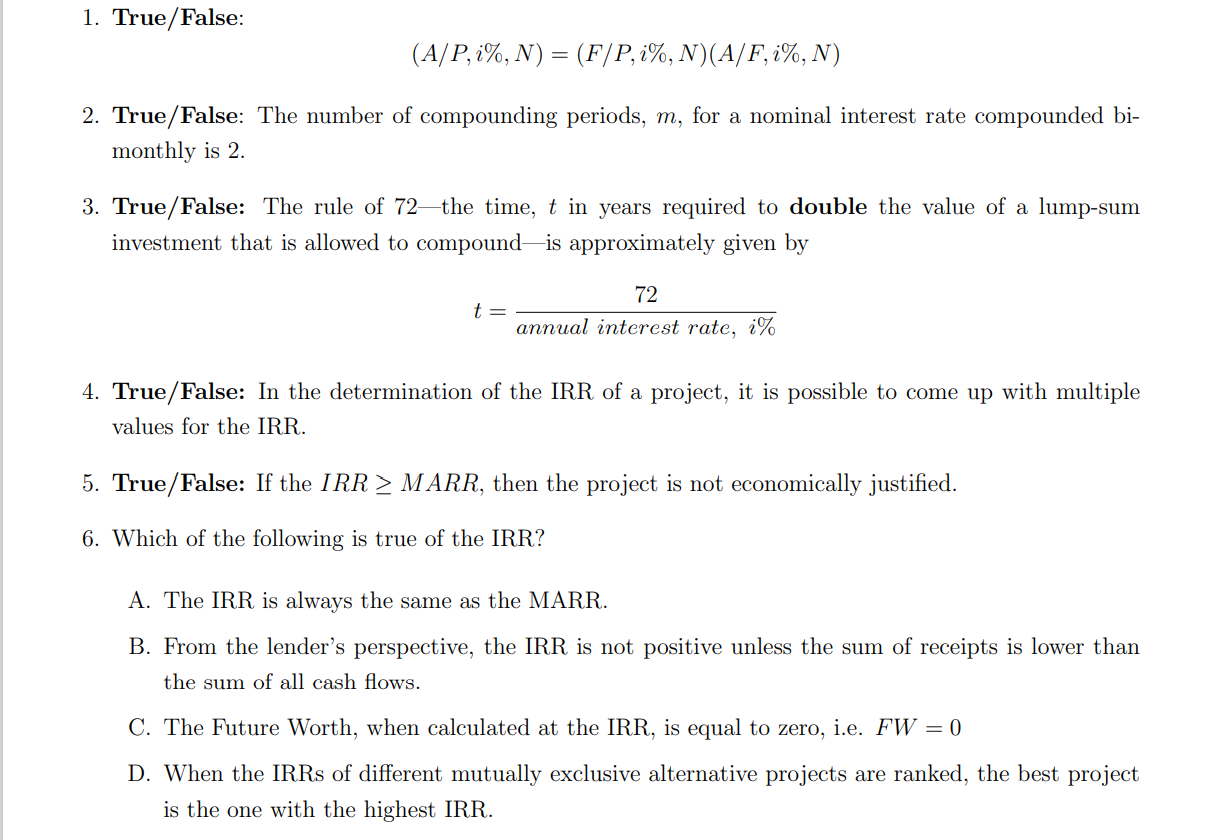
Question: slovw those question with explination 1. True /False: (A/P, io, N) = (F/P, i%%, N) (A/ F, i%%, N) 2. True/False: The number of compounding
slovw those question with explination
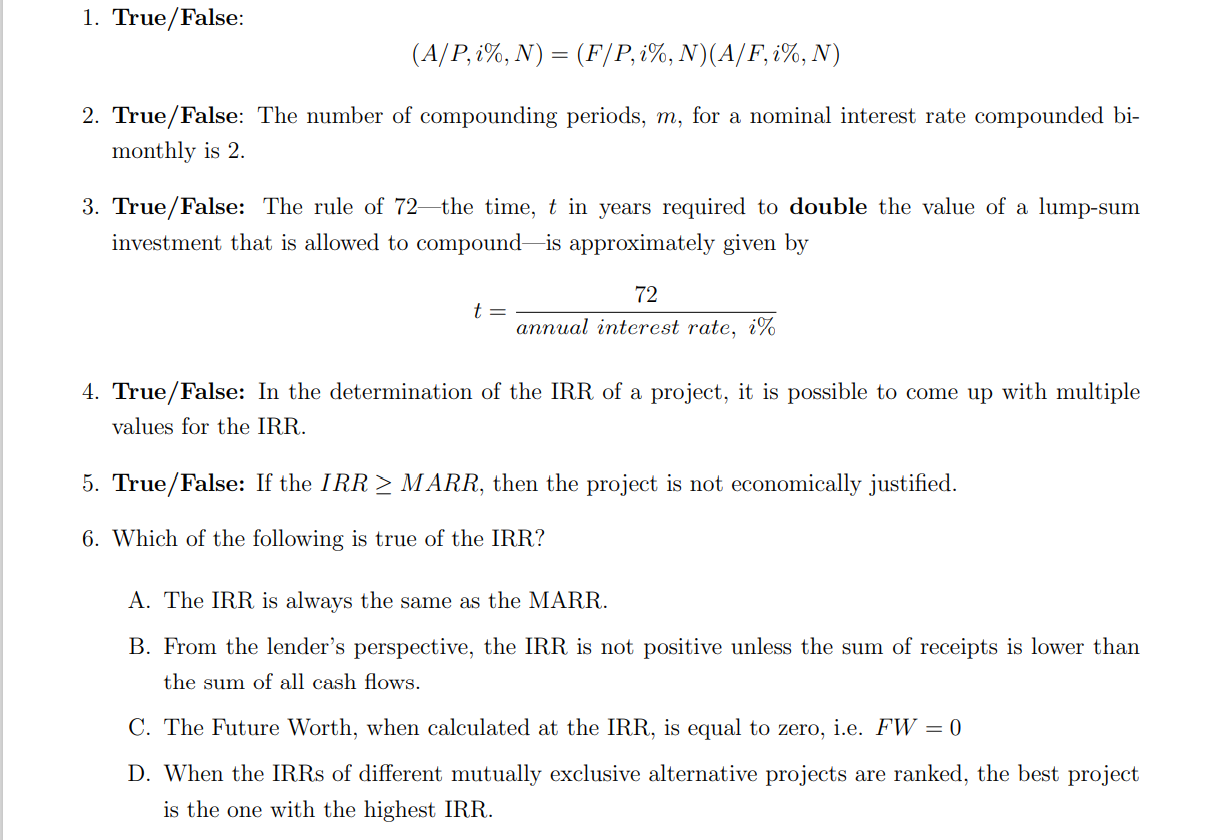
1. True /False: (A/P, io, N) = (F/P, i%%, N) (A/ F, i%%, N) 2. True/False: The number of compounding periods, m, for a nominal interest rate compounded bi- monthly is 2. 3. True/False: The rule of 72-the time, t in years required to double the value of a lump-sum investment that is allowed to compound-is approximately given by 72 t = annual interest rate, i% 4. True/False: In the determination of the IRR of a project, it is possible to come up with multiple values for the IRR. 5. True/False: If the IRR > MARR, then the project is not economically justified. 6. Which of the following is true of the IRR? A. The IRR is always the same as the MARR. B. From the lender's perspective, the IRR is not positive unless the sum of receipts is lower than the sum of all cash flows. C. The Future Worth, when calculated at the IRR, is equal to zero, i.e. FW = 0 D. When the IRRs of different mutually exclusive alternative projects are ranked, the best project is the one with the highest IRR
Step by Step Solution
There are 3 Steps involved in it

Get step-by-step solutions from verified subject matter experts
 Study Help