







Question: Smith and Co. has to choose between two mutually exclusive projects. If it chooses project A, Smith and Co. will have the opportunity to make
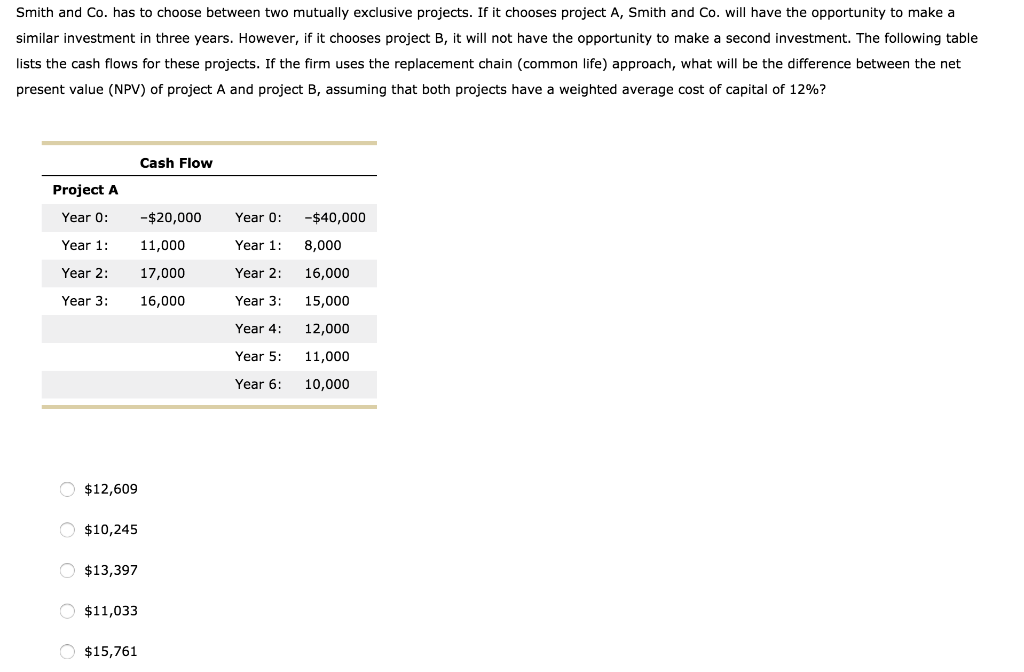
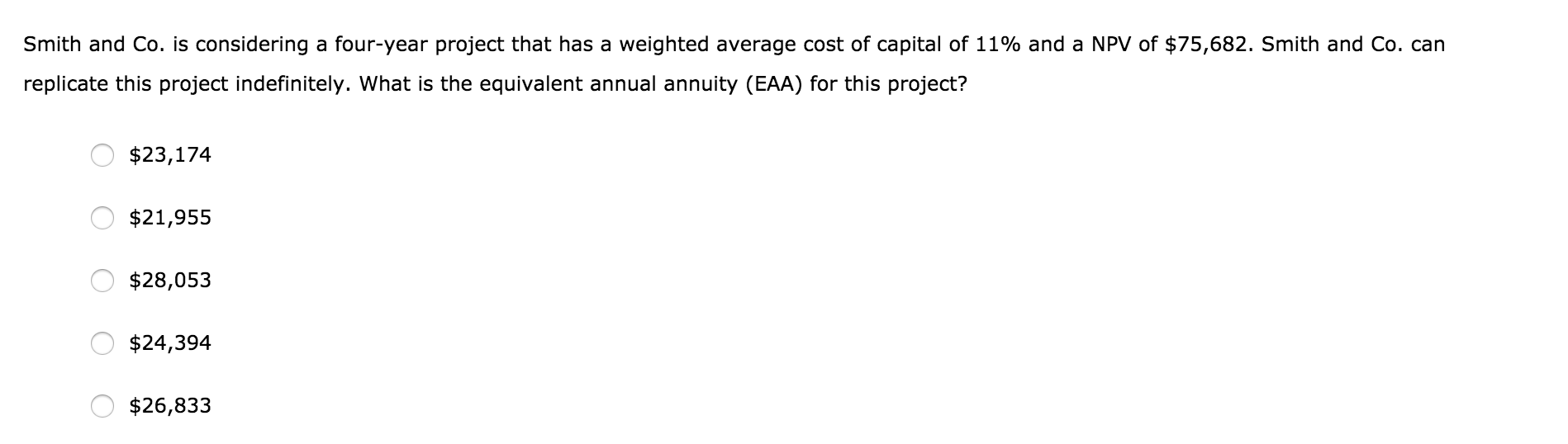
Smith and Co. has to choose between two mutually exclusive projects. If it chooses project A, Smith and Co. will have the opportunity to make a similar investment in three years. However, if it chooses project B, it will not have the opportunity to make a second investment. The following table lists the cash flows for these projects. If the firm uses the replacement chain (common life) approach, what will be the difference between the net present value (NPV) of project A and project B, assuming that both projects have a weighted average cost of capital of 12%? Cash Flow Project A Year 0: $40,000 Year 0: Year 1: Year 2: Year 3: -$20,000 11,000 17,000 16,000 Year 1: Year 2: Year 3: Year 4: Year 5: Year 6: 8,000 16,000 15,000 12,000 11,000 10,000 $12,609 O $10,245 O $13,397 O $11,033 O $15,761 Smith and Co. is considering a four-year project that has a weighted average cost of capital of 11% and a NPV of $75,682. Smith and Co. can replicate this project indefinitely. What is the equivalent annual annuity (EAA) for this project? O $23,174 0 $21,955 O $28,053 O $24,394 O $26,833
Step by Step Solution
There are 3 Steps involved in it

Get step-by-step solutions from verified subject matter experts
 Study Help