







Question: So the code is as follows: #include #include #include int main() { pid_t pid; int i,j; for (i =0; i if((pid=fork())==0) // child process break;
So the code is as follows:
#include
#include
#include
int main()
{
pid_t pid;
int i,j;
for (i =0; i
if((pid=fork())==0) // child process
break;
if (pid == 0)
{
if (i%2 == 0)
{
for (j =0; j
if((pid=fork())==0) // child process
break;
}
}
else // parent process
for (int i=0;i
wait(NULL);
sleep(10);
return 0;
}
before making the code i we made a table like this for some reason:
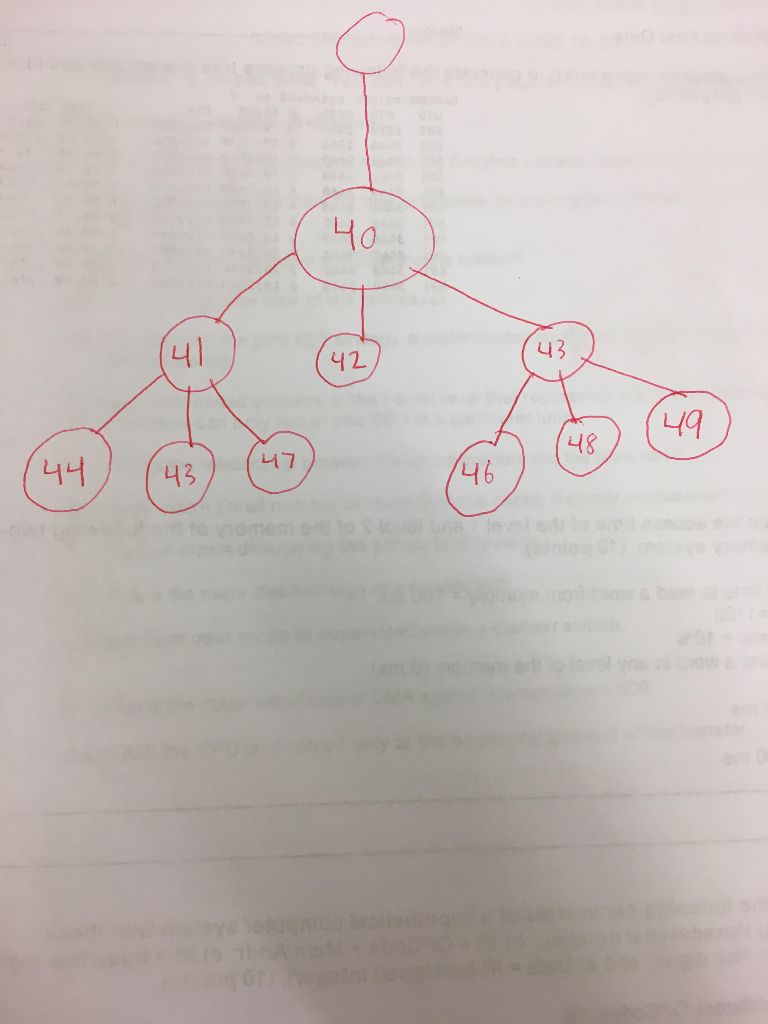
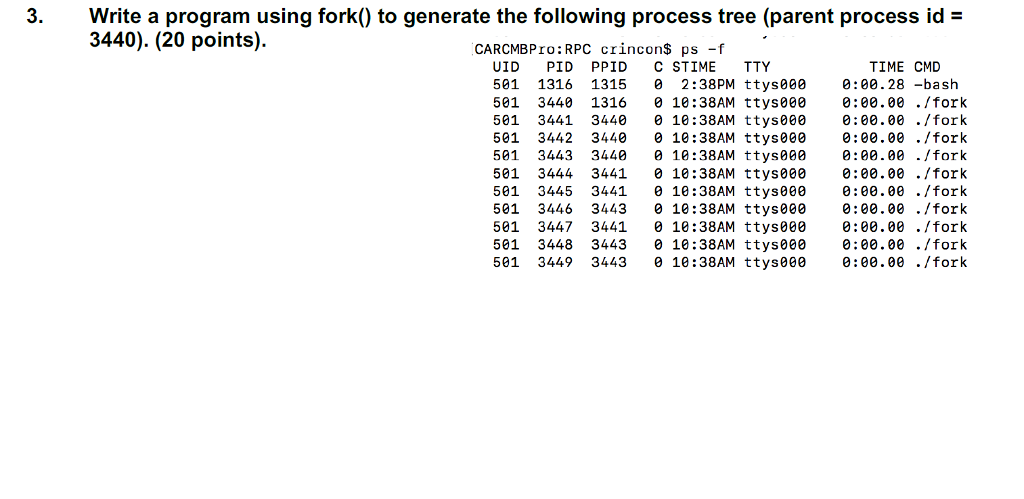
So my question is, how did we make this tree (i'm pretty sure the tree is right) and how did we make the code? I need to be able to do this for another table, same question format but i didn't understand how to do it in class.
3. Write a program using fork() to generate the following process tree (parent process id - 3440). (20 points). CARCMBPro:RPC crincon$ ps f UID PID PPID C STIME TTY 501 1316 1315 2:38PM ttys000 0:00.28-bash 501 3440 1316 0 10:38AM ttys000 0:00.00./fork 501 3441 3440 1e:38AM ttysee e:ee.ee./fork 501 3442 3440 10:38AM ttys000 :00.00-/fork 501 3443 3440 10:38AM ttys000 0:00.00 ./fork 501 3444 3441 10:38AM ttys 0:00.00 ./fork 501 3445 3441 10:38AM ttys 8:80.80 /fork 501 3446 3443 0 10:38AM ttys000 0:00.00 ./fork 501 3447 3441 10:38AM ttys000 0:00.00 ./fork 501 3448 3443 1e:38AM ttyseea e:ee.ee./fork 591 3449 3443 10 : 38AM ttysee0 0:00 . ./fork TIME CMD
Step by Step Solution
There are 3 Steps involved in it

Get step-by-step solutions from verified subject matter experts
 Study Help