







Question: So this is the case study and I need to fill in a sample medical record. I've included an example as well and I have
So this is the case study and I need to fill in a sample medical record. I've included an example as well and I have to fill out the "medical" part of it. I am stuck there
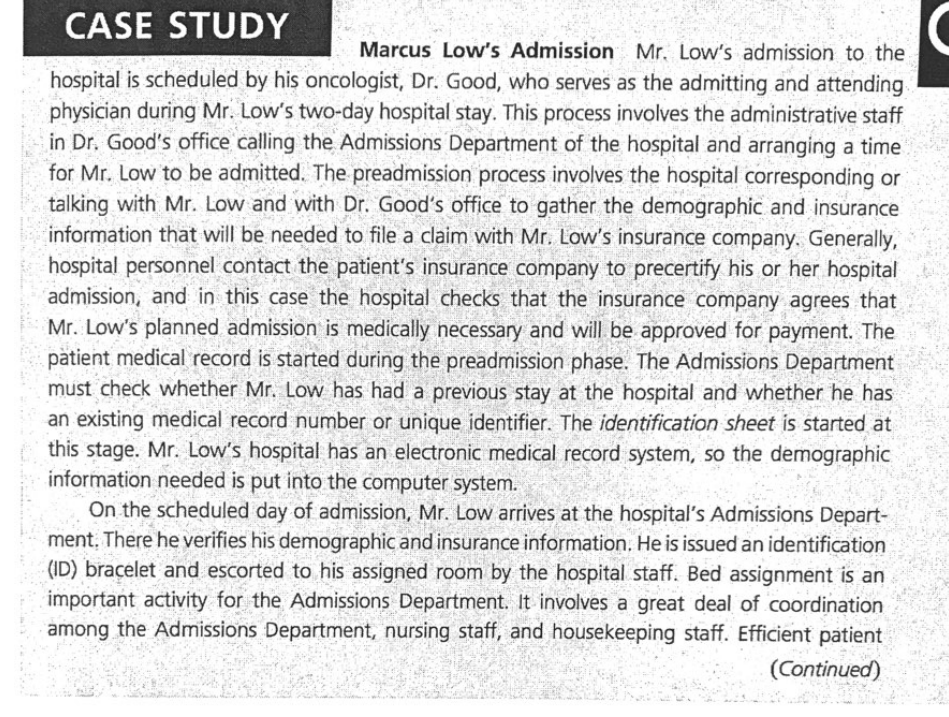
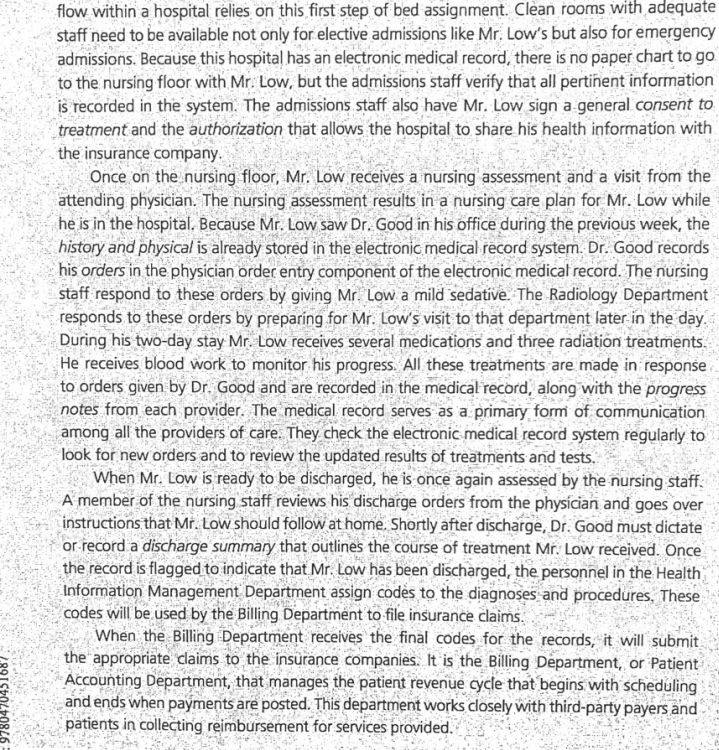
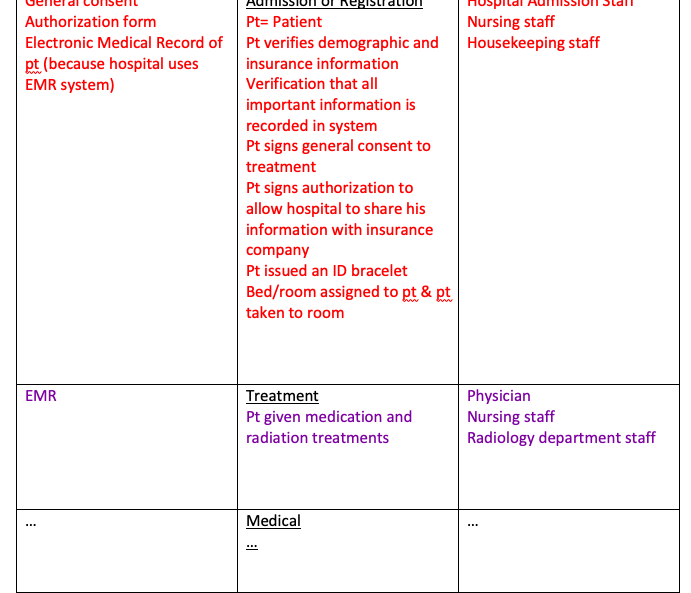
CASE STUDY Marcus Low's Admission Mr. Low's admission to the hospital is scheduled by his oncologist, Dr. Good, who serves as the admitting and attending physician during Mr. Low's two-day hospital stay. This process involves the administrative staff in Dr. Good's office calling the Admissions Department of the hospital and arranging a time for Mr. Low to be admitted. The preadmission process involves the hospital corresponding or talking with Mr. Low and with Dr. Good's office to gather the demographic and insurance information that will be needed to file a claim with Mr. Low's insurance company. Generally, hospital personnel contact the patient's insurance company to precertify his or her hospital admission, and in this case the hospital checks that the insurance company agrees that Mr. Low's planned admission is medically necessary and will be approved for payment. The patient medical record is started during the preadmission phase. The Admissions Department must check whether Mr. Low has had a previous stay at the hospital and whether he has an existing medical record number or unique identifier. The identification sheet is started at this stage. Mr. Low's hospital has an electronic medical record system, so the demographic information needed is put into the computer system. On the scheduled day of admission, Mr. Low arrives at the hospital's Admissions Depart- ment. There he verifies his demographic and insurance information. He is issued an identification (ID) bracelet and escorted to his assigned room by the hospital staff. Bed assignment is an important activity for the Admissions Department. It involves a great deal of coordination among the Admissions Department, nursing staff, and housekeeping staff. Efficient patient (Continued) flow within a hospital relies on this first step of bed assignment. Clean rooms with adequate staff need to be available not only for elective admissions like Mr. Low's but also for emergency admissions. Because this hospital has an electronic medical record, there is no paper chart to go to the nursing floor with Mr. Low, but the admissions staff verify that all pertinent information is recorded in the system. The admissions staff also have Mr. Low sign a general consent to treatment and the authorization that allows the hospital to share his health information with the insurance company. Once on the nursing floor, Mr. Low receives a nursing assessment and a visit from the attending physician. The nursing assessment results in a nursing care plan for Mr. Low while he is in the hospital. Because Mr. Low saw Dr. Good in his office during the previous week, the history and physical is already stored in the electronic medical record system. Dr. Good records his orders in the physician order entry component of the electronic medical record. The nursing staff respond to these orders by giving Mr. Low a mild sedative. The Radiology Department responds to these orders by preparing for Mr. Low's visit to that department later in the day. During his two-day stay Mr. Low receives several medications and three radiation treatments, He receives blood work to monitor his progress. All these treatments are made in response to orders given by Dr. Good and are recorded in the medical record, along with the progress notes from each provider. The medical record serves as a primary form of communication among all the providers of care. They check the electronic medical record system regularly to look for new orders and to review the updated results of treatments and tests. When Mr. Low is ready to be discharged, he is once again assessed by the nursing staff A member of the nursing staff reviews his discharge orders from the physician and goes over instructions that Mr. Low should follow at home. Shortly after discharge, Dr. Good must dictate or record a discharge summary that outlines the course of treatment Mr. Low received. Once the record is flagged to indicate that Mr. Low has been discharged, the personnel in the Health Information Management Department assign codes to the diagnoses and procedures, These codes will be used by the Billing Department to file insurance claims. When the Billing Department receives the final codes for the records, it will submit the appropriate claims to the insurance companies. It is the Billing Department, or Patient Accounting Department, that manages the patient revenue cycle that begins with scheduling and ends when payments are posted. This department works closely with third-party payers and patients in collecting reimbursement for services provided. BOTSWOZDOBL6 Authorization form Pt=Patient Nursing staff Electronic Medical Record of Pt verifies demographic and Housekeeping staff pt (because hospital uses insurance information EMR system) Verification that all important information is recorded in system Pt signs general consent to treatment Pt signs authorization to allow hospital to share his information with insurance company Pt issued an ID bracelet Bed/room assigned to pt & pt taken to room EMR Treatment Pt given medication and radiation treatments Physician Nursing staff Radiology department staff Medical LEO
Step by Step Solution
There are 3 Steps involved in it
1 Expert Approved Answer
Step: 1 Unlock

Question Has Been Solved by an Expert!
Get step-by-step solutions from verified subject matter experts
Step: 2 Unlock
Step: 3 Unlock
 Study Help