







Question: Solve ( b ) For a constant resitive torque T , determine the arm and foot forces, F 1 and F 2 , respectively, that
Solve b For a constant resitive torque T determine the arm and foot forces, F and F respectively, that must be applied to the linkage to balance this load as the linkage undergoes one complete cycle
Problem :
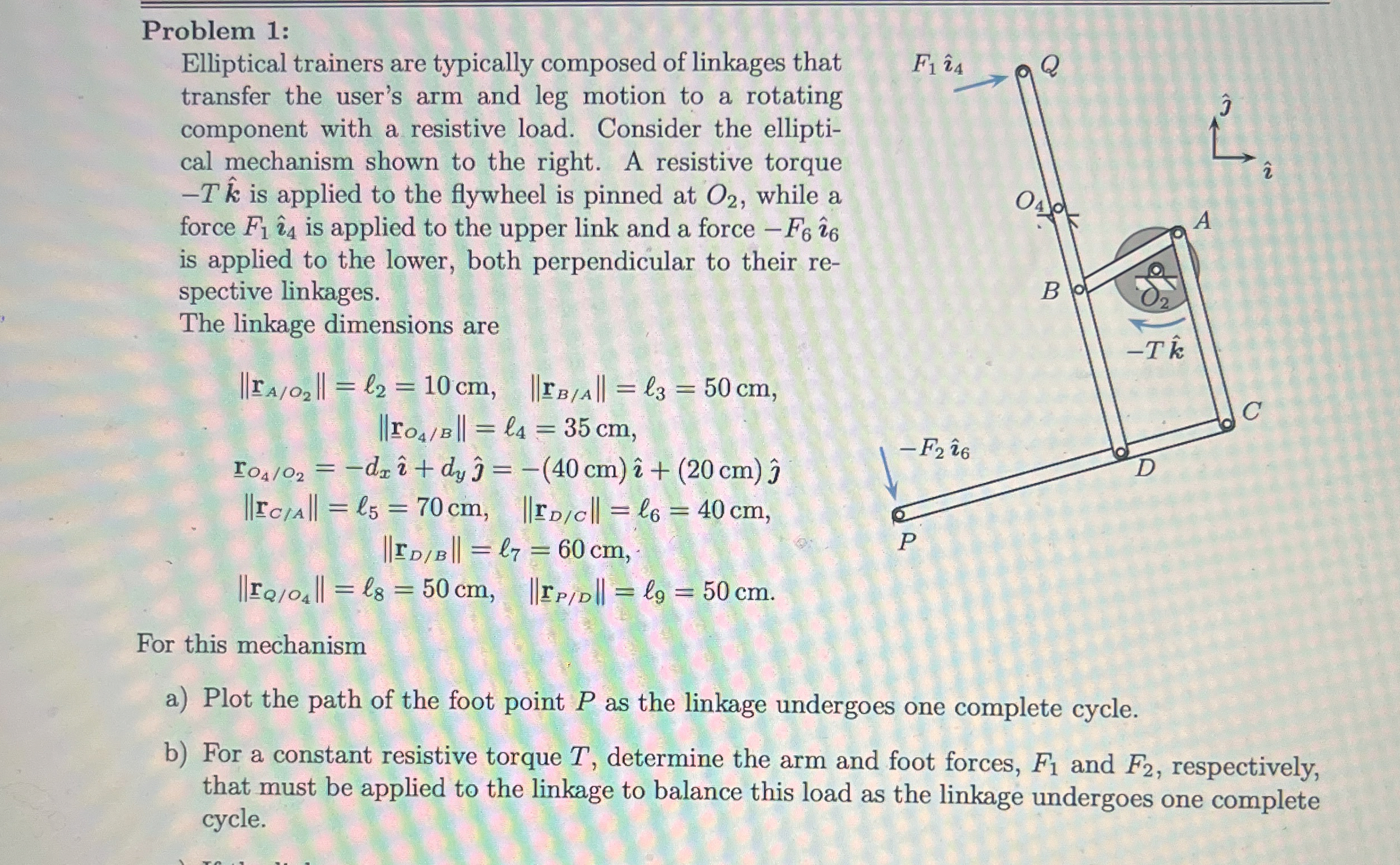
Elliptical trainers are typically composed of linkages that transfer the user's arm and leg motion to a rotating component with a resistive load. Consider the elliptical mechanism shown to the right. A resistive torque That is applied to the flywheel is pinned at while a force hat is applied to the upper link and a force hat is applied to the lower, both perpendicular to their respective linkages.
The linkage dimensions are
hathat
For this mechanism
a Plot the path of the foot point as the linkage undergoes one complete cycle.
b For a constant resistive torque determine the arm and foot forces, and respectively, that must be applied to the linkage to balance this load as the linkage undergoes one complete cycle.
Step by Step Solution
There are 3 Steps involved in it
1 Expert Approved Answer
Step: 1 Unlock

Question Has Been Solved by an Expert!
Get step-by-step solutions from verified subject matter experts
Step: 2 Unlock
Step: 3 Unlock
 Study Help