



Question: solve the following 1) Find the following values by using the Poisson formula. (Round intermediate values to 4 decimal places. Round your answers to 4
solve the following
1)
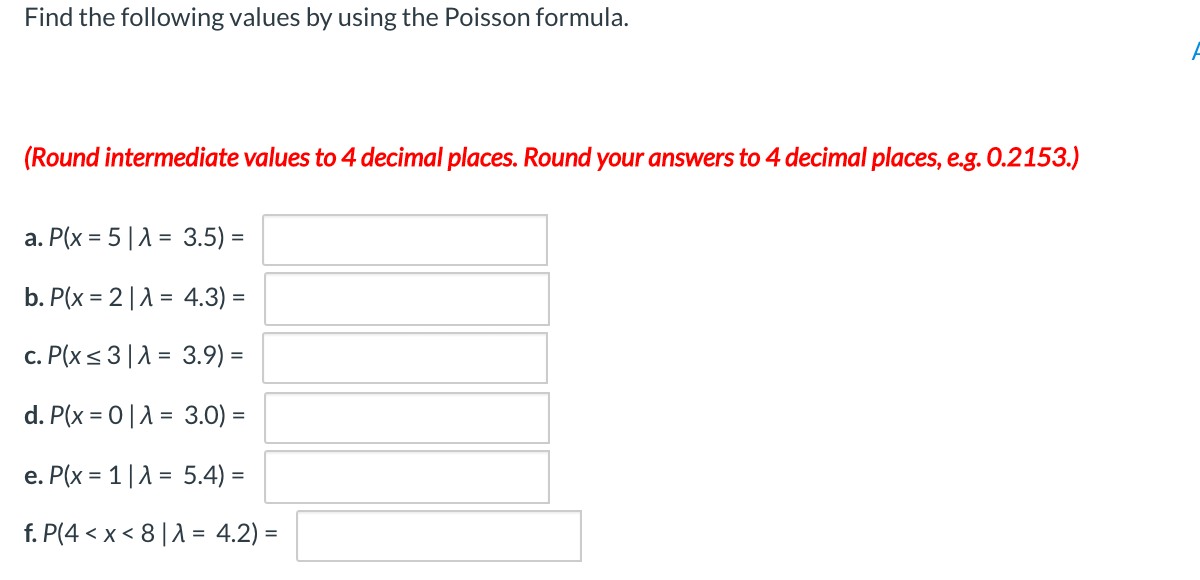
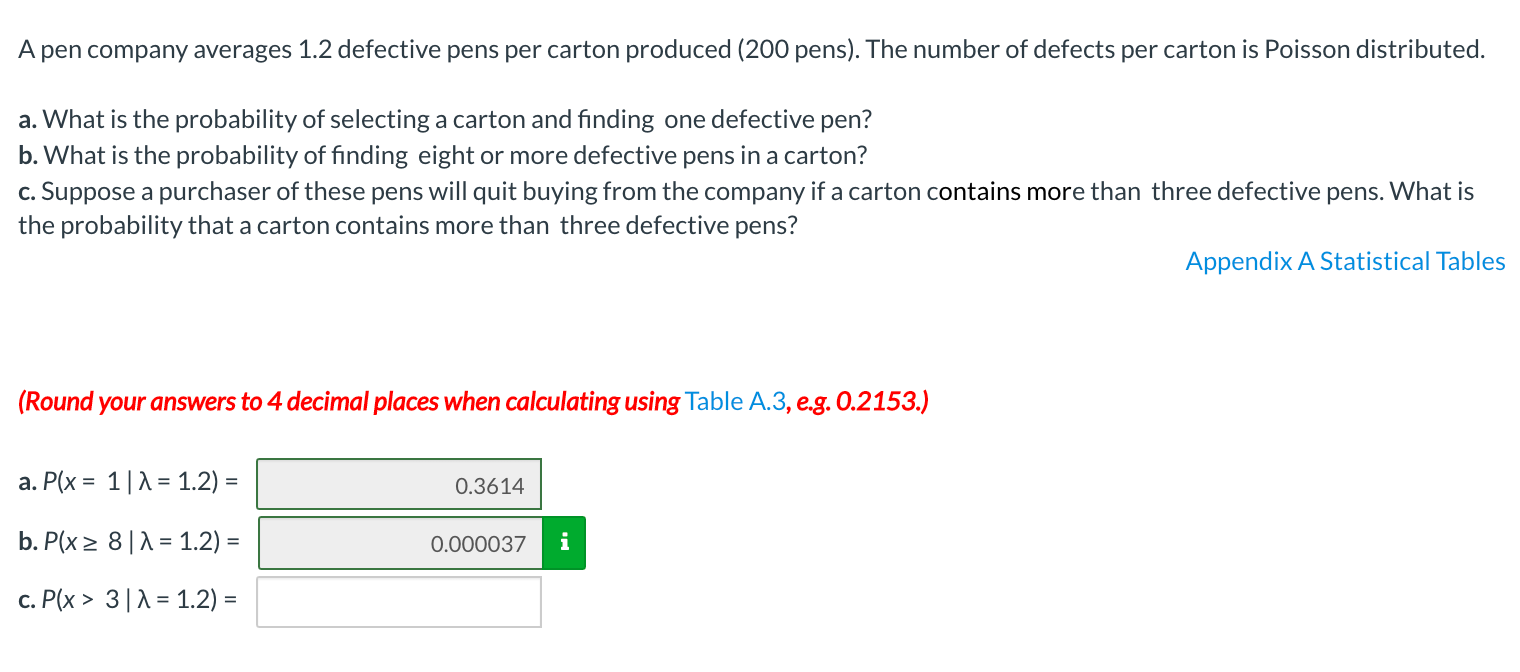
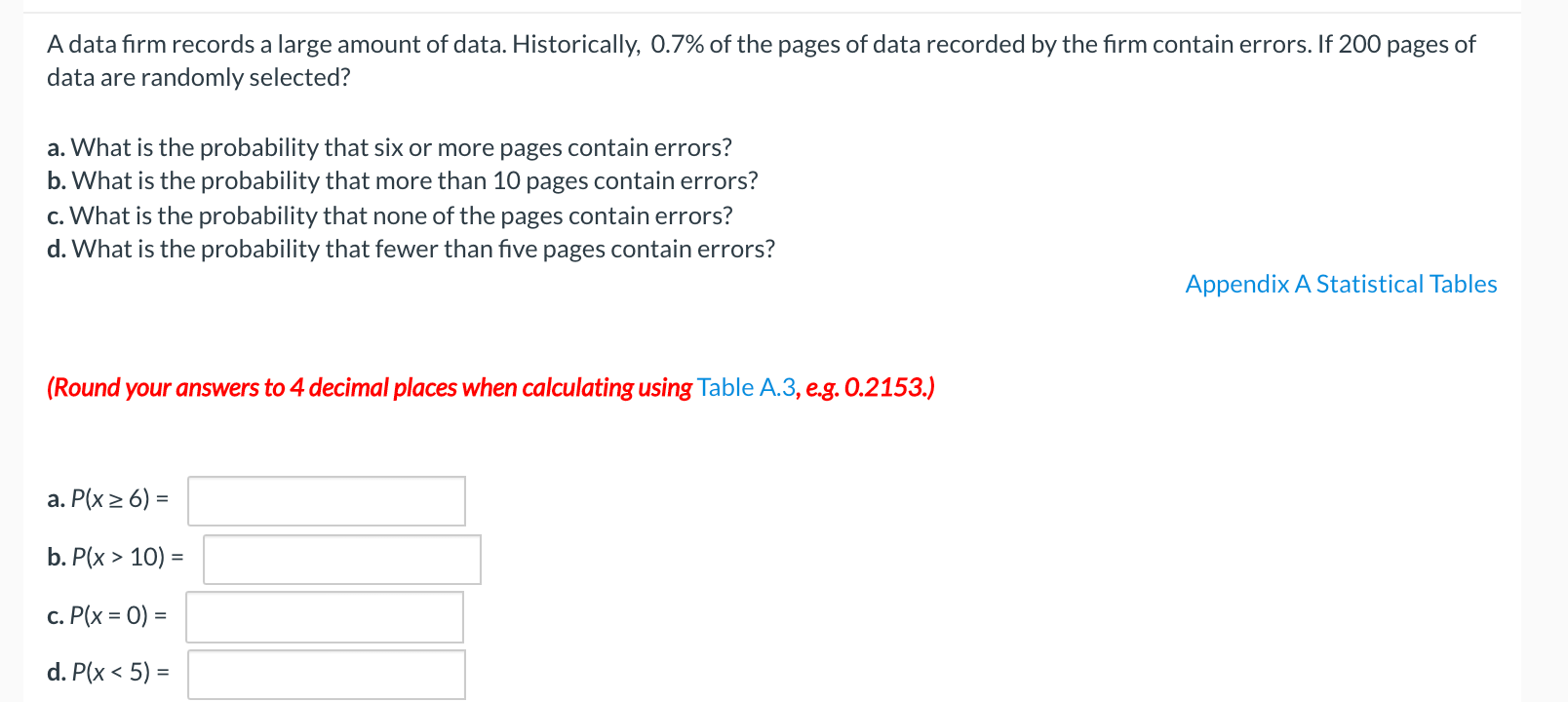
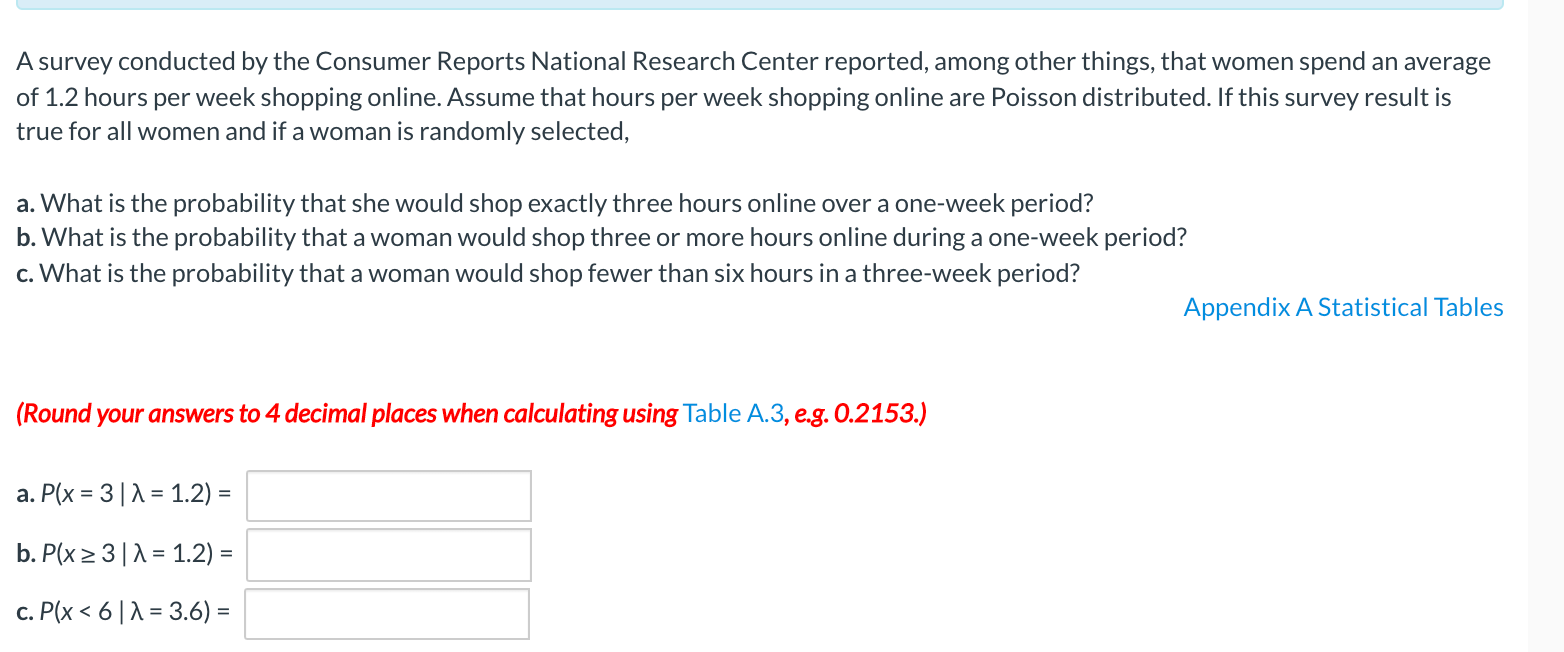
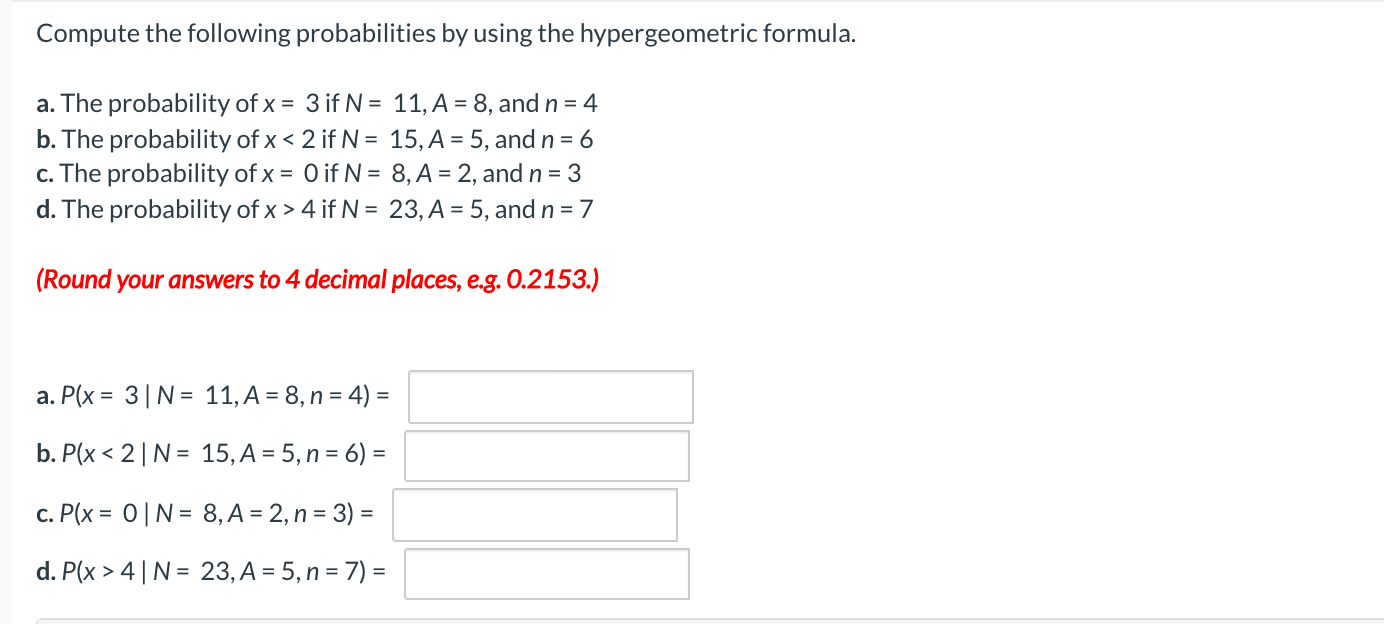
Find the following values by using the Poisson formula. (Round intermediate values to 4 decimal places. Round your answers to 4 decimal places, e.g. 0.2153.) a. P(x = 5 | 1 = 3.5) = b. P(x = 2 | 1 = 4.3) = c. P(x 3|A=1.2)= A data rm records a large amount of data. Historically, 0.7% of the pages of data recorded by the rm contain errors. If 200 pages of data are randomly selected? a. What is the probability that six or more pages contain errors? b.What is the probability that more than 10 pages contain errors? c. What is the probability that none of the pages contain errors? cl. What is the probability that fewer than ve pages contain errors? Appendix A Statistical Tables (Round your answers to 4 decimal places when calculating using Table A.3, 9.3. 0.2 153.) b.P(x>10)= |:| A survey conducted by the Consumer Reports National Research Center reported, among other things, that women spend an average of 1.2 hours per week shopping online. Assume that hours per week shopping online are Poisson distributed. lfthis survey result is true for all women and if a woman is randomly selected, a. What is the probability that she would shop exactly three hours online over a one-week period? b. What is the probability that a woman would shop three or more hours online during a one-week period? c. What is the probability that a woman would shop fewer than six hours in a three-week period? Appendix A Statistical Tables (Round your answers to 4 decimal places when calculating using Ta ble A. 3, e3. 0.2 153.) a.P(x=3|A=1.2)= b.P(x23|A=1.2)= c.P(x 4 if N = 23, A = 5, and n = 7 (Round your answers to 4 decimal places, e.g. 0.2153.) a. P(x = 3 | N = 11, A = 8, n = 4) = b. P(x 4 | N = 23, A = 5, n = 7) =
Step by Step Solution
There are 3 Steps involved in it

Get step-by-step solutions from verified subject matter experts