



Question: Solve the following 1) Under fixed exchange rate, which one of the following statements is the most accurate? A) Devaluation causes a decrease in output,
Solve the following
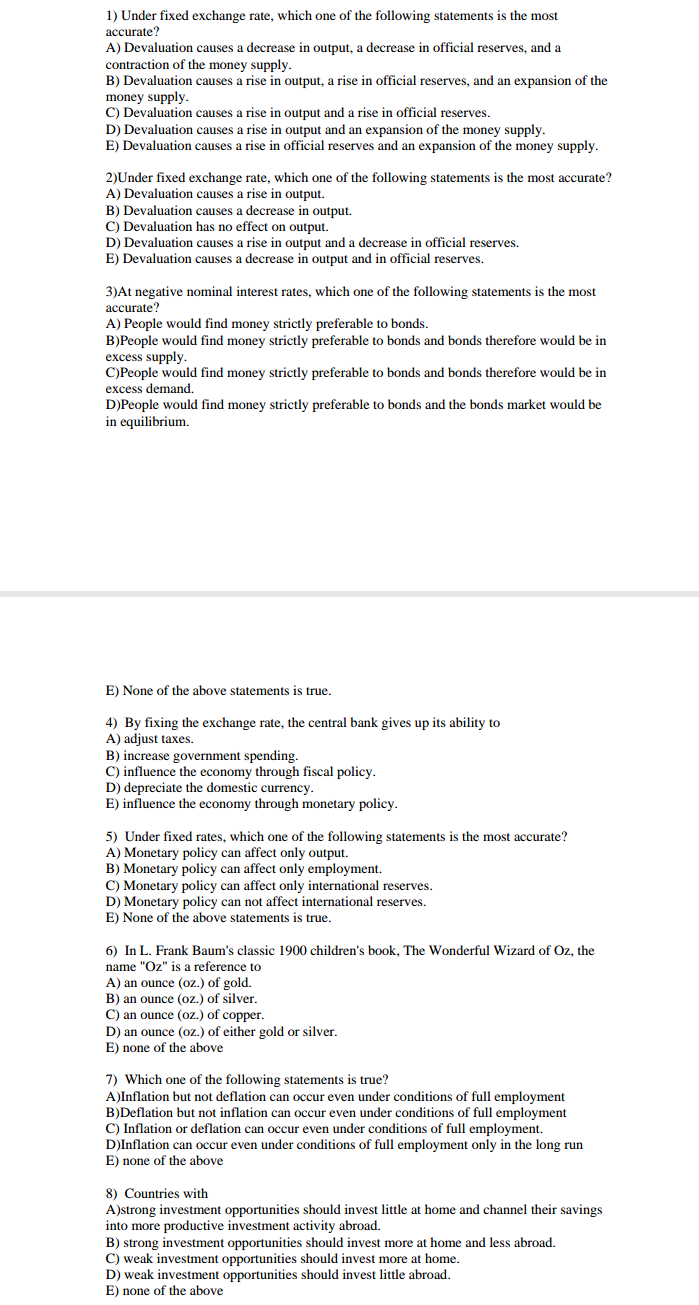
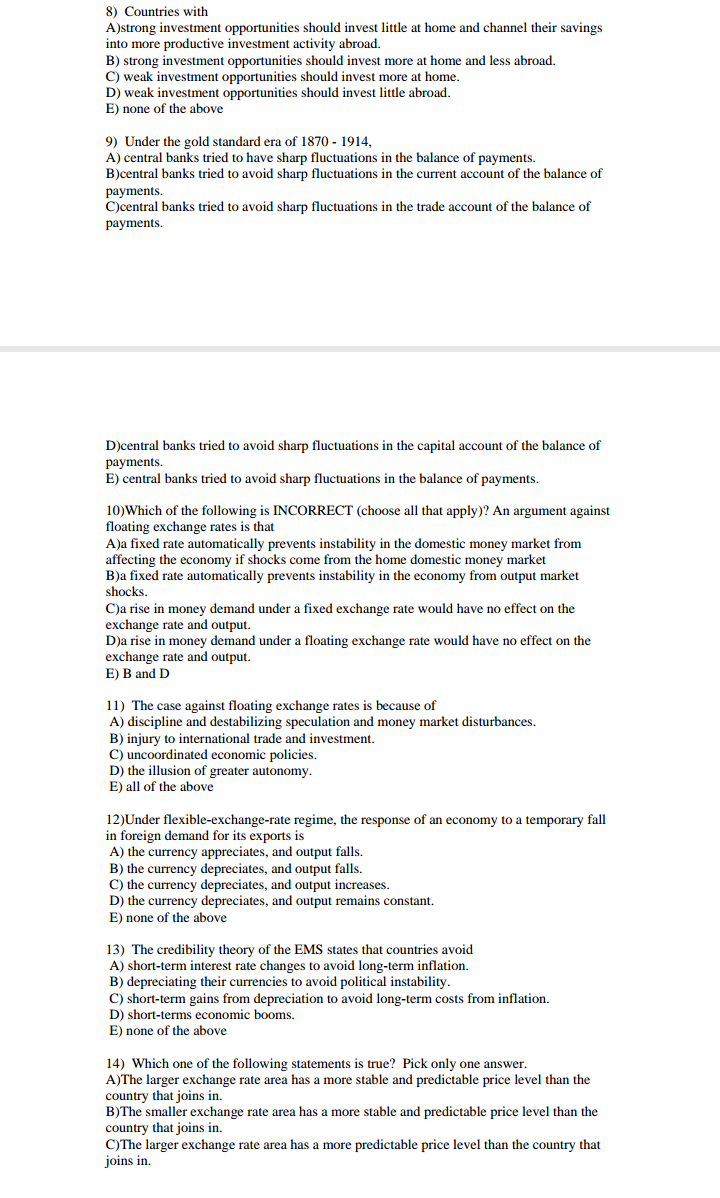
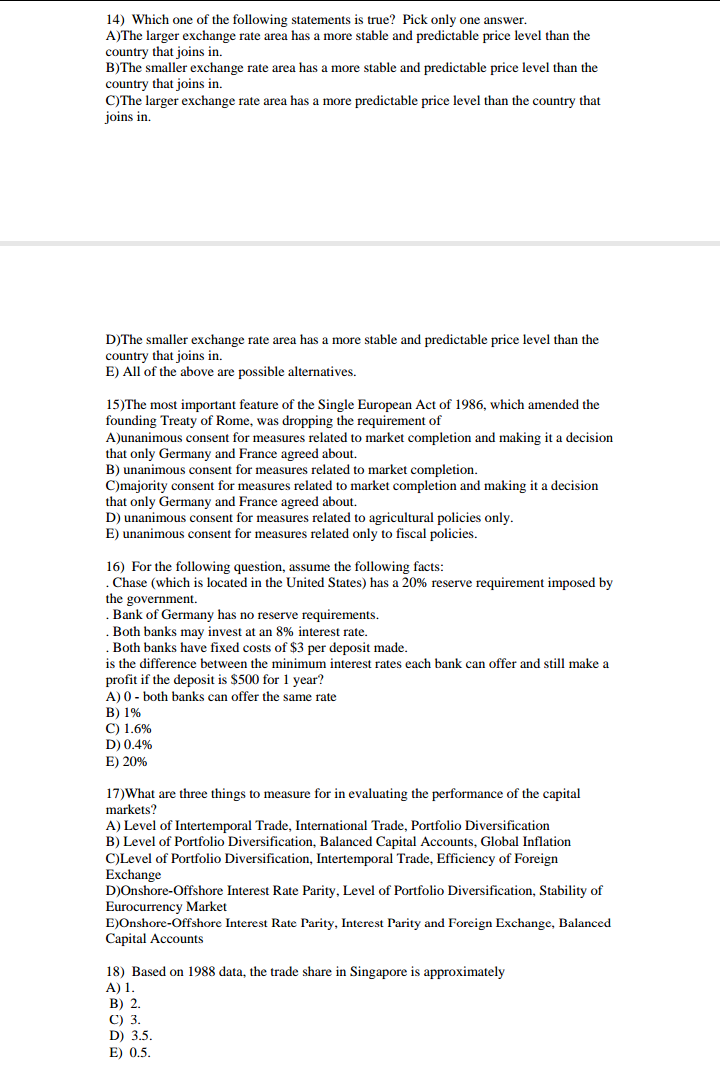
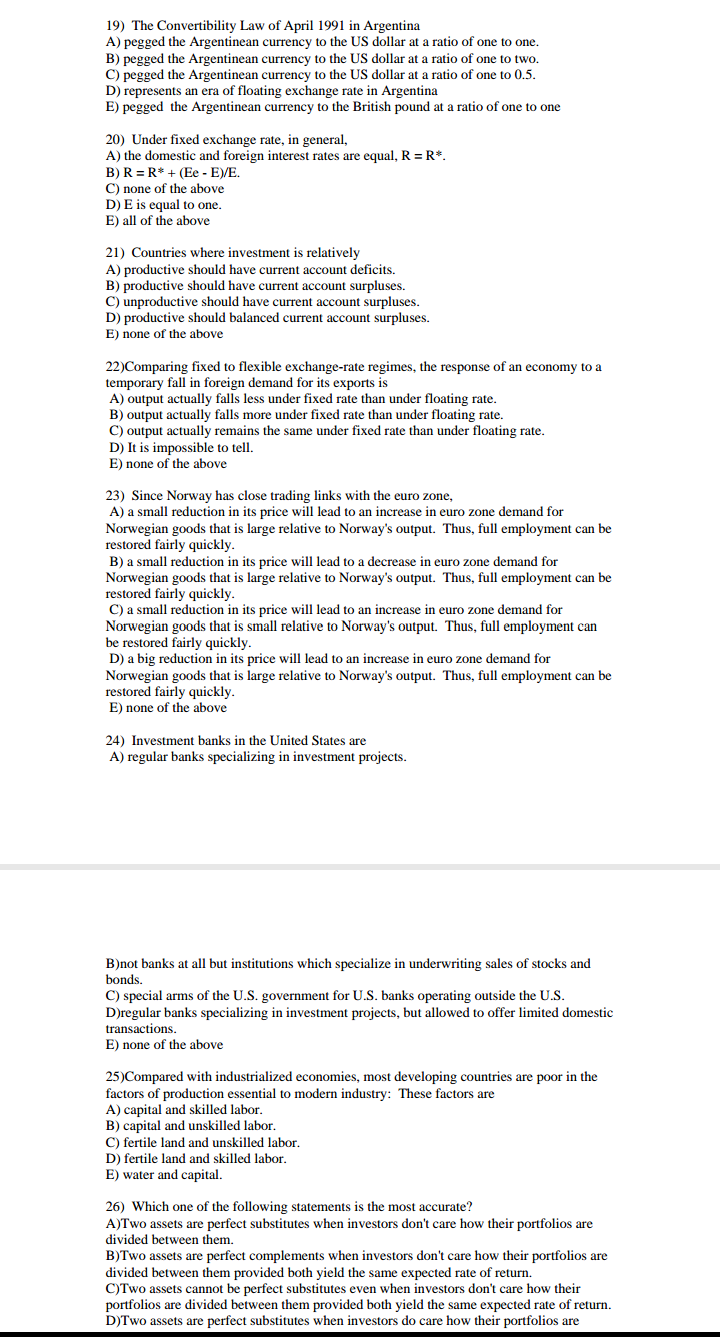
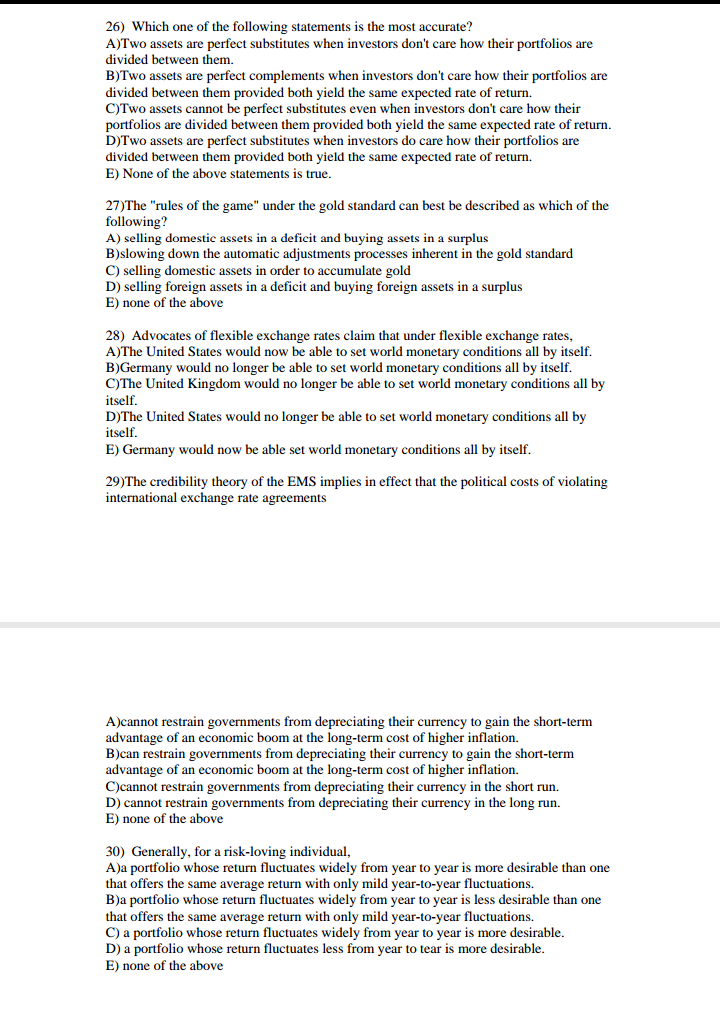
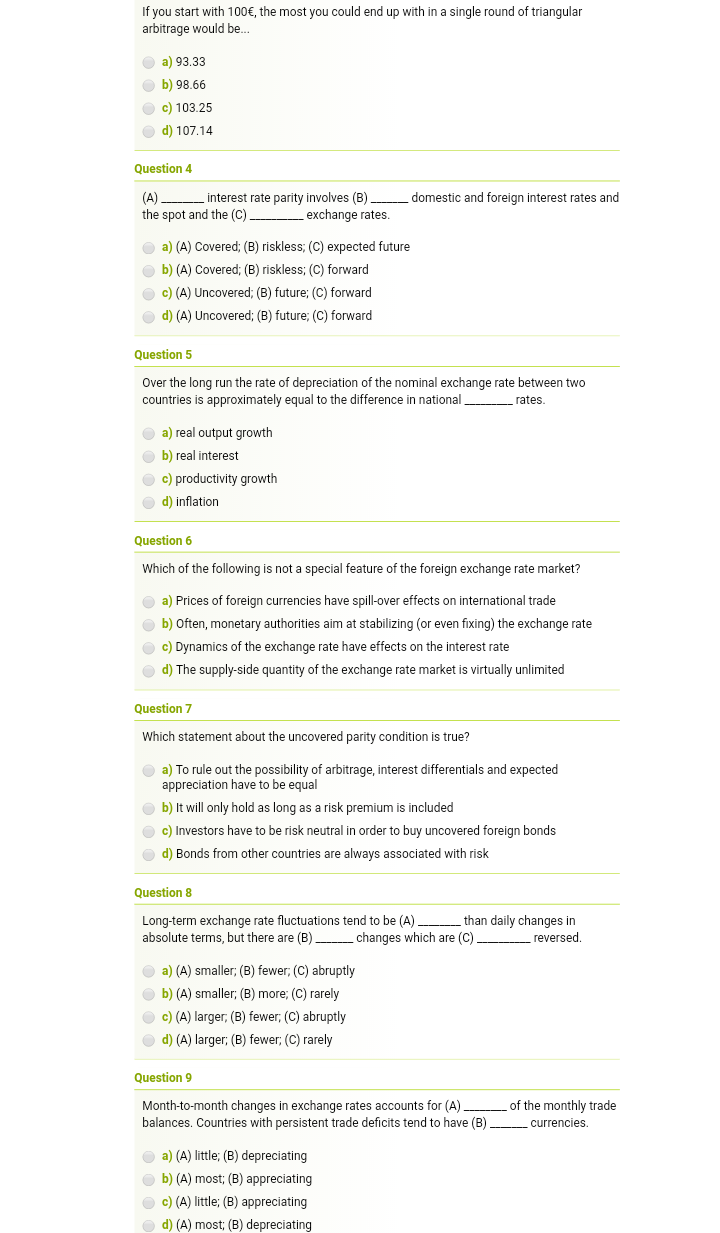
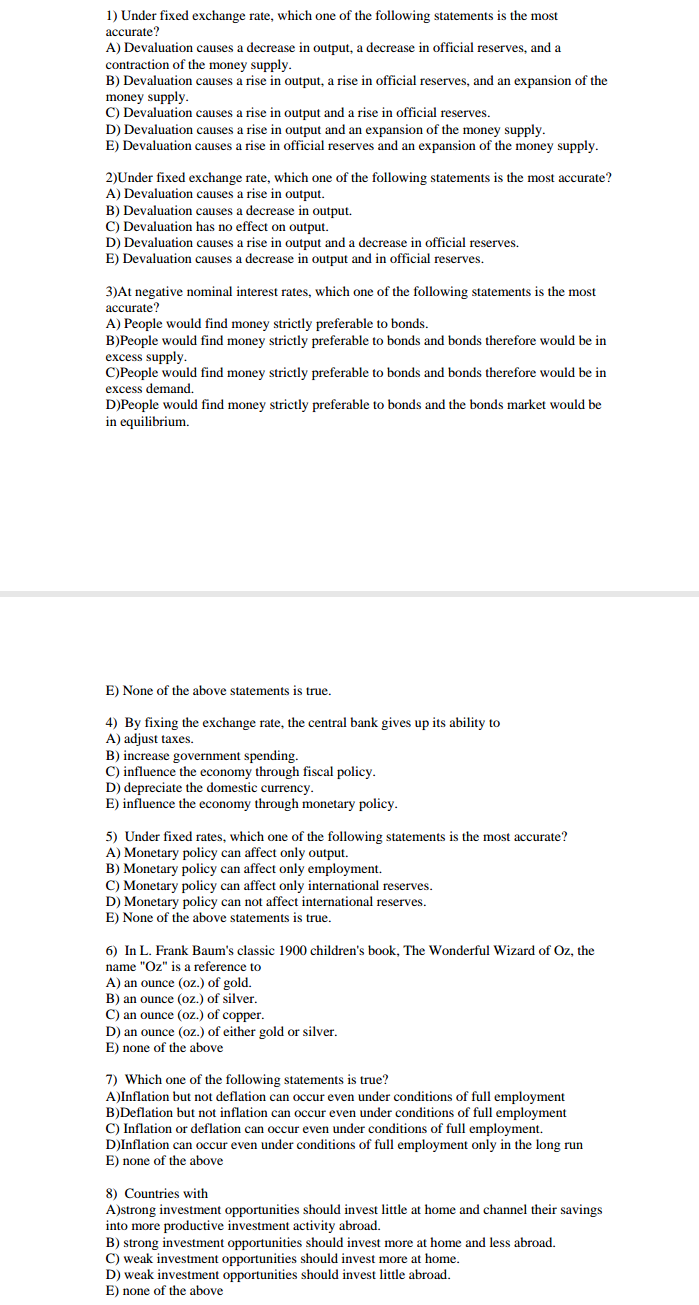
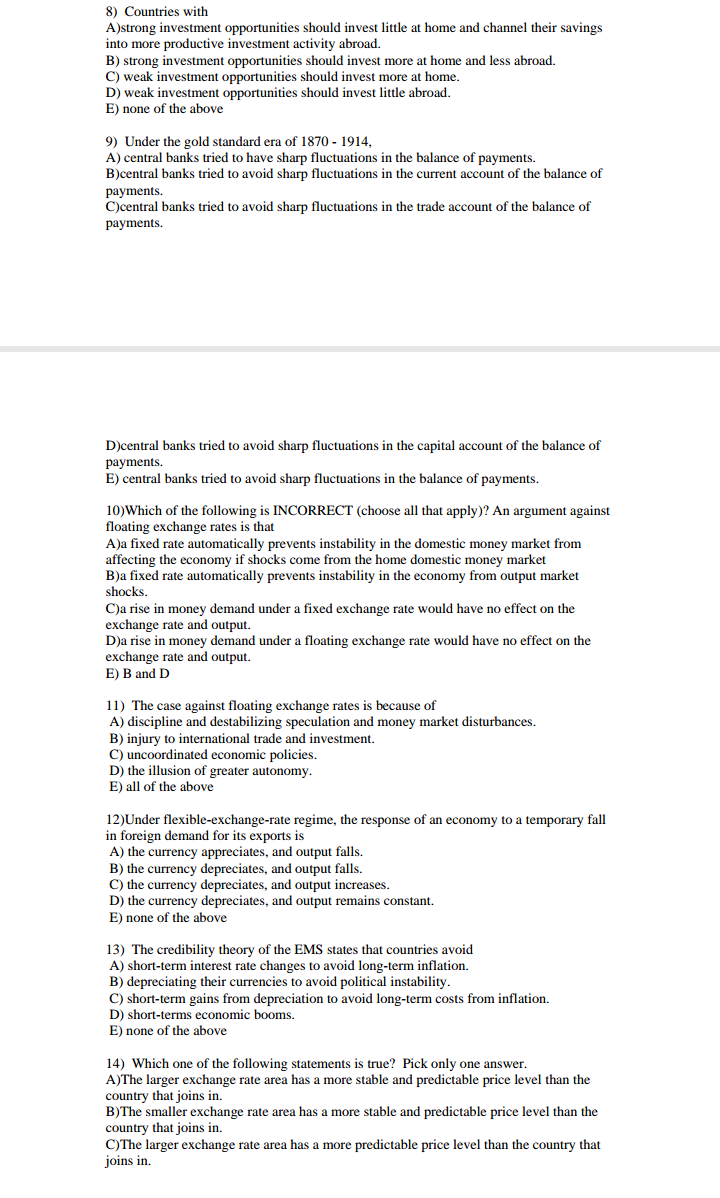
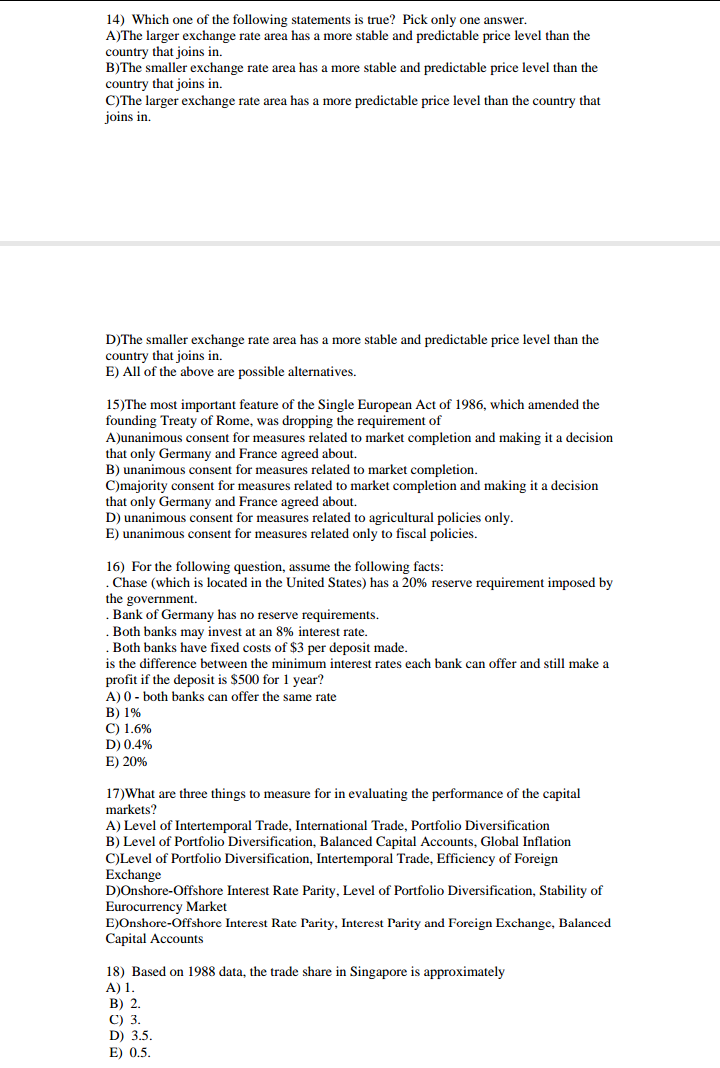
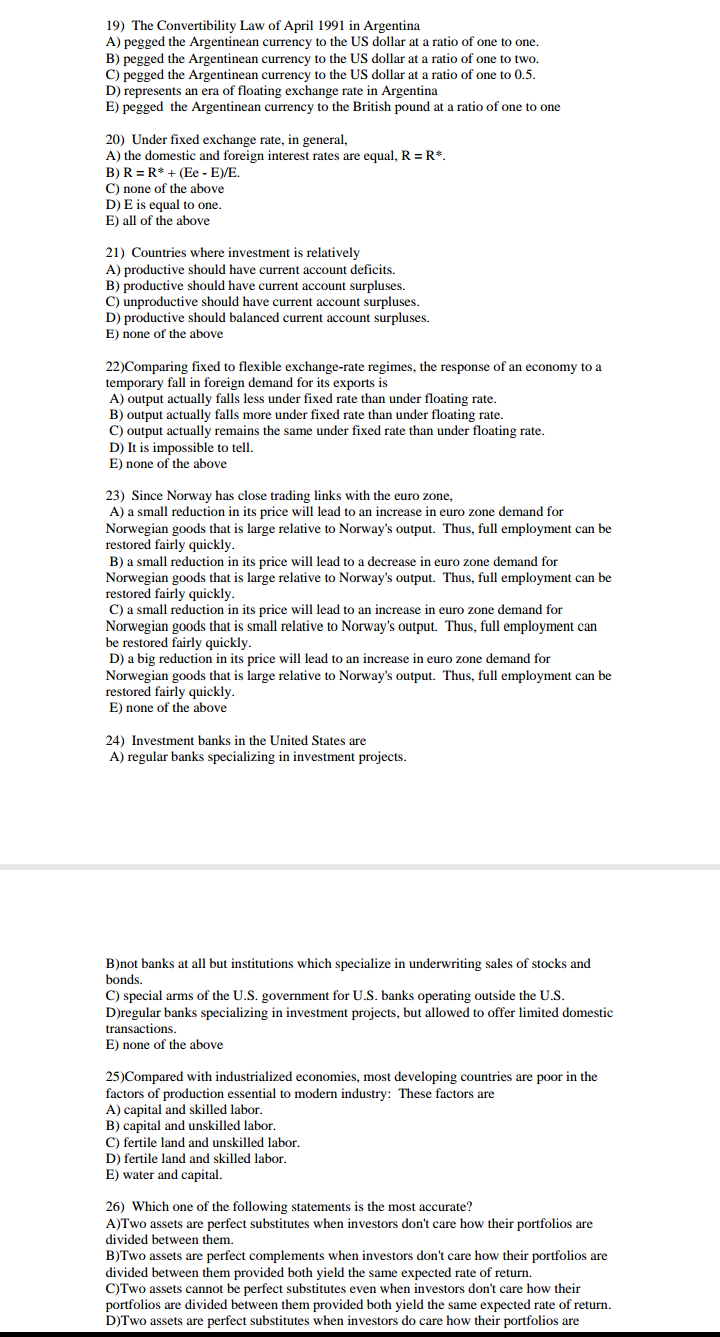
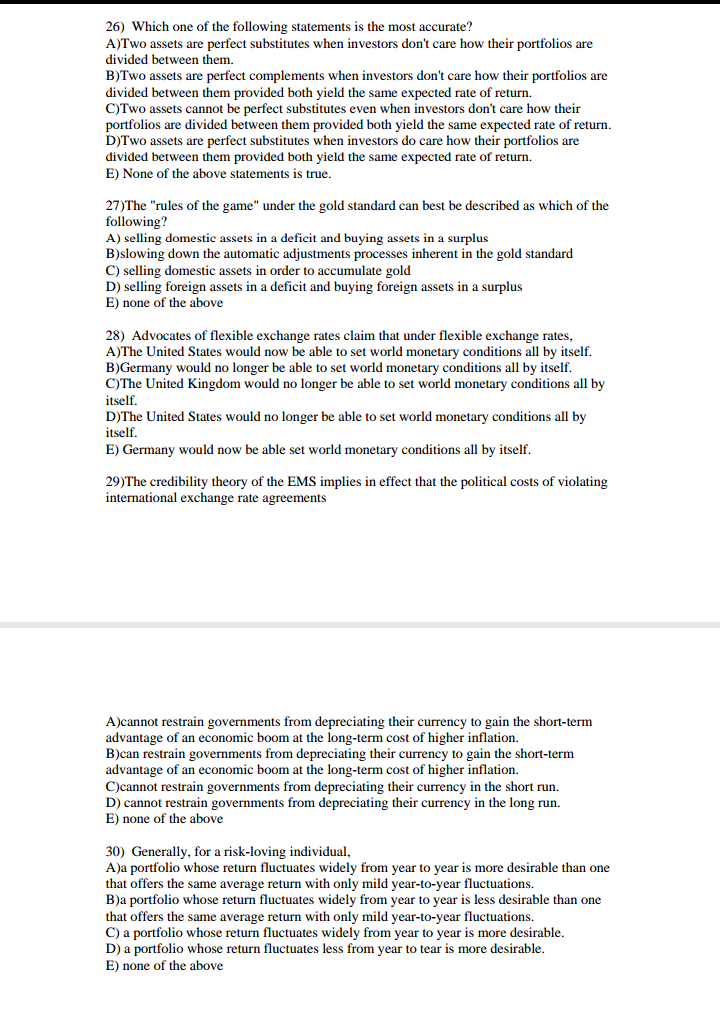
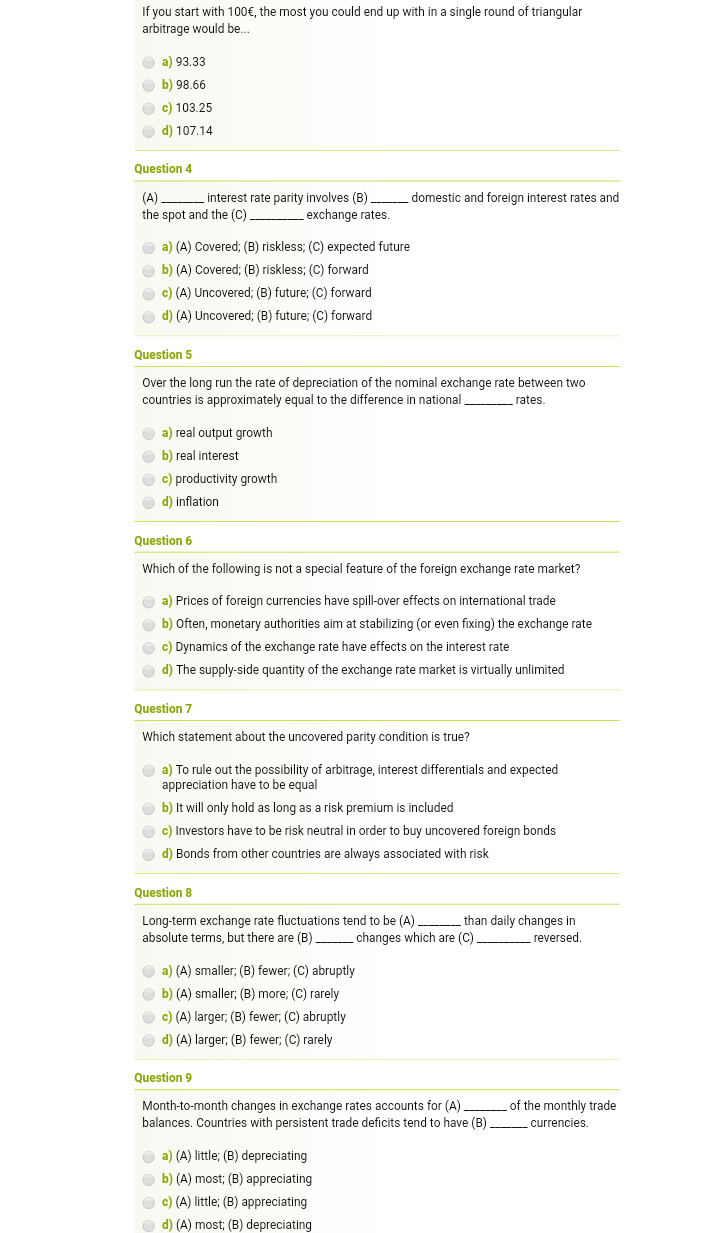
1) Under fixed exchange rate, which one of the following statements is the most accurate? A) Devaluation causes a decrease in output, a decrease in official reserves, and a contraction of the money supply. B) Devaluation causes a rise in output, a rise in official reserves, and an expansion of the money supply. C) Devaluation causes a rise in output and a rise in official reserves. D) Devaluation causes a rise in output and an expansion of the money supply. E) Devaluation causes a rise in official reserves and an expansion of the money supply. 2)Under fixed exchange rate, which one of the following statements is the most accurate? A) Devaluation causes a rise in output. B) Devaluation causes a decrease in output. C) Devaluation has no effect on output. D) Devaluation causes a rise in output and a decrease in official reserves. E) Devaluation causes a decrease in output and in official reserves. 3)At negative nominal interest rates, which one of the following statements is the most accurate? A) People would find money strictly preferable to bonds. B)People would find money strictly preferable to bonds and bonds therefore would be in excess supply. C)People would find money strictly preferable to bonds and bonds therefore would be in excess demand. D)People would find money strictly preferable to bonds and the bonds market would be in equilibrium. E) None of the above statements is true. 4) By fixing the exchange rate, the central bank gives up its ability to A) adjust taxes. B) increase government spending. C) influence the economy through fiscal policy. D) depreciate the domestic currency. E) influence the economy through monetary policy. 5) Under fixed rates, which one of the following statements is the most accurate? A) Monetary policy can affect only output. B) Monetary policy can affect only employment. C) Monetary policy can affect only international reserves. D) Monetary policy can not affect international reserves. E) None of the above statements is true. 6) In L. Frank Baum's classic 1900 children's book, The Wonderful Wizard of Oz, the name "Oz" is a reference to A) an ounce (oz.) of gold. B) an ounce (oz.) of silver. C) an ounce (oz.) of copper. D) an ounce (oz.) of either gold or silver. E) none of the above 7) Which one of the following statements is true? A )Inflation but not deflation can occur even under conditions of full employment B)Deflation but not inflation can occur even under conditions of full employment C) Inflation or deflation can occur even under conditions of full employment. D)Inflation can occur even under conditions of full employment only in the long run E) none of the above 8) Countries with A)strong investment opportunities should invest little at home and channel their savings into more productive investment activity abroad. B) strong investment opportunities should invest more at home and less abroad. C) weak investment opportunities should invest more at home. D) weak investment opportunities should invest little abroad. E) none of the above8) Countries with A)strong investment opportunities should invest little at home and channel their savings into more productive investment activity abroad. B) strong investment opportunities should invest more at home and less abroad. C) weak investment opportunities should invest more at home. D) weak investment opportunities should invest little abroad. E) none of the above 9) Under the gold standard era of 1870 - 1914, A) central banks tried to have sharp fluctuations in the balance of payments. B)central banks tried to avoid sharp fluctuations in the current account of the balance of payments. C)central banks tried to avoid sharp fluctuations in the trade account of the balance of payments. Dicentral banks tried to avoid sharp fluctuations in the capital account of the balance of payments. E) central banks tried to avoid sharp fluctuations in the balance of payments. 10)Which of the following is INCORRECT (choose all that apply)? An argument against floating exchange rates is that A )a fixed rate automatically prevents instability in the domestic money market from affecting the economy if shocks come from the home domestic money market B)a fixed rate automatically prevents instability in the economy from output market shocks. Cja rise in money demand under a fixed exchange rate would have no effect on the exchange rate and output. Dja rise in money demand under a floating exchange rate would have no effect on the exchange rate and output. E) B and D 11) The case against floating exchange rates is because of A) discipline and destabilizing speculation and money market disturbances. B) injury to international trade and investment. C) uncoordinated economic policies. D) the illusion of greater autonomy. E) all of the above 12)Under flexible-exchange-rate regime, the response of an economy to a temporary fall in foreign demand for its exports is A) the currency appreciates, and output falls. B) the currency depreciates, and output falls. C) the currency depreciates, and output increases. D) the currency depreciates, and output remains constant. E) none of the above 13) The credibility theory of the EMS states that countries avoid A) short-term interest rate changes to avoid long-term inflation. B) depreciating their currencies to avoid political instability. C) short-term gains from depreciation to avoid long-term costs from inflation. D) short-terms economic booms. E) none of the above 14) Which one of the following statements is true? Pick only one answer. A)The larger exchange rate area has a more stable and predictable price level than the country that joins in. B) The smaller exchange rate area has a more stable and predictable price level than the country that joins in. C)The larger exchange rate area has a more predictable price level than the country that joins in.14) Which one of the following statements is true? Pick only one answer. A)The larger exchange rate area has a more stable and predictable price level than the country that joins in. B)The smaller exchange rate area has a more stable and predictable price level than the country that joins in. C)The larger exchange rate area has a more predictable price level than the country that joins in. D)The smaller exchange rate area has a more stable and predictable price level than the country that joins in. E) All of the above are possible alternatives. 15)The most important feature of the Single European Act of 1986, which amended the founding Treaty of Rome, was dropping the requirement of A )unanimous consent for measures related to market completion and making it a decision that only Germany and France agreed about. B) unanimous consent for measures related to market completion. C)majority consent for measures related to market completion and making it a decision that only Germany and France agreed about. D) unanimous consent for measures related to agricultural policies only. E) unanimous consent for measures related only to fiscal policies. 16) For the following question, assume the following facts: Chase (which is located in the United States) has a 20% reserve requirement imposed by the government. Bank of Germany has no reserve requirements. . Both banks may invest at an 8% interest rate. . Both banks have fixed costs of $3 per deposit made. is the difference between the minimum interest rates each bank can offer and still make a profit if the deposit is $500 for 1 year? A) 0 - both banks can offer the same rate B) 1% C) 1.6% D) 0.4% E) 20% 17) What are three things to measure for in evaluating the performance of the capital markets? A) Level of Intertemporal Trade, International Trade, Portfolio Diversification B) Level of Portfolio Diversification, Balanced Capital Accounts, Global Inflation C)Level of Portfolio Diversification, Intertemporal Trade, Efficiency of Foreign Exchange D)Onshore-Offshore Interest Rate Parity, Level of Portfolio Diversification, Stability of Eurocurrency Market E)Onshore-Offshore Interest Rate Parity, Interest Parity and Foreign Exchange, Balanced Capital Accounts 18) Based on 1988 data, the trade share in Singapore is approximately A) 1. B) 2. C) 3. D) 3.5. E) 0.5.19) The Convertibility Law of April 1991 in Argentina A) pegged the Argentinean currency to the US dollar at a ratio of one to one. B) pegged the Argentinean currency to the US dollar at a ratio of one to two. ") pegged the Argentinean currency to the US dollar at a ratio of one to 0.5. D) represents an era of floating exchange rate in Argentina E) pegged the Argentinean currency to the British pound at a ratio of one to one 20) Under fixed exchange rate, in general, A) the domestic and foreign interest rates are equal, R = R*. B) R = R* + (Ee - EVE. C) none of the above D) E is equal to one. E) all of the above 21) Countries where investment is relatively A) productive should have current account deficits. B) productive should have current account surpluses. C) unproductive should have current account surpluses. D) productive should balanced current account surpluses. E) none of the above 22)Comparing fixed to flexible exchange-rate regimes, the response of an economy to a temporary fall in foreign demand for its exports is A) output actually falls less under fixed rate than under floating rate. B) output actually falls more under fixed rate than under floating rate. C) output actually remains the same under fixed rate than under floating rate. D) It is impossible to tell. E) none of the above 23) Since Norway has close trading links with the euro zone, A) a small reduction in its price will lead to an increase in euro zone demand for Norwegian goods that is large relative to Norway's output. Thus, full employment can be restored fairly quickly. B) a small reduction in its price will lead to a decrease in euro zone demand for Norwegian goods that is large relative to Norway's output. Thus, full employment can be restored fairly quickly. C) a small reduction in its price will lead to an increase in euro zone demand for Norwegian goods that is small relative to Norway's output. Thus, full employment can be restored fairly quickly. D) a big reduction in its price will lead to an increase in euro zone demand for Norwegian goods that is large relative to Norway's output. Thus, full employment can be restored fairly quickly. E) none of the above 24) Investment banks in the United States are A) regular banks specializing in investment projects. B)not banks at all but institutions which specialize in underwriting sales of stocks and bonds. C) special arms of the U.S. government for U.S. banks operating outside the U.S. Djregular banks specializing in investment projects, but allowed to offer limited domestic transactions. E) none of the above 25)Compared with industrialized economies, most developing countries are poor in the factors of production essential to modern industry: These factors are A) capital and skilled labor. B) capital and unskilled labor. C) fertile land and unskilled labor. D) fertile land and skilled labor. E) water and capital. 26) Which one of the following statements is the most accurate? A)Two assets are perfect substitutes when investors don't care how their portfolios are divided between them. B)Two assets are perfect complements when investors don't care how their portfolios are divided between them provided both yield the same expected rate of return. C)Two assets cannot be perfect substitutes even when investors don't care how their portfolios are divided between them provided both yield the same expected rate of return. D)Two assets are perfect substitutes when investors do care how their portfolios are26) Which one of the following statements is the most accurate? A)Two assets are perfect substitutes when investors don't care how their portfolios are divided between them. B)Two assets are perfect complements when investors don't care how their portfolios are divided between them provided both yield the same expected rate of return. C)Two assets cannot be perfect substitutes even when investors don't care how their portfolios are divided between them provided both yield the same expected rate of return. D)Two assets are perfect substitutes when investors do care how their portfolios are divided between them provided both yield the same expected rate of return. E) None of the above statements is true. 27)The "rules of the game" under the gold standard can best be described as which of the following? A) selling domestic assets in a deficit and buying assets in a surplus B)slowing down the automatic adjustments processes inherent in the gold standard C) selling domestic assets in order to accumulate gold D) selling foreign assets in a deficit and buying foreign assets in a surplus E) none of the above 28) Advocates of flexible exchange rates claim that under flexible exchange rates, A)The United States would now be able to set world monetary conditions all by itself. B)Germany would no longer be able to set world monetary conditions all by itself. C)The United Kingdom would no longer be able to set world monetary conditions all by itself. D)The United States would no longer be able to set world monetary conditions all by itself. E) Germany would now be able set world monetary conditions all by itself. 29)The credibility theory of the EMS implies in effect that the political costs of violating international exchange rate agreements A)cannot restrain governments from depreciating their currency to gain the short-term advantage of an economic boom at the long-term cost of higher inflation. B)can restrain governments from depreciating their currency to gain the short-term advantage of an economic boom at the long-term cost of higher inflation. C)cannot restrain governments from depreciating their currency in the short run. D) cannot restrain governments from depreciating their currency in the long run. E) none of the above 30) Generally, for a risk-loving individual, A )a portfolio whose return fluctuates widely from year to year is more desirable than one that offers the same average return with only mild year-to-year fluctuations. Bja portfolio whose return fluctuates widely from year to year is less desirable than one that offers the same average return with only mild year-to-year fluctuations. C) a portfolio whose return fluctuates widely from year to year is more desirable. D) a portfolio whose return fluctuates less from year to tear is more desirable. E) none of the aboveIf you start with 100, the most you could end up with in a single round of triangular arbitrage would be... ( a) 93.33 O b) 98.66 O c) 103.25 O d) 107.14 Question 4 (A) interest rate parity involves (B) . domestic and foreign interest rates and the spot and the (C) exchange rates. a) (A) Covered; (B) riskless; (C) expected future b) (A) Covered; (B) riskless; (C) forward ( c) (A) Uncovered; (B) future; (C) forward O d) (A) Uncovered; (B) future; (C) forward Question 5 Over the long run the rate of depreciation of the nominal exchange rate between two countries is approximately equal to the difference in national rates. O a) real output growth b) real interest O c) productivity growth O d) inflation Question 6 Which of the following is not a special feature of the foreign exchange rate market? a) Prices of foreign currencies have spill-over effects on international trade ( b) Often, monetary authorities aim at stabilizing (or even fixing) the exchange rate c) Dynamics of the exchange rate have effects on the interest rate ( d) The supply-side quantity of the exchange rate market is virtually unlimited Question 7 Which statement about the uncovered parity condition is true? O a) To rule out the possibility of arbitrage, interest differentials and expected appreciation have to be equal O b) It will only hold as long as a risk premium is included ( c) Investors have to be risk neutral in order to buy uncovered foreign bonds O d) Bonds from other countries are always associated with risk Question 8 Long-term exchange rate fluctuations tend to be (A) . than daily changes in absolute terms, but there are (B) changes which are (C) reversed. O a) (A) smaller; (B) fewer; (C) abruptly O b) (A) smaller; (B) more; (C) rarely O c) (A) larger, (B) fewer; (C) abruptly O d) (A) larger; (B) fewer; (C) rarely Question 9 Month-to-month changes in exchange rates accounts for (A) . of the monthly trade balances. Countries with persistent trade deficits tend to have (B) currencies. O a) (A) little; (B) depreciating ( b) (A) most; (B) appreciating O c) (A) little; (B) appreciating ( d) (A) most; (B) depreciating
Step by Step Solution
There are 3 Steps involved in it

Get step-by-step solutions from verified subject matter experts