



Question: solve the following question Two public corporations, First Engineering and Midwest Development, each show capitalization of $175 million in their annual reports. The bal- ance
solve the following question
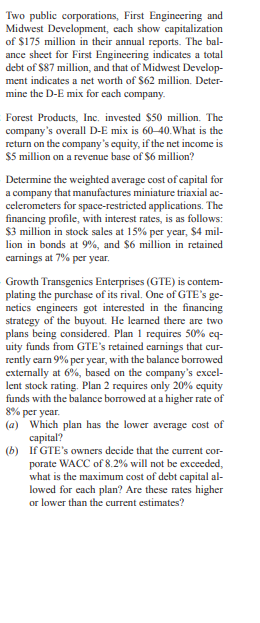
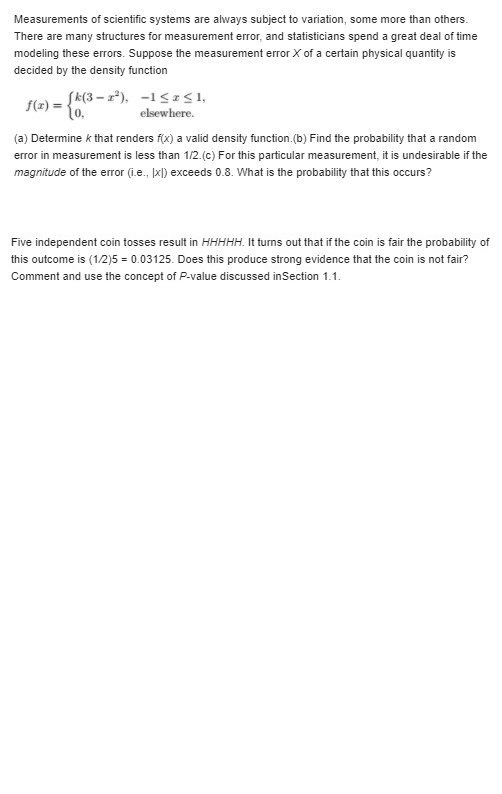
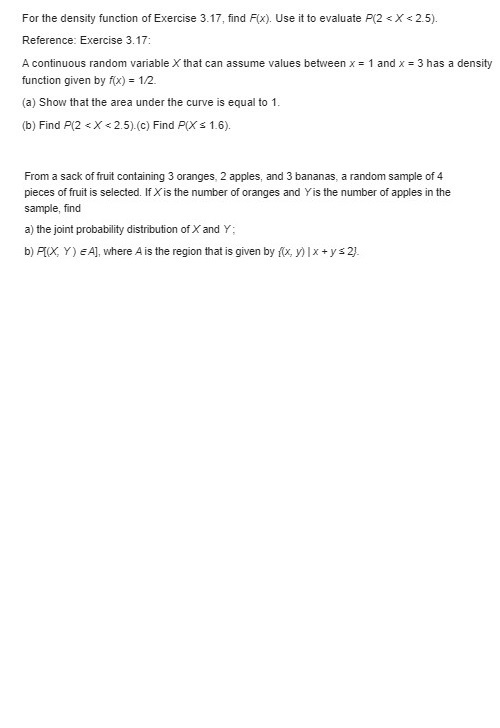
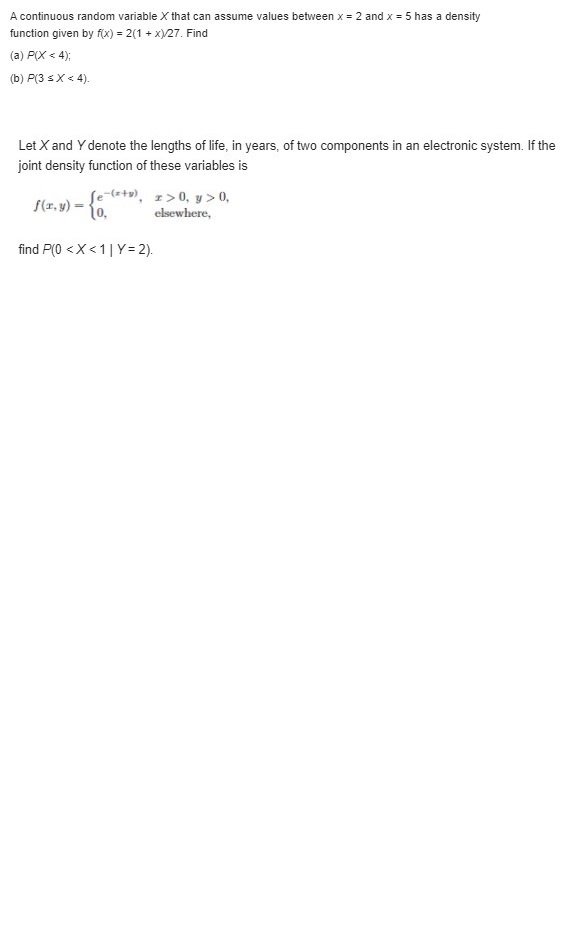
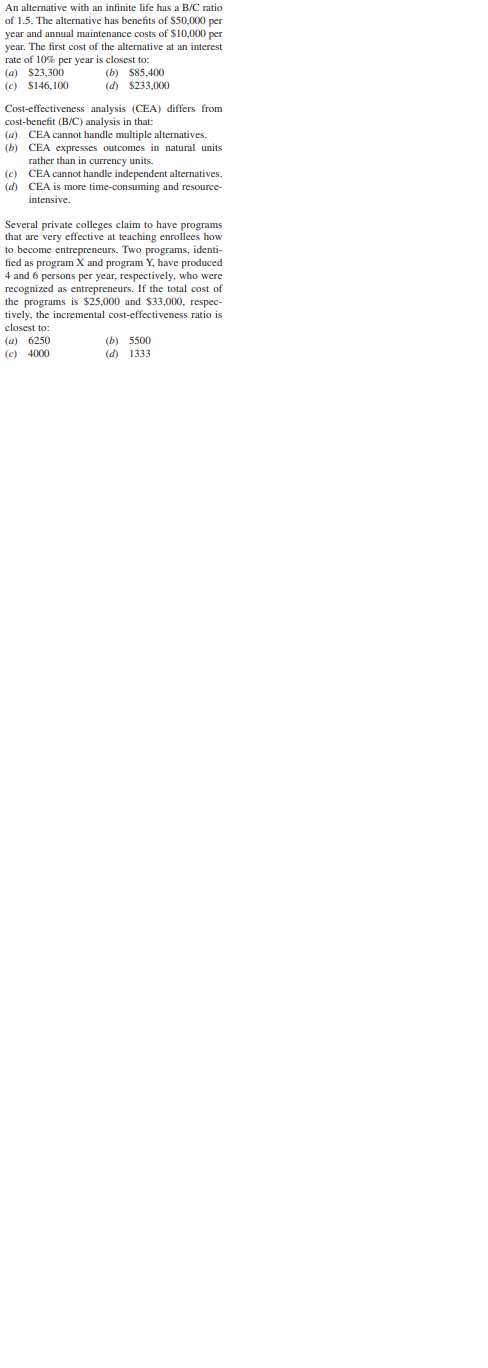
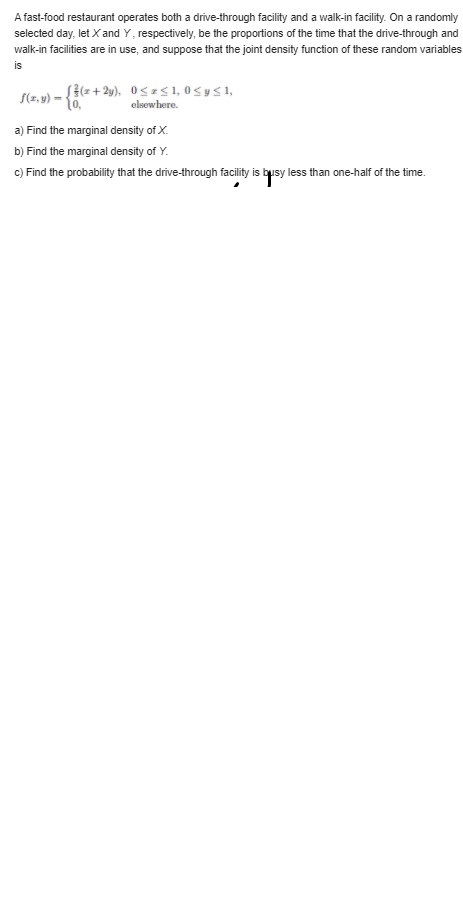
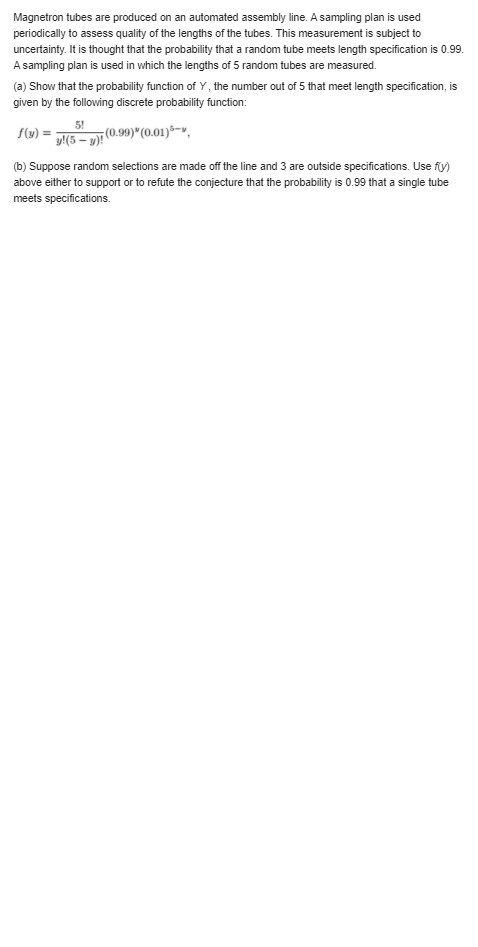
Two public corporations, First Engineering and Midwest Development, each show capitalization of $175 million in their annual reports. The bal- ance sheet for First Engineering indicates a total debt of $87 million, and that of Midwest Develop- ment indicates a net worth of $62 million. Deter- mine the D-E mix for each company. Forest Products, Inc. invested $50 million. The company's overall D-E mix is 60-40. What is the return on the company's equity, if the net income is $5 million on a revenue base of $6 million? Determine the weighted average cost of capital for a company that manufactures miniature triaxial ac- celerometers for space-restricted applications. The financing profile, with interest rates, is as follows: $3 million in stock sales at 15% per year, $4 mil- lion in bonds at 9%, and $6 million in retained carnings at 7% per year. Growth Transgenics Enterprises (GTE) is contem- plating the purchase of its rival. One of GTE's ge- netics engineers got interested in the financing strategy of the buyout. He learned there are two plans being considered. Plan 1 requires 50% cq- uity funds from GTE's retained earnings that cur- rently earn 9% per year, with the balance borrowed externally at 6%, based on the company's excel- lent stock rating. Plan 2 requires only 20% equity funds with the balance borrowed at a higher rate of 8% per year. (a) Which plan has the lower average cost of capital? (b) If GTE's owners decide that the current cor- porate WACC of 8.2% will not be exceeded, what is the maximum cost of debt capital al- lowed for each plan? Are these rates higher or lower than the current estimates?Measurements of scientific systems are always subject to variation, some more than others. There are many structures for measurement error, and statisticians spend a great deal of time modeling these errors. Suppose the measurement error X of a certain physical quantity is decided by the density function f(x) = [*(3-r'), -15251, elsewhere. (a) Determine * that renders f(x) a valid density function.(b) Find the probability that a random error in measurement is less than 1/2.(c) For this particular measurement, it is undesirable if the magnitude of the error (ie., (x]) exceeds 0.8. What is the probability that this occurs? Five independent coin tosses result in HHHHH. It turns out that if the coin is fair the probability of this outcome is (1/2)5 = 0.03125. Does this produce strong evidence that the coin is not fair? Comment and use the concept of P-value discussed inSection 1.1.For the density function of Exercise 3.17, find F(x). Use it to evaluate P(2 0, y>0, elsewhere, find P(0
Step by Step Solution
There are 3 Steps involved in it

Get step-by-step solutions from verified subject matter experts