







Question: Solve the problem below. Questions. The representative firm has production function Y = zN, where z is labor productivity. The representative household has utility function
Solve the problem below. Questions.
The representative firm has production function Y = zN, where z is labor productivity. The representative household has utility function u(c, l) = ? c + 18? l. Let w denote the real wage rate.
Suppose that z = 200. What is the representative firm's labor demand function? What must the wage rate be at the equilibrium? At this wage rate, how much profit can this firm send to household?
Given this wage rate and non-wage income, what is the optimal time allocation and consumption for the representative household? (c) (1 point) At the equilibrium, how big is labor input and how much output is produced?
Now the productivity drops. z = 190. At the new equilibrium how big is labor input and how much output is produced?
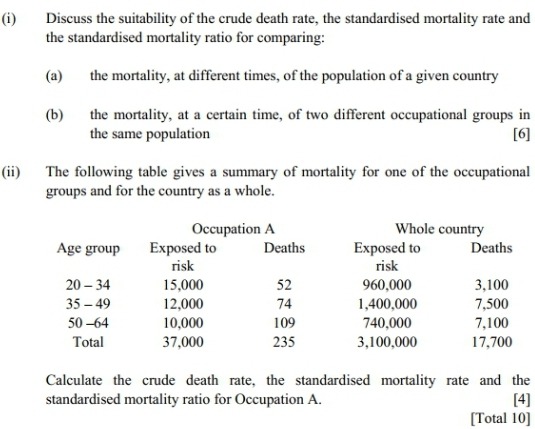
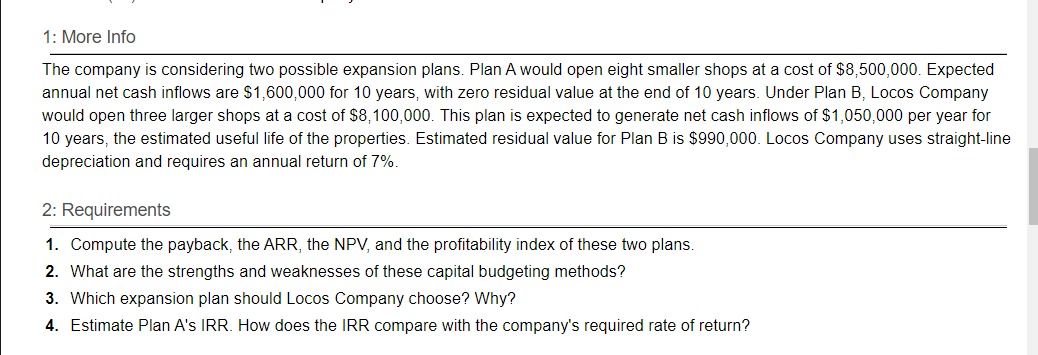
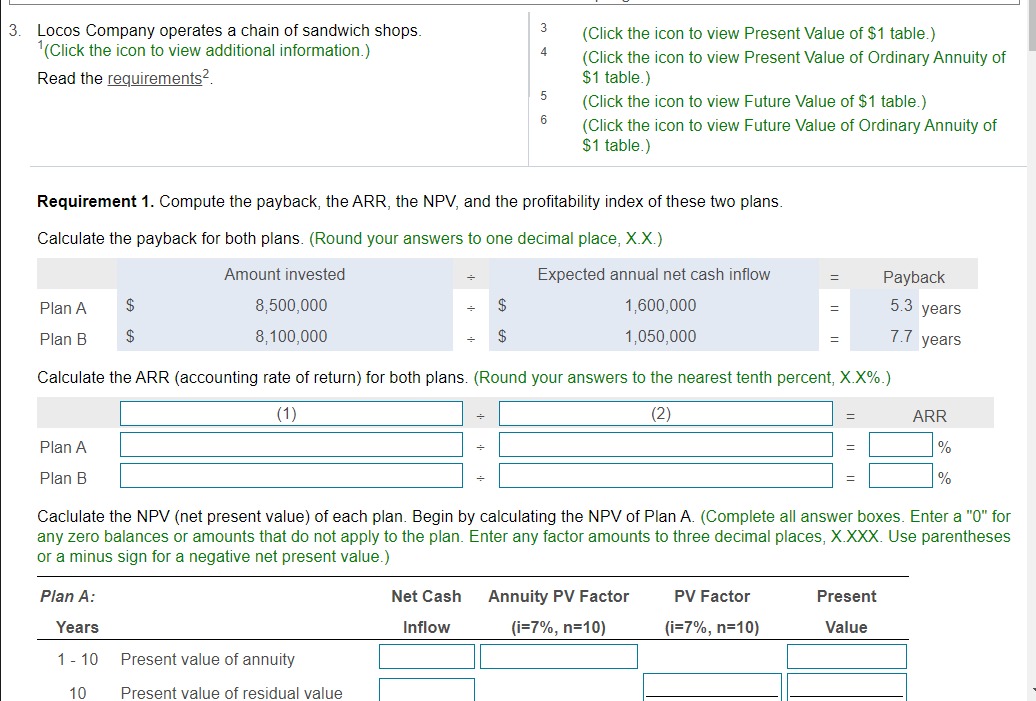
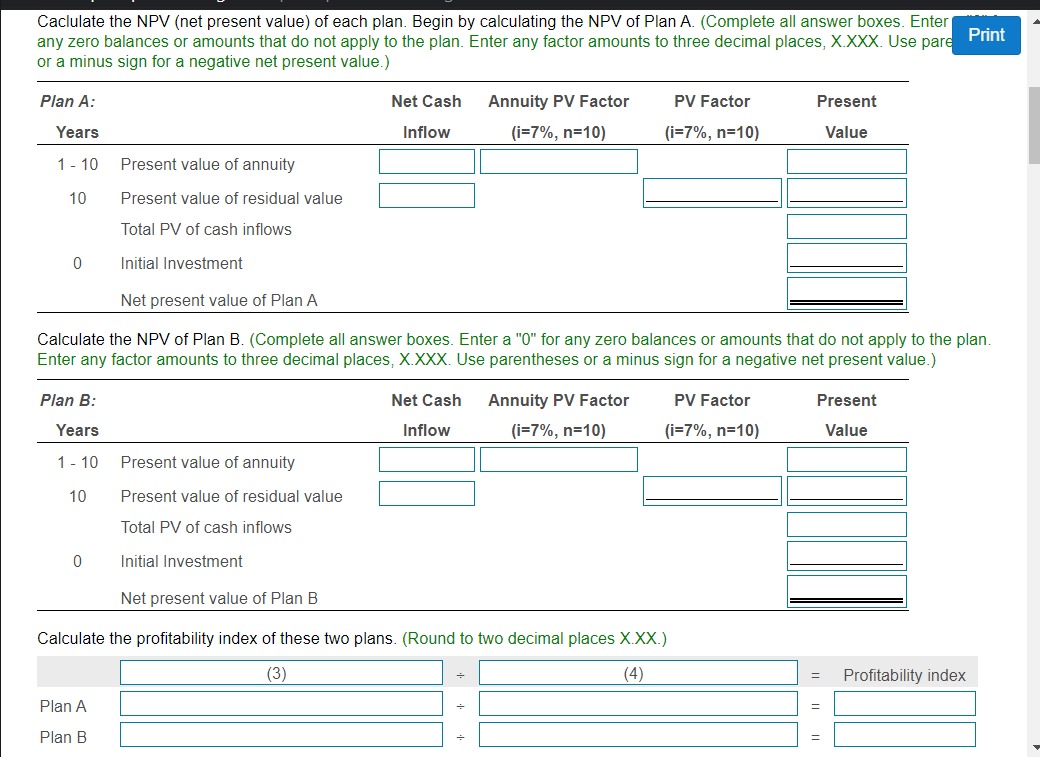
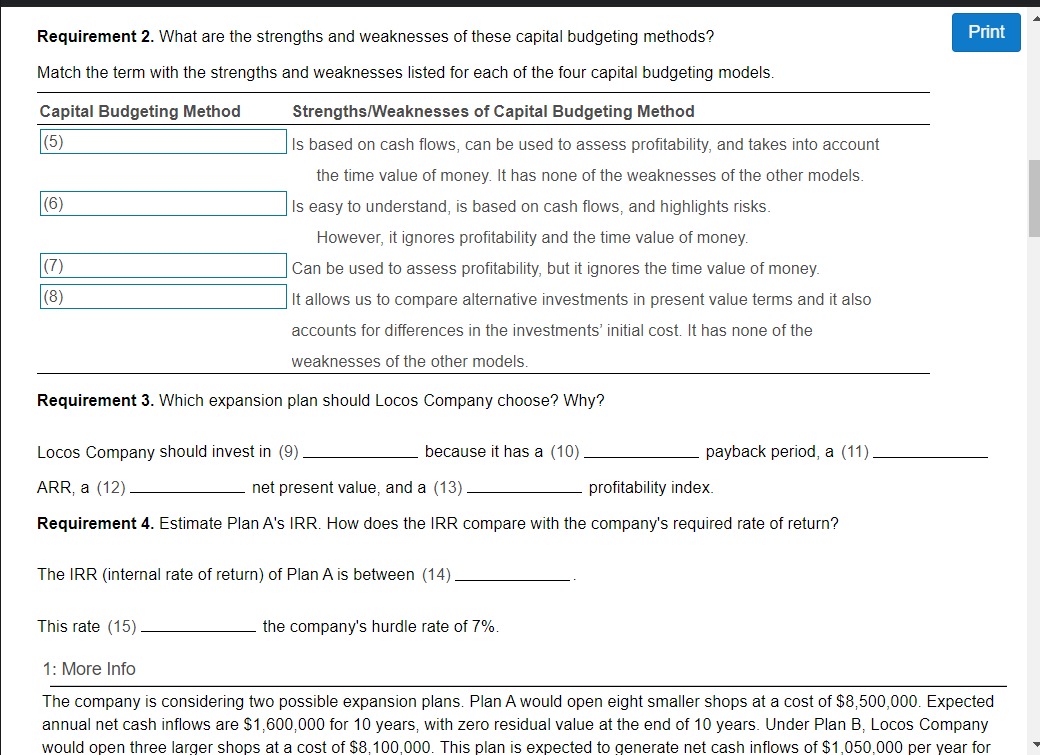
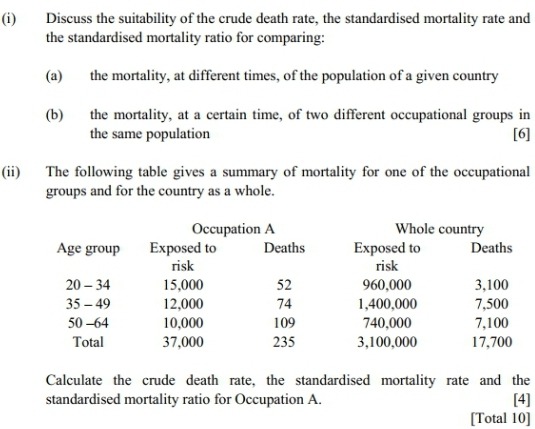
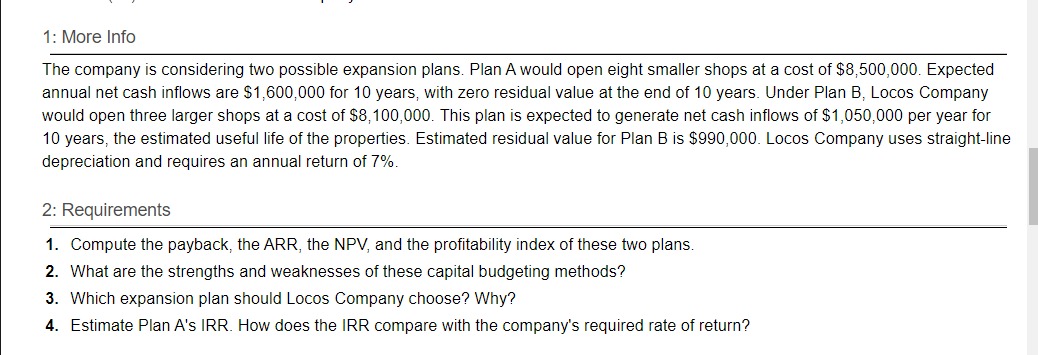
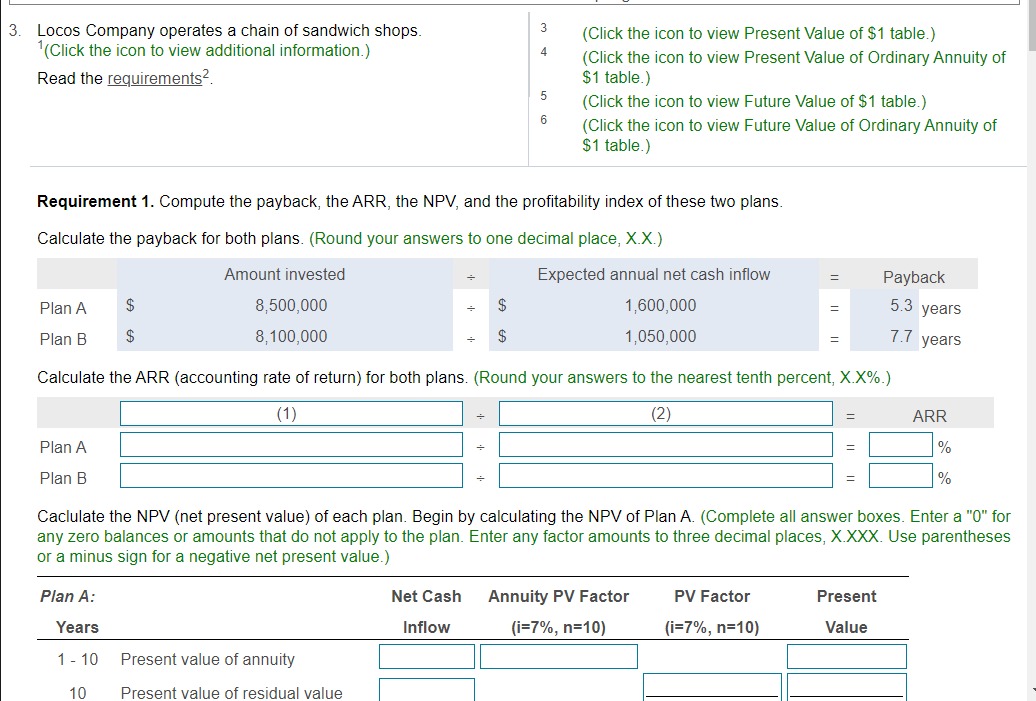
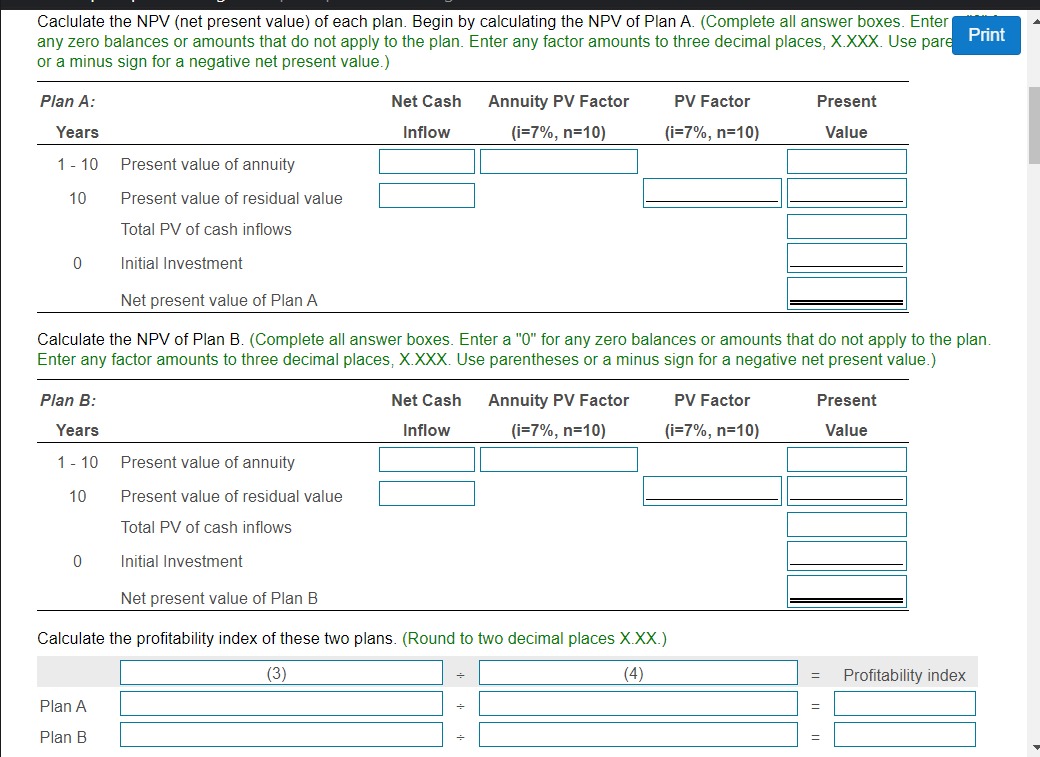
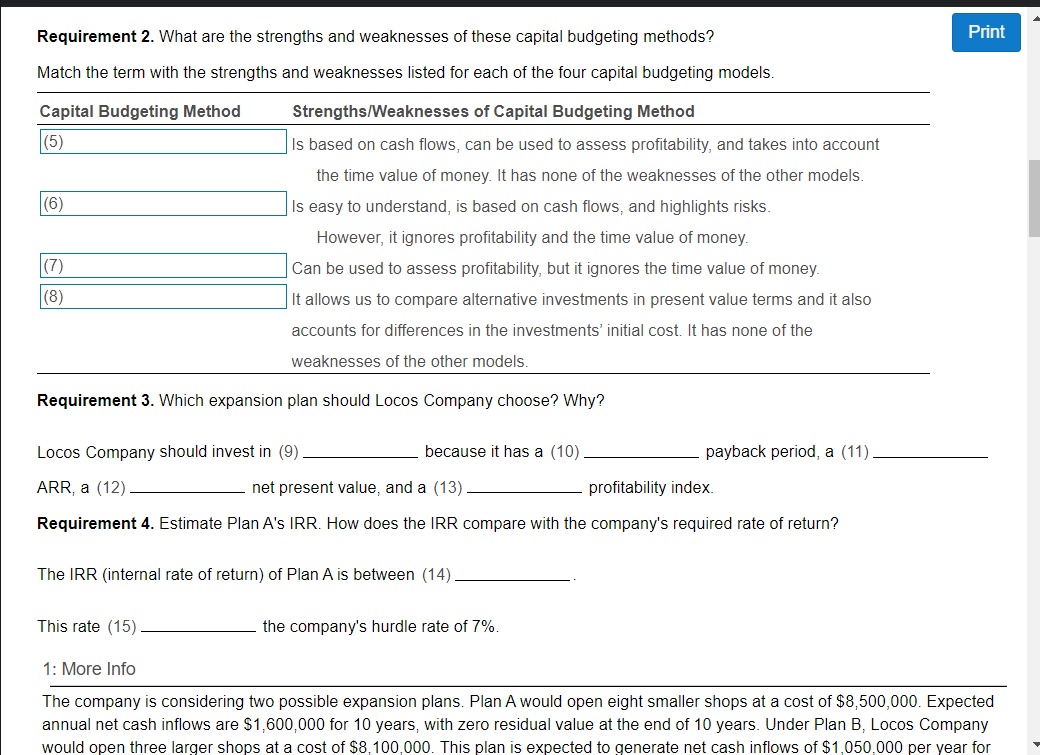
(i) Discuss the suitability of the crude death rate, the standardised mortality rate and the standardised mortality ratio for comparing: (a) the mortality, at different times, of the population of a given country (b) the mortality, at a certain time, of two different occupational groups in the same population [6] (ii) The following table gives a summary of mortality for one of the occupational groups and for the country as a whole. Occupation A Whole country Age group Exposed to Deaths Exposed to Deaths risk risk 20 -34 15,000 52 960,000 3.100 35 -49 12,000 74 1,400,000 7.500 50-64 10,000 109 740,000 7.100 Total 37,000 235 3,100.000 17,700 Calculate the crude death rate, the standardised mortality rate and the standardised mortality ratio for Occupation A. [4] [Total 10]1: More Info The company is considering two possible expansion plans. Plan A would open eight smaller shops at a cost of $8.500,000. Expected annual net cash inows are $1,600,000 for 10 years, with zero residual value at the end of 10 years. Under Plan B, Locos Company would open three larger shops at a cost of $8.1 00,000. This plan is expected to generate net cash inows of $1 50,000 per year for 10 years, the estimated useful life of the properties. Estimated residual value for Plan E is $990,000. Locos Company uses straightline depreciation and requires an annual return of 7%. 2: Requirements Compute the payback, the ARR, the NPV, and the protability index of these two plans. What are the strengths and weaknesses of these capital budgeting methods? Which expansion plan should Locos Company choose? Why? PP'N.' Estimate Plan A's IRR. Howr does the IRR compare with the company's required rate of return? LOCOS (300193"? operates a chain 0f sandwich ShOPS- 3 (Click the icon to view Present Value of$1 table.) 1 . . . . . . . \"mix the Icon to view additional Information.) 4 (Click the icon to view Present Value of Ordinary Annuity of Read the uirementsz. $1 table.) 5 (Click the icon to view Future Value of$1 table.) (Click the icon to view Future Value of Ordinary Annuity of $1 table.) Requirement 1. Compute the payback, the ARR, the NPV, and the protability index of these two plans. Calculate the payback for both plans. (Round your answers to one decimal place, XX.) Amount invested + Expected annual net cash inow : Payback Plan A $ 8,500,000 + $ 1,600,000 = 5.3 years Plan B 35 8,100,000 + $ 1,050,000 : T] years Calculate the ARR (accounting rate of return) for both plans. (Round your answers to the nearest tenth percent, X.X%_] (1) + | (2} = ARR Plan A + = \"/0 Plan B + i = \"/0 Caclulate the NPV (net present value} of each plan. Begin by calculating the NPV of Plan A. (Complete all answer boxes. Enter a "0" for any zero balances or amounts that do not apply to the plan. Enter any factor amounts to three decimal places, XXXX. Use parentheses or a minus sign for a negative net present value.) Plan A: Net Cash Annuity PV Factor PV Factor Present Years Inow (i=7%, n=10) {i=?%, n=10} Value 1 10 Present value ofannuity I 10 Present value of residual value i i Caclulate the NPV (net present value) of each plan. Begin by calculating the NPV of Plan A. (Complete all answer boxes. Enter any zero balances or amounts that do not apply to the plan. Enter any factor amounts to three decimal places, X.XXX. Use pare Print or a minus sign for a negative net present value.) Plan A: Net Cash Annuity PV Factor PV Factor Present Years Inflow (i=7%, n=10) (i=7%, n=10) Value 1 - 10 Present value of annuity 10 Present value of residual value Total PV of cash inflows 0 Initial Investment Net present value of Plan A Calculate the NPV of Plan B. (Complete all answer boxes. Enter a "0" for any zero balances or amounts that do not apply to the plan. Enter any factor amounts to three decimal places, X.XXX. Use parentheses or a minus sign for a negative net present value.) Plan B: Net Cash Annuity PV Factor PV Factor Present Years Inflow (i=7%, n=10) (i=7%, n=10) Value 1 - 10 Present value of annuity 10 Present value of residual value Total PV of cash inflows 0 Initial Investment Net present value of Plan B Calculate the profitability index of these two plans. (Round to two decimal places X.XX.) (3) (4) Profitability index Plan A Plan BRequirement 2. What are the strengths and weaknesses of these capital budgeting methods? Match the term with the strengths and weaknesses listed for each of the four capital budgeting models. Capital Budgeting Method Strengthereaknesses of Capital Budgeting Method (5) is based on cash flows, can be used to assess protability, and takes into account the time value of money. It has none of the weaknesses of the other models. (5} Is easy to understand, is based on cash flows, and highlights risks. However, it ignores protability and the time value of money. (7} Can be used to assess profitability, but it ignores the time value of money. (3) It allows us to compare alternative investments in present value terms and it also accounts for differences in the investments' initial cost. It has none of the weaknesses of the other modeis. Requirement 3. Which expansion plan should Locos Company choose? Why? Locos Company should invest in (0) because it has a {10) payback period, a (11} ARR, a (12) net present value, and a (13} protability index. Requirement 4. Estimate Plan A's IRR. How does the IRR compare with the company's required rate of return? The IRR (internal rate of return} of Plan A is between (14} This rate (15) the company's hurdle rate of T%. 1: More Info The company is considering two possible expansion plans. PlanA would open eight smaller shops at a cost of $8,500,000. Expected annual net cash inows are $1,600,000 for 10 years, with zero residual value at the end of 10 years. Under Plan B, Locos Company would open three larger shops at a cost of $8,1 00,000. This plan is expected to generate net cash inows of $1 050,000 per year for V
Step by Step Solution
There are 3 Steps involved in it

Get step-by-step solutions from verified subject matter experts
 Study Help