







Question: solve the question Refer to Exercise 3. a. Calculate the covariance between X, = the number of customers in the express checkout and X- =
solve the question
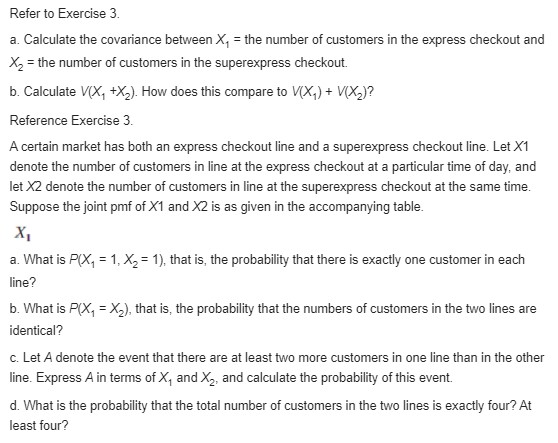
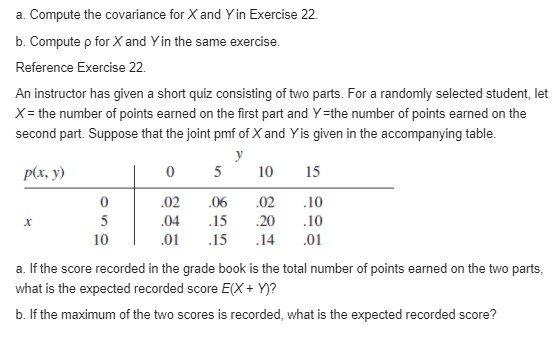
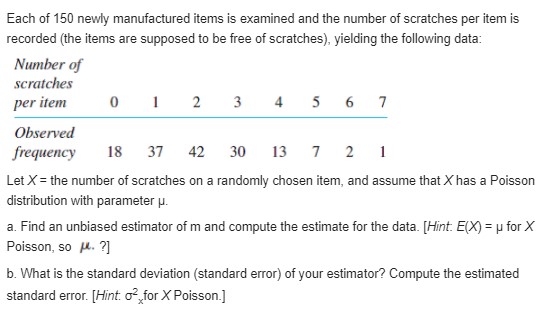
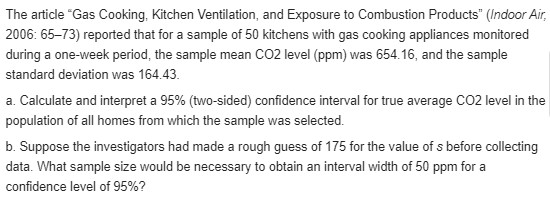
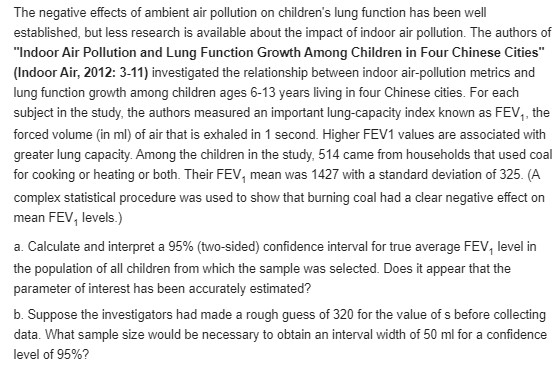
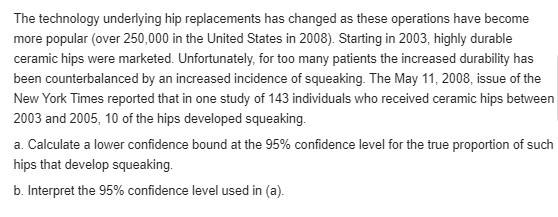
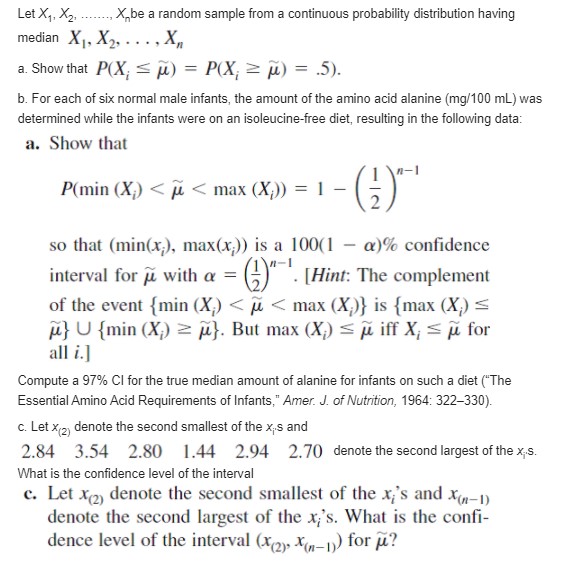
Refer to Exercise 3. a. Calculate the covariance between X, = the number of customers in the express checkout and X- = the number of customers in the superexpress checkout. b. Calculate V(X, +X,). How does this compare to V(X,) + V(X2)? Reference Exercise 3. A certain market has both an express checkout line and a superexpress checkout line. Let X1 denote the number of customers in line at the express checkout at a particular time of day, and let X2 denote the number of customers in line at the superexpress checkout at the same time. Suppose the joint pmf of X1 and X2 is as given in the accompanying table. X a. What is P(X, = 1, X, = 1), that is, the probability that there is exactly one customer in each line? b. What is P(X, = X,), that is, the probability that the numbers of customers in the two lines are identical? c. Let A denote the event that there are at least two more customers in one line than in the other line. Express A in terms of X, and X2, and calculate the probability of this event. d. What is the probability that the total number of customers in the two lines is exactly four? At least four?a. Compute the covariance for X and Y in Exercise 22. b. Compute p for X and Yin the same exercise. Reference Exercise 22. An instructor has given a short quiz consisting of two parts. For a randomly selected student, let X = the number of points earned on the first part and Y=the number of points earned on the second part. Suppose that the joint pmf of X and Yis given in the accompanying table. p(x, y) 0 5 10 15 .02 .06 .02 .10 X .04 .15 20 .10 10 01 .15 .14 .01 a. If the score recorded in the grade book is the total number of points earned on the two parts, what is the expected recorded score E(X + Y)? b. If the maximum of the two scores is recorded, what is the expected recorded score?Each of 150 newly manufactured items is examined and the number of scratches per item is recorded (the items are supposed to be free of scratches), yielding the following data: Number of scratches per item 2 3 4 5 6 7 Observed frequency 18 37 42 30 13 7 2 1 Let X = the number of scratches on a randomly chosen item, and assume that X has a Poisson distribution with parameter J. a. Find an unbiased estimator of m and compute the estimate for the data. [Hint. E(X) = p for X Poisson, so M. ?] b. What is the standard deviation (standard error) of your estimator? Compute the estimated standard error. [Hint: of for X Poisson.]The article "Gas Cooking, Kitchen Ventilation, and Exposure to Combustion Products" (Indoor Air, 2006: 65-73) reported that for a sample of 50 kitchens with gas cooking appliances monitored during a one-week period, the sample mean CO2 level (ppm) was 654.16, and the sample standard deviation was 164.43. a. Calculate and interpret a 95% (two-sided) confidence interval for true average CO2 level in the population of all homes from which the sample was selected. b. Suppose the investigators had made a rough guess of 175 for the value of s before collecting data. What sample size would be necessary to obtain an interval width of 50 ppm for a confidence level of 95%?The negative effects of ambient air pollution on children's lung function has been well established, but less research is available about the impact of indoor air pollution. The authors of "Indoor Air Pollution and Lung Function Growth Among Children in Four Chinese Cities" (Indoor Air, 2012: 3-11) investigated the relationship between indoor air-pollution metrics and lung function growth among children ages 6-13 years living in four Chinese cities. For each subject in the study, the authors measured an important lung-capacity index known as FEV,, the forced volume (in ml) of air that is exhaled in 1 second. Higher FEV1 values are associated with greater lung capacity. Among the children in the study, 514 came from households that used coal for cooking or heating or both. Their FEV, mean was 1427 with a standard deviation of 325. (A complex statistical procedure was used to show that burning coal had a clear negative effect on mean FEV, levels.) a. Calculate and interpret a 95% (two-sided) confidence interval for true average FEV, level in the population of all children from which the sample was selected. Does it appear that the parameter of interest has been accurately estimated? b. Suppose the investigators had made a rough guess of 320 for the value of s before collecting data. What sample size would be necessary to obtain an interval width of 50 ml for a confidence level of 95%?The technology underlying hip replacements has changed as these operations have become more popular (over 250,000 in the United States in 2008). Starting in 2003, highly durable ceramic hips were marketed. Unfortunately, for too many patients the increased durability has been counterbalanced by an increased incidence of squeaking. The May 11, 2008, issue of the New York Times reported that in one study of 143 individuals who received ceramic hips between 2003 and 2005, 10 of the hips developed squeaking. a. Calculate a lower confidence bound at the 95% confidence level for the true proportion of such hips that develop squeaking. b. Interpret the 95% confidence level used in (a).Let X1, X2 .......) Xbe a random sample from a continuous probability distribution having median X , X2, . . . . X, a. Show that P(X; = /) = P(X; = M) = .5). b. For each of six normal male infants, the amount of the amino acid alanine (mg/100 mL) was determined while the infants were on an isoleucine-free diet, resulting in the following data: a. Show that P(min (X;) ju}. But max (X,) = p iff X; Su for all i.] Compute a 97% CI for the true median amount of alanine for infants on such a diet ("The Essential Amino Acid Requirements of Infants," Amer. J. of Nutrition, 1964: 322-330). c. Let x 2) denote the second smallest of the x.s and 2.84 3.54 2.80 1.44 2.94 2.70 denote the second largest of the X.S. What is the confidence level of the interval c. Let x2) denote the second smallest of the x,'s and X(-1) denote the second largest of the x;'s. What is the confi- dence level of the interval (X(2) *(m-1)) for u
Step by Step Solution
There are 3 Steps involved in it
To start lets address Exercise 3 by calculating the covariance and variances for the given checkout ... View full answer

Get step-by-step solutions from verified subject matter experts
 Study Help