







Question: solve this case study A saying that is often overused is that of the textbook example. Even in the classroom it is hard to identify
solve this case study
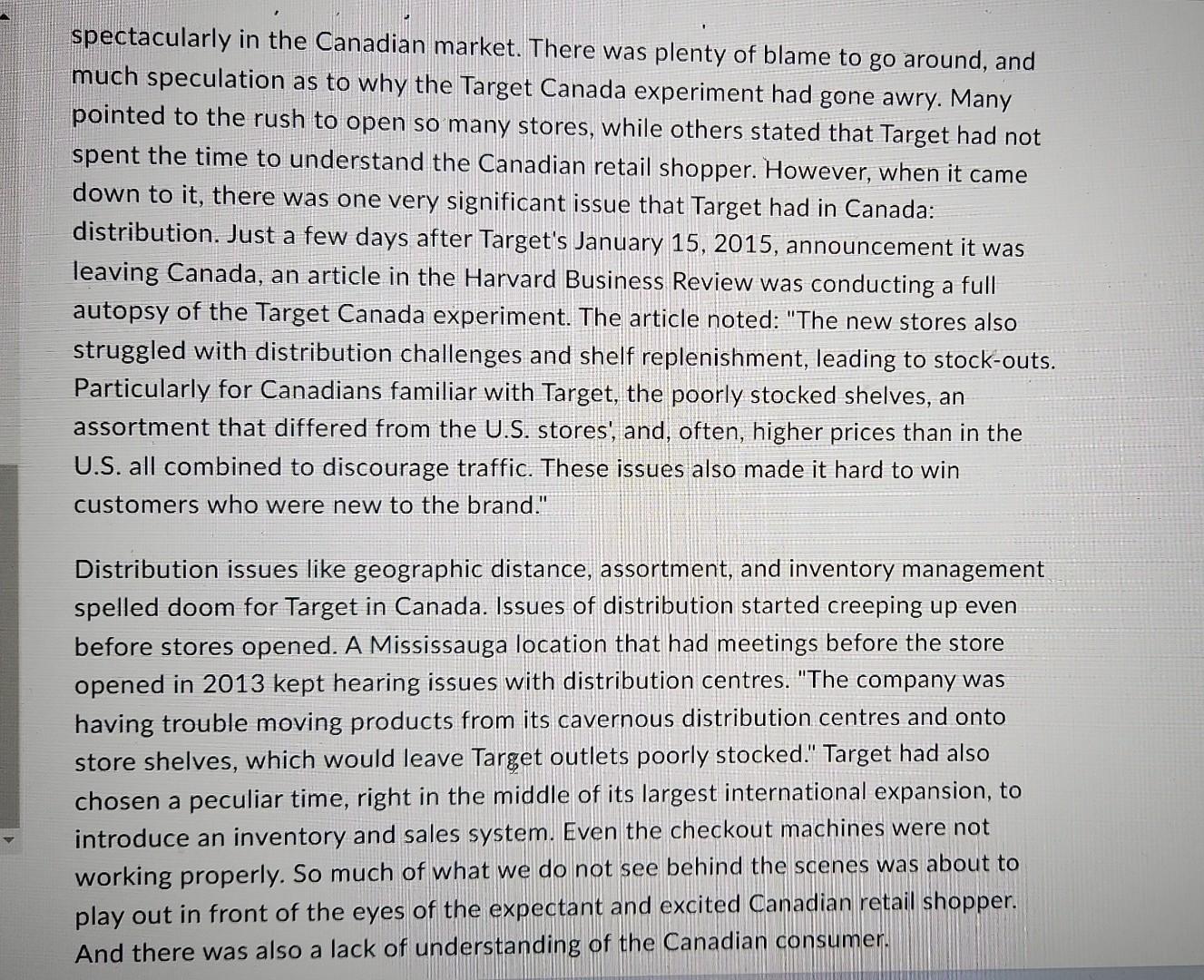
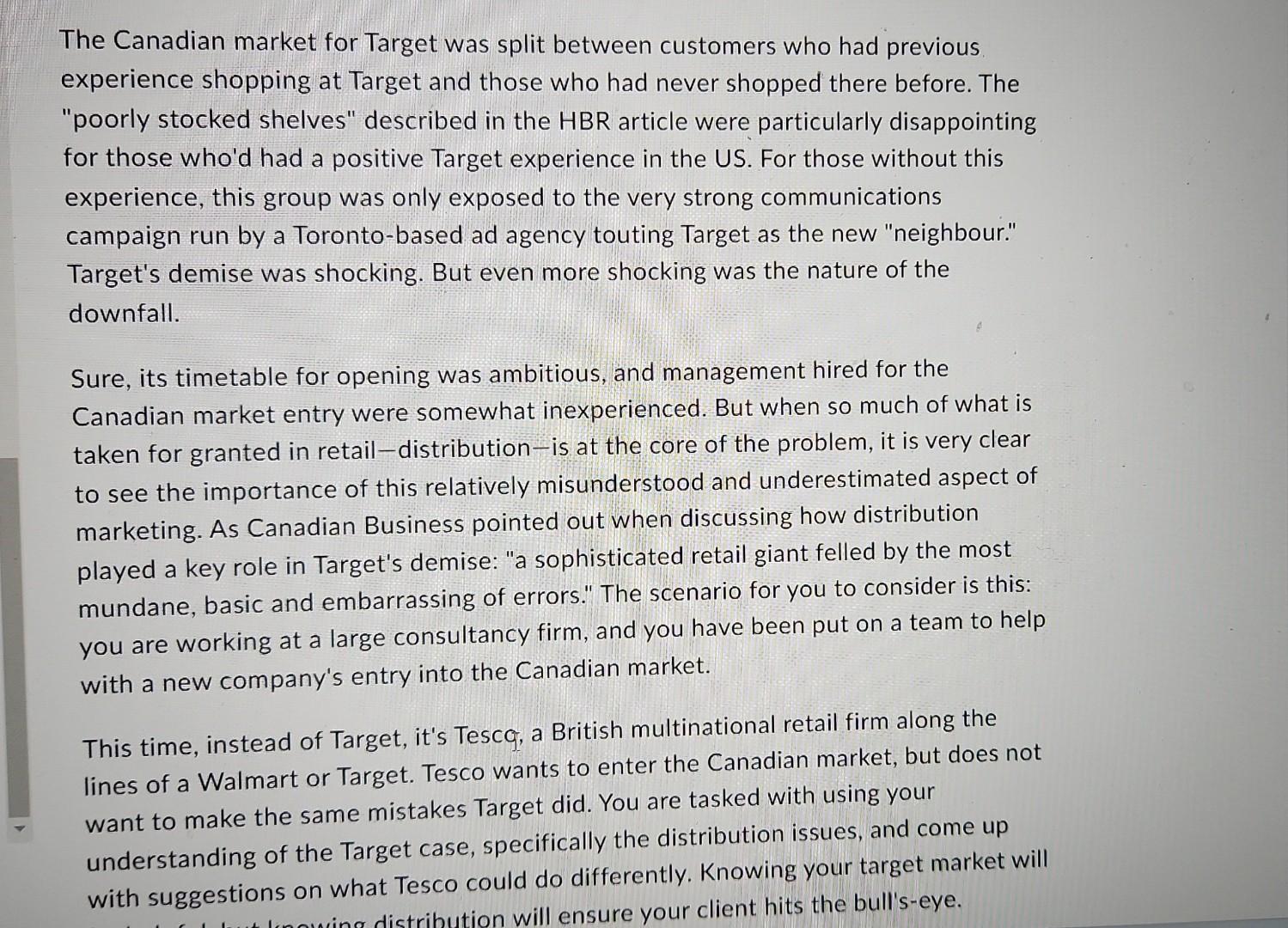
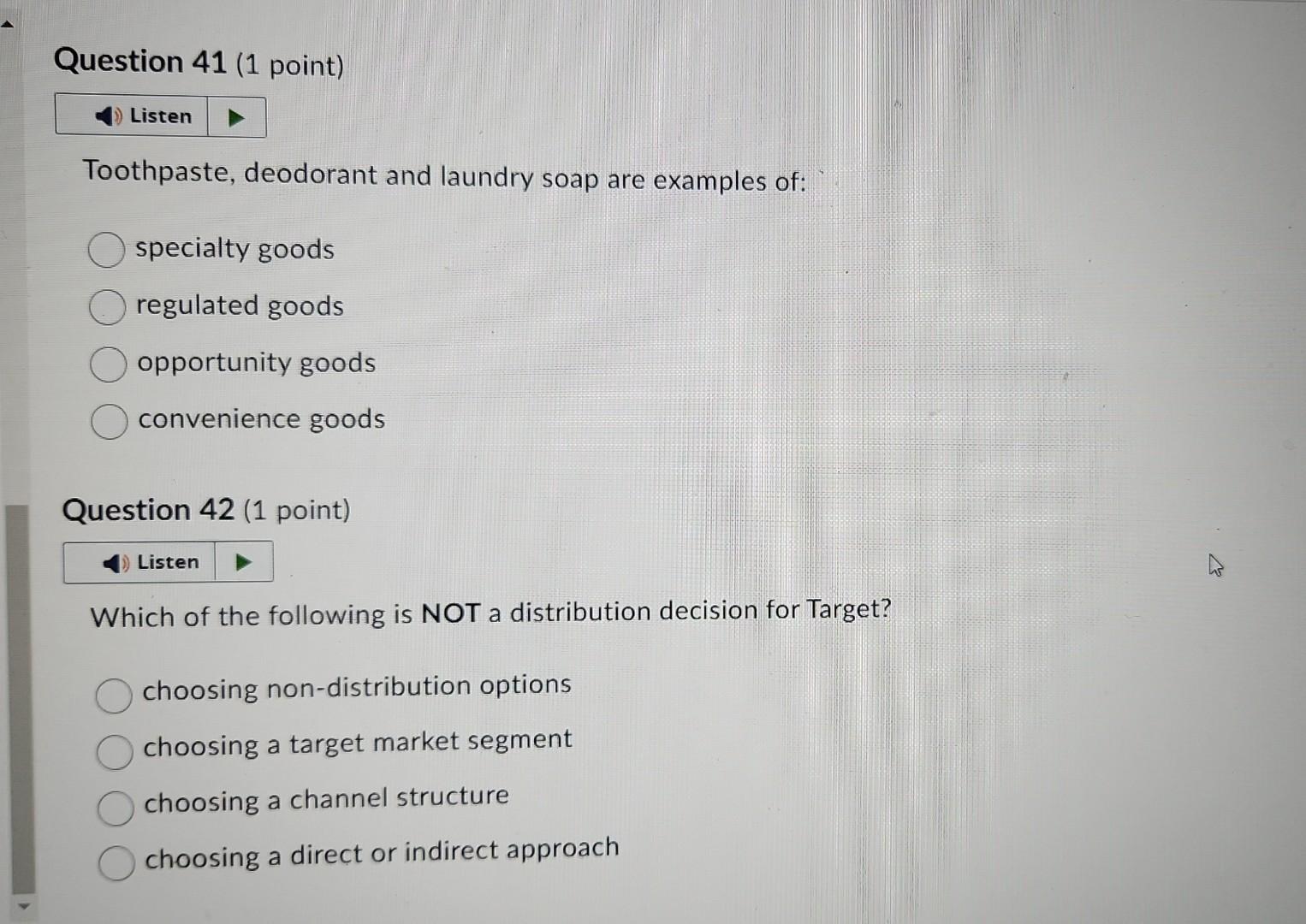
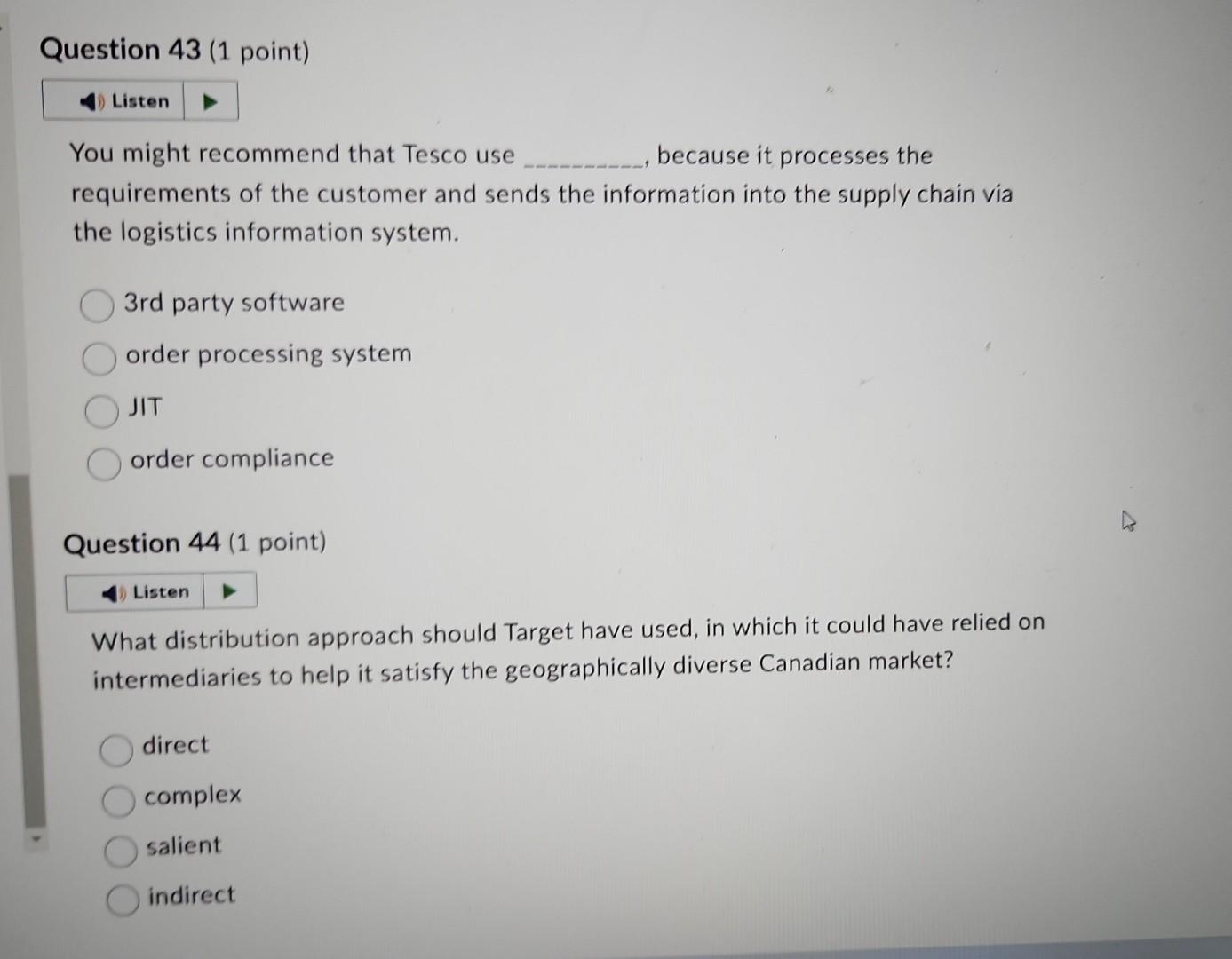
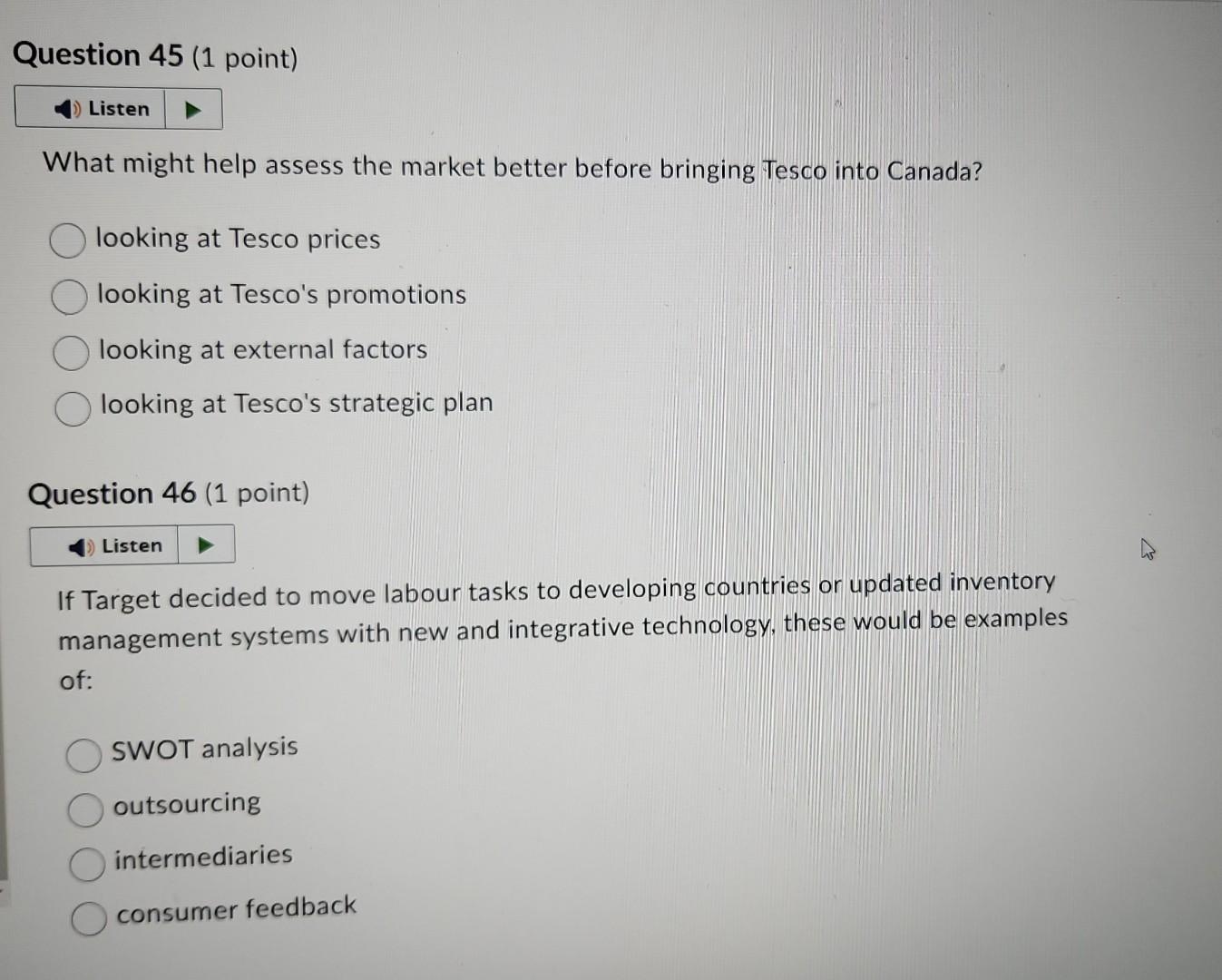
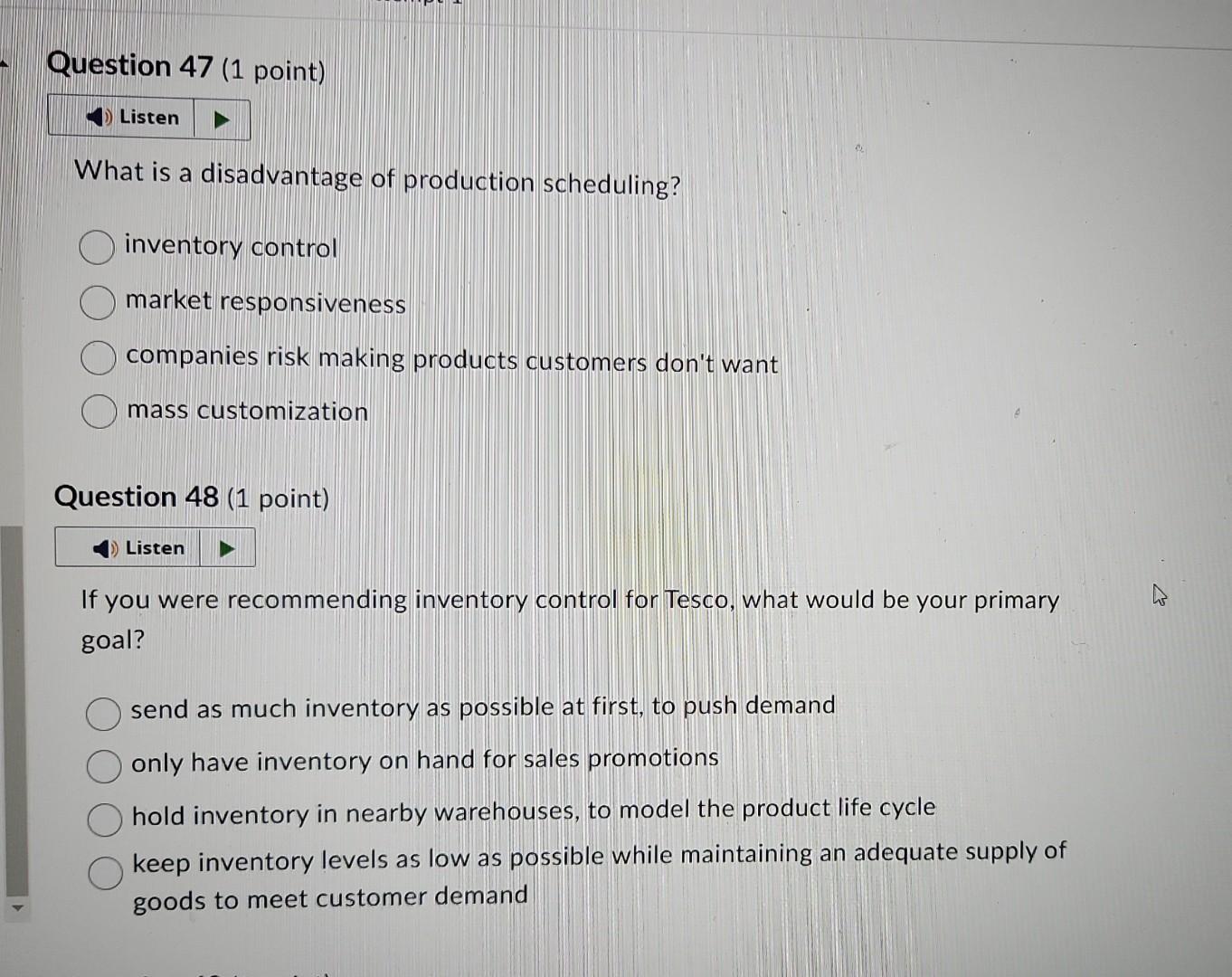
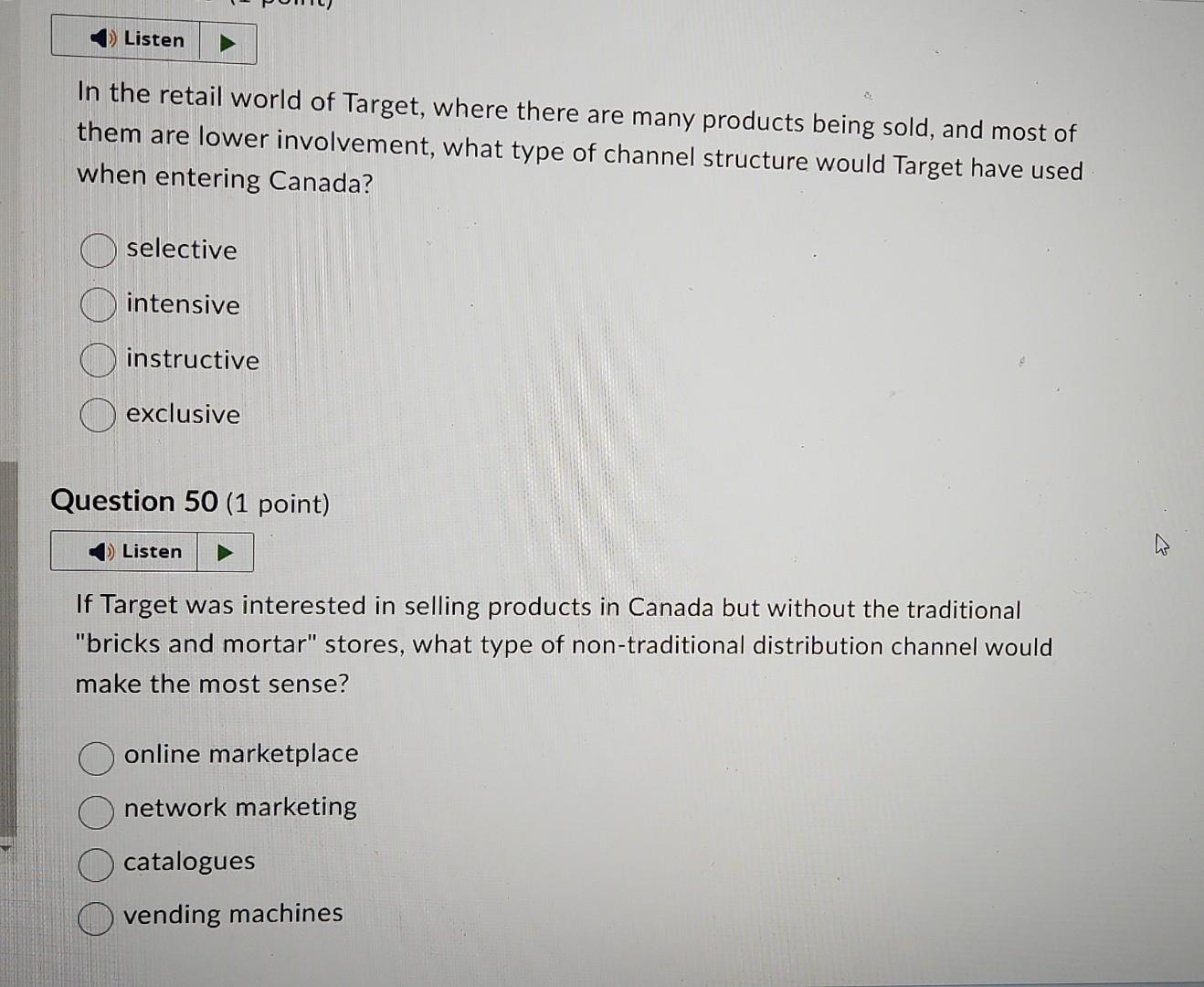
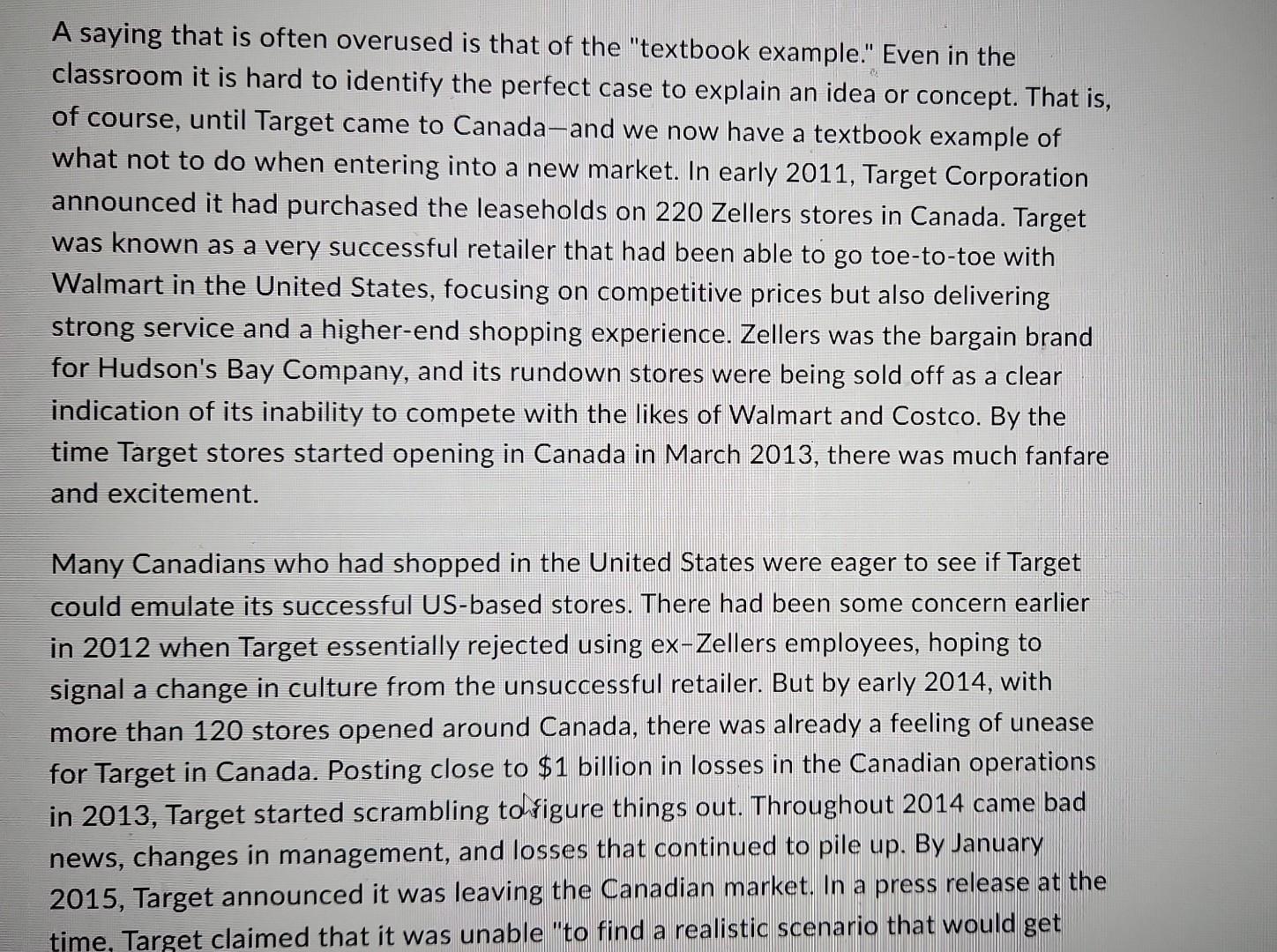
A saying that is often overused is that of the "textbook example." Even in the classroom it is hard to identify the perfect case to explain an idea or concept. That is, of course, until Target came to Canada-and we now have a textbook example of what not to do when entering into a new market. In early 2011, Target Corporation announced it had purchased the leaseholds on 220 Zellers stores in Canada. Target was known as a very successful retailer that had been able to go toe-to-toe with Walmart in the United States, focusing on competitive prices but also delivering strong service and a higher-end shopping experience. Zellers was the bargain brand for Hudson's Bay Company, and its rundown stores were being sold off as a clear indication of its inability to compete with the likes of Walmart and Costco. By the time Target stores started opening in Canada in March 2013, there was much fanfare and excitement. Many Canadians who had shopped in the United States were eager to see if Target could emulate its successful US-based stores. There had been some concern earlier in 2012 when Target essentially rejected using ex-Zellers employees, hoping to signal a change in culture from the unsuccessful retailer. But by early 2014 , with more than 120 stores opened around Canada, there was already a feeling of unease for Target in Canada. Posting close to $1 billion in losses in the Canadian operations in 2013. Target started scrambling tohfigure things out. Throughout 2014 came bad news, changes in management, and losses that continued to pile up. By January 2015, Target announced it was leaving the Canadian market. In a press release at the time. Target claimed that it was unable "to find a realistic scenario that would get spectacularly in the Canadian market. There was plenty of blame to go around, and much speculation as to why the Target Canada experiment had gone awry. Many pointed to the rush to open so many stores, while others stated that Target had not spent the time to understand the Canadian retail shopper. However, when it came down to it, there was one very significant issue that Target had in Canada: distribution. Just a few days after Target's January 15, 2015, announcement it was leaving Canada, an article in the Harvard Business Review was conducting a full autopsy of the Target Canada experiment. The article noted: "The new stores also struggled with distribution challenges and shelf replenishment, leading to stock-outs. Particularly for Canadians familiar with Target, the poorly stocked shelves, an assortment that differed from the U.S. stores', and, often, higher prices than in the U.S. all combined to discourage traffic. These issues also made it hard to win customers who were new to the brand." Distribution issues like geographic distance, assortment, and inventory management spelled doom for Target in Canada. Issues of distribution started creeping up even before stores opened. A Mississauga location that had meetings before the store opened in 2013 kept hearing issues with distribution centres. "The company was having trouble moving products from its cavernous distribution centres and onto store shelves, which would leave Target outlets poorly stocked." Target had also chosen a peculiar time, right in the middle of its largest international expansion, to introduce an inventory and sales system. Even the checkout machines were not working properly. So much of what we do not see behind the scenes was about to play out in front of the eyes of the expectant and excited Canadian retail shopper. And there was also a lack of understanding of the Canadian consumer. The Canadian market for Target was split between customers who had previous experience shopping at Target and those who had never shopped there before. The "poorly stocked shelves" described in the HBR article were particularly disappointing for those who'd had a positive Target experience in the US. For those without this experience, this group was only exposed to the very strong communications campaign run by a Toronto-based ad agency touting Target as the new "neighbour." Target's demise was shocking. But even more shocking was the nature of the downfall. Sure, its timetable for opening was ambitious, and management hired for the Canadian market entry were somewhat inexperienced. But when so much of what is taken for granted in retail-distribution - is at the core of the problem, it is very clear to see the importance of this relatively misunderstood and underestimated aspect of marketing. As Canadian Business pointed out when discussing how distribution played a key role in Target's demise: "a sophisticated retail giant felled by the most mundane, basic and embarrassing of errors." The scenario for you to consider is this: you are working at a large consultancy firm, and you have been put on a team to help with a new company's entry into the Canadian market. This time, instead of Target, it's Tescg, a British multinational retail firm along the lines of a Walmart or Target. Tesco wants to enter the Canadian market, but does not want to make the same mistakes Target did. You are tasked with using your understanding of the Target case, specifically the distribution issues, and come up with suggestions on what Tesco could do differently. Knowing your target market will Toothpaste, deodorant and laundry soap are examples of: specialty goods regulated goods opportunity goods convenience goods Question 42 (1 point) Which of the following is NOT a distribution decision for Target? choosing non-distribution options choosing a target market segment choosing a channel structure choosing a direct or indirect approach You might recommend that Tesco use , because it processes the requirements of the customer and sends the information into the supply chain via the logistics information system. 3rd party software order processing system JIT order compliance Question 44 (1 point) What distribution approach should Target have used, in which it could have relied on intermediaries to help it satisfy the geographically diverse Canadian market? direct complex salient indirect What might help assess the market better before bringing Tesco into Canada? looking at Tesco prices looking at Tesco's promotions looking at external factors looking at Tesco's strategic plan Question 46 (1 point) If Target decided to move labour tasks to developing countries or updated inventory management systems with new and integrative technology, these would be examples of: SWOT analysis outsourcing intermediaries consumer feedback What is a disadvantage of production scheduling? inventory control market responsiveness companies risk making products customers don't want mass customization Question 48 (1 point) If you were recommending inventory control for Tesco, what would be your primary goal? send as much inventory as possible at first, to push demand only have inventory on hand for sales promotions hold inventory in nearby warehouses, to model the product life cycle keep inventory levels as low as possible while maintaining an adequate supply of goods to meet customer demand In the retail world of Target, where there are many products being sold, and most of them are lower involvement, what type of channel structure would Target have used when entering Canada? selective intensive instructive exclusive Question 50 ( 1 point) If Target was interested in selling products in Canada but without the traditional "bricks and mortar" stores, what type of non-traditional distribution channel would make the most sense? online marketplace network marketing catalogues vending machines
Step by Step Solution
There are 3 Steps involved in it
1 Expert Approved Answer
Step: 1 Unlock

Question Has Been Solved by an Expert!
Get step-by-step solutions from verified subject matter experts
Step: 2 Unlock
Step: 3 Unlock
 Study Help