







Question: solve this hndwritten only please detailed solution box final answer do not use generated answere 1. Let the national income mode] be described by the
![use generated answere 1. Let the national income mode] be described by](https://s3.amazonaws.com/si.experts.images/answers/2024/06/6676164def4d8_9896676164dc278c.jpg)
solve this hndwritten only please detailed solution box final answer
do not use generated answere
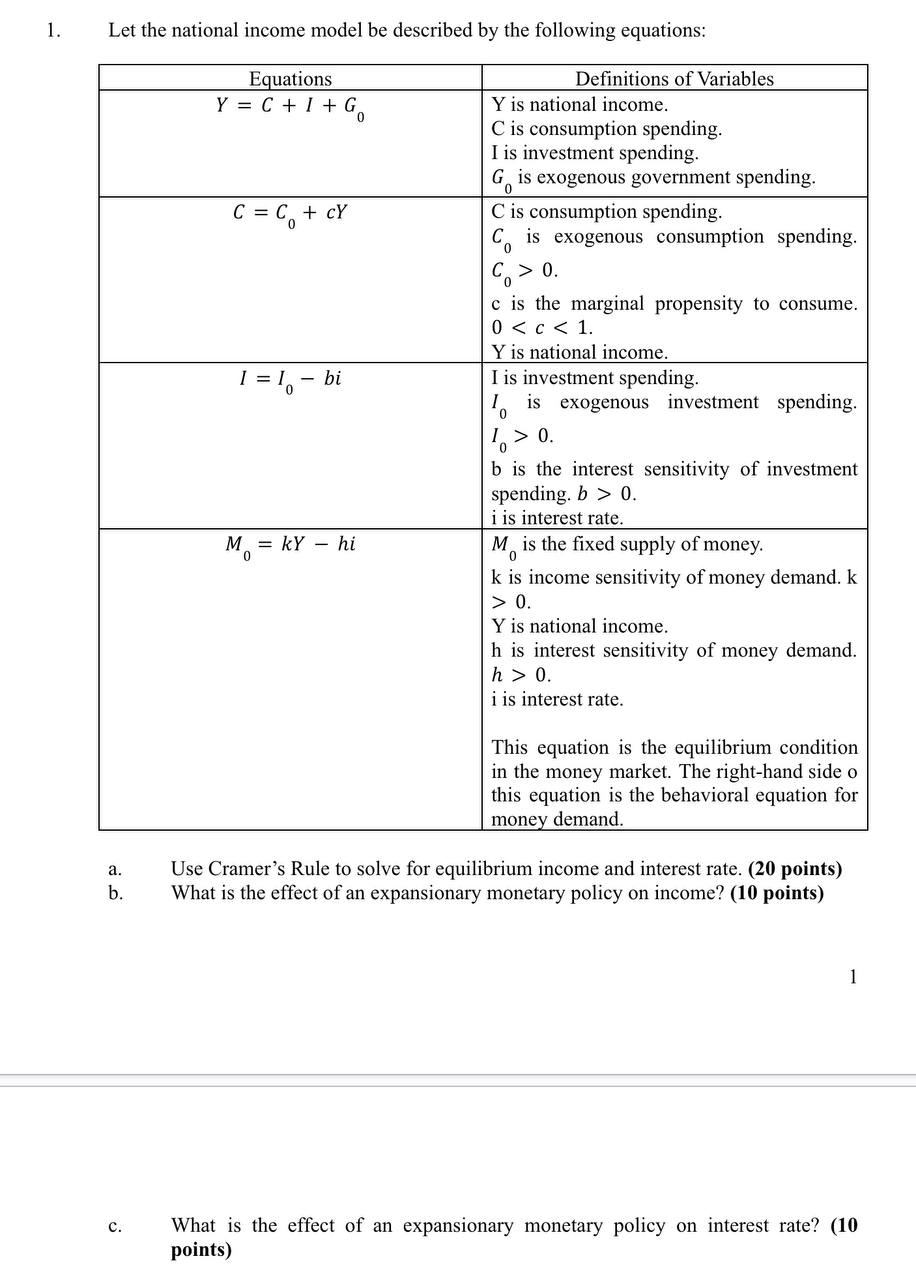
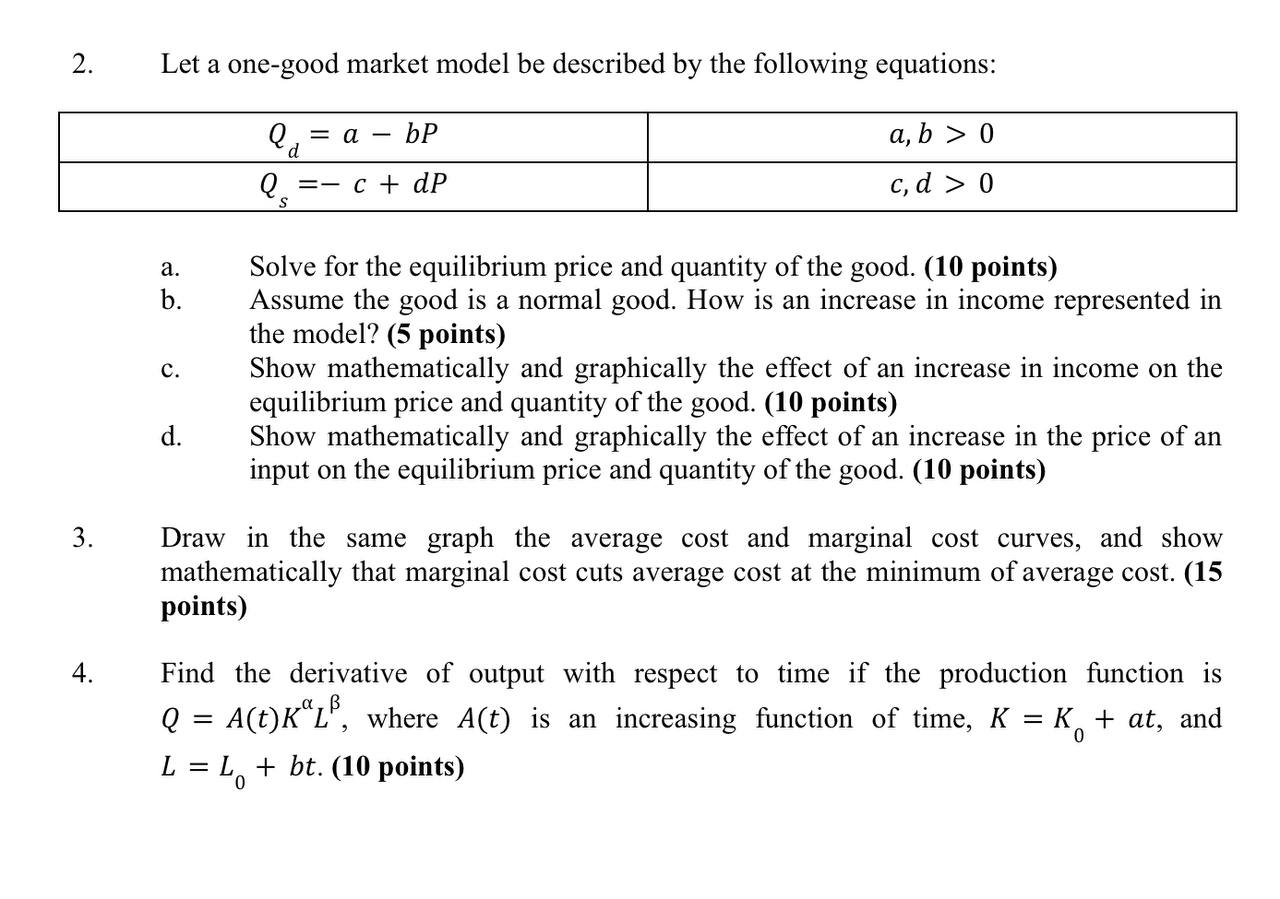
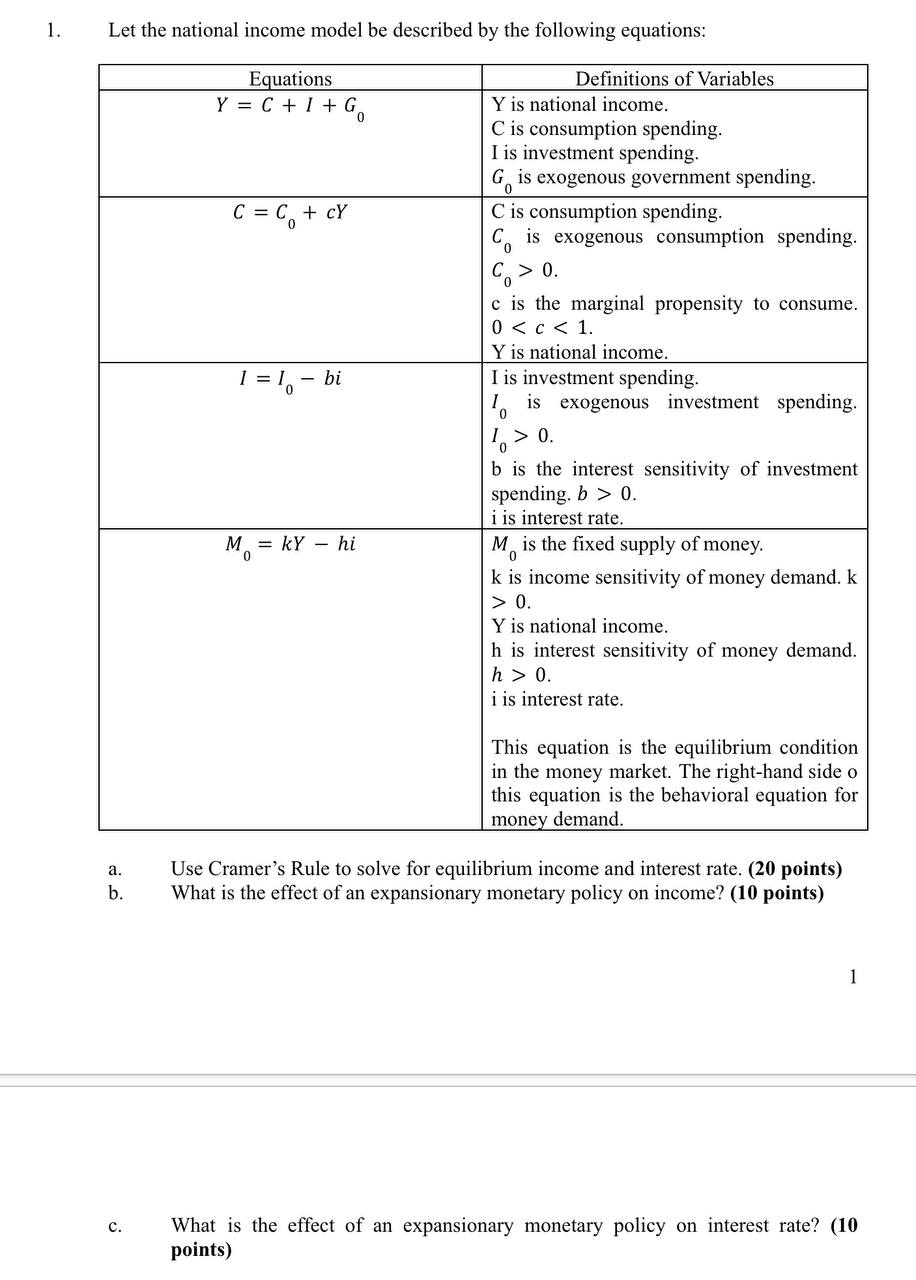
1. Let the national income mode] be described by the following equations: E-uations Denitions of Variables Y is national income. C is consumption spending. I is investment spending. G0 is exogenous government spending. C is consumption spending. f: is exogenous consumption spending. CD > 0. c is the marginal propensity to consume. 0 0. u b is the interest sensitivity of investment Spending. b :> U. i is interest rate. Me is the fixed supply of money. k is income sensitivity of money demand. k > i). Y is national income. h is interest sensitivity of money demand. it > 0. i is interest rate. This equation is the equilibrium condition in the money market. The right-hand side 0 this equation is the behavioral equation for mone demand. a. Use Cramer's Rule to solve for equilibrium income and interest rate. (20 points) b. What is the effect of an expansiOnary monetary policy on income? (10 points} i c. What is the effect of an expansionary monetary policy on interest rate? (10 points} 2. Let a onegood market model be described by the following equations: Qd=abP a,b>0 a. Solve for the equilibrium price and quantity of the good. (10 points) b. Assume the good is a normal good. How is an increase in income represented in the model? (5 points) c. Show mathematically and graphically the effect of an increase in income on the equilibrium price and quantity of the good. (10 points) d. Show mathematically and graphically the effect of an increase in the price of an input on the equilibrium price and quantity of the good. (10 points) 3. Draw in the same graph the average cost and marginal cost curves, and Show mathematically that marginal cost cuts average cost at the minimum of average cost. (15 points) 4. Find the derivative of output with respect to time if the production function is Q = A(t)KaL , where AG) is an increasing function of time, K = K0 + at, and L = L0 + bt. (10 points)
Step by Step Solution
There are 3 Steps involved in it

Get step-by-step solutions from verified subject matter experts
 Study Help