







Question: Some help with counterexamples Let's say you wanted to show that the following statement is false: If a is an integer, then a3 is an
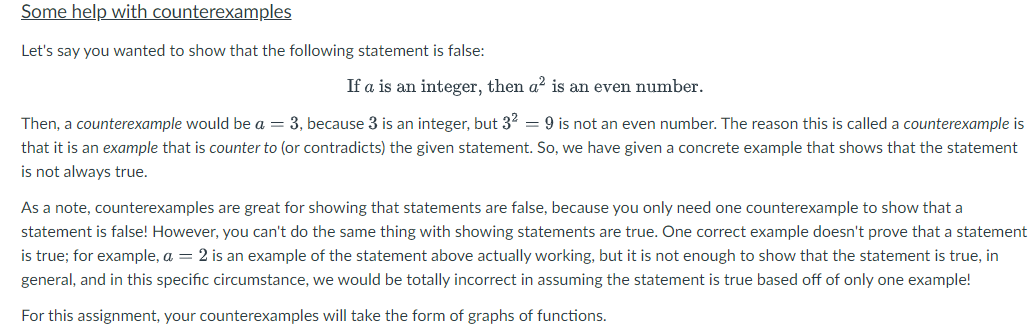
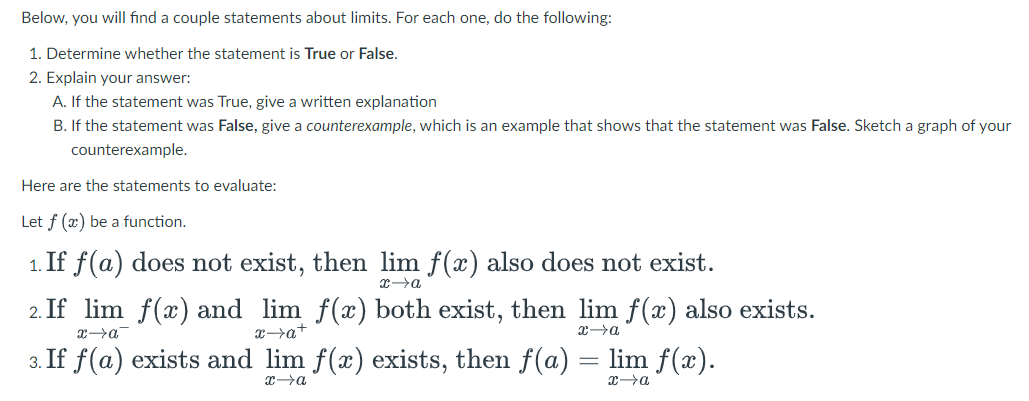
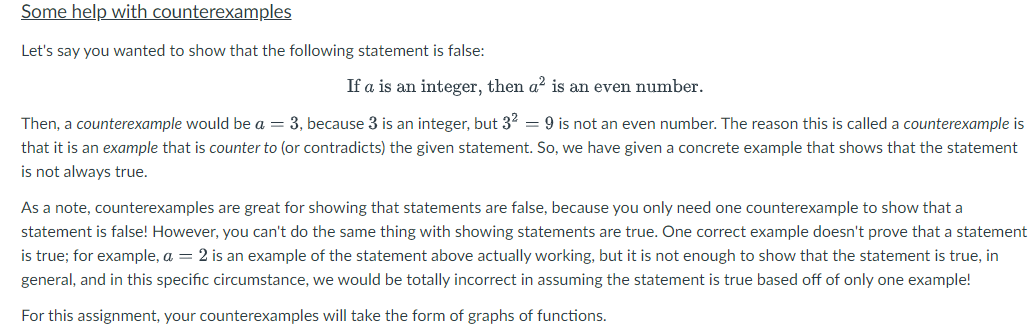
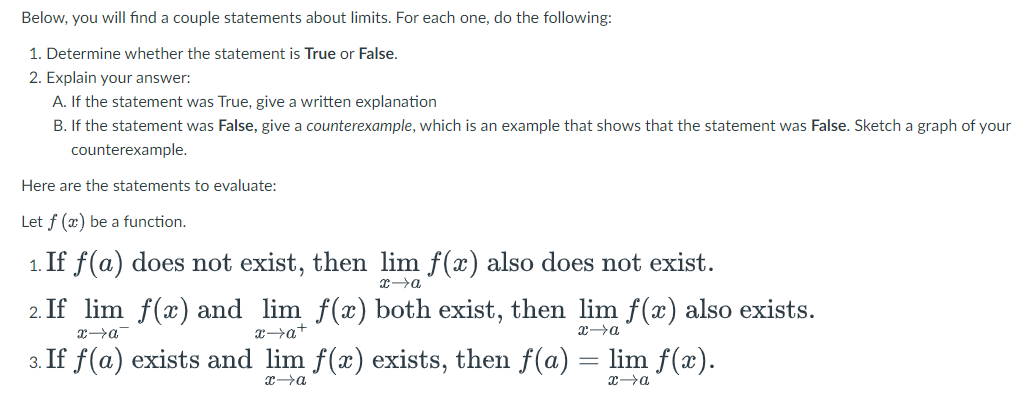
Some help with counterexamples Let's say you wanted to show that the following statement is false: If a is an integer, then a3 is an even number. Then. a counterexample would be a = 3, because 3 is an integer. but 32 = 9 is not an even number. The reason this is called a counterexample is that it is an example that is counter to [or contradicts} the given statement. So. we have given a concrete example that shows that the statement is not always true. As a note, counterexamples are great for showing that statements are false. because you only need one counterexample to show that a statement is false! However, you can't do the same thing with showing statements are true. One correct example doesn't prove that a statement is true; for example. a = 2 is an example of the statement above actually working. but it is not enough to show that the statement is true, in general. and in this specic circumstance. we would be totally incorrect in assuming the statement is true based off of only one example! For this assignment. your counterexamples will take the form of graphs of functions. Below, you will nd a couple statements about limits. For each one, do the following: 1. Determine whether the statement is True or False. 2. Explain your answer: A. If the statement was True, give a written explanation B. If the statement was False, give a counterexample, which is an example that shows that the statement was False. Sketch a graph of your counterexample. Here are the statements to evaluate: Let f (as) be a function. 1.If f(o.) does not exist, then lim x) also does not exist. 113}{1 2.If lim f(:1:) and lim f(a:) both exist, then Jim f(a:) also exists. + mm mmF mm s.If f(o,) exists and Bin aw) exists, then e) = E31 x)
Step by Step Solution
There are 3 Steps involved in it

Get step-by-step solutions from verified subject matter experts
 Study Help