Question: Source of Data 4 Date Data Collected 4 Description of Data a Type of Data Anticipated Hypothesis Test x External Data Oct-24 History of how
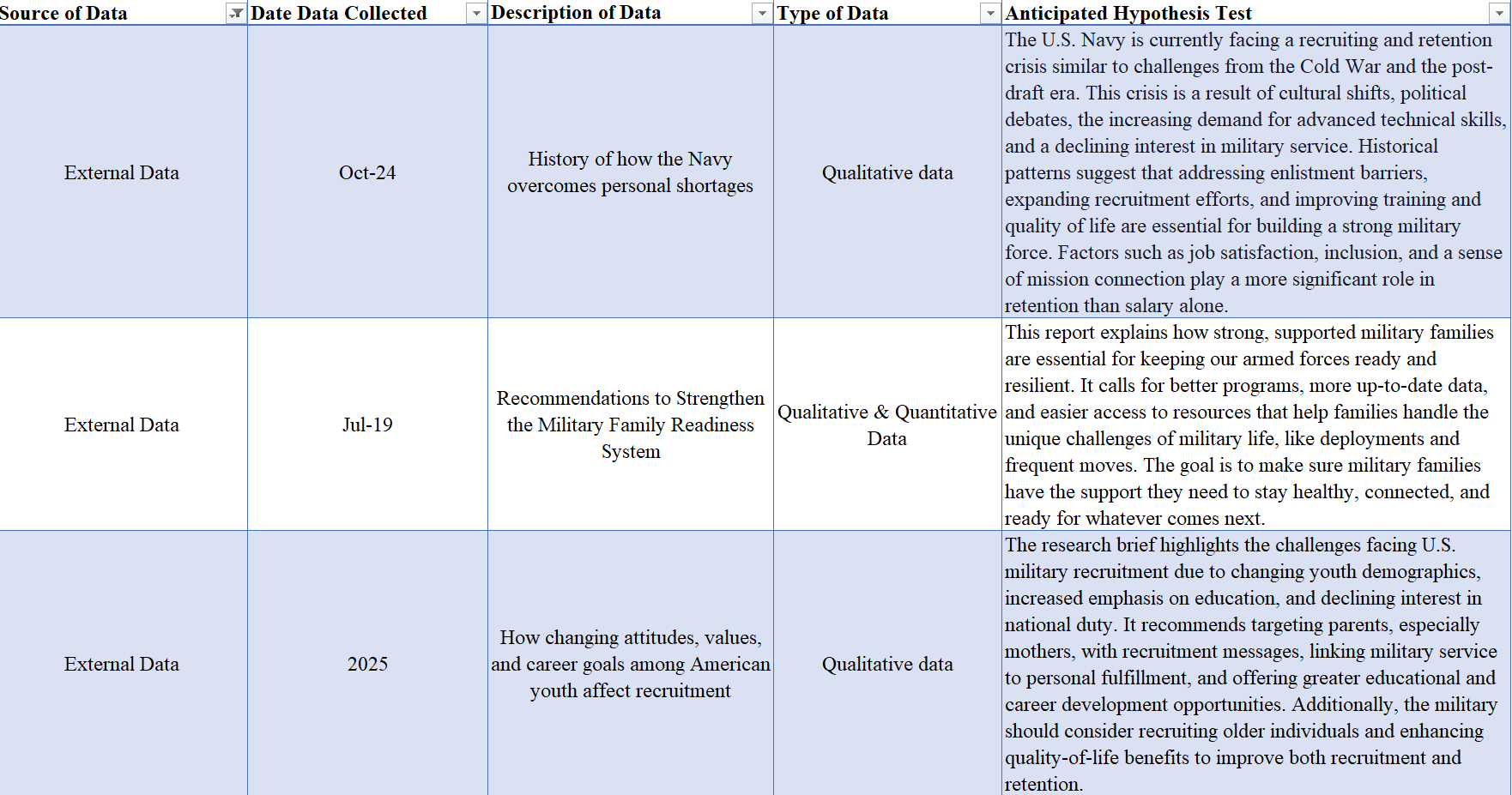
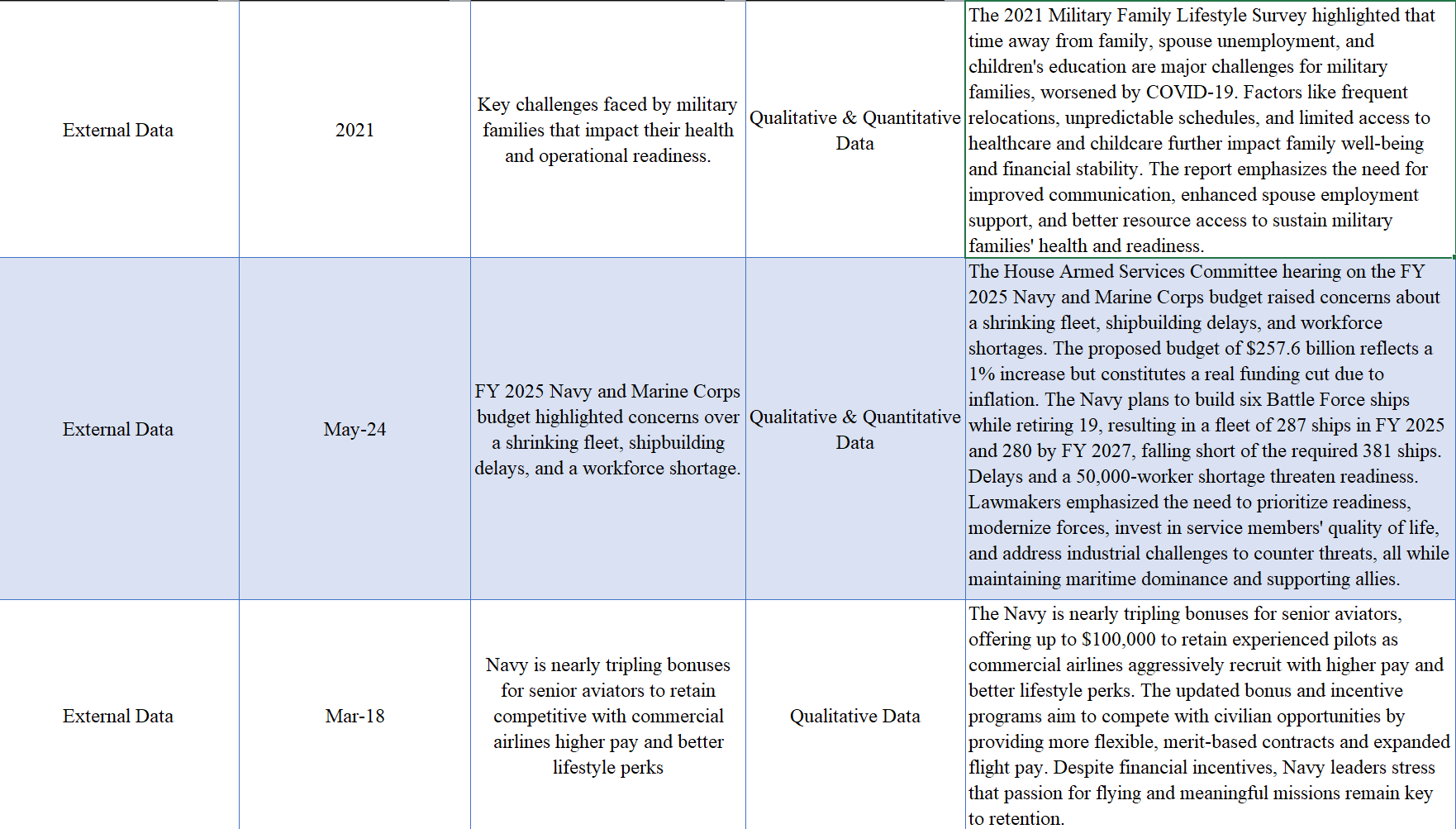
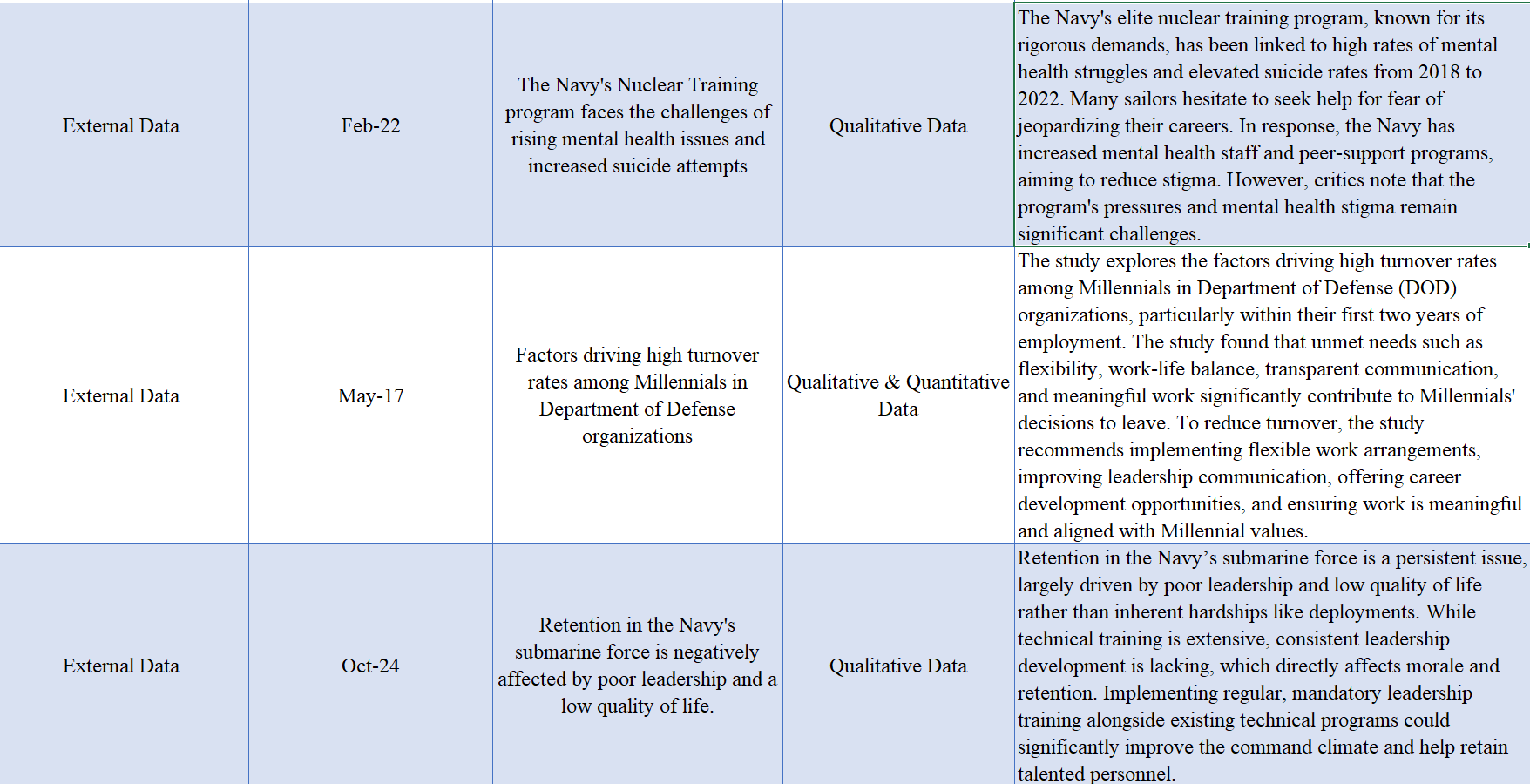
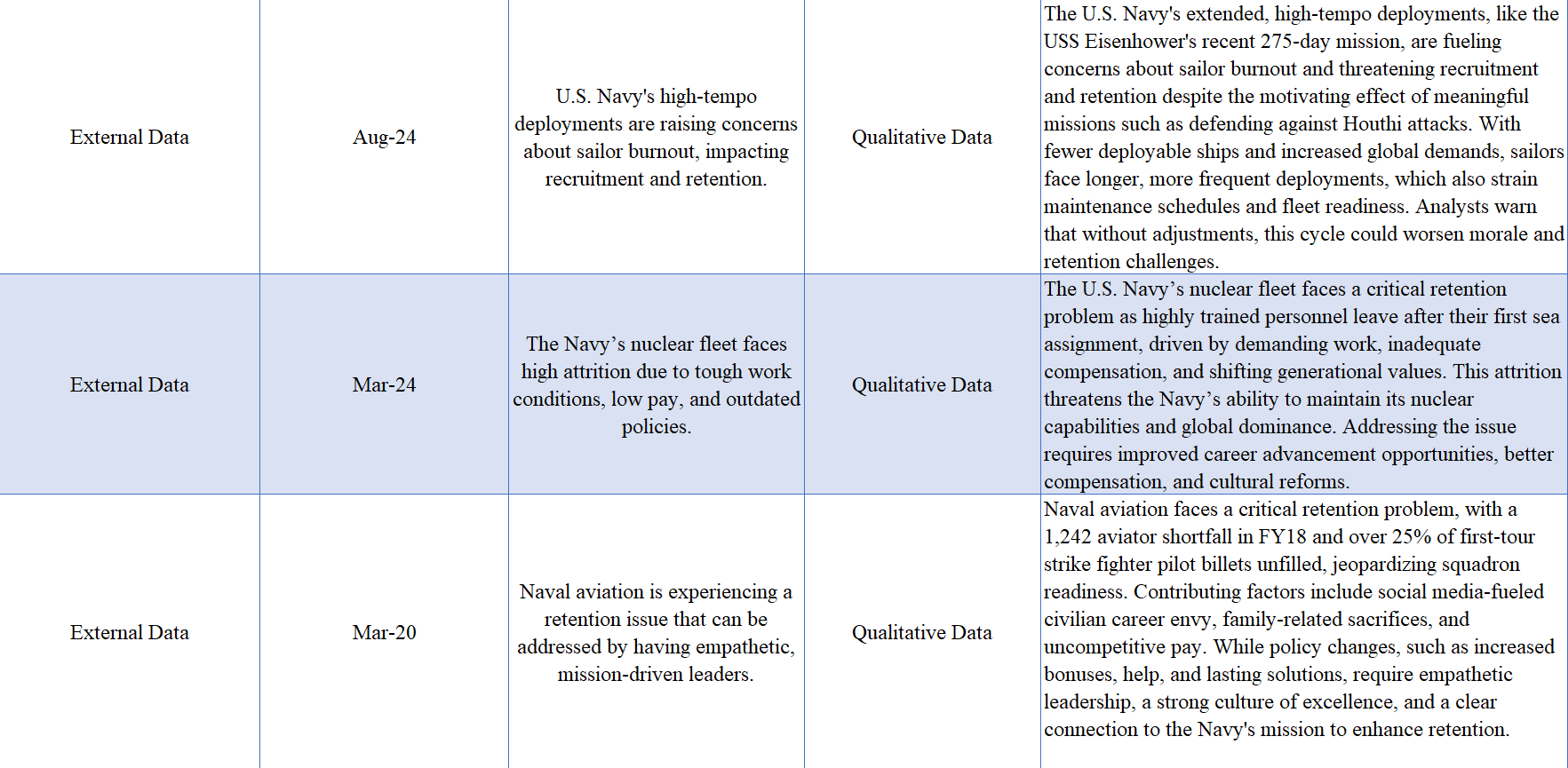
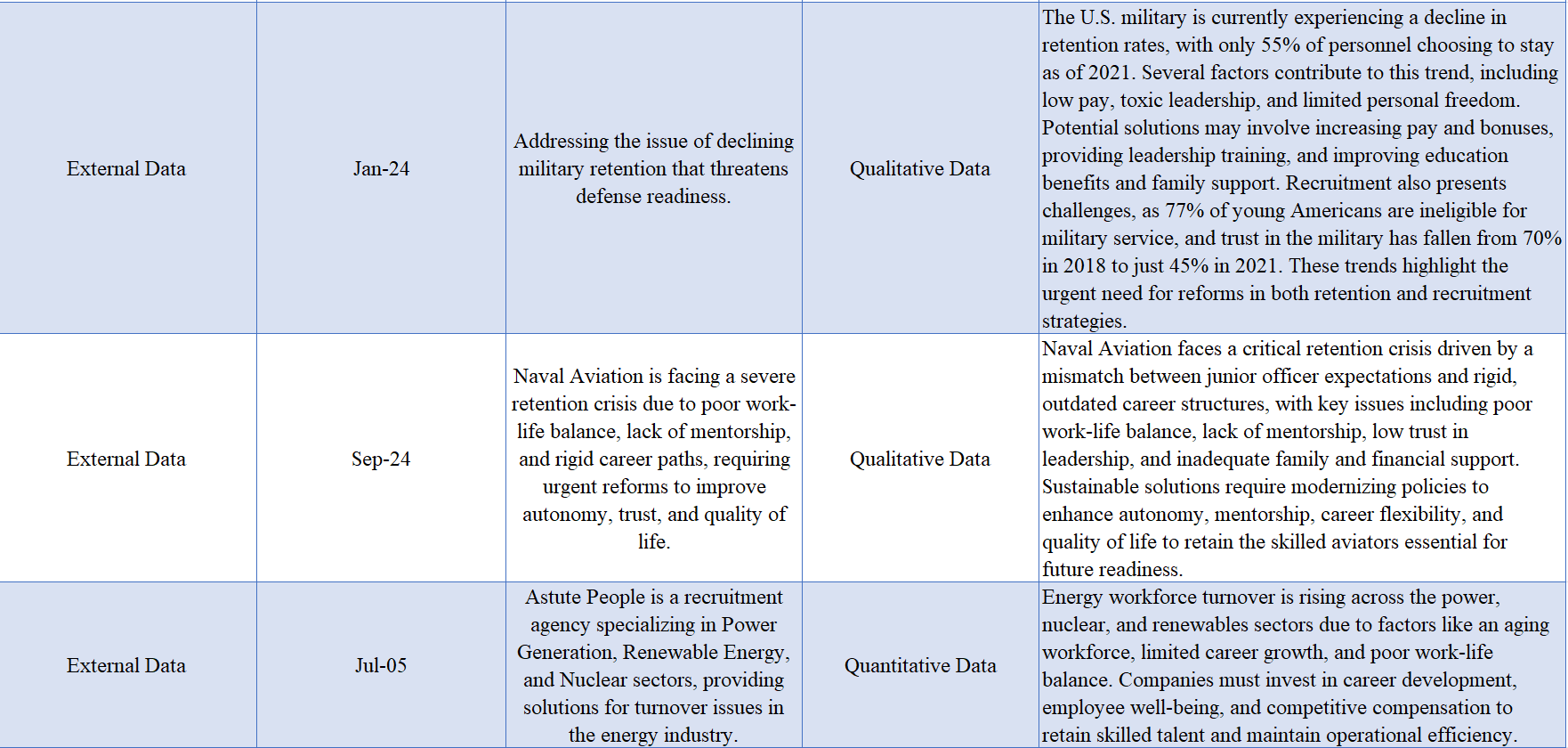
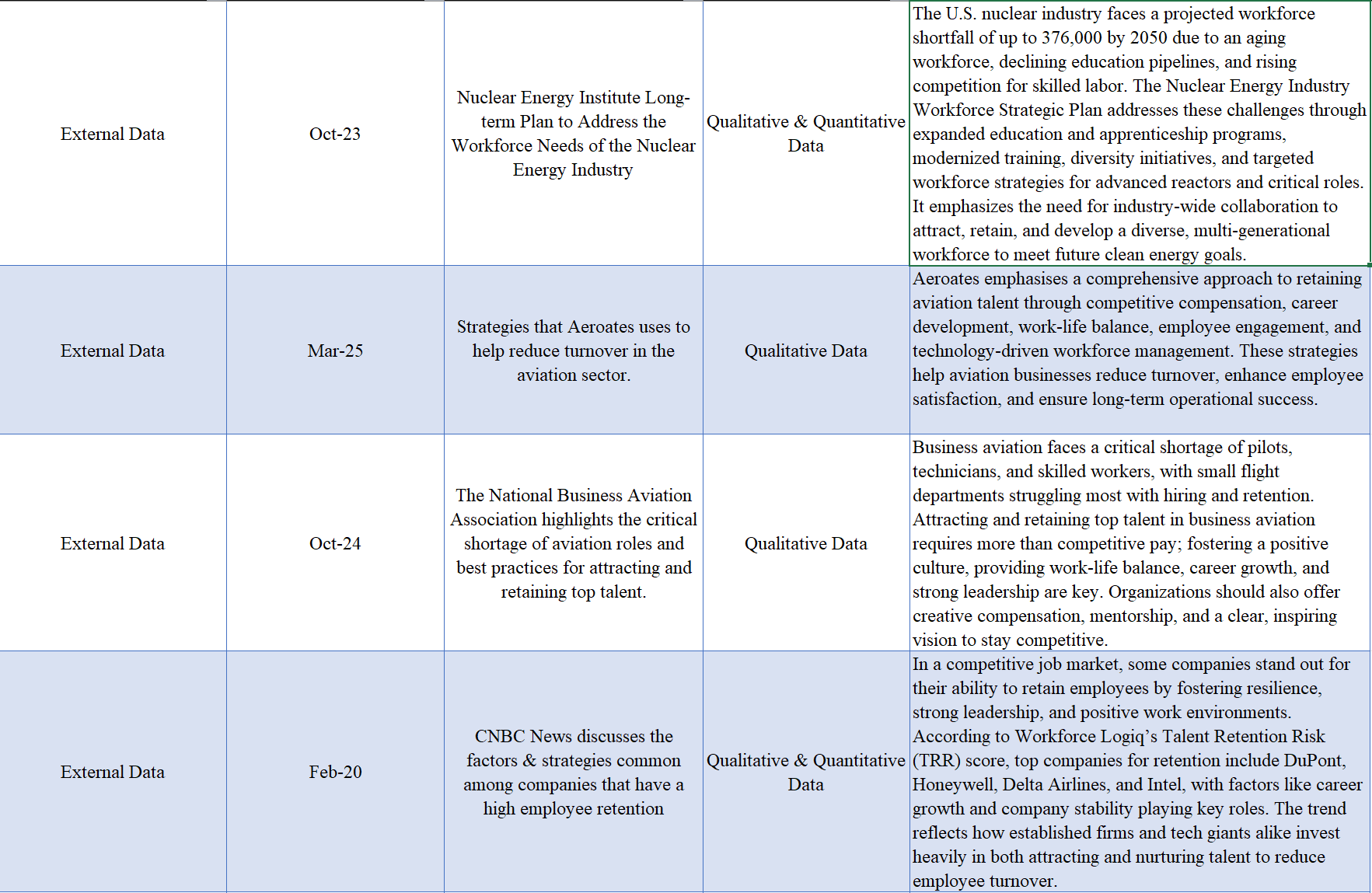
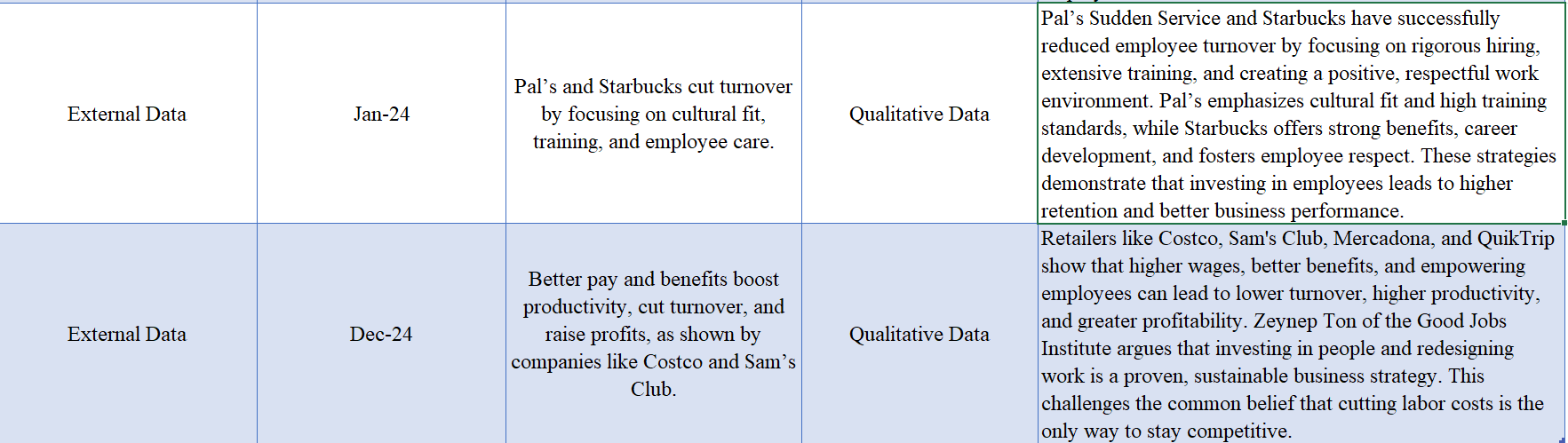
Source of Data 4 Date Data Collected 4 Description of Data a Type of Data Anticipated Hypothesis Test x External Data Oct-24 History of how the Navy overcomes personal shortages Qualitative data The U.S. Navy is currently facing a recruiting and retention crisis similar to challenges from the Cold War and the post- draft era. This crisis is a result of cultural shifts, political debates, the increasing demand for advanced technical skills, and a declining interest in military service. Historical patterns suggest that addressing enlistment barriers, expanding recruitment efforts, and improving training and quality of life are essential for building a strong military force. Factors such as job satisfaction, inclusion, and a sense of mission connection play a more significant role in retention than salary alone. External Data Jul-19 Recommendations to Strengthen the Military Family Readiness System Qualitative & Quantitative Data This report explains how strong, supported military families are essential for keeping our armed forces ready and resilient. It calls for better programs, more up-to-date data, and easier access to resources that help families handle the unique challenges of military life, like deployments and frequent moves. The goal is to make sure military families have the support they need to stay healthy, connected, and ready for whatever comes next. External Data 2025 How changing attitudes, values, and career goals among American youth affect recruitment Qualitative data The research brief highlights the challenges facing U.S. military recruitment due to changing youth demographics, increased emphasis on education, and declining interest in national duty. It recommends targeting parents, especially mothers, with recruitment messages, linking military service to personal fulfillment, and offering greater educational and career development opportunities. Additionally, the military should consider recruiting older individuals and enhancing quality-of-life benefits to improve both recruitment and retention. External Data 2021 Key challenges faced by military families that impact their health and operational readiness. Qualitative & Quantitative Data The 2021 Military Family Lifestyle Survey highlighted that time away from family, spouse unemployment, and children's education are major challenges for military families, worsened by COVID-19. Factors like frequent relocations, unpredictable schedules, and limited access to healthcare and childcare further impact family well-being and financial stability. The report emphasizes the need for improved communication, enhanced spouse employment support, and better resource access to sustain military families' health and readiness. External Data May-24 FY 2025 Navy and Marine Corps budget highlighted concerns over a shrinking fleet, shipbuilding delays, and a workforce shortage. Qualitative & Quantitative Data The House Armed Services Committee hearing on the FY 2025 Navy and Marine Corps budget raised concerns about a shrinking fleet, shipbuilding delays, and workforce shortages. The proposed budget of $257.6 billion reflects a 1% increase but constitutes a real funding cut due to inflation. The Navy plans to build six Battle Force ships while retiring 19, resulting in a fleet of 287 ships in FY 2025 and 280 by FY 2027, falling short of the required 381 ships. Delays and a 50,000-worker shortage threaten readiness. Lawmakers emphasized the need to prioritize readiness, modernize forces, invest in service members' quality of life, and address industrial challenges to counter threats, all while maintaining maritime dominance and supporting allies. External Data Mar-18 Navy is nearly tripling bonuses for senior aviators to retain competitive with commercial airlines higher pay and better lifestyle perks Qualitative Data The Navy is nearly tripling bonuses for senior aviators, offering up to $100,000 to retain experienced pilots as commercial airlines aggressively recruit with higher pay and better lifestyle perks. The updated bonus and incentive programs aim to compete with civilian opportunities by providing more flexible, merit-based contracts and expanded flight pay. Despite financial incentives, Navy leaders stress that passion for flying and meaningful missions remain key to retention. The Navy's elite nuclear training program, known for its rigorous demands, has been linked to high rates of mental health struggles and elevated suicide rates from 2018 to 2022. Many sailors hesitate to seek help for fear of Qualitative Data jeopardizing their careers. In response, the Navy has increased mental health staff and peer-support programs, aiming to reduce stigma. However, critics note that the program's pressures and mental health stigma remain The Navy's Nuclear Training program faces the challenges of rising mental health issues and mcreased suicide attempts External Data Feb-22 significant challenges. The study explores the factors driving high turnover rates among Millennials in Department of Defense (DOD) organizations, particularly within their first two years of employment. The study found that unmet needs such as flexibility, work-life balance, transparent communication, and meaningful work significantly contribute to Millennials' decisions to leave. To reduce turnover, the study recommends implementing flexible work arrangements, improving leadership communication, offering career development opportunities, and ensuring work is meaningful and aligned with Millennial values. Factors driving high turnover rates among Millennials in Qualitative & Quantitative Department of Defense Data organizations External Data May-17 Retention in the Navy's submarine force is a persistent issue, largely driven by poor leadership and low quality of life rather than inherent hardships like deployments. While technical training is extensive, consistent leadership Qualitative Data development is lacking, which directly affects morale and retention. Implementing regular, mandatory leadership training alongside existing technical programs could significantly improve the command climate and help retain talented personnel. Retention in the Navy's submarine force is negatively affected by poor leadership and a low quality of life. External Data Oct-24 External Data Aug-24 U.S. Navy's high-tempo deployments are raising concerns about sailor burnout, impacting recruitment and retention. Qualitative Data The U.S. Navy's extended, high-tempo deployments, like the USS Eisenhower's recent 275-day mission, are fueling concerns about sailor burnout and threatening recruitment and retention despite the motivating effect of meaningful missions such as defending against Houthi attacks. With fewer deployable ships and increased global demands, sailors face longer, more frequent deployments, which also strain maintenance schedules and fleet readiness. Analysts warn that without adjustments, this cycle could worsen morale and retention challenges. External Data Mar-24 The Navy's nuclear fleet faces high attrition due to tough work conditions, low pay, and outdated policies. Qualitative Data The U.S. Navy's nuclear fleet faces a critical retention problem as highly trained personnel leave after their first sea assignment, driven by demanding work, inadequate compensation, and shifting generational values. This attrition threatens the Navy's ability to maintain its nuclear capabilities and global dominance. Addressing the issue requires mproved career advancement opportunities, better compensation, and cultural reforms. External Data Mar-20 Naval aviation is experiencing a retention issue that can be addressed by having empathetic, mission-driven leaders. Qualitative Data Naval aviation faces a critical retention problem, with a 1,242 aviator shortfall in FY18 and over 25% of first-tour strike fighter pilot billets unfilled, jeopardizing squadron readiness. Contributing factors include social media-fueled civilian career envy, family-related sacrifices, and uncompetitive pay. While policy changes, such as increased bonuses, help, and lasting solutions, require empathetic leadership, a strong culture of excellence, and a clear connection to the Navy's mission to enhance retention. External Data Jan-24 Addressing the issue of declining military retention that threatens defense readiness. Qualitative Data The U.S. military is currently experiencing a decline in retention rates, with only 55% of personnel choosing to stay as of 2021. Several factors contribute to this trend, including low pay, toxic leadership, and limited personal freedom. Potential solutions may involve increasing pay and bonuses, providing leadership training, and improving education benefits and family support. Recruitment also presents challenges, as 77% of young Americans are ineligible for military service, and trust in the military has fallen from 70% in 2018 to just 45% in 2021. These trends highlight the urgent need for reforms in both retention and recruitment strategies. External Data Sep-24 Naval Aviation is facing a severe retention crisis due to poor work- life balance, lack of mentorship, and rigid career paths, requiring urgent reforms to improve autonomy, trust, and quality of life. Qualitative Data Naval Aviation faces a critical retention crisis driven by a mismatch between junior officer expectations and rigid, outdated career structures, with key issues including poor work-life balance, lack of mentorship, low trust in leadership, and inadequate family and financial support. Sustainable solutions require modernizing policies to enhance autonomy, mentorship, career flexibility, and quality of life to retain the skilled aviators essential for future readiness. External Data Jul-05 Astute People is a recruitment agency specializing in Power Generation, Renewable Energy, and Nuclear sectors, providing solutions for turnover issues in the energy industry. Quantitative Data Energy workforce turnover is rising across the power, nuclear, and renewables sectors due to factors like an aging workforce, limited career growth, and poor work-life balance. Companies must invest in career development, employee well-being, and competitive compensation to retain skilled talent and maintain operational efficiency. Nuclear Energy Institute Long- term Plan to Address the Qualitative & Quantitative The U.S. nuclear industry faces a projected workforce shortfall of up to 376,000 by 2050 due to an aging workforce, declining education pipelines, and rising competition for skilled labor. The Nuclear Energy Industry Workforce Strategic Plan addresses these challenges through External Data Oct-23 Workforce Needs of the Nuclear Data expanded education and apprenticeship programs, modernized training, diversity initiatives, and targeted Energy Industry : ss workforce strategies for advanced reactors and critical roles. It emphasizes the need for industry-wide collaboration to attract, retain, and develop a diverse, multi-generational workforce to meet future clean energy goals. Aeroates emphasises a comprehensive approach to retaining aviation talent through competitive compensation, career Strategies that Aeroates uses to development, work-life balance, employee engagement, and External Data Mar-25 help reduce turnover in the Qualitative Data technology-driven workforce management. These strategies aviation sector. help aviation businesses reduce turnover, enhance employee satisfaction, and ensure long-term operational success. Business aviation faces a critical shortage of pilots, technicians, and skilled workers, with small flight The National Business Aviation departments struggling most with hiring and retention. Association highlights the critical Attracting and retaining top talent in business aviation External Data Oct-24 shortage of aviation roles and Qualitative Data requires more than competitive pay; fostering a positive best practices for attracting and culture, providing work-life balance, career growth, and retaining top talent. strong leadership are key. Organizations should also offer creative compensation, mentorship, and a clear, inspiring vision to stay competitive. In a competitive job market, some companies stand out for their ability to retain employees by fostering resilience, strong leadership, and positive work environments. CNBC News discusses the According to Workforce Logiq's Talent Retention Risk External Data Feb-20 factors & strategies common Qualitative & Quantitative |(TRR) score, top companies for retention include DuPont, among companies that have a high employee retention Data Honeywell, Delta Airlines, and Intel, with factors like career growth and company stability playing key roles. The trend reflects how established firms and tech giants alike invest heavily in both attracting and nurturing talent to reduce employee turnover. Pal's and Starbucks cut turnover Pal's Sudden Service and Starbucks have successfully reduced employee turnover by focusing on rigorous hiring, extensive traimmg, and creating a positive, respectful work environment. Pal's emphasizes cultural fit and high training standards, while Starbucks offers strong benefits, career development, and fosters employee respect. These strategies demonstrate that investing in employees leads to higher retention and better business performance. External Data Jan-24 by focusing on cultural fit, Qualitative Data training, and employee care. Better pay and benefits boost productivity, cut turnover, and External Data Dec-24 raise profits, as shown by Qualitative Data companies like Costco and Sam's Club. Retailers like Costco, Sam's Club, Mercadona, and QuikTrip ] show that higher wages, better benefits, and empowering employees can lead to lower turnover, higher productivity, and greater profitability. Zeynep Ton of the Good Jobs Institute argues that investing in people and redesigning work is a proven, sustainable business strategy. This challenges the common belief that cutting labor costs is the only way to stay competitive
Step by Step Solution
There are 3 Steps involved in it
1 Expert Approved Answer
Step: 1 Unlock
Question Has Been Solved by an Expert!
Get step-by-step solutions from verified subject matter experts
Step: 2 Unlock
Step: 3 Unlock
Students Have Also Explored These Related General Management Questions!