







Question: Specific ID: Compute the cost assigned to ending inventory using specific identification. For specific identification, the March 9 sale consisted of 60 units from beginning
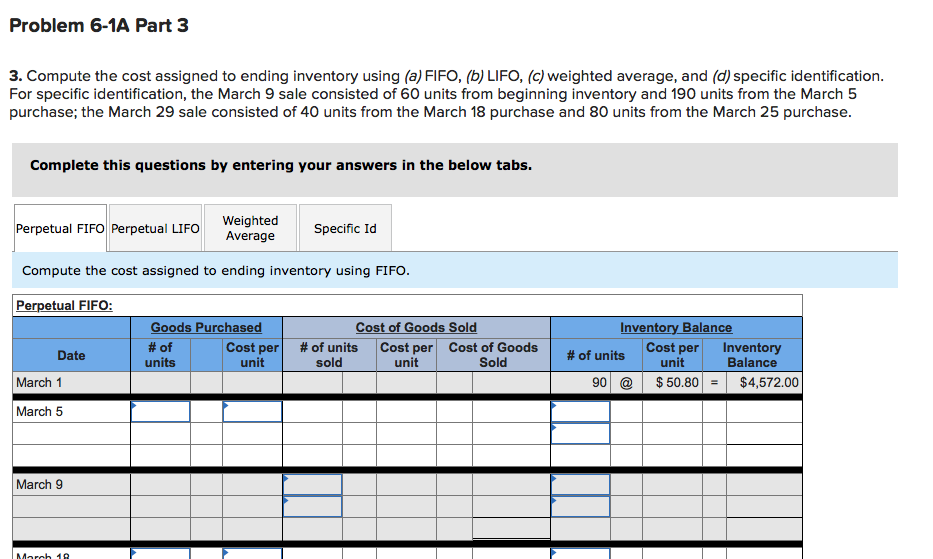
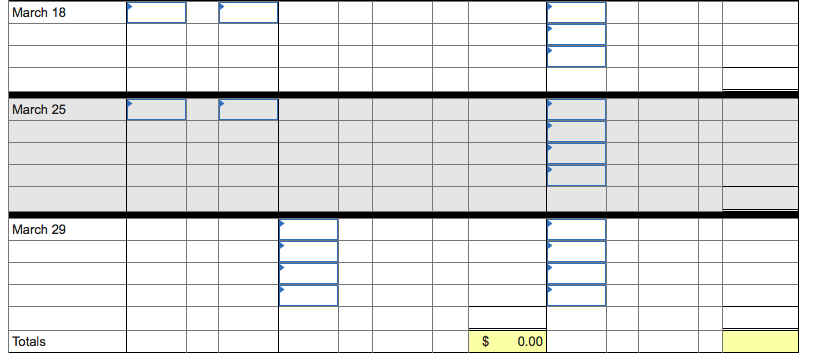
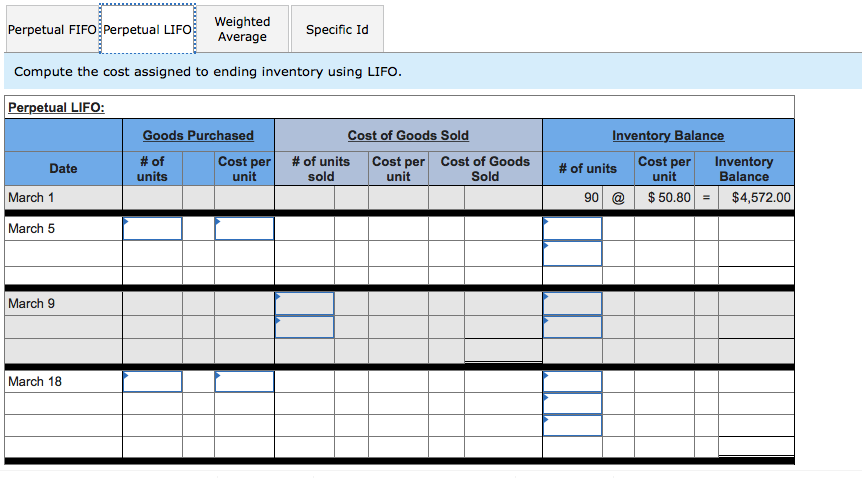
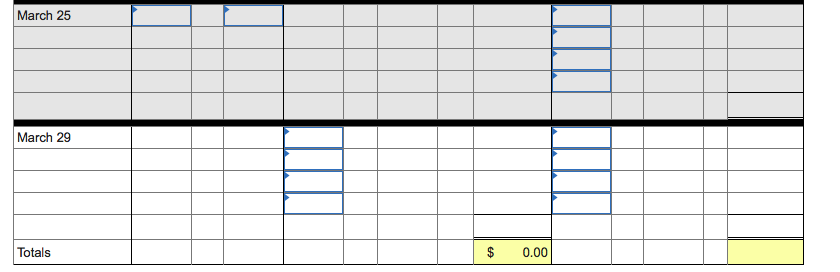
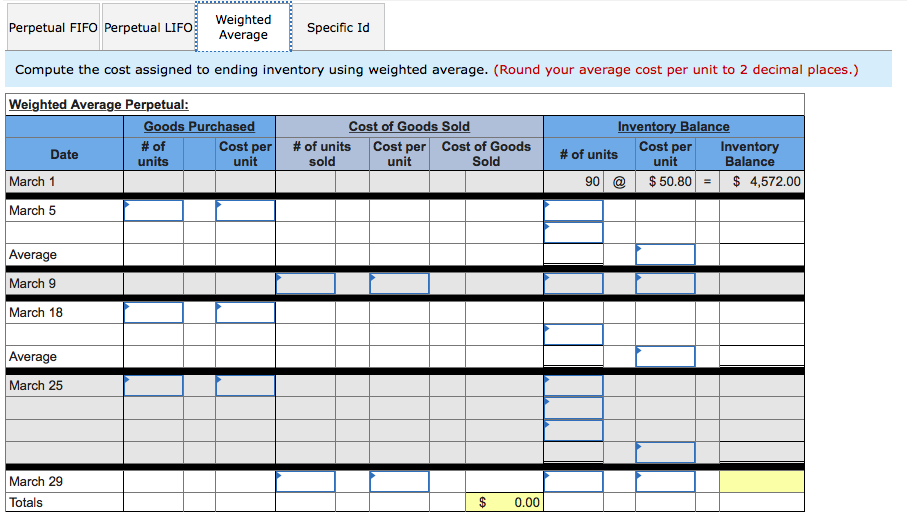
Specific ID: Compute the cost assigned to ending inventory using specific identification. For specific identification, the March 9 sale consisted of 60 units from beginning inventory and 190 units from the March 5 purchase; the March 29 sale consisted of 40 units from the March 18 purchase and 80 units from the March 25 purchase.
![questions displayed below.] Warnerwoods Company uses a perpetual inventory system. It entered](https://s3.amazonaws.com/si.experts.images/answers/2024/07/66a60a9f45eb4_72666a60a9ed4057.jpg)
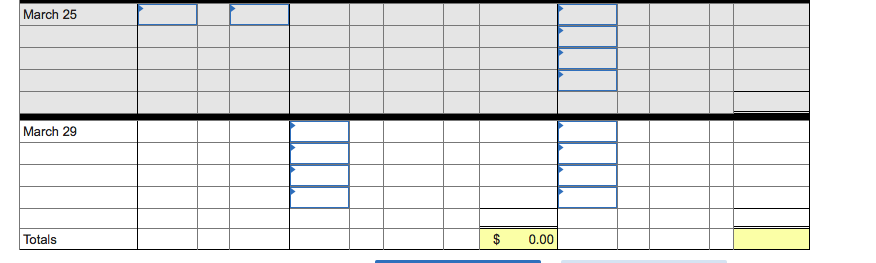
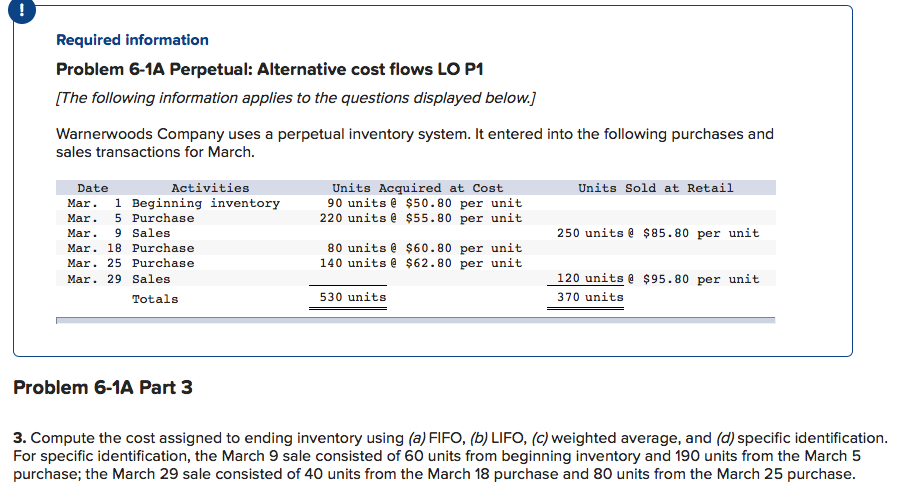
Required information Problem 6-1A Perpetual: Alternative cost flows LO P1 The following information applies to the questions displayed below.] Warnerwoods Company uses a perpetual inventory system. It entered into the following purchases and sales transactions for March. Activities Units Sold at Retail Units Acquired at Cost 90 units $50.80 per unit 220 units $55.80 per unit Date Mar. Mar. 5 Purchase Mar. 9 Sales Mar. 18 Purchase Mar. 25 Purchase Mar. 29 Sales 1 Beginning inventory 250 units $85.80 per unit 80 units $60.80 per unit 140 units $62.80 per unit 120 units $95.80 per unit 370 units Totals 530 units Problem 6-1A Part 3 3. Compute the cost assigned to ending inventory using (a) FIFO, (b) LIFO, (c) weighted average, and (d) specific identification For specific identification, the March 9 sale consisted of 60 units from beginning inventory and 190 units from the March 5 purchase; the March 29 sale consisted of 40 units from the March 18 purchase and 80 units from the March 25 purchase
Step by Step Solution
There are 3 Steps involved in it

Get step-by-step solutions from verified subject matter experts
 Study Help