







Question: SPREADSHEET 10.1 Valuina Bhnds Using a Spreadsheet ity differs from the current yield of a bond, which is divided by its price. The current yield
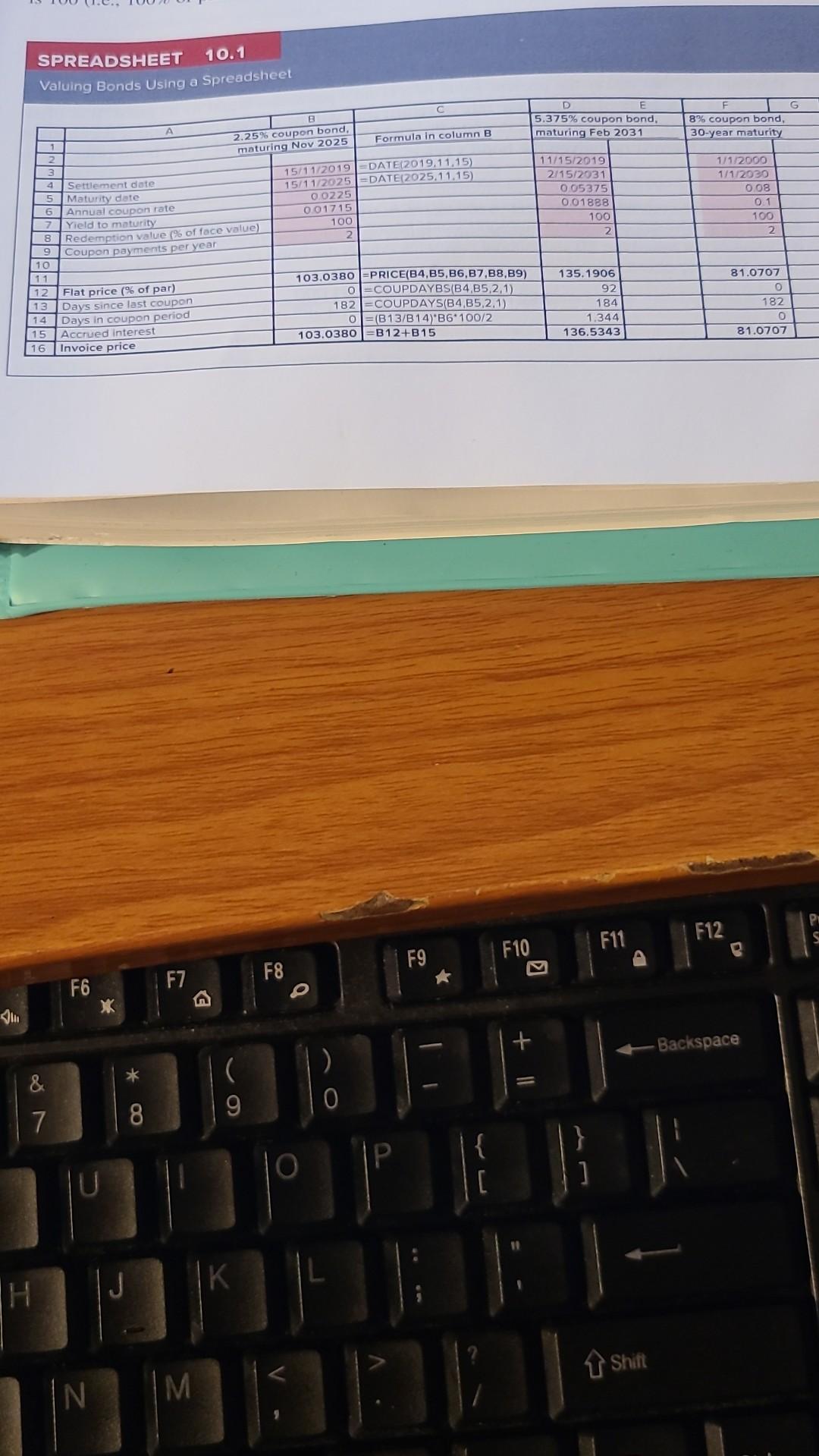
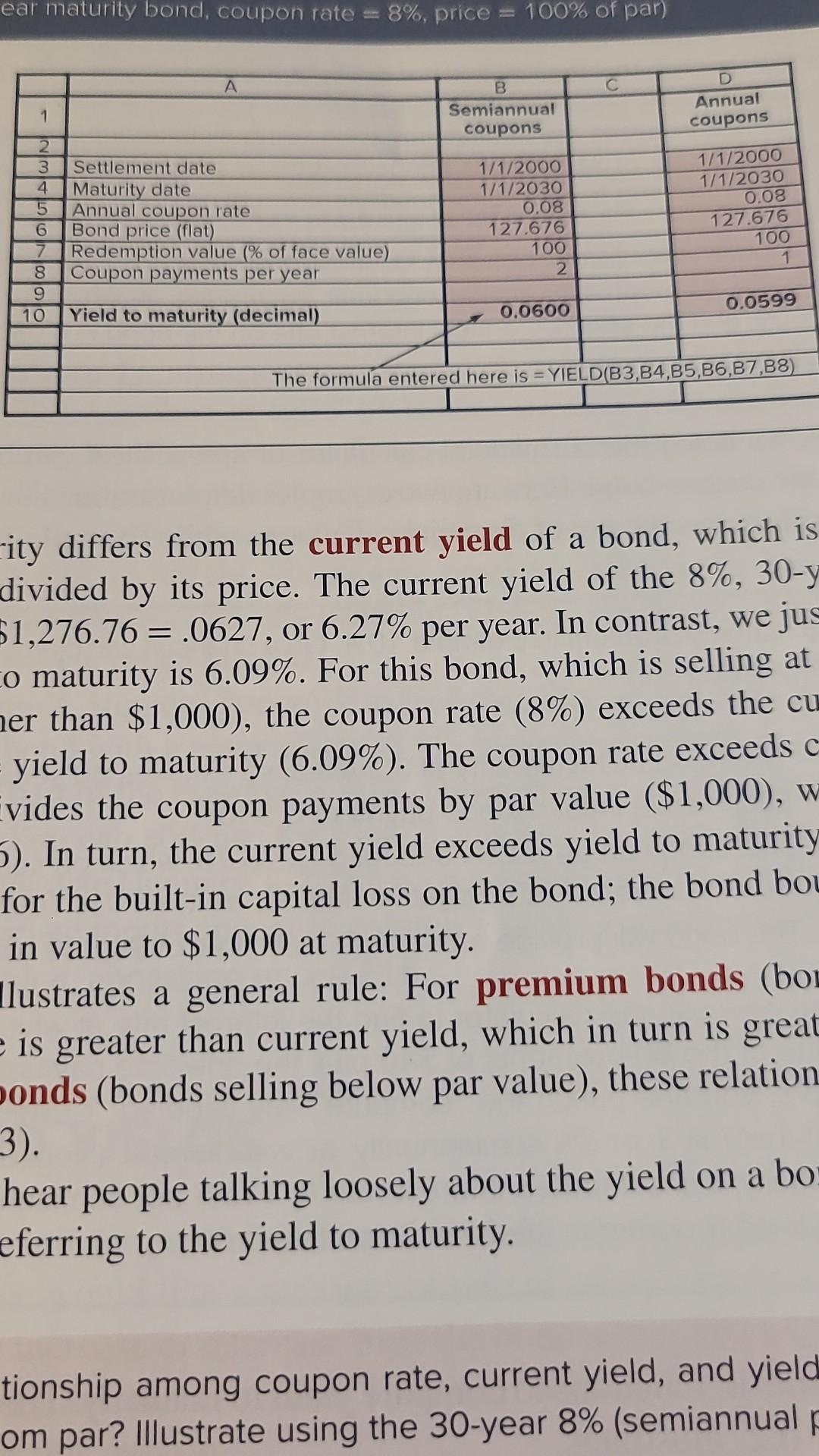
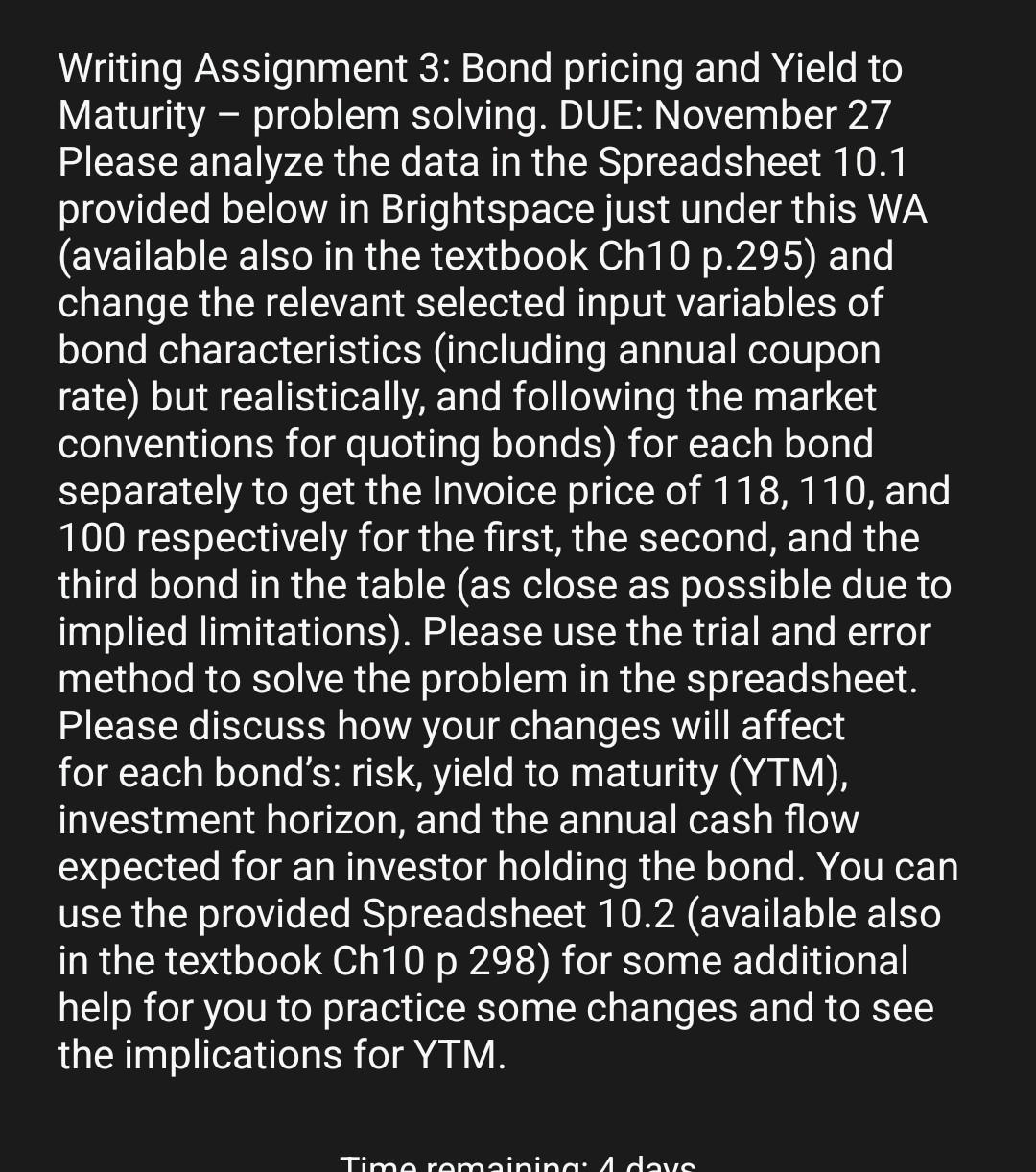
SPREADSHEET 10.1 Valuina Bhnds Using a Spreadsheet ity differs from the current yield of a bond, which is divided by its price. The current yield of the 8%,30y 1,276.76=.0627, or 6.27% per year. In contrast, we jus maturity is 6.09%. For this bond, which is selling at than $1,000), the coupon rate (8%) exceeds the cu yield to maturity (6.09\%). The coupon rate exceeds vides the coupon payments by par value ($1,000), w 6). In turn, the current yield exceeds yield to maturity for the built-in capital loss on the bond; the bond bo in value to $1,000 at maturity. llustrates a general rule: For premium bonds (bo is greater than current yield, which in turn is great onds (bonds selling below par value), these relation 3). hear people talking loosely about the yield on a bo eferring to the yield to maturity. tionship among coupon rate, current yield, and yield om par? Illustrate using the 30 -year 8% (semiannual Writing Assignment 3: Bond pricing and Yield to Maturity - problem solving. DUE: November 27 Please analyze the data in the Spreadsheet 10.1 provided below in Brightspace just under this WA (available also in the textbook Ch10 p.295) and change the relevant selected input variables of bond characteristics (including annual coupon rate) but realistically, and following the market conventions for quoting bonds) for each bond separately to get the Invoice price of 118,110 , and 100 respectively for the first, the second, and the third bond in the table (as close as possible due to implied limitations). Please use the trial and error method to solve the problem in the spreadsheet. Please discuss how your changes will affect for each bond's: risk, yield to maturity (YTM), investment horizon, and the annual cash flow expected for an investor holding the bond. You can use the provided Spreadsheet 10.2 (available also in the textbook Ch10 p 298) for some additional help for you to practice some changes and to see the implications for YTM. SPREADSHEET 10.1 Valuina Bhnds Using a Spreadsheet ity differs from the current yield of a bond, which is divided by its price. The current yield of the 8%,30y 1,276.76=.0627, or 6.27% per year. In contrast, we jus maturity is 6.09%. For this bond, which is selling at than $1,000), the coupon rate (8%) exceeds the cu yield to maturity (6.09\%). The coupon rate exceeds vides the coupon payments by par value ($1,000), w 6). In turn, the current yield exceeds yield to maturity for the built-in capital loss on the bond; the bond bo in value to $1,000 at maturity. llustrates a general rule: For premium bonds (bo is greater than current yield, which in turn is great onds (bonds selling below par value), these relation 3). hear people talking loosely about the yield on a bo eferring to the yield to maturity. tionship among coupon rate, current yield, and yield om par? Illustrate using the 30 -year 8% (semiannual Writing Assignment 3: Bond pricing and Yield to Maturity - problem solving. DUE: November 27 Please analyze the data in the Spreadsheet 10.1 provided below in Brightspace just under this WA (available also in the textbook Ch10 p.295) and change the relevant selected input variables of bond characteristics (including annual coupon rate) but realistically, and following the market conventions for quoting bonds) for each bond separately to get the Invoice price of 118,110 , and 100 respectively for the first, the second, and the third bond in the table (as close as possible due to implied limitations). Please use the trial and error method to solve the problem in the spreadsheet. Please discuss how your changes will affect for each bond's: risk, yield to maturity (YTM), investment horizon, and the annual cash flow expected for an investor holding the bond. You can use the provided Spreadsheet 10.2 (available also in the textbook Ch10 p 298) for some additional help for you to practice some changes and to see the implications for YTM
Step by Step Solution
There are 3 Steps involved in it

Get step-by-step solutions from verified subject matter experts
 Study Help